English
 Türkçe

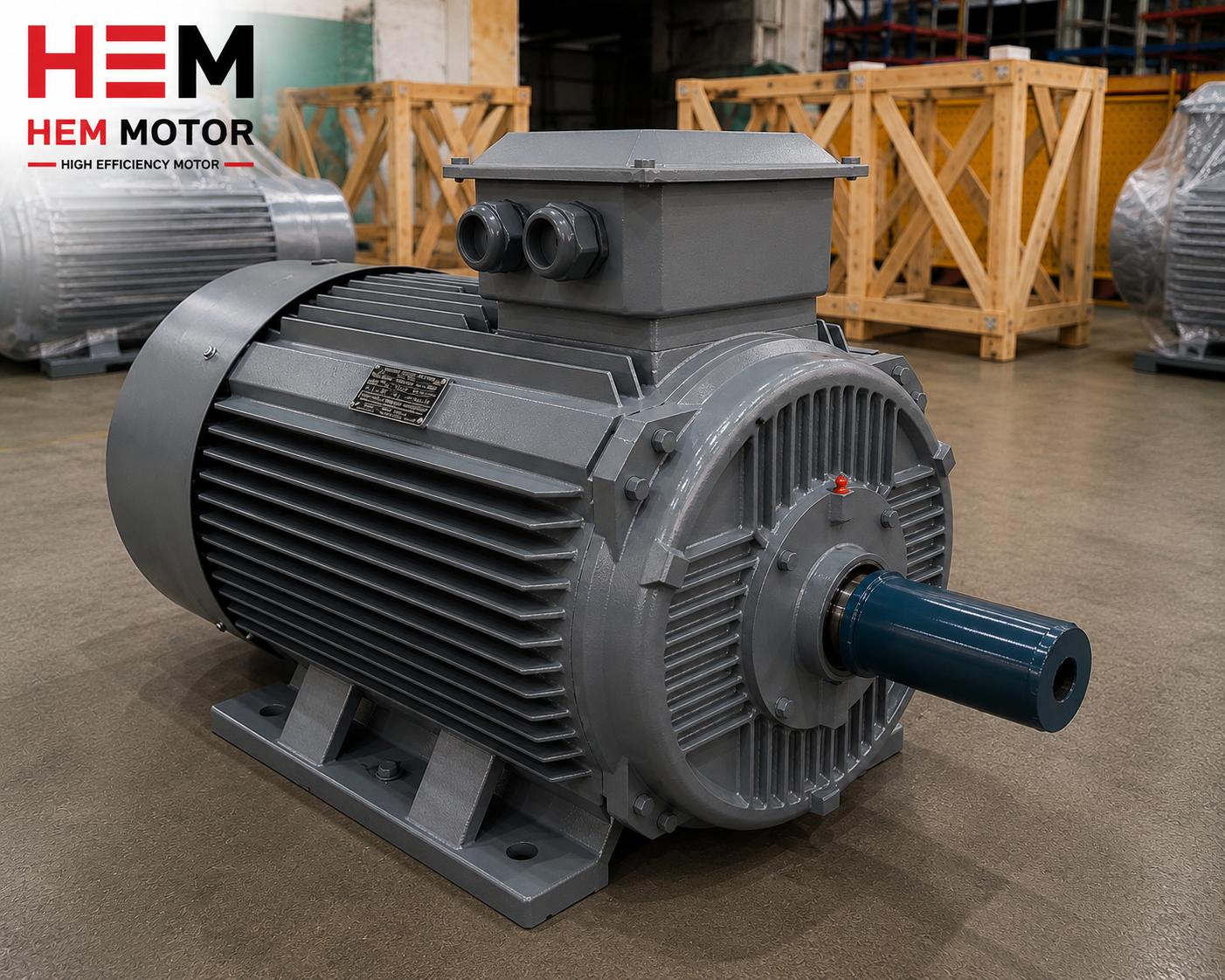

When a business invests in a high-efficiency motor such as IE4, the first question that comes to mind is this: Is this motor really delivering the promised savings, and is it running healthily? The answer to that question lies in IoT motor monitoring technology. Smart sensors that continuously measure a motor's instantaneous energy consumption, vibration, temperature, and run hours both prove the real savings provided by an efficient motor and warn of faults before they even occur. In this guide, we examine the IoT sensor energy and condition monitoring approach for efficient motors from the perspective of a manufacturer and seller: what the sensors measure, the difference between condition monitoring and predictive maintenance, how real savings are proven, and how correct motor supply and monitoring should be evaluated together. Our aim is to ensure that the efficient motor we sell also delivers its on-paper performance in the field.
What Is IoT Motor Monitoring?
IoT (Internet of Things) based motor monitoring relies on small sensors placed on the motor or at its connection points to continuously collect data and wirelessly transmit it through a gateway to the cloud or a local monitoring dashboard. In traditional maintenance, a technician periodically goes to the motor, takes a measurement, and notes it down; IoT motor monitoring, on the other hand, makes this process continuous and automatic. The motor reports itself 24/7, and deviations in the data are seen instantly. The system consists of three layers:
- Sensor layer: Wireless sensors mounted on the motor body or bearing seats, measuring vibration, temperature, and sometimes magnetic field; plus energy sensors measuring current/power at the panel.
- Gateway layer: The device that collects data from the sensors and transmits it to the internet; it can perform edge processing to turn raw data into meaningful information.
- Cloud and dashboard layer: The software layer where data is stored, trends are plotted, alarm thresholds are defined, and reports are generated.
Thanks to this structure, dozens of motors in a facility can be monitored from a single screen; each motor's health status, consumption, and load profile can be seen. For businesses wanting to measure the results of an efficient motor investment, this visibility is invaluable. Monitoring a motor's performance determines total savings as much as selecting the right efficiency class does. For efficient motor selection approaches, the topic correct selection of high-efficiency motors is a useful guide.
What Does an IoT Sensor Package Measure?
Motor monitoring sensors measure several key quantities that reveal both the electrical and mechanical health of the motor. Evaluating these quantities together provides a holistic view of the motor's condition:
- Instantaneous power and energy consumption: The current and active power (kW) drawn by the motor and the energy (kWh) consumed over time. This is the basis for proving an efficient motor's savings.
- Vibration: Vibration velocity (mm/s) within the framework of ISO 20816. Vibration is the earliest indicator of rotor imbalance, misalignment, and bearing wear.
- Surface and bearing temperature: Overheating points to overload, insufficient cooling, or a bearing problem.
- Run hours and load profile: How long and at what load the motor runs; this data is used in spare planning and efficiency analysis.
- Speed (on some systems): Speed information, especially on drive-fed motors, enriches the load analysis.
The power of this data lies not in a single instantaneous value, but in the trend over time. A slow rise in vibration, a gradual increase in temperature, or an unexpected rise in consumption is the harbinger of a problem invisible to the eye. Trend tracking is the bridge that connects a motor's technical specifications to real performance in the field. For the effect of the right power and speed combination on the load profile, the topic power and speed options guides can be reviewed.
The Difference Between Condition Monitoring and Predictive Maintenance
The two concepts are often confused, but they are different. Condition monitoring reveals the current health status of the motor by monitoring its instantaneous and historical data; it answers the question "Is everything normal right now?" Predictive maintenance, on the other hand, analyzes this data to make predictions about the future; it approaches the question "When will this bearing fail, and when should I intervene?" The relationship between them is as follows:
What does condition monitoring provide?
- Shows the motor's instantaneous vibration, temperature, and consumption values.
- Generates an alarm when defined thresholds are exceeded.
- Prevents sudden failures by catching anomalies early.
What does predictive maintenance provide?
- Estimates the remaining life of a component (for example, a bearing) through trend analysis.
- Enables maintenance to be planned at the optimal time, before failure but not unnecessarily early.
- Reduces production loss by turning unplanned downtime into planned maintenance.
When the vibration and temperature trends on a motor are evaluated together, problems such as bearing wear, misalignment, imbalance, or overload can be detected before they even occur. This prevents the production loss that an unplanned motor failure would cause. For the relationship between vibration and bearing life in cast iron body motors, the topic performance in IE4 efficient motors offers complementary information.
Proving the Real Savings of an Efficient Motor
The strongest justification for switching to a high-efficiency motor such as IE4 is energy savings; however, this saving often remains on paper and is not measured in the field. IoT energy monitoring fills exactly this gap. The consumption of the old motor is measured before the change, and the consumption of the new efficient motor is measured under the same load conditions after the change; when the two values are compared, the real saving emerges concretely. This approach is valuable in several respects:
- Verification of the investment: The time it takes for the amount paid for the efficient motor to pay back is shown with real data.
- Prioritization: Which motors in the facility should be replaced first is determined by looking at consumption data; the motors that consume the most energy and run the most are prioritized.
- Continuous improvement: Deviations in consumption can be an early sign of a problem (load increase, mechanical issue, faulty operation).
A purchasing decision supported by data is always stronger than one based on intuition. As a manufacturer and supplier, in addition to delivering the right efficiency class motor from stock, we also emphasize the value of monitoring that motor's performance. To select the right motor and get information about current electric motor prices, you can contact us.
Integrating Monitoring with Maintenance Planning and Spare Stock
The real value of the data provided by IoT monitoring emerges when it is turned into maintenance and supply decisions. In a continuously monitored motor fleet, it is known in advance which motors will soon require maintenance; this enables intelligent planning of spare motor and parts stock:
- Identifying critical spares: Monitoring data clarifies which motors, at which power and speed, should be kept in stock.
- Planned replacement: A motor detected before failure is replaced during planned downtime, preventing production loss.
- Managing lead time ahead: Since the lead time of high-power motors can be long, predictive data ensures the order is placed at the right time.
This integration turns maintenance from reactive (after failure) into proactive (before failure). When a facility begins monitoring its motor fleet, it reduces both energy cost and unplanned downtime risk together. Sensors can be added later to existing motors; newly purchased motors can be commissioned ready for monitoring from the start. For efficient motor selection and technical decisions, guides and technical information content is a useful resource.
Adding Sensors to Existing Motors or Monitoring from the Start?
There are two paths to transitioning to a monitoring system, and both are feasible. Which one is chosen depends on the facility's situation and budget:
- Retrofit sensor addition: Adding a wireless vibration/temperature sensor to existing, running motors and an energy sensor to the panel is usually the fastest and least invasive path. There is no need to dismantle the motor.
- Commissioning ready for monitoring from the start: Newly purchased motors are commissioned with the monitoring infrastructure in mind; sensor locations and data collection are planned from the outset.
Most businesses start with critical motors and gradually bring the entire fleet under monitoring. The motors that run the most, have the highest power, and whose failure would be the most costly are monitored first. This gradual approach both spreads the investment and provides the highest return at the most critical points. When building the monitoring infrastructure, it is essential that the motor itself be reliable and efficient; because even the best monitoring system does not improve a poor motor, it only reports its condition.
Alarm Thresholds and Early Warning Logic
The value of a monitoring system lies in its ability to turn raw data into meaningful warnings. This is where alarm thresholds come into play. A normal operating range is defined for the vibration, temperature, and consumption quantities of each motor; when this range is exceeded, the system generates a graduated warning. A well-designed threshold structure is usually two-level:
- Warning level: The first warning given when a value begins to rise above normal. It is not yet urgent but shows that a trend has started; it allows time for maintenance planning.
- Alarm level: The urgent warning given when a value reaches the critical limit. At this point, a delay in intervention can lead to failure.
Setting the thresholds correctly is important; thresholds that are too narrow lead to a flood of unnecessary alarms (false positives), while thresholds that are too wide cause real problems to be missed. Therefore, thresholds should be adapted according to the motor's power, mounting rigidity, and application. Data collected over time clarifies the motor-specific definition of "normal," and the thresholds are fine-tuned accordingly. The aim of early warning logic is to enable a technician to notice a problem days in advance and solve it in a planned manner, rather than rushing to an emergency failure in the middle of the night. This lowers both maintenance cost and unplanned downtime risk.
Data-Driven Procurement Decisions
Perhaps one of the least discussed but most valuable benefits of IoT monitoring is that it moves purchasing and supply decisions from intuition to data. In the traditional approach, a facility usually decides which motor to replace and when at the moment of failure or by rough estimate. In a continuously monitored motor fleet, however, decisions are based on concrete data:
- Which motor to replace first: The motors that consume the most energy and run the most provide the highest return when switching to an efficient motor; monitoring data clarifies this prioritization.
- Which power to keep as spare: The power and speed information of motors showing a failure tendency forms the list of critical spares to be kept in stock.
- When to place the order: Predictive data manages the long lead time of high-power motors in advance, ensuring the order is placed at the right time.
- Verification of the investment: The consumption measured after the change shows the real return of switching to an efficient motor and informs subsequent investment decisions.
As a manufacturer and supplier, we care not only that our customers buy the right motor, but also that they supply that motor at the right time and the right power. A supply plan supported by monitoring data both optimizes stock cost and ensures the right motor is ready at the critical moment. This approach fully reveals the value of the efficient motor investment and sustainably lowers the facility's energy cost. For the efficient motor range and application-specific solutions, the high-efficiency electric motors options can be evaluated.
Frequently Asked Questions
What exactly does an IoT motor sensor measure?
A typical motor monitoring package measures the motor's vibration (in mm/s within the framework of ISO 20816), surface and bearing temperature, the current and active power measured at the panel along with energy consumption (kW/kWh), and run hours together with the load profile. The trend of these quantities over time reveals both the motor's health status and its real energy consumption.
Can I add sensors to my existing motors later?
Yes. Wireless vibration and temperature sensors can be added to existing, running motors without dismantling them, and an energy sensor can be installed on the panel. This retrofit approach is the fastest and least invasive path to monitoring. Most businesses start with critical motors first and gradually bring the fleet under monitoring.
How does monitoring prove an IE4 motor's energy savings?
The consumption of the old motor is measured before the change, and the consumption of the new IE4 motor is measured under the same load conditions after the change. Comparing the two values concretely shows the real saving provided by switching to an efficient motor. This way, the payback period of the investment is demonstrated not by intuition but by measured data, and it becomes possible to prioritize which motors to replace first.