English
 Türkçe

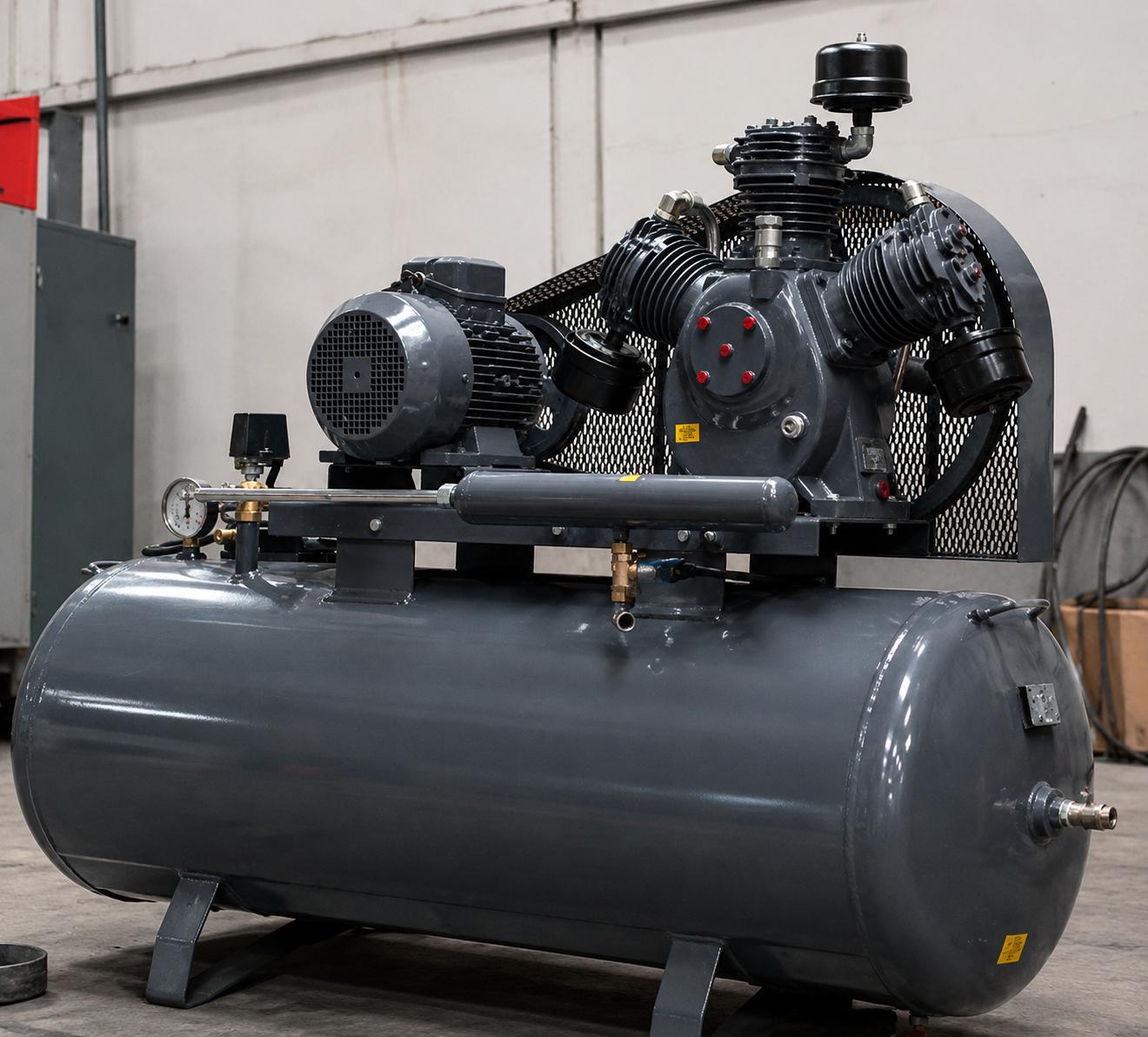

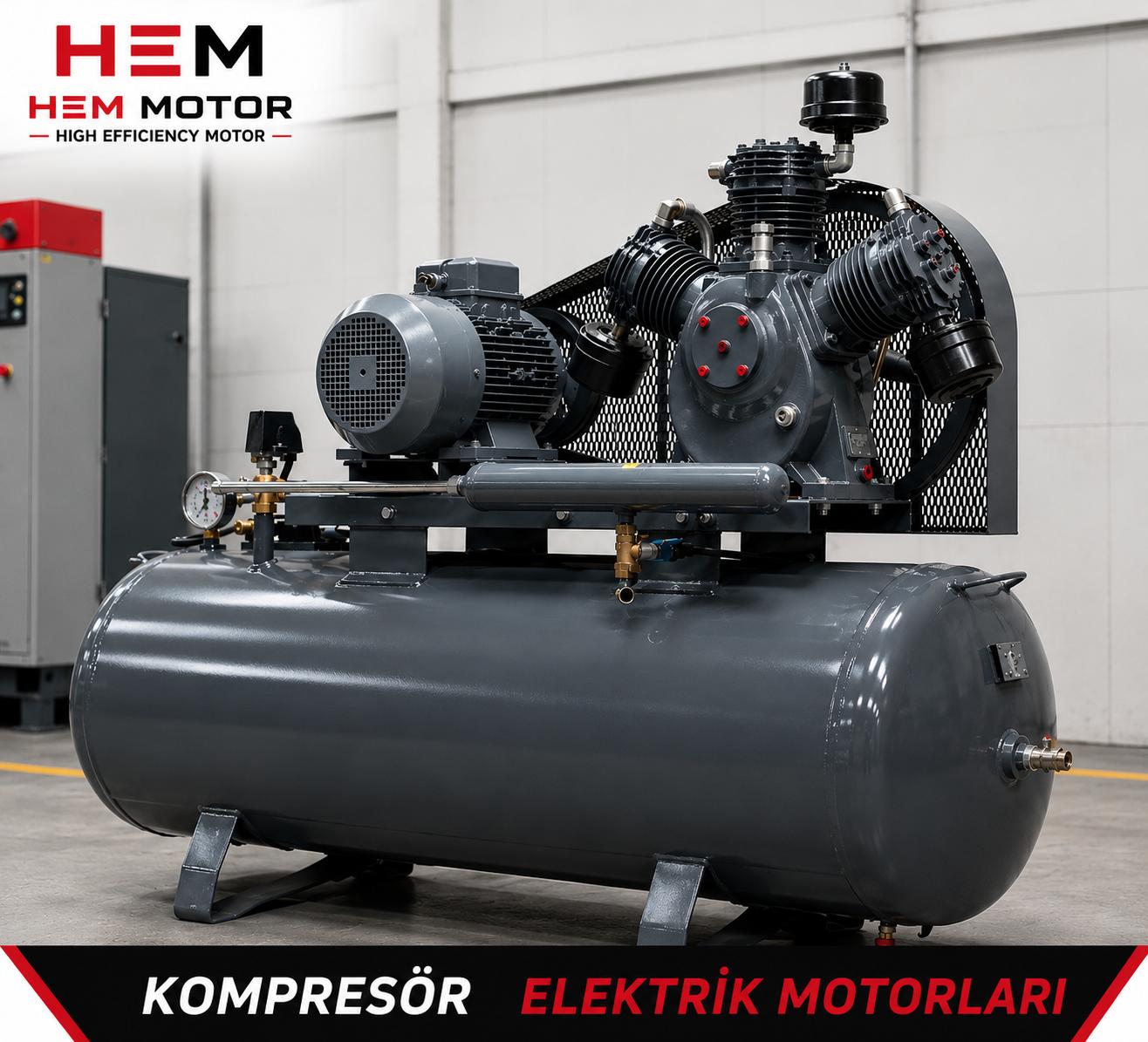
Compressed air is one of industry's most expensive forms of energy, because converting electricity into mechanical pressure involves a large efficiency loss. A significant part of the electricity consumed in a compressor plant goes to air that is produced but escapes unused. A compressed air leak is a silent but large cost item that continues unnoticed in most businesses. In this article we address the impact of leaks on energy cost, how the compressor's load/unload ratio determines consumption, where an efficient compressor motor stands in this picture and how you should make the investment decision.
At HEM Motor we manufacture and sell efficient compressor motors; but we always remind our customers: even the most efficient motor cannot fully close the waste in a leaking air system. The right decision is to address the motor and the system together. This article offers a view that combines both the motor and the system side.
Why Is Compressed Air So Expensive?
A compressor first converts electrical energy into mechanical energy in the motor, then into pressure energy by compressing the air. There is a loss at every link of this chain. As a result, the "unit cost" of the compressed air produced is higher than most jobs where electricity is used directly. That is why the compressed air system is always a priority in energy efficiency audits.
- Continuous operation: Compressors generally run for long hours under continuous duty, which magnifies annual energy consumption.
- Leaks turn directly into money: Every hole in the system makes the compressor run idle and consume extra electricity.
- The effect of pressure setting: A working pressure higher than necessary both increases leaks and raises consumption.
The Cost of Leaks: Understanding the Invisible Bill
Compressed air leaks occur at fittings, hoses, valves, seals and quick couplers. A single small leak seems trivial, but when dozens of leaks in a plant come together, they make the compressor run extra throughout the day. To understand the price of a leak, follow this logic:
- Leaks are continuous: Even if production stops, if the system is pressurized the leak continues; through weekends and nights the compressor runs to feed the leak.
- Leaks grow with pressure: At a high working pressure more air escapes from the same hole.
- Detection is easy: An ultrasonic leak detector, or monitoring how often the compressor cuts in when production stops, shows the scale of the leak.
When profiling a plant's energy use, a motor inventory and consumption map are critically important. We address this topic in our article on preparing for an energy efficiency audit: plant motor inventory and efficiency class assessment; the compressor is almost always the largest consumer item in this inventory.
Load/Unload Ratio: The Hidden Key to Efficiency
A fixed speed compressor does not stop completely when air demand drops; it usually switches to unload mode. While running unloaded the compressor does not deliver air, but the motor keeps turning and still consumes a serious amount of electricity. This is the hidden key to efficiency:
- High unload ratio = low efficiency: If the compressor spends most of its time unloaded, the energy cost of each unit of air it produces soars.
- Leaks increase the unload ratio: The more leaks there are, the more often the compressor cuts in and the more the unload-load cycle increases.
- Correct sizing: A compressor much larger than needed cycles continually between load and unload and runs inefficiently. We address at what load a motor should run in our article on at what load should a motor run? Efficiency, power margin and correct sizing.
When Does a Variable Frequency Drive (VFD) Make Sense?
In plants with fluctuating air demand, a variable speed (VFD) compressor produces air according to demand and largely eliminates the unload loss. However, in plants with steady, high demand a fixed speed efficient motor may be more suitable. As with pumps and fans, you can evaluate the saving potential of a drive on a compressor using the principles in our article on high efficiency motor plus variable frequency drive: energy saving in pumps and fans.
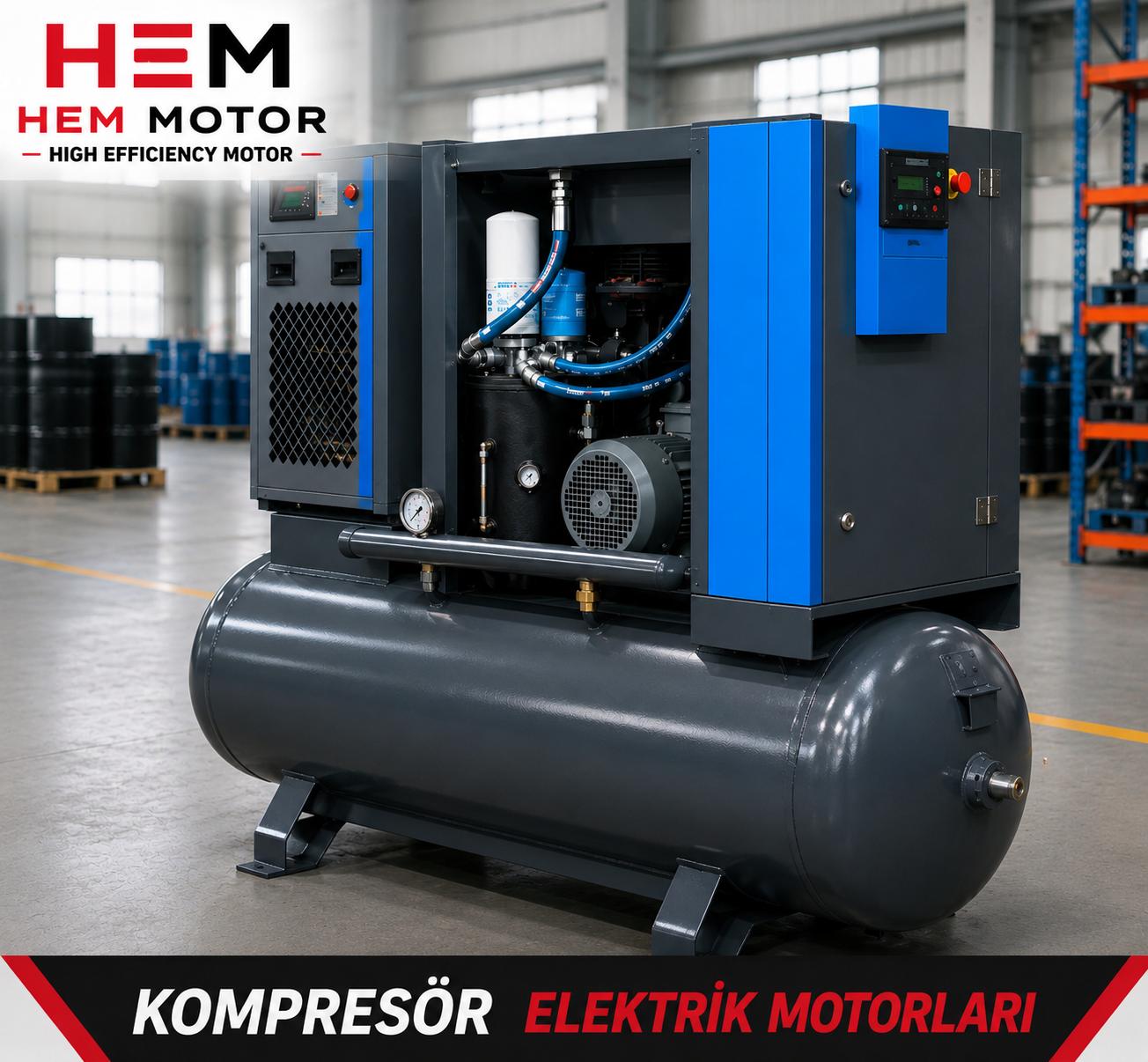
The Role of the Efficient Motor: The Floor of Saving
Leak and load/unload management are the system side's job; but the efficiency of the motor that produces every unit of air forms the floor of saving. An efficient compressor motor produces the same air with less electricity, and because it runs continuously this gain accumulates throughout the year.
- In which application is an efficient motor essential? Because the compressor is a continuously running, high consumption application, the efficiency class reflects directly on the bill. We address the efficiency threshold for pumps, fans and compressors in our article on the IE4 threshold for pumps, fans and compressors: which application requires an IE4 motor.
- Motor renewal: Matching an old compressor motor with an efficient one provides serious savings alongside eliminating system leaks. We explain motor matching on piston and screw compressors in our article on compressor motor renewal: motor matching guide for piston and screw compressors.
- Total cost of ownership: A motor decision should be made not only by the purchase price but by the lifetime energy cost. We show this calculation in our article on how to calculate total cost of ownership (TCO) for high efficiency motors.
The Investment Decision: Leaks First, or Motor First?
The right order matters. The smartest approach follows these steps:
- Fix the leaks first: Leak detection and repair are usually the lowest cost and fastest payback step. Making a large investment before fixing leaks is like buying a more powerful pump without closing the hole.
- Optimize the working pressure: Lowering an unnecessarily high pressure reduces both leaks and consumption.
- Measure the load/unload profile: If the unload ratio is high, a VFD or correct sizing is evaluated.
- Move to an efficient motor: After the system is optimized, switching to an efficient motor makes the saving permanent.
At HEM Motor we manufacture and supply efficient compressor motors across a wide power range and help you make the right match for your existing system. For current electric motor prices and stock availability you can contact us.
Where Do Leaks Occur and How Are They Found?
Most compressed air leaks occur at predictable points in the system. When setting up a leak hunting program, prioritizing these points gives the fastest result:
- Quick couplers and fittings: These points, where connecting and disconnecting is frequent, are the most common leak source.
- Hoses and flexible connections: Hoses that wear over time crack and leak.
- Valves and regulators: Worn seals leak air silently.
- Threaded connections: Insufficient sealant or loosening connections leak over time.
- Condensate drain valves: Stuck open or faulty drain valves lose air continuously.
The most reliable way to find leaks is to observe how often the compressor cuts in when production stops and to scan the line with an ultrasonic detector. A soap bubble test also makes small leaks visible. A regular leak hunt reveals a surprising amount of hidden waste in most plants.
Optimizing the Working Pressure
Many plants run the compressor at a pressure higher than their real need; this stems from a "just in case" habit. Yet unnecessarily high pressure both enlarges leaks and increases energy consumption. Bringing the working pressure down to the real process need is often a saving step that requires no hardware investment.
- Determine the real need: Identify the machine on the line requiring the highest pressure, set the pressure accordingly and cut the unnecessary surplus.
- Reduce pressure drop: Narrow pipes, dirty filters and long runs create pressure drop; eliminating these makes it possible to run the compressor at a lower pressure.
- Zonal pressure: Separate regulation for zones requiring different pressures is better than forcing the whole system to high pressure.
The Annual Gain of an Efficient Motor at Continuous Load
The compressor motor is one of the longest running motors in a plant; therefore the efficiency difference turns into a large difference in a short time. An efficient motor that produces the same air with less electricity accumulates the gain throughout the year because it runs continuously. This accumulation usually repays the difference in the motor's initial purchase price in a short time.
- The longer the running hours, the more efficiency matters: On a compressor motor running long hours per day, even a small efficiency difference means serious annual gain.
- Load profile: If the motor runs continuously near full load, the efficiency advantage is at its highest.
- Measurement and documentation: Measuring consumption before and after renewal documents the gain concretely and supports the investment decision.
The annual gain logic of an efficient motor at continuous load, which we address together with pumps and fans in our energy saving content, can be applied to the compressor with the same principles; because all three are continuously running, high consumption applications.
Common Mistakes
- Ignoring leaks and upsizing the compressor: Buying a larger compressor without closing the hole multiplies the waste.
- Unnecessarily high pressure: "Just in case" high pressure enlarges both the leak and the bill.
- Not measuring the unload ratio: A correct investment decision cannot be made without knowing how much the compressor runs unloaded.
- Looking only at the purchase price: On a continuously running motor the lifetime energy cost is far greater than the purchase price.
Compressed air saving comes not from a single miracle product, but from addressing leak management, correct pressure, a smart load/unload strategy and an efficient motor together. When these four steps are applied together, the compressor plant both consumes less energy and runs longer. Proceeding in the right order provides both the fastest payback and the most permanent saving.
Frequently Asked Questions
Is a compressed air leak really a significant cost?
Yes. Leaks are continuous; even if production stops, if the system is pressurized the compressor runs to feed the leak and consumes electricity through nights and weekends. The many small leaks that accumulate in a plant make the compressor run noticeably more and lead to a high bill. Fixing leaks is usually the fastest payback saving step.
Does buying an efficient motor solve leaks?
No, but it raises the floor. An efficient motor produces the same air with less electricity; however, if the leak continues the motor still runs extra. The best approach is to fix leaks first, optimize pressure, then switch to an efficient motor. When both are applied together the saving is maximized.
Why does a fixed speed compressor consume electricity while running unloaded?
In unload mode the compressor does not deliver air, but the motor keeps turning; this rotation and the auxiliary systems still consume energy. If the compressor spends most of its time unloaded, the unit cost of the air it produces rises. In this case a VFD compressor or correct sizing should be evaluated.