English
 Türkçe

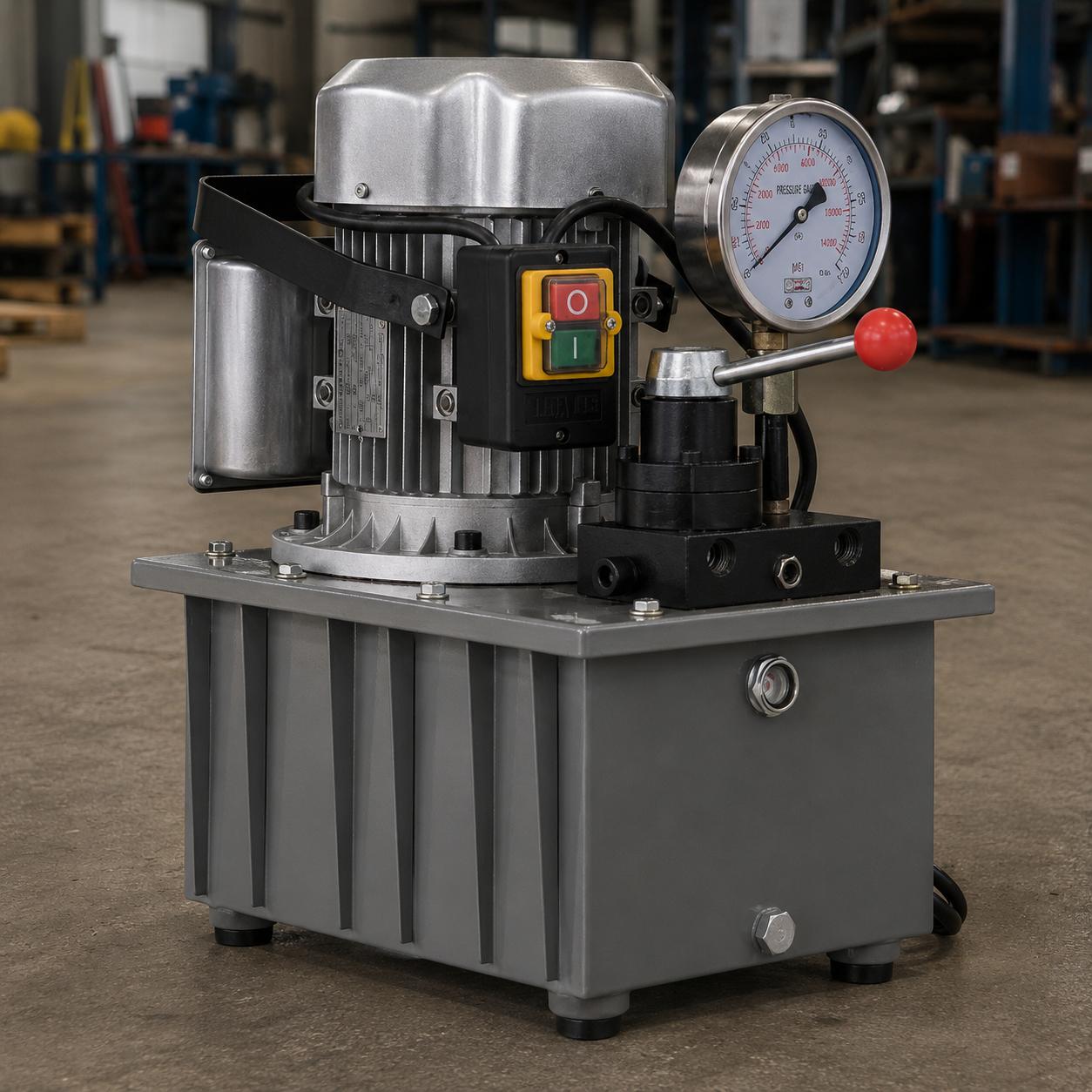

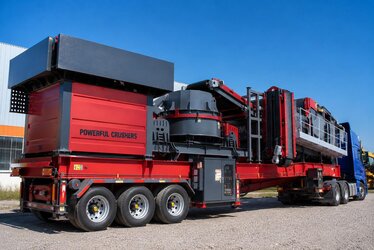
Mobile crushers are among the most critical production assets in quarries, mining sites and construction-waste recycling yards where grid electricity is simply not available. On these sites the entire crushing and screening line is driven either by an onboard diesel-electric hybrid system or by an external generator. This is exactly where choosing the correct electric motor becomes an engineering decision that directly governs site productivity, fuel cost and downtime. A motor selected at the wrong power rating or with the wrong starting method will overwhelm the generator, cause voltage collapse at start-up and leave the site idle for hours.
In this guide we cover every dimension of motor selection for generator-fed and hybrid-driven mobile crushing plants: from the power demand of the main crusher to correctly sizing the feeder, screen and conveyor motors, from balancing starting current against generator kVA to selecting cast-iron frames that withstand dust and vibration. As a manufacturer and supplier, HEM Motor delivers ruggedized crusher-duty motors from stock with fast shipment.
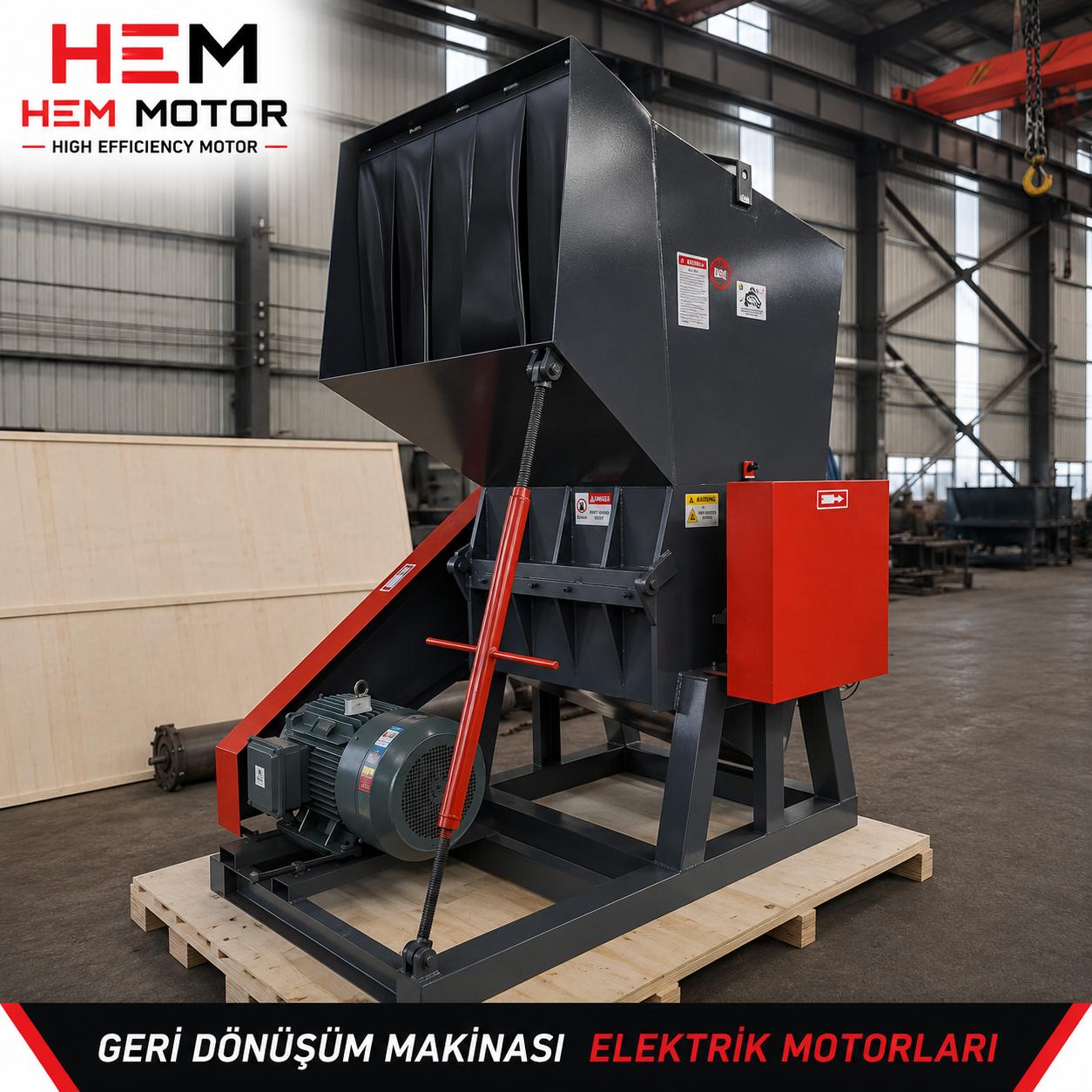
The Difference Between Diesel-Electric Hybrid and Generator-Fed Systems
Drive architecture on mobile crushing plants generally follows one of three approaches, and the crusher motor you select depends on that architecture. The first approach is fully diesel-hydraulic drive, where there is almost no electric motor. The second and most common approach today is the diesel-electric hybrid system: the onboard diesel engine spins a generator, and the electricity produced feeds separate electric motors on the crusher, feeder, screen and conveyors. The third approach is running the plant entirely from an external generator-fed or grid connection.
The main reasons hybrid and generator-fed systems favour electric drive are that electric drive is more efficient than hydraulic drive, generates less heat loss, lowers maintenance cost and allows each unit to be controlled independently. However, these advantages are only realised when the motors are matched to the generator capacity. A motor fed from the practically unlimited grid behaves differently from one drawing on a limited generator source, so the site engineering is different.
Why Ruggedized Motors Are Essential
Unlike fixed factory environments, mobile crushing plants operate under constant vibration, heavy dust, impact loads and outdoor humidity and temperature swings. A standard general-purpose motor cannot survive long on such a site. Motors used on a stone crushing line are expected to have cast-iron frames, IP55 and where necessary IP65 protection, Class F insulation and reinforced bearings. To send the right motor to site, the safest starting point is a product family built specifically for this duty, such as impact-resistant stone-crushing plant motors.
Why Starting Current vs Generator kVA Balance Matters
The most common problem on mobile crusher sites does not come from the motor's rated power but from its behaviour at start-up. A directly started (DOL) asynchronous motor draws a starting current of roughly 6-8 times its rated current at the moment of first movement. While this is no issue on the grid, on a limited-capacity generator it causes sudden voltage collapse, frequency drop and even a protective shutdown of the generator.
That is why the fundamental rule in generator-fed systems is to size the generator so that it can supply the starting current of the largest motor it must feed. In practice the generator kVA value is selected well above the motor's rated power when direct-on-line starting is used. To make this calculation soundly, review the criteria for correctly matching generator kVA with motor kW in our dedicated guide on matching generator kVA to motor kW.
- Start the largest motor first: Starting the heaviest load, such as the crusher motor, while the others are stopped reduces the instantaneous load on the generator.
- Apply staged starting: Bringing the feeder, screen and conveyor motors online in sequence rather than all at once prevents voltage collapse.
- Choose the starting method: Using a soft starter or star-delta significantly lowers the starting current.
- Account for power factor: The generator must supply both active and reactive power; a motor running at light load uses the generator inefficiently.
- Monitor frequency stability: If frequency drops below 50 Hz on an overloaded generator, motor torque and cooling performance deteriorate.
Soft Starter or Star-Delta: Which One on Site?
The two most practical ways to manage starting current are star-delta and soft starter starters. In the star-delta method the motor starts at reduced voltage in star connection, then switches to delta as it approaches speed; this reduces starting current to roughly one third. It is economical and widely used, but it produces a current surge at the transition moment and requires the motor to have a six-terminal terminal box.
A soft starter raises the voltage on a smooth ramp, minimising both starting current and mechanical shock. On sites where impact loads such as mobile crushers are started frequently, a soft starter protects both the generator and the belt-pulley and gear assembly. For a detailed comparison of starting methods, see our guide on crusher motor starting options. In general, soft starters are preferred on generator-fed mobile plants because they minimise voltage collapse.
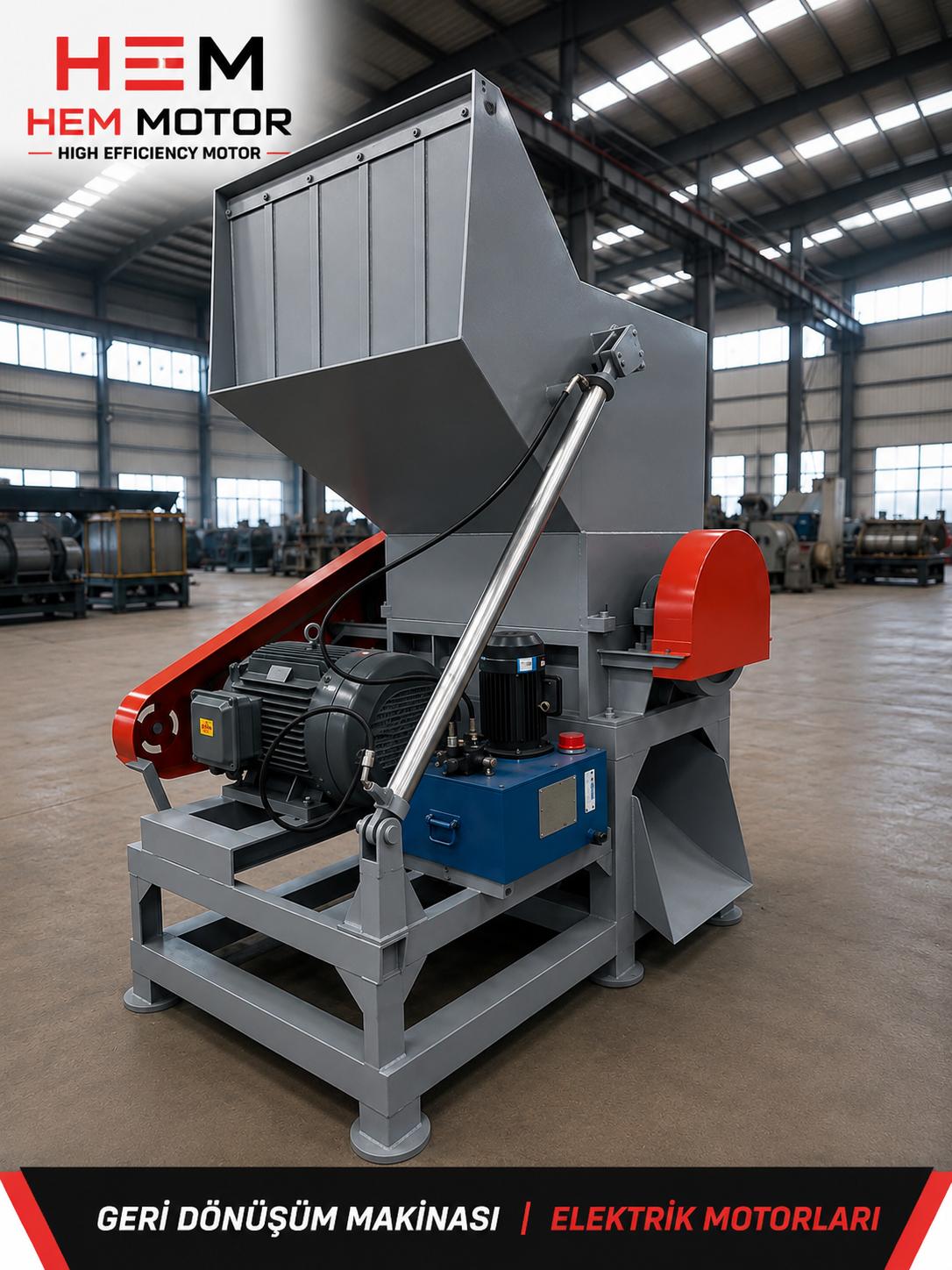
Motor Power and Speed Selection by Crusher Type
The crusher types used in mobile plants have different load characteristics, and this directly affects motor selection. Jaw crushers operate with high inertia and a flywheel and present an impact load profile; here high-starting-torque motors and designs that benefit from flywheel inertia are preferred. Impact crushers run with high-speed rotors and experience sudden load variations. Cone crushers, by contrast, draw a continuous and relatively balanced load.
Therefore the rated power, pole count and speed are determined differently for each crusher type. Jaw crushers generally use lower-speed 4- or 6-pole motors, while impact crushers tend to use 4-pole motors depending on the application. Correct power sizing requires evaluating the crusher capacity, the hardness of the feed material and the desired product size together. For the details of determining power by crusher type, our guide on selecting crusher motor kW for jaw, impact and cone crushers is a solid reference.
Auxiliary Motors: Feeder, Screen and Conveyor
In a mobile crushing plant it is not only the main crusher but also the vibrating feeder, the screen (vibrating screen) and several belt conveyors that are driven by electric motors. The combined power of these auxiliary motors often approaches that of the main crusher and must always be accounted for in generator sizing. Vibration motors need high vibration resistance, while conveyor motors need high starting torque and continuous-duty (S1) capability. When planning a motor package for the whole site, an approach centred on motor supply for portable mobile crusher plants ensures main and auxiliary motors are treated as one system.
Voltage, Frequency Stability and Motor Derating
In generator-fed systems voltage and frequency can be more variable than on the grid. As the generator runs close to full load, deviations in voltage and frequency may appear. Motors are designed for a specific voltage and frequency tolerance; once this tolerance is exceeded, torque, heating and efficiency are adversely affected. A frequency drop below 50 Hz reduces motor speed and the efficiency of the cooling fan, while a voltage drop increases current and heating.
In addition, at high-altitude sites and in hot environments the motor may need to be run somewhat below its rated power (derating), because thin air makes cooling harder. Since mobile plants are often deployed at varying altitudes and temperatures, it is wise to leave some safety margin in motor selection. For typical problems and solutions on generator-powered sites, you can also review our content on motor selection on generator-powered sites.
Field Reality: Stock, Fast Shipment and Redundancy
Mobile crushing plants often operate far from cities and service points. On these sites a single motor failure means the entire crushing line stops, and the downtime cost is very high. That is why one of the most critical aspects of field reality is keeping critical spare motors in stock. As HEM Motor, we supply cast-iron-frame, reinforced-bearing motors suitable for crusher duty from stock and deliver them to site with fast shipment. For current electric motor prices and stock availability, you can contact our sales team.
A sound supply plan includes keeping spares of the most failure-prone power-speed combinations on site or at the nearest depot, selecting motors with exact dimensional compatibility (IEC frame, shaft diameter, flange type), and communicating nameplate information clearly before ordering. This way a replacement motor can be commissioned within minutes rather than hours when a failure occurs.
Nameplate Reading and IEC Dimensional Compatibility for Correct Replacement
When a motor fails on a mobile crushing plant, the replacement motor sent to site must match not only in power and speed but also in mechanical dimensions. Otherwise the new motor cannot be fitted to the existing belt-pulley, coupling or gearbox assembly, and the site is forced to wait for hours. That is why reading the existing motor's nameplate completely before ordering is of great importance.
The essential information to read from the nameplate includes rated power (kW), speed (rpm), pole count, voltage and frequency, rated current, power factor, IEC frame size, mounting type (B3, B5, B35), shaft diameter, protection class (IP) and insulation class. All of this information ensures the right motor reaches site and the replacement is completed without trouble. In mobile plants in particular, frame-size and shaft-diameter compatibility are critical for the motor to seat properly in the mechanical assembly.
As HEM Motor, we identify the exact equivalent motor from the nameplate information our customers provide, and where necessary we recommend alternative mounting types. This way the field crew can be confident that they have requested the correct part at the moment of failure, and downtime is minimised. Determining the correct replacement motor is one of the most effective ways to reduce a mobile crushing plant's total operating cost.
Auxiliary Equipment and Protection Devices
Field reliability is determined as much by the equipment that feeds and protects the motor as by the motor itself. Thermal overload relays, motor protection circuit breakers, phase-sequence protection relays and winding-temperature monitoring elements (PTC thermistor or PT100) protect the motor against overload, phase loss and overheating. Because voltage and frequency fluctuations are more frequent in generator-fed systems, these protection devices become even more critical. A phase loss or voltage collapse can quickly burn out the motor winding if protection does not trip.
For this reason, planning which protection devices will be used together with the motor order is decisive for long life and safe operation on site. A correctly sized thermal protection both protects the motor and safely stops the line in risky situations on the generator. Planning the entire motor fleet of a mobile crushing plant with this holistic view protects both the investment and production continuity.
Frequently Asked Questions
How many kVA generator is needed for a generator-fed mobile crusher?
This depends on the power of the largest motor to be fed and the starting method. With direct-on-line (DOL) starting, the generator kVA value is selected well above the motor power to cover the largest motor's starting current. This margin decreases when a soft starter or star-delta is used. The combined load and power factor of all motors running simultaneously must also be accounted for. For correct matching, starting current and generator kVA must be evaluated together.
Which protection class and frame should mobile crusher motors use?
Because of heavy dust, vibration and outdoor conditions, cast-iron-frame motors with at least IP55 protection are preferred. In very dusty applications or where high-pressure washing occurs, IP65 protection is safer. Class F insulation and a reinforced bearing structure extend motor life under impact load and continuous operation. Standard general-purpose motors are not durable enough for these field conditions.
Is a soft starter or star-delta more suitable?
On generator-fed mobile plants a soft starter is generally more suitable, because it raises voltage on a smooth ramp, minimising both starting current and mechanical shock and preventing voltage collapse. Star-delta is a more economical solution but produces a current surge at the transition moment and requires the motor to have a six-terminal terminal box. For frequently started impact loads, a soft starter better protects both the generator and the mechanical transmission components.