English
 Türkçe

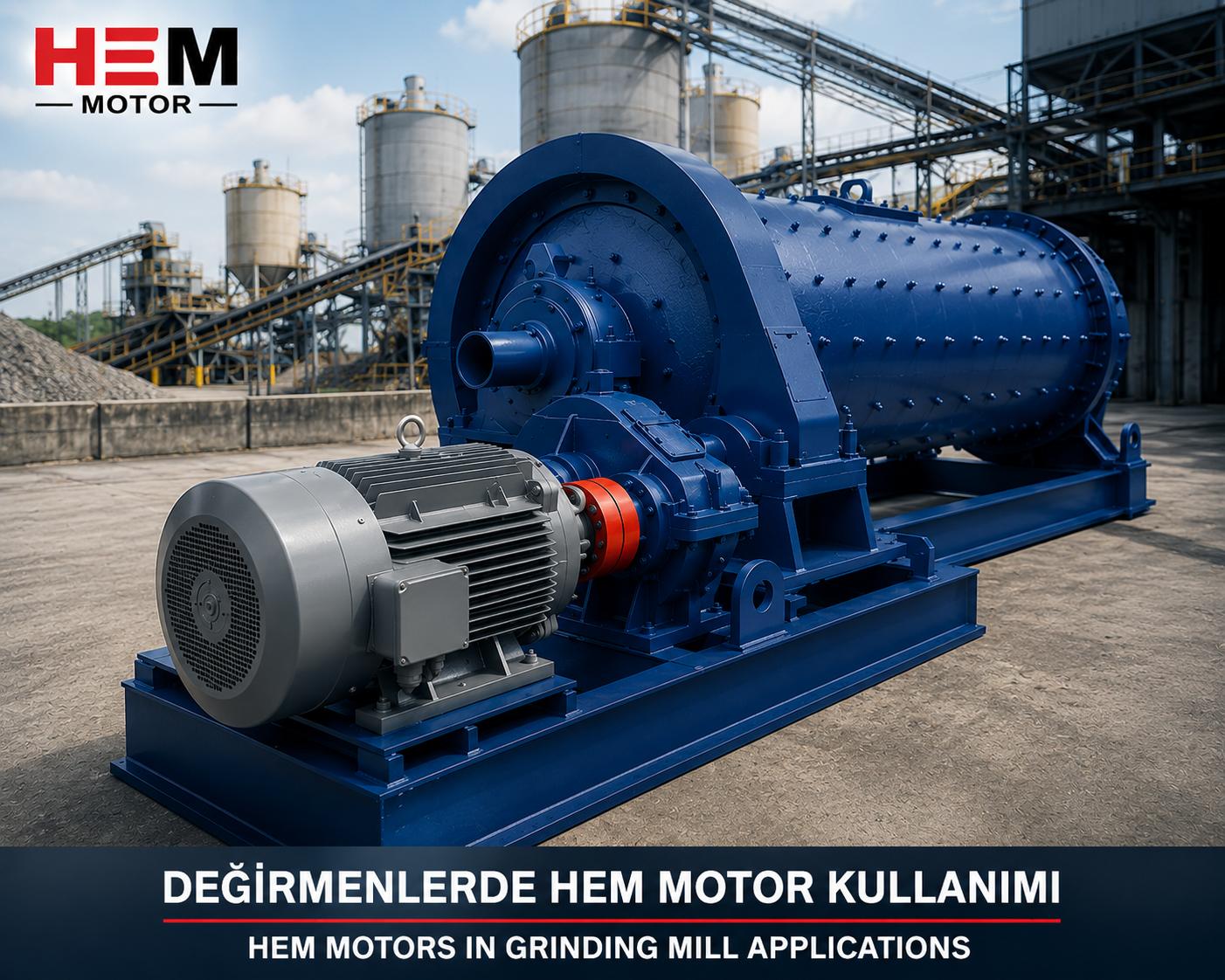

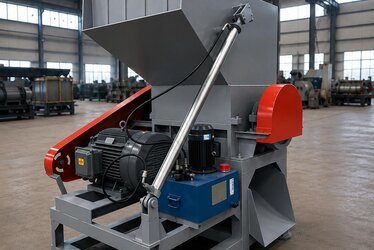
In mine and ore preparation plants, the screw (spiral/helical) conveyor is equipment that moves material horizontally or at an incline from one point to another and must withstand abrasive, heavy conditions. The electric motor that drives this conveyor must produce high torque, resist wear and dust, and often run continuously (continuous duty). A wrong motor selection on a screw conveyor leads to the motor stalling, frequent failures and costly production stoppages. In this article we examine motor selection for a mine and ore screw conveyor in terms of torque demand, speed, gearbox compatibility, protection class and correct supply, from the perspective of an electric motor manufacturer and seller. For current electric motor prices and our mining motor range, you can review our product pages.
The Demands the Screw Conveyor Places on the Motor
A screw conveyor is a simple but demanding system in which a rotating screw (spiral) inside a tube or trough pushes the material. In a mine and ore application the conveyed material is heavy, abrasive, moist and of variable particle size. This places special demands on the motor:
- High torque: A full screw requires high torque due to the weight and friction of the material; the torque demand peaks especially at loaded start-up.
- Loaded start-up: The conveyor often stays full and must start from the full condition; this requires a high starting (locked-rotor) torque.
- Continuous duty (S1): Mine plant lines run uninterrupted for long periods; the motor must reach thermal equilibrium and run at that temperature.
- Wear and dust: The environment is dusty and abrasive; the motor and its sealing must withstand this.
Torque Demand and Low Speed: Operating with a Gearbox
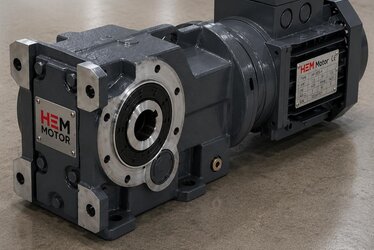
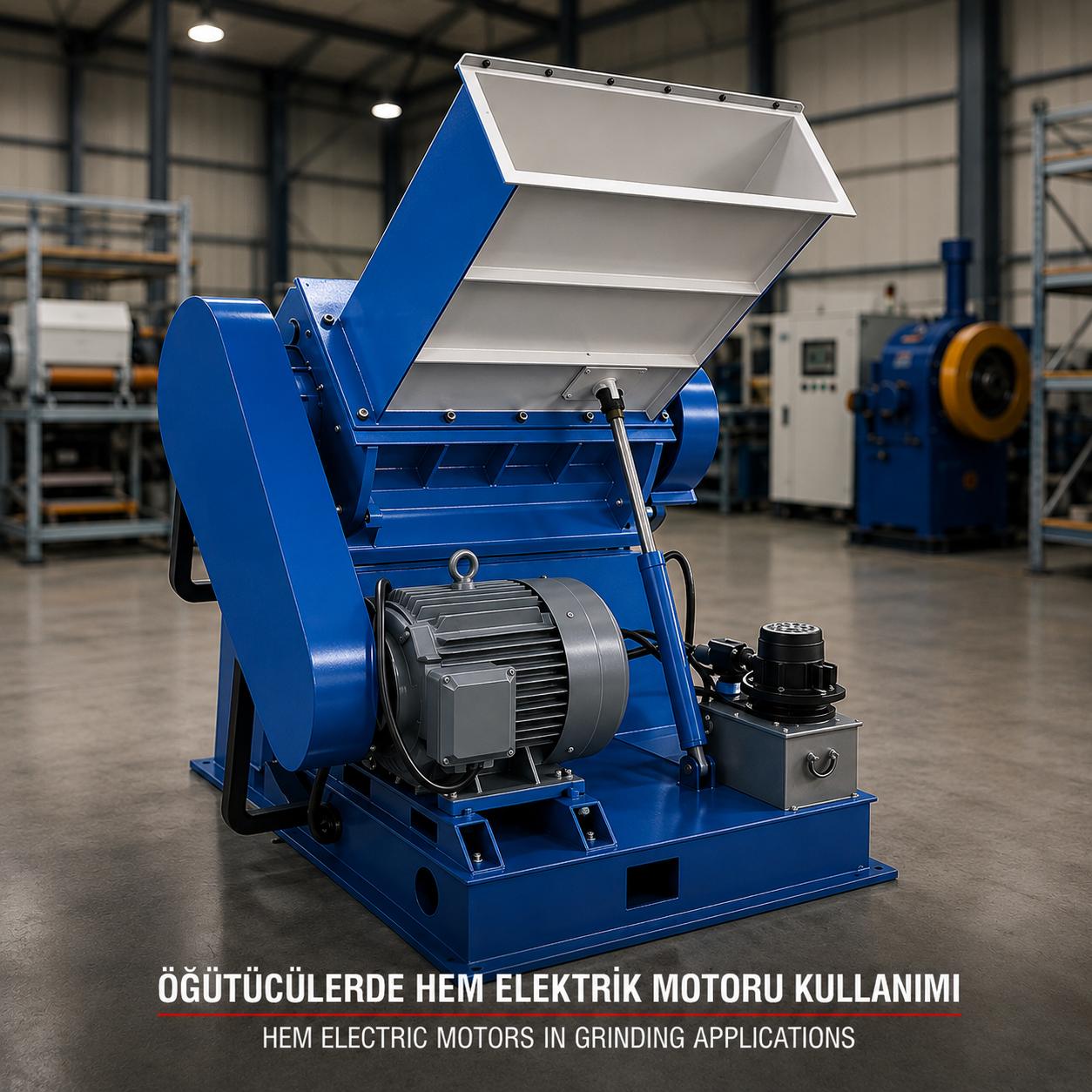
A screw conveyor requires high torque at low speed. For this reason the motor is almost always used together with a gearbox. The motor turns at high speed, the gearbox reduces the speed and increases the torque, and the low speed/high torque the conveyor needs is obtained at the output.
Motor + Gearbox Matching
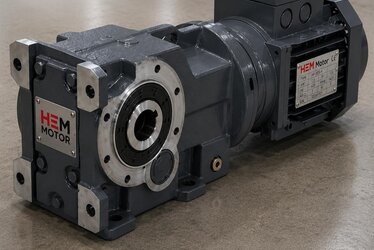
- Helical bevel gearbox: Frequently preferred in screw conveyors with its 90-degree power output and high torque capacity.
- Worm gearbox: Used in applications requiring a high reduction ratio and compact build.
- Reduction ratio: Selected according to the desired output speed; a high ratio means low output speed and high torque.
- Service factor: For heavy, pulsating loads such as mine and ore, the gearbox service factor should be selected high.
Motor power should be selected not only by the continuous running torque but also by the loaded start-up and peak torque demand; otherwise a full conveyor stalls the motor at start-up. For high torque and continuous duty in heavy service, our article on high torque and heavy duty in mine and ore mill motors offers a complementary framework.
Wet and Abrasive Environment: Protection Class and Sealing
In mine and ore plants, the screw conveyor often carries moist, muddy and abrasive material. For the motor to operate with a long life in this environment, protection and frame features are critically important:
- IP55 protection and above: The motor interior must be protected against dust and water spray; in very wet environments a higher IP should be evaluated.
- Cast iron frame: A cast iron frame resistant to impact and wear, dissipating heat well, provides long life in heavy service.
- Corrosion protection: In a moist and abrasive environment, the frame paint and coating must be corrosion resistant.
- Terminal sealing: The correct cable gland and a sealed terminal box prevent dust and moisture from entering.
Low-speed screw drives in wet and abrasive environments are very common in aggregate and mine plants; we covered this in detail in our articles on aggregate washing sand screw motor selection and spiral screw classifier drive motor.
Start-Up, Starting Method and Protection
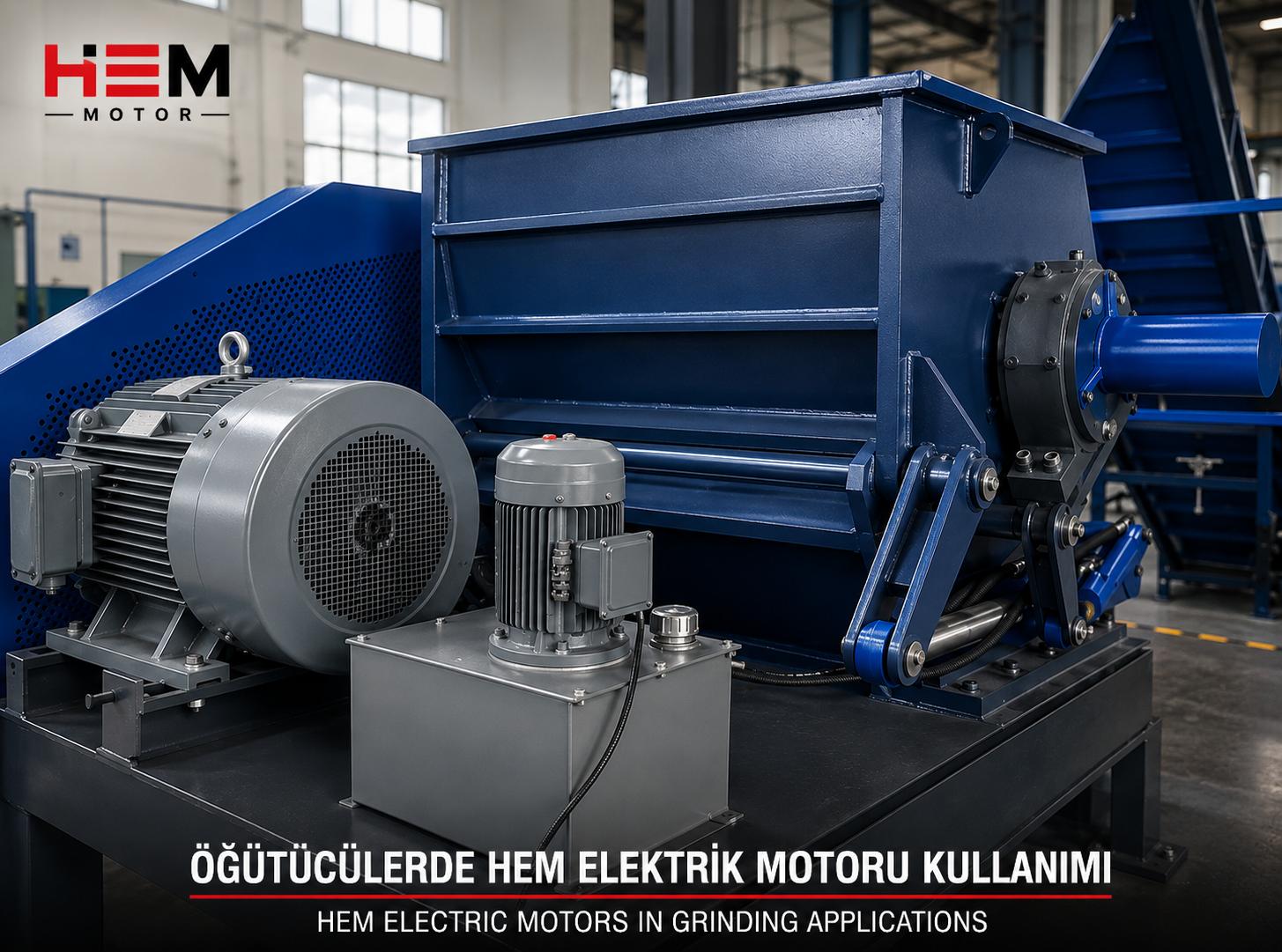
The start-up of a full screw conveyor is the moment the motor is most stressed. At loaded start-up there is high starting torque and high starting current. Therefore the starting method and protection must be selected carefully:
- Starting method: In direct-on-line (DOL) starting the starting current is high; star-delta or a soft starter reduces the starting current but also reduces torque in the star position, so it must be selected carefully for loaded start-up.
- Thermal protection: For frequent and heavy starts, the thermal relay should be of a trip class suited to the motor's start-up time.
- Staggered starting: If there are many motors in the plant, staggered (stepped) starting reduces the total starting current and power demand.
For the logic of staggered starting in a multi-motor plant, our article on staggered (stepped) starting in a crusher plant offers an applicable approach.
Factors That Determine Power: Capacity, Incline and Material
The power of a screw conveyor motor is determined by the amount and properties of the material conveyed. If two conveyors of the same length run with different material and different capacity, they require very different power motors. The main factors considered in power calculation are:
- Conveying capacity: As the amount of material conveyed per unit time rises, the required power increases.
- Conveyor length: The longer the distance the material is conveyed, the more friction and therefore power increase.
- Incline: Compared with a horizontal conveyor, an inclined (upward-conveying) conveyor requires significantly more power because it does the work of lifting the material.
- Material properties: The ore's density, moisture, stickiness and abrasiveness directly affect the friction coefficient and power need.
- Fill ratio: How full the screw runs changes the torque and power demand.
A motor selected without correctly evaluating these factors either becomes oversized and runs at a poor power factor, or remains insufficient and cannot lift a full conveyor. When calculating the power required for an application, our article on motor power calculation for pump, fan and conveyor is a good starting point.
Challenges the Motor Faces in a Mine Plant
Mine and ore plants are one of the most demanding operating environments for an electric motor in Türkiye. In this environment where dust, moisture, vibration and continuous load are combined, motor selection must be done far more carefully than in an ordinary industrial application:
- Excessive dust: Ore dust impairs the motor's cooling and, if the sealing is weak, enters and damages the winding.
- Moisture and mud: In wet processes (washing, classifying), the motor and terminal box must be protected against water.
- Vibration and impact: A large piece entering the conveyor or a blockage imposes a shock load on the motor.
- Long operating time: Mine lines often do not stop throughout a shift; continuous duty and good cooling are essential.
Our article in which we examined motor protection against dust, moisture and impact in this environment in detail, motor protection in a stone quarry and mine site, offers practical recommendations for long life in the field. To manage continuous operation and overheating on a dusty site, our guide on motor cooling and overheating in a crusher plant is complementary.
Correct Supply: Stock, Redundancy and Critical Stock
In a mine and ore plant, the failure of a screw conveyor motor stops the line and causes major production loss. As an electric motor manufacturer and seller, the points we emphasize on the supply side are:
- Exact equivalent: An exact equivalent recommendation based on the existing motor's nameplate data and mounting dimensions.
- Critical stock: Keeping a spare of line-stopping critical motors on site or within fast supply.
- Supply contract: A supply plan that clarifies redundancy and delivery assurance in continuously running plants.
- Heavy-duty range: Mining motor options with cast iron frame, high torque and suitability for continuous duty.
For redundancy and critical stock assurance in mining, our article on motor supply contracts in mining offers a supply approach that reduces plant downtime risk. You can find the heavy-duty mining motor range in the HEM Motor product catalog.
Continuous Duty, Cooling and Thermal Management
In a mine and ore plant, the screw conveyor often almost never stops during a shift. This continuous duty (S1) means the motor reaches thermal equilibrium and runs for hours at that temperature. In this environment where dust impairs cooling, thermal management is one of the most critical issues determining the motor's lifetime:
- Cleaning the cooling fins: Ore dust sticks to the motor's cooling fins and reduces heat dissipation; periodic cleaning is essential.
- Insulation and temperature margin: Class F insulation lets the motor run with a wider thermal margin; this means a safety margin in a dusty environment.
- Thermal protection: Thermal protection placed in the winding (PTC/PT100) protects the motor against overheating and warns before a failure.
- Ambient temperature: The motor must be selected for the expected ambient temperature; in hot and dusty sites, derating should be evaluated.
When thermal management is set up correctly, the motor completes its expected lifetime even in a harsh environment such as a mine. Preventing overheating under continuous load eliminates one of the most frequent causes of unplanned stoppages.
Failure and Emergency Replacement: Keeping the Line Running
When a screw conveyor motor fails, the whole line often stops. Therefore a fast and correct replacement at the moment of failure minimizes production loss. Points to watch in emergency replacement:
- Nameplate data: The power, speed, frame and mounting type on the failed motor's nameplate are the basic data for an exact equivalent.
- Mechanical compatibility: The shaft diameter, key, flange dimension and terminal orientation must be confirmed so the new motor fits the gearbox without trouble.
- Stock readiness: Having spares of critical motors predetermined saves hours at the moment of failure.
For emergency replacement and an exact swap checklist on a conveyor motor, our article on conveyor belt motor emergency replacement and exact swap offers a checklist that can be applied directly in the field.
Frequently Asked Questions
Should I buy the screw conveyor motor directly or with a gearbox?
A screw conveyor requires high torque at low speed; therefore a motor + gearbox is almost always used together. The motor turns at high speed, and the gearbox reduces the speed and increases the torque. Selecting the correct reduction ratio and a gearbox with an adequate service factor is critical to safely meet the loaded start-up and continuous operation of a full conveyor.
Is it enough to select motor power by the continuous running torque?
No. A screw conveyor usually stays full and must start from the full condition; therefore the loaded start-up and peak torque demand must also be considered. A motor selected only by the continuous running torque may be stressed or stall at the start-up of a full conveyor. Starting torque and the starting method must be evaluated together.
Which protection class is needed in a wet and abrasive environment?
In a mine and ore plant, dust, moisture and abrasive material are intense; therefore at least IP55 protection, a cast iron frame and corrosion-resistant paint/coating are recommended. In very wet environments, higher IP values should be evaluated and the terminal box should be sealed with the correct cable gland. These measures ensure the motor operates with a long life in a harsh environment.