English
 Türkçe

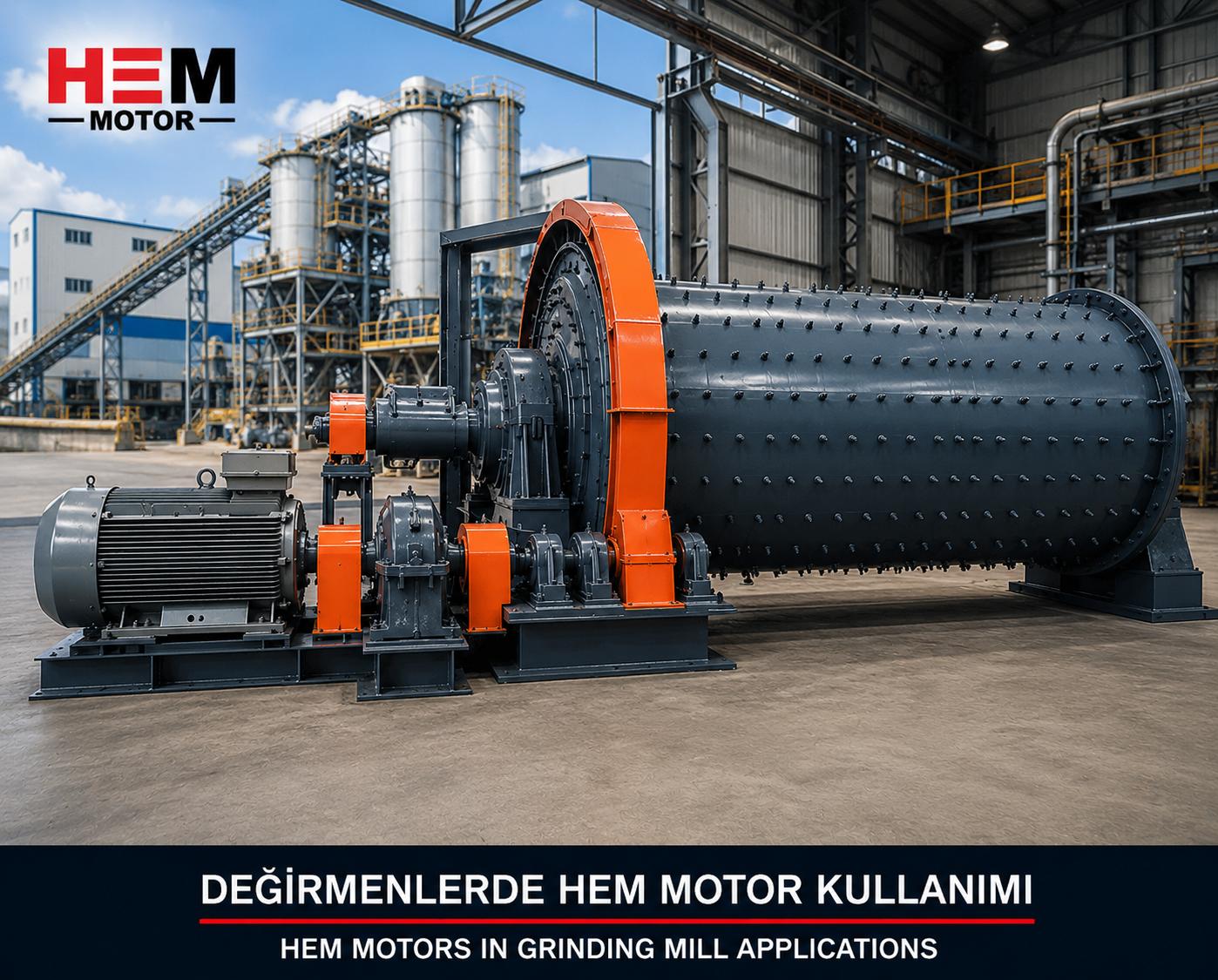

In mining and ore-beneficiation plants, removing the water from the fine-grained slurry produced after grinding and flotation is a critical step. Filter press (dewatering) systems do this job: they compress the slurry under high pressure to separate the water and leave behind a transportable, storable cake. The hydraulic unit and feed pumps that perform this compression are driven by electric motors operating under heavy-duty conditions. In this guide we address mining and ore filter press (dewatering) drive motor selection in terms of high torque, dust, continuous duty and correct supply, explaining how to adapt your motor to the harsh mining environment.
At HEM Motor we supply motors for the mining sector from stock, from 0.55 kW up to 355 kW, in IE3 and IE4 efficiency classes, with cast-iron frames, high starting torque and reinforced bearings. First, let us understand what the filter press application demands of the motor.
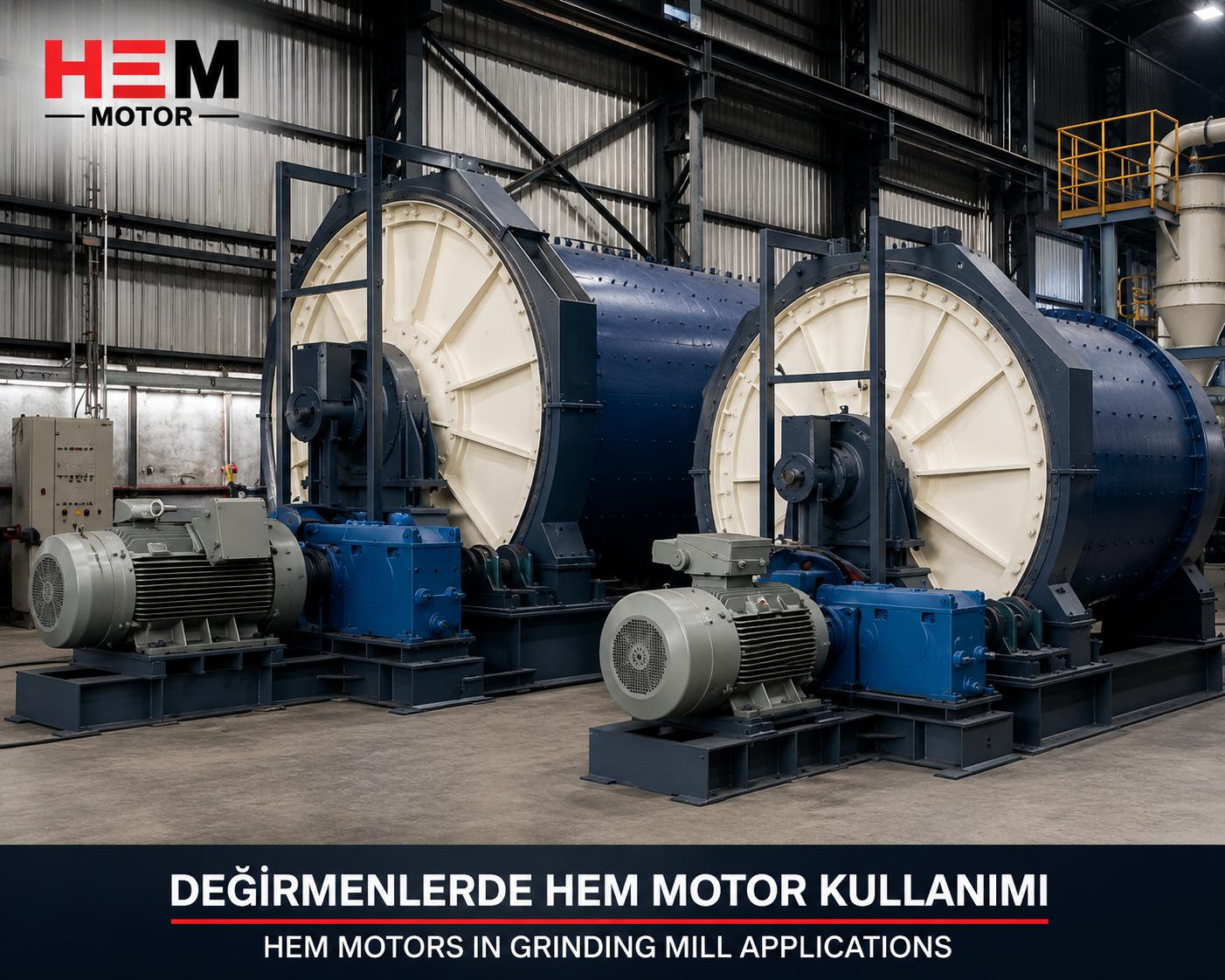
What Job Does the Motor Do in a Filter Press Drive?
In a filter press system the electric motor is usually found at two main points: the pump motor feeding the hydraulic unit, and the feed-pump motor delivering the slurry to the press. The hydraulic unit clamps the plates together under high pressure; the pump producing this pressure requires the motor to produce high and stable torque. The load is not constant during the compression cycle; as the pressure rises, the power drawn by the pump and therefore the motor increases.
For this reason a filter press drive motor must be suitable both for high starting torque and for stable operation under changing load. Insufficient torque means a drop in compression pressure and inadequate dewatering of the cake; this directly affects process efficiency.
High Torque and Speed Selection
In hydraulic pump drives, 4-pole (1500 rpm) motors are generally preferred; they provide a good torque-speed balance. In heavy applications needing higher torque, 6-pole (1000 rpm) motors come into play. What matters is meeting not only the motor's rated power but also the torque demand during starting and compression.
- High starting torque: The motor must produce strong starting torque for the hydraulic pump to start under pressure.
- Robust rotor and reinforced bearings: Repeated compression cycles and vibration make bearing durability critical.
- Cast-iron frame: High mechanical strength against impact and vibration is essential in a mining environment.
We addressed the general logic of high-torque mining drives in our guide on mining and ore mill motors high-torque supply; the filter press application shares the same heavy-duty philosophy.
Protection Against Dust, Moisture and Corrosion
One of the biggest threats to electric motors on a mining site is fine ore dust and moisture. Dust clogs the cooling fins, causing the motor to overheat; if it reaches the windings it causes insulation damage. In a filter press environment there is also high humidity due to slurry and process water. Measures against these conditions:
- IP55 or higher protection: Standard protection against dust and splashing water; a higher class can be offered on request in harsher environments.
- Cast-iron frame: A structure resistant to corrosion and impact, suitable for open-field conditions.
- Tropicalized windings: Extend insulation life in high-humidity environments.
- Regular cleaning and cooling checks: Preventing dust buildup on the cooling fins preserves motor life.
We cover field protection measures against dust, moisture and impact in detail in our article on motor protection in stone quarries and mining sites.
Continuous Duty (S1) and Efficiency
Filter press plants are mostly part of an uninterrupted production line; the motors run continuously for long hours. For this reason S1 continuous duty type, class-F insulation and a structure resistant to continuous operation are essential. At the same time, the energy cost on a continuously running drive is very high; choosing an IE3 and, where possible, IE4 efficiency-class motor is both a legal requirement and an economic advantage. Because downtime cost is very high in mining plants, reliability and redundancy are as much a priority as efficiency in motor selection.
Supply and Redundancy Planning
The failure of a filter press motor halts the dewatering line and affects the entire production chain. For this reason supply planning in mining is an inseparable part of motor selection:
- Keep a spare motor in stock from the outset for critical drives.
- Define the motor's kW, poles, mounting type, shaft diameter and protection class clearly.
- Keep the existing motor's nameplate information for an exact replacement.
- Clarify the stock and lead-time plan in advance for long-term supply assurance.
We addressed supply continuity in mining in our article on motor supply contracts in mining. For motor options specific to the mining sector you can browse our mining-sector electric motor product group, and contact us for a heavy-duty motor and current electric motor prices.
The Other Motors on the Dewatering Line
A filter press plant has more than just the main hydraulic pump motor; the dewatering process relies on a chain of several motors working together. Mixers moving material from the slurry tank to the press, feed pumps, cake-transport conveyors and dust-collection blowers are parts of this chain. Each has a different load characteristic: a mixer demands high and variable torque, a conveyor demands continuous and balanced torque, and a blower runs on a fan characteristic. Because all of these motors are exposed to the dust and moisture of the mining environment, they must be selected with the same protection philosophy.
Correct selection of these auxiliary drives directly affects the efficiency of the main press. For example, if the feed pump falls short the press does not fill fully; if the mixer is weak the slurry is not fed homogeneously. We addressed the selection of motors other than the main crusher in crushing-screening plants in our article on screen, feeder and belt drive motors in crushing-screening plants; the auxiliary motors on the dewatering line require similarly holistic planning.
Reducing Failure and Downtime Cost
In mining, the cost of a motor failure is far beyond the price of the motor itself. When the dewatering line stops, the entire chain including grinding and flotation can become blocked, meaning hours or even days of production loss. Reducing downtime cost therefore requires planning far broader than motor selection:
- Spare motor stock: A spare motor in the same configuration should be kept ready for critical drives.
- Preventive maintenance: Bearings, insulation and cooling should be checked regularly; failure signs should be caught early.
- Protection hardware: Correctly set thermal and overload protection prevents a small problem from burning out the motor.
- Nameplate records: The nameplate information of all critical motors should be kept on record; it saves time in emergency replacement.
We addressed methods of reducing motor failure and downtime cost in crusher and mining plants in detail in our article on motor failure and downtime cost in crusher plants. The dewatering line shares the same redundancy logic.
Starting and Hydraulic Pump Start-Up
Because the filter press hydraulic pump starts under pressure, it requires the motor to produce a high starting torque. With direct-on-line (DOL) starting the motor draws a high inrush current; this can create problems especially in mining plants where the site electrical infrastructure is limited. For this reason, star-delta, soft-starter or frequency-drive starting is assessed in these applications. A frequency drive also offers the advantage of controlling pump pressure and providing energy savings.
We addressed the choice of starting method in heavy drives in our article on starting a crusher motor: soft starter, star-delta. The correct starting method protects both the motor from starting stress and the stability of the site electrical grid.
Mining Drive Supply with HEM Motor
Success in filter press and dewatering drives is the coming together of high torque, robust construction and uninterrupted supply. At HEM Motor we evaluate your mining application's torque profile, environmental conditions and continuous-duty requirement, and recommend your motor with a cast-iron frame, high starting torque, reinforced bearings and IE3/IE4 efficiency class. Our standards of 100% copper windings and class-F insulation ensure long, reliable service life in dusty and humid mining environments.
Cooling and Preventing Dust Buildup
One of the most frequent problems for a filter press motor operating in a mining environment is dust buildup on the cooling fins. The fan on the motor's rear end shield cools the motor by passing air over the fins on the frame. If fine ore dust accumulates on these fins, the airflow decreases and the motor runs much hotter than expected. High temperature wears the winding insulation and shortens the motor's life. For this reason, regular cleaning is an inseparable part of motor maintenance in a dusty mining environment.
The positioning of the motor is also important in reducing dust buildup. As far as possible, a position where dust does not fall directly on it and where airflow is free should be chosen. In very harsh environments, the motor's cooling solution should be assessed from the outset; if necessary, a higher protection class and a suitable cooling arrangement should be planned. During regular checks it should be verified that the fan is sound, the fins are clean and the motor is not overheating. These simple but critical measures ensure the motor runs long on the mining site.
Efficiency and Cost in Continuous Operation
Because filter press plants are part of uninterrupted production, the motors run continuously for long hours. This raises the energy cost far above the motor's purchase price. Choosing an IE3 and, where possible, IE4 efficiency-class motor is the most important long-term cost decision on a continuously running drive. A high-efficiency motor also heats up less; in a dusty and hot mining environment this indirectly preserves insulation life and reduces the risk of failure.
When evaluating the total cost of ownership, the purchase price, energy consumption, maintenance and expected life must be considered together. Because downtime cost is very high in mining, reliability and redundancy are at least as much a priority as efficiency. Supplying the right motor together with the right protection and a redundancy plan both reduces energy cost and secures production continuity. For this reason, filter press motor selection is not merely a technical decision but a holistic operating decision.
Frequently Asked Questions
Which speed is suitable for a filter press hydraulic pump?
In most filter press hydraulic drives a 4-pole (1500 rpm) motor is preferred; this speed provides a good torque-speed balance and is compatible with hydraulic pumps. In heavy applications needing higher torque, 6-pole (1000 rpm) may come into play. The correct choice should be made according to the pump speed recommended by the hydraulic-unit manufacturer and the system's pressure-flow profile. If you send us your system's requirements, we will determine the suitable speed and power together.
Is standard IP55 protection sufficient against mine dust?
IP55 is standard protection against dust and splashing water and is a suitable starting point in many mining applications. However, under conditions such as very heavy fine dust, an aggressive chemical environment or high-pressure washing, a higher protection class may be recommended on request. A cast-iron frame and tropicalized windings provide additional resistance to corrosion and moisture. In addition, regular cleaning of the cooling fins is critical to motor life whatever protection class is chosen. We will assess your environmental conditions and recommend the correct protection class.
If the filter press motor fails, how long does production stop?
This depends on your spare-motor plan. Because the dewatering line is part of uninterrupted production, the failure of a motor without a spare can halt the entire line until a replacement is procured, which means a very high downtime cost. For this reason we recommend keeping a spare motor in stock from the outset for critical mining drives. If you share the existing motor's nameplate information with us, we can quickly supply an exactly compatible replacement and create a stock plan for long-term supply assurance.