English
 Türkçe

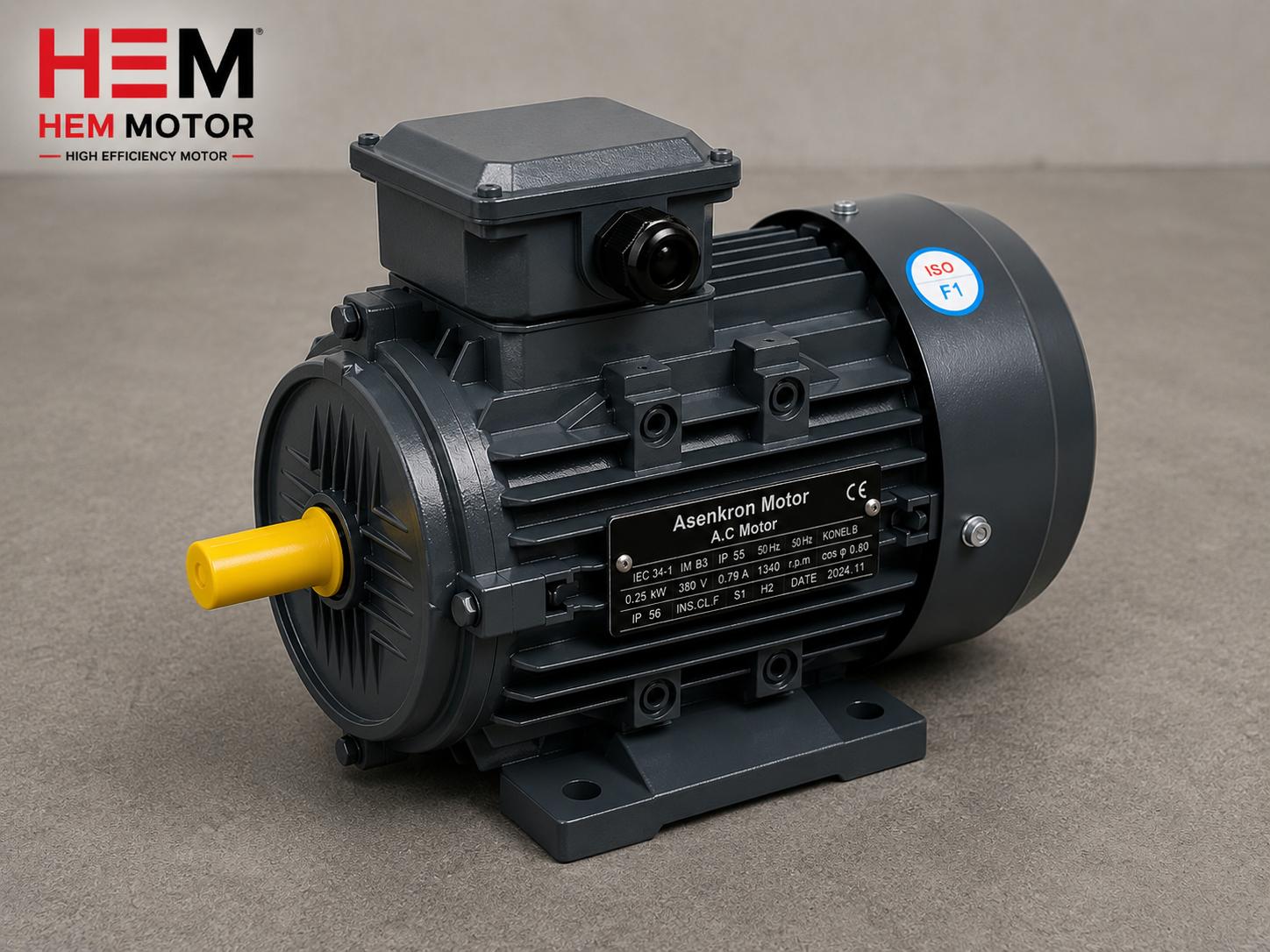

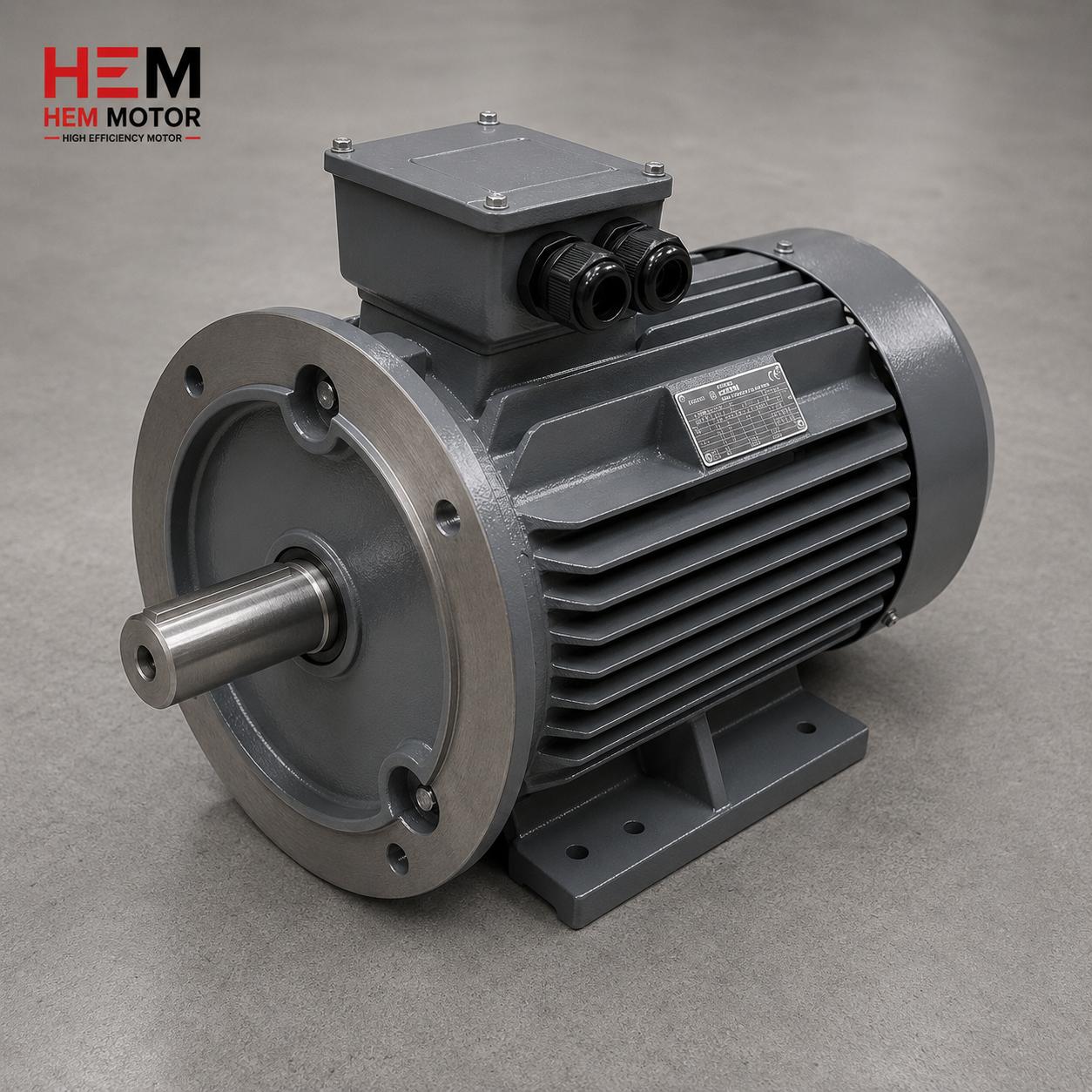
When you connect a cast iron electric motor to a pump, gearbox, fan or a custom machine, the most critical detail is often overlooked: the motor shaft. Even with the correct power and speed selected, an incorrectly specified shaft extension and shaft adapter means the motor will not seat on the machine, the coupling will not align, the pulley will slip, or the bearing will wear out prematurely. Especially in heavy-duty cast iron motors, the shaft is the single mechanical interface that carries torque, axial/radial load and vibration. In this guide we cover double shaft ends, shaft extension length, coupling matching and shaft adapter selection from both a technical and a correct-supply perspective.
At HEM Motor, with our identity as both a manufacturer and a seller, we see that most of the "the motor arrived but did not fit the machine" complaints come from missing shaft information at the order stage. This guide shows which dimensions to clarify before ordering, when a standard shaft is enough, and when a special shaft or adapter is required. For current electric motor prices and stock status, review our product pages and finalize the shaft options at the quotation stage.
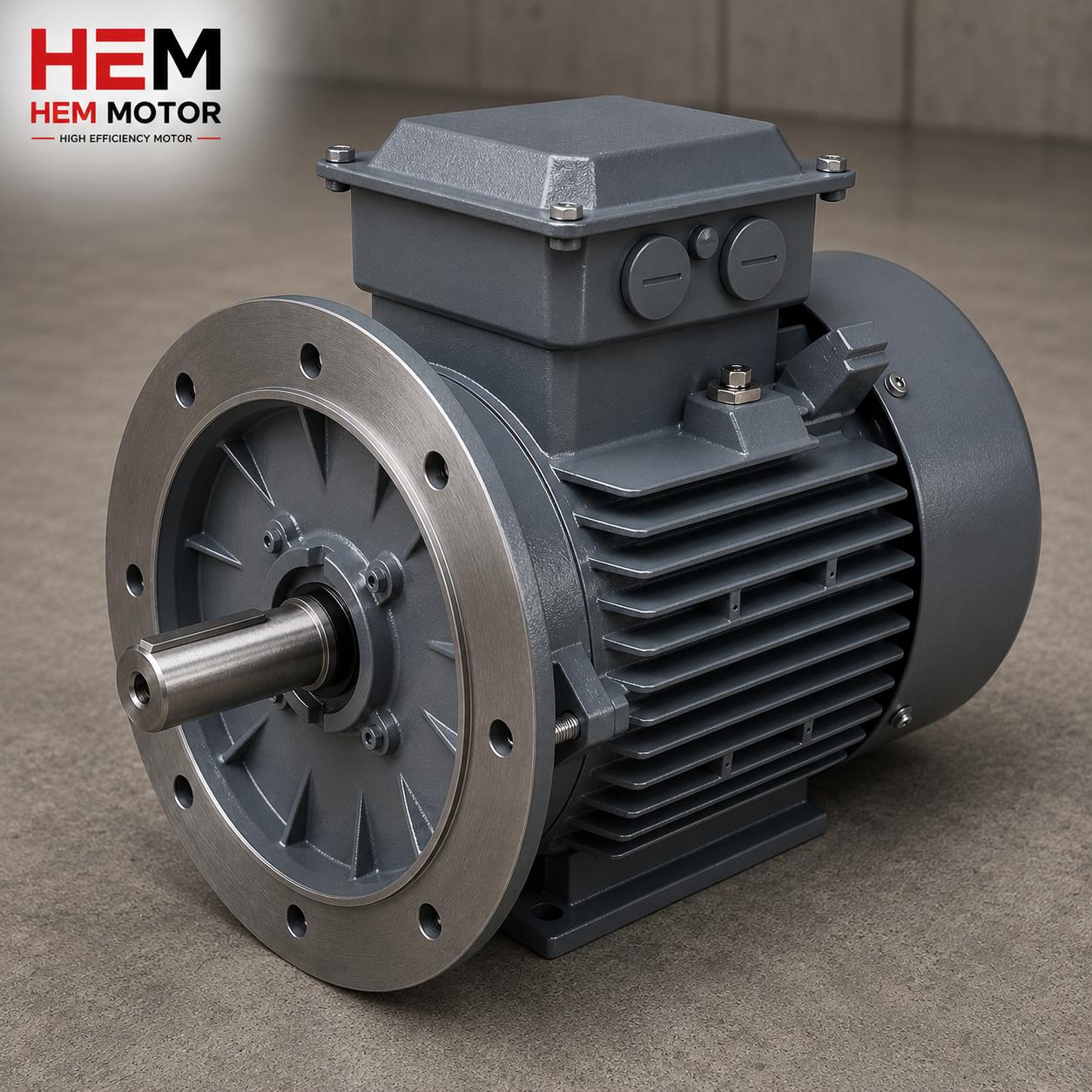
Shaft End Anatomy: What Is Standard, What Is Not?
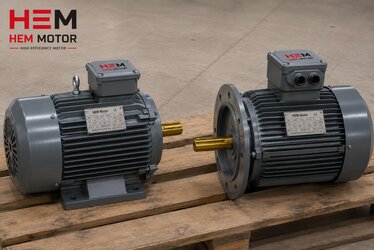
Cast iron motors built to IEC standards have a shaft end (D-end, drive side) with a defined diameter, length and keyway. These dimensions depend on the frame size: thin and short on small frames, thick and long on large frames. The standard shaft end is cylindrical, with a keyway to DIN 6885 and a center hole to DIN 332 at the tip.
Three Dimensions to Verify on the Shaft End
- Shaft diameter (D): The diameter on which the coupling, pulley or gearbox bore will seat. The tolerance class (usually k6 or j6) is decisive here.
- Shaft extension length (E): The length of the shaft protruding from the housing. The coupling hub or pulley must fit within this length.
- Key dimensions (width × height × length): Torque is transmitted through the key. The fit between keyway and key is critical.
When these three dimensions are correct, the mechanical seating of the motor on the machine is largely guaranteed. For more detail on the shaft diameter and key relationship, see our article on shaft diameter, key and coupling matching on cast iron motors.
When Is a Shaft Extension Needed?
The standard shaft extension length is sufficient for most applications. However, in some cases it falls short:
- Two drive elements on a single shaft: For example, if both a coupling and a small encoder pulley must sit on the same shaft, the standard length may not be enough.
- Long-hub couplings: Some high-torque flexible couplings have long hubs that require the shaft to protrude further.
- Non-standard machine interface: If a motor is being fitted in place of an old one and the machine was designed around the long shaft of the old motor, a shaft extension may be needed for a direct fit.
A shaft extension must be specified at the order stage, because a longer shaft increases the lever arm of the radial load on the bearing. This affects bearing life and shaft bending strength. On radial and axial load limits, our article on shaft radial and axial load limits and bearing life is a useful guide.
Double Shaft End: What Is It For?
On a standard motor the shaft protrudes only from the drive side (D-end); on the opposite side (N-end) sit the fan and cowl. With the double shaft end option, a shaft end is provided from the rear of the motor as well. This option makes the job much easier in many applications:
- Dual drive: The main load can be driven from one side and a secondary device (such as a lubrication pump or auxiliary fan) from the other.
- Feedback element mounting: An encoder or tachometer can be mounted on the rear shaft end for speed feedback.
- Manual turning: In some processes the rear shaft end offers a practical way to turn the motor by hand.
When choosing a double shaft end, the diameter, length and key dimensions of the rear shaft end must also be specified. For the detailed supply side of this option, see our article on double shaft extension and rear shaft end on cast iron motors.
Coupling Matching: The Bridge Between Shaft and Machine
The coupling connects the motor shaft to the driven machine shaft. Correct coupling matching ensures both torque transmission and tolerance of axial/angular misalignment. Key points when selecting a coupling on cast iron motors:
Coupling Type Selection
- Flexible coupling: Tolerates small misalignment and dampens vibration. Common in applications such as pumps and fans.
- Rigid coupling: Requires precise alignment but provides fully synchronous transmission. Preferred where alignment is perfect.
For alignment details in the flexible-versus-rigid coupling choice, we recommend our article on flexible or rigid coupling selection and shaft alignment.
Compatibility of Coupling Hub and Shaft Tolerance
The fit (interference/transition/clearance) between the coupling hub bore and the motor shaft diameter must be chosen correctly. The motor shaft is usually produced to k6 tolerance; the coupling hub forms a transition fit with an H7 bore. An incorrect fit either prevents the coupling from being fitted or causes play and wear during operation. For shaft tolerance and key standard, our article on shaft tolerance (k6/m6) and key (DIN 6885) provides comprehensive information.
Shaft Adapter: Adapting a Standard Shaft to a Different Diameter
In some cases the machine expects a different diameter than the motor's standard shaft. For example, an old machine's gearbox input was made for a specific diameter and the new motor's standard shaft does not match it. At this point there are two paths:
- Shaft adapter (shaft bushing): An intermediate sleeve fitted over the standard shaft, with the outside matching the machine diameter and the inside matching the motor shaft. A fast and economical solution, but it requires alignment and balance precision.
- Custom shaft order: Production of the motor at the desired diameter and length at the factory. A more robust solution and safer in terms of vibration, but it requires lead time.
The choice depends on vibration sensitivity, operating speed and lead-time pressure. In high-speed (3000 rpm) applications, preferring a custom shaft over an adapter is generally more correct for balance and safety.
Shaft Information to Clarify Before Ordering
At HEM Motor, to provide a correct and fast quotation, we recommend clarifying the following before ordering:
- Motor frame size and mounting type (B3, B5, B35).
- Shaft end diameter, extension length and tolerance class.
- Key dimensions and key standard.
- Is a double shaft end needed? Rear shaft dimensions.
- Coupling type and hub bore size.
- Shaft adapter or custom shaft preference.
- Operating speed and vibration sensitivity.
When this information is provided, a direct fit of the delivered motor to the machine is largely guaranteed. Correct mechanical matching both shortens assembly time and eliminates the risk of early failure. The lead-time difference between standard-shaft motors available from stock and projects requiring a custom shaft should also be planned at this stage.
Shaft-Related Errors in Assembly and Commissioning
Even when the shaft and coupling are correctly selected, errors during assembly lead to early failure. The most common ones:
- Fitting the coupling with a hammer: Instead of using the center hole on the shaft end and an appropriate puller/heating method, driving the coupling on with impact delivers an axial blow to the bearing and causes bearing damage.
- Misalignment: Angular or parallel misalignment quickly fatigues the bearing and coupling. A dial gauge or laser alignment should be used to avoid it.
- Wrong key length: When the key is shorter or longer than the keyway, torque transmission weakens and the keyway can be crushed.
On shaft end machining and the center hole, our article on shaft center hole (DIN 332) and shaft end machining explains the correct method for coupling and pulley mounting.
The Relationship Between Shaft Diameter and Frame Size
On cast iron motors, the shaft diameter is not arbitrary but standardized according to the frame size. A small-frame motor and a large-frame motor cannot have the same shaft diameter, because the shaft is sized in proportion to the torque and load it will carry. This standardization is a great convenience when looking for a replacement (equivalent) motor: a motor of the same frame size in most cases also brings the same shaft diameter and mounting dimensions.
However, care is needed on two points. First, some manufacturers may offer different power-speed combinations in the same frame size, in which case the shaft extension length may change. Second, when replacing an old motor with a new one, the old motor's shaft may have been specially machined; in this case the new motor's standard shaft may not fit the machine. For this reason, physically verifying the existing motor's shaft dimensions in replacement orders provides an additional assurance beyond the nameplate data.
- If the frame size is fixed, the shaft diameter is usually fixed; however, the shaft extension length may change with power-speed.
- The old motor's shaft may have been specially machined; physical measurement should be taken before replacement.
- Different pole counts in the same frame may require different shaft options.
Shaft Load in Belt-Pulley Drive
The shaft is not always connected directly with a coupling; in many applications belt-pulley drive is used. In belt drive, the load on the shaft end differs from coupling drive: belt tension applies a continuous radial (sideways) force to the shaft. This radial force directly affects the life of the shaft and especially of the drive-side bearing.
The following points are important in shaft end and bearing selection for belt drive:
- Pulley diameter: A small pulley requires higher belt tension to transmit the same torque, which increases the radial load.
- Pulley position: How far from the housing the pulley sits on the shaft end determines the moment arm on the bearing. The pulley should be fitted as close to the housing as possible.
- Number and type of belts: Multiple belts distribute the tension; but the total radial load must still stay within the bearing limit.
Therefore, in belt-pulley drive, not only the diameter of the shaft end but also the seating position of the pulley should be evaluated at the order stage. A wrong pulley position can shorten bearing life despite a correct-diameter shaft.
Shaft Material and Torque Transmission Strength
The shaft is the element that transmits the torque produced by the motor to the machine; therefore its material is a critical quality marker. In quality cast iron motors, the shaft is produced from a suitable steel grade (commonly C45 and similar tempered steels). A shaft made from low-quality material may be subject to torsion at high torque, crushing in the keyway, or fatigue fracture.
Especially in impact and variable-torque applications (press, crusher, sudden-load conveyor), the strength of the shaft material becomes even more important. In these applications, a higher-strength shaft option beyond the standard shaft may be needed. Sharing the torque character of the application at the order stage ensures the correct shaft material is selected.
Frequently Asked Questions
Do standard-shaft motors come from stock, and how long does a custom shaft take?
Cast iron motors with IEC standard shaft dimensions are mostly supplied quickly from stock. Options such as a special diameter, special extension length or a double shaft end require production and therefore create lead time. For this reason, reporting the need for a custom shaft early in project planning speeds up delivery.
Is it safe to use a shaft adapter?
In low- and medium-speed applications, a shaft adapter produced to the correct tolerance and balanced can be used safely. However, in high-speed applications with high vibration sensitivity, preferring a factory-produced custom shaft over an adapter is healthier. The decision should be made based on operating speed and machine sensitivity.
Which fit should I use to mount the coupling?
The general rule is k6 for the motor shaft and H7 for the coupling hub bore, which gives a transition fit. The coupling is fitted by heating or with a puller; it should not be driven on with impact. The application's torque and speed are decisive in the fit and tolerance choice; sharing this information before ordering ensures correct matching.
Shaft extension, double shaft end, coupling matching and shaft adapter are the foundation of connecting a cast iron motor correctly to the machine. At HEM Motor, as both manufacturer and seller, by clarifying your shaft information at the order stage we supply you with a directly compatible motor, from stock or to lead time. Correct shaft selection shortens assembly time, extends bearing life and reduces downtime cost.