English
 Türkçe

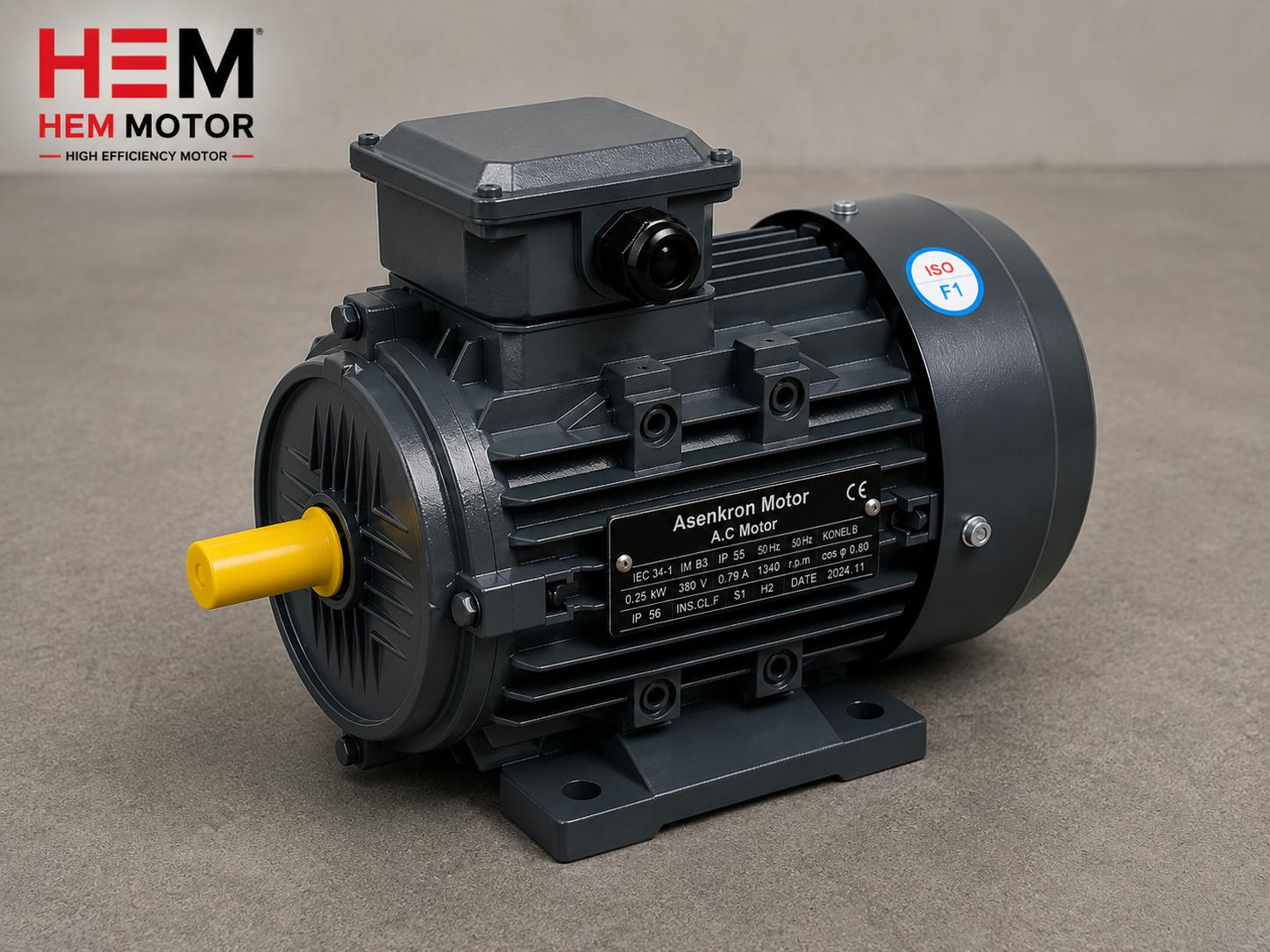

The frame of an electric motor is far more than a protective shell; it is the mechanical backbone of the machine. It carries the stator pack, aligns the bearing housings, and dampens the vibration generated during operation. As such, the frame directly determines how long a motor lasts and how quietly it runs. A cast iron frame stands out as one of the most reliable choices for these duties, yet putting a raw casting straight into service rarely delivers the right result. The critical step in between, often overlooked, is stress relief annealing and its effect on grain structure.
As a casting solidifies, different regions cool at different rates. The difference in cooling between thick walls and thin sections leaves behind invisible but very real residual stresses locked inside the material. When these stresses are eventually released, they move the frame, even if only by hundredths of a millimeter; bearing housings drift out of alignment, the precision gained from machining is lost, and the motor begins to generate vibration over time. This is exactly why dimensional stability is not a marketing slogan for serious manufacturers but an engineering requirement.
In this article we explain how a cast iron motor frame is produced, the metallurgical logic behind stress relief annealing, the role grain structure plays in vibration damping, and how all of this translates into real-world motor performance. We also show why a properly produced frame is more economical over the long run.
What Is a Cast Iron Frame and Why Is It Preferred?
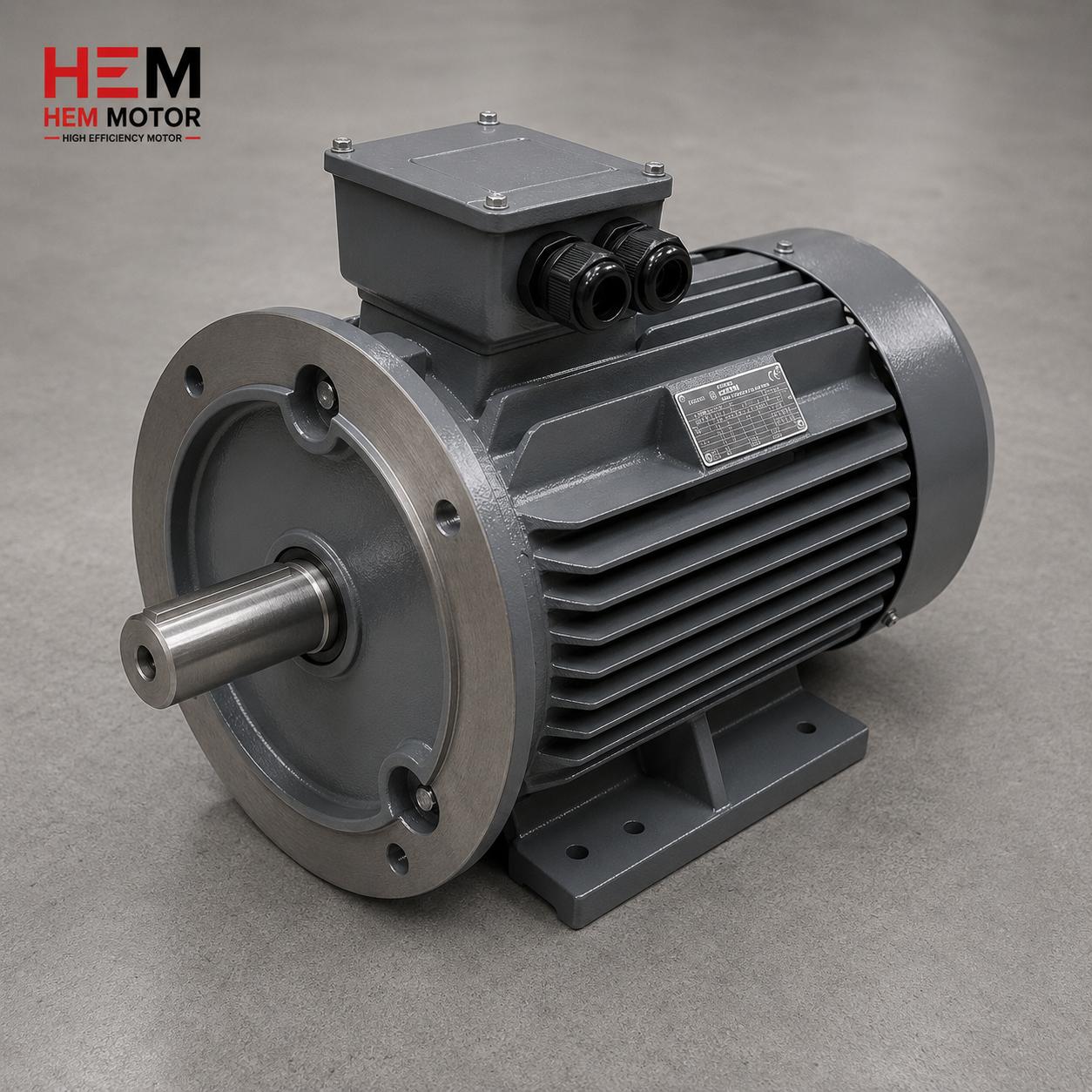
Cast iron (gray iron) is a high-carbon iron alloy containing free graphite flakes in its structure. These graphite flakes give the material two highly valuable properties: excellent vibration damping and good machinability. Although a cast iron frame is heavier than an aluminum one, it is decisively superior in terms of mechanical rigidity, thermal mass, and dynamic stability. In heavy-duty applications such as compressors, pumps, fans, and conveyor drives running under continuous load, this superiority is the deciding factor.
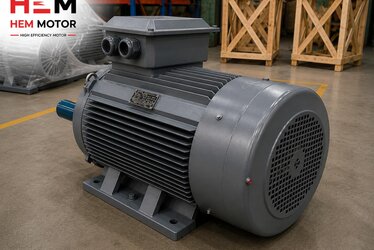
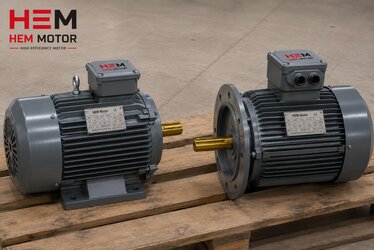
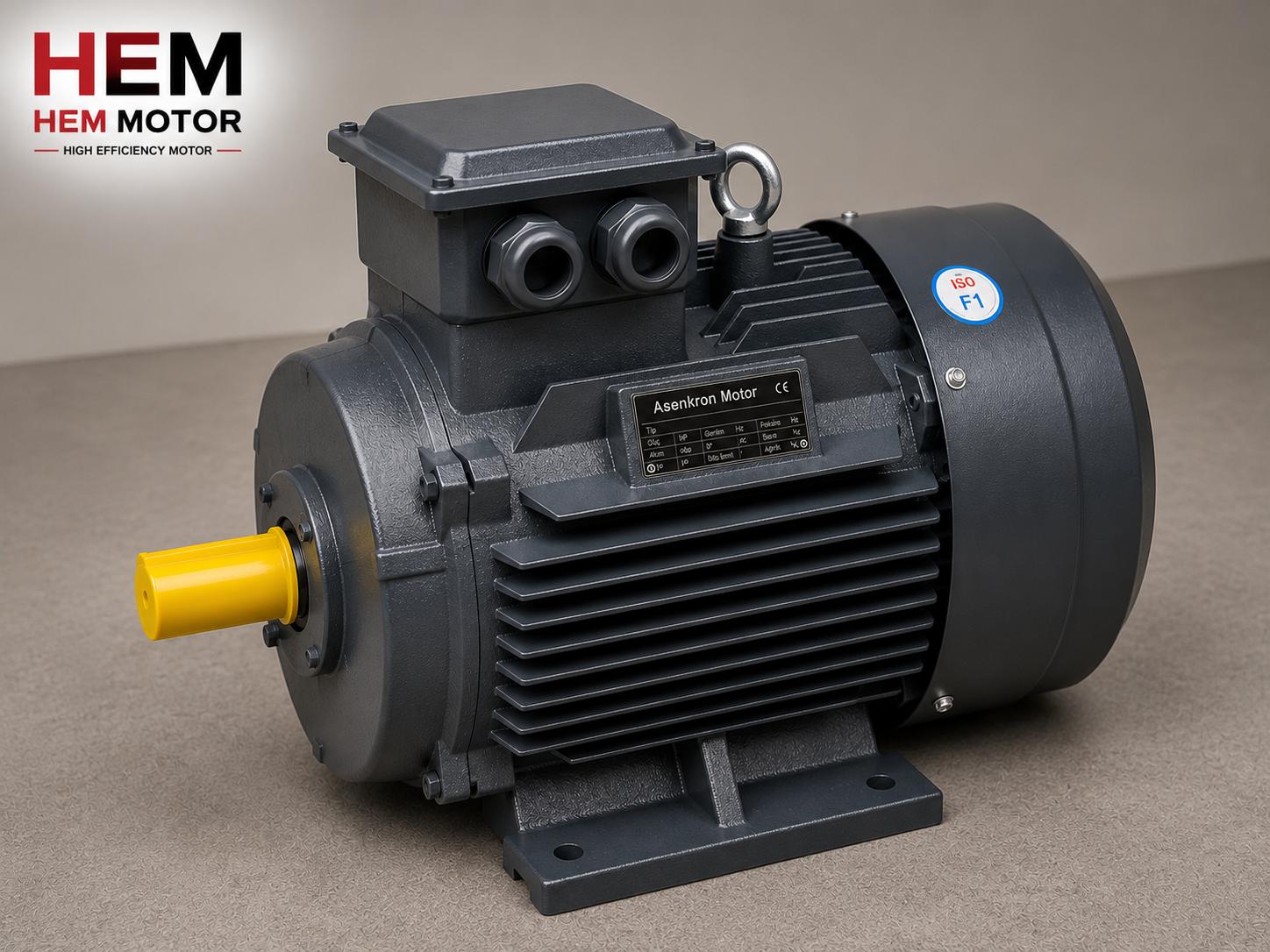
In the HEM Motor product family, cast iron framed motors are offered in IEC 56-355 frame sizes, from 0.55 to 355 kW, and at 1000/1500/3000 rpm synchronous speeds. Produced in IE3 and IE4 motor efficiency classes, with Class F insulation and an IP55 protection rating, these frames are completed with 100% copper windings and heavy-duty bearings. Thanks to B3, B5, and B35 mounting options, they adapt to a wide range of applications.
How Do Residual Stresses Form in Castings?
After molten metal is poured into the mold, solidification is not uniform. The thick regions of the frame (for example the feet and flange sections) cool far more slowly than thin cooling fins. The quickly cooling regions contract and solidify first; when the late-cooling regions later try to contract, they are restrained by the surrounding solid material. This restrained contraction leaves behind a field of locked-in stress within the metal.
These residual stresses lead to three main problems:
- During machining (material removal), the stress balance is disturbed as material is cut away, and the part warps.
- Months after the motor enters service, the stresses slowly relax, causing the bearing alignment to drift over time.
- Thermal expansion at operating temperature combines with existing internal stresses, creating fertile ground for micro-crack initiation.
For this reason, machining and assembling a raw casting directly may look cheap in the short term but comes back as failure, noise, and warranty cost in the long term.
Stress Relief Annealing: The Metallurgical Logic
Stress relief annealing subjects the raw casting to a controlled thermal cycle. The part is slowly heated below the critical transformation temperature (typically a mid-range temperature for gray iron), held there long enough, and then cooled at a controlled, slow rate. The goal is to release the elastic stresses locked inside through plastic flow without altering the fundamental microstructure of the material.
Heating Stage
Slow and even heating is essential. Heating too fast creates a fresh temperature difference between thick and thin sections, generating additional stress. The furnace is therefore allowed to distribute heat homogeneously through the part.
Soaking (Holding) Stage
When the part is held at the target temperature for a set period, the yield strength of the material temporarily drops, and the locked-in stresses relax through small plastic shifts. As wall thickness increases, the soaking time is extended, because it takes time for the heat to reach the center of the part.
Controlled Cooling Stage
The most critical step is cooling. Rapid cooling re-imposes the very stresses that were just relieved. The part is therefore cooled inside the furnace following a gradual, slow profile. At the end of a correctly executed cycle, dimensional stability improves markedly, and the part no longer warps during subsequent machining.
Grain Structure and Vibration Damping
The vibration damping ability of gray iron is directly related to its grain structure. The material matrix typically consists of pearlitic or ferritic phases, with graphite flakes dispersed throughout. As vibration energy travels through the material, it is dissipated as heat through friction at the interfaces of these graphite flakes. In effect, the frame absorbs the incoming mechanical energy.
Stress relief annealing stabilizes this matrix. Once internal stresses are removed, the material's damping behavior stays consistent over time; in an un-annealed frame, as stresses relax, both the damping properties and the geometry slowly change. This is one of the most common reasons a motor runs quietly at first and grows noisier over time. Our article on noise and vibration in electric motors offers complementary insight.
The Effect of Dimensional Stability on Bearing Life
The most sensitive geometry in a motor is the coaxiality of the two bearing seats relative to each other. The shaft rotates between these two bearings, and the slightest misalignment of the axes causes asymmetric loading, heating, and early fatigue in the bearings. In a frame that lacks dimensional stability, the alignment between bearings degrades as stresses relax in service, and bearing life is dramatically shortened.
An annealed, stress-relieved cast iron frame keeps the bearing seats in place for the life of the motor. This means both lower vibration and longer bearing life. Our content on bearing and bearing life in cast iron motors examines the effect of bearing selection on lifespan in greater depth.
Frame size selection is also part of this equation; the right frame mass determines both thermal behavior and mechanical stability. Our article on cast iron motor frame sizes (IEC 56-355) guides this choice.
Machinability and Precision Gains
A stress-relieved frame behaves far more predictably on the machine. Because the part does not warp during material removal, dimensional tolerances can be hit the first time and the need for rework is reduced. This delivers both a cost and a consistency advantage in production.
The practical benefits of a properly prepared frame are as follows:
- Coaxiality of the bearing seats preserved for life, with low vibration.
- Reduced dimensional deviation after machining and higher repeatability.
- More stable geometry at operating temperature and reduced thermal creep risk.
- Longer service life for bearings and sealing elements.
- Easier compliance with noise standards thanks to the low sound level.
The Difference Between Natural Aging and Thermal Cycling
In the past, many foundries left their castings outdoors for months, waiting for the stresses to relax on their own; this is called natural aging. The method works, but it is extremely slow, occupies a valuable portion of the yard, and produces unpredictable results. Because seasonal temperatures, humidity, and holding time vary from batch to batch, it is impossible to guarantee that two frames have reached the same stability. In modern, disciplined production this uncertainty is unacceptable.
Controlled thermal cycling, namely stress relief annealing performed in a furnace, achieves the same result within hours and in a repeatable manner. Because every batch passes through the same temperature, the same soak, and the same cooling profile, every cast iron frame produced exhibits consistent dimensional stability. This repeatability is the foundation of quality assurance in series production and ensures that every motor leaving the line shows the same low vibration behavior.
How It Translates to Field Performance: Quiet and Reliable
The ultimate goal of all these metallurgical steps is a motor that runs trouble-free in the field for many years. A correctly annealed frame lowers operating cost in continuously running applications such as compressors and pumps while also reducing the risk of unplanned downtime. An unexpected motor stoppage in a plant usually means production loss that costs far more than the motor itself.
A low vibration level is not merely a matter of comfort; vibration loosens mounting bolts, fatigues couplings, wears out sealing elements, and can even damage connected equipment. A stress-relieved, stable cast iron frame cuts off the source of this chain of damage at the root. When the energy savings of the IE4 motor efficiency class are combined with the mechanical reliability of low vibration, the total cost of ownership drops markedly.
Manufacturer Assurance and Supply Advantage
All this metallurgical care only counts when backed by a disciplined production chain. HEM Motor offers its cast iron framed motors with manufacturer assurance and a broad range of IP55 protected products. Frames produced without skipping the stress relief step keep their promise of dimensional stability and low vibration for many years in the field. Fast delivery from stock keeps projects moving without delay; in quotation and supply processes, the manufacturer is the direct point of contact.
If you would like to evaluate IE4 motor options according to your efficiency needs, our cast iron body electric motors category brings together all frame sizes and mounting types. For current electric motor prices and stock availability you can get in touch directly; the right frame is matched with the right efficiency and the right delivery time.
Frequently Asked Questions
Does stress relief annealing change the efficiency of the motor?
It does not change electrical efficiency directly; efficiency is set by the winding, lamination stack, and design. However, thanks to stress relief annealing the frame stays dimensionally stable, the bearings remain aligned, and mechanical losses and vibration are reduced. This indirectly contributes to smooth, quiet operation and therefore to field reliability.
Why does a cast iron frame run quieter than aluminum?
The graphite flakes within the grain structure of gray iron dissipate vibration energy through friction. This natural damping is much lower in aluminum. For heavy-duty and continuously running applications, a cast iron frame therefore offers both lower noise and greater mechanical stability.
How can I tell in the field whether an annealed frame is dimensionally stable?
The clearest indicator is time: a frame that has received proper stress relief annealing maintains the same low vibration level even months later. Motors that run quietly at installation but become noisy within a few months usually point to frames that were not stress relieved. Choosing motors with manufacturer assurance, IP55 protection, and correct heat treatment eliminates this risk.