English
 Türkçe

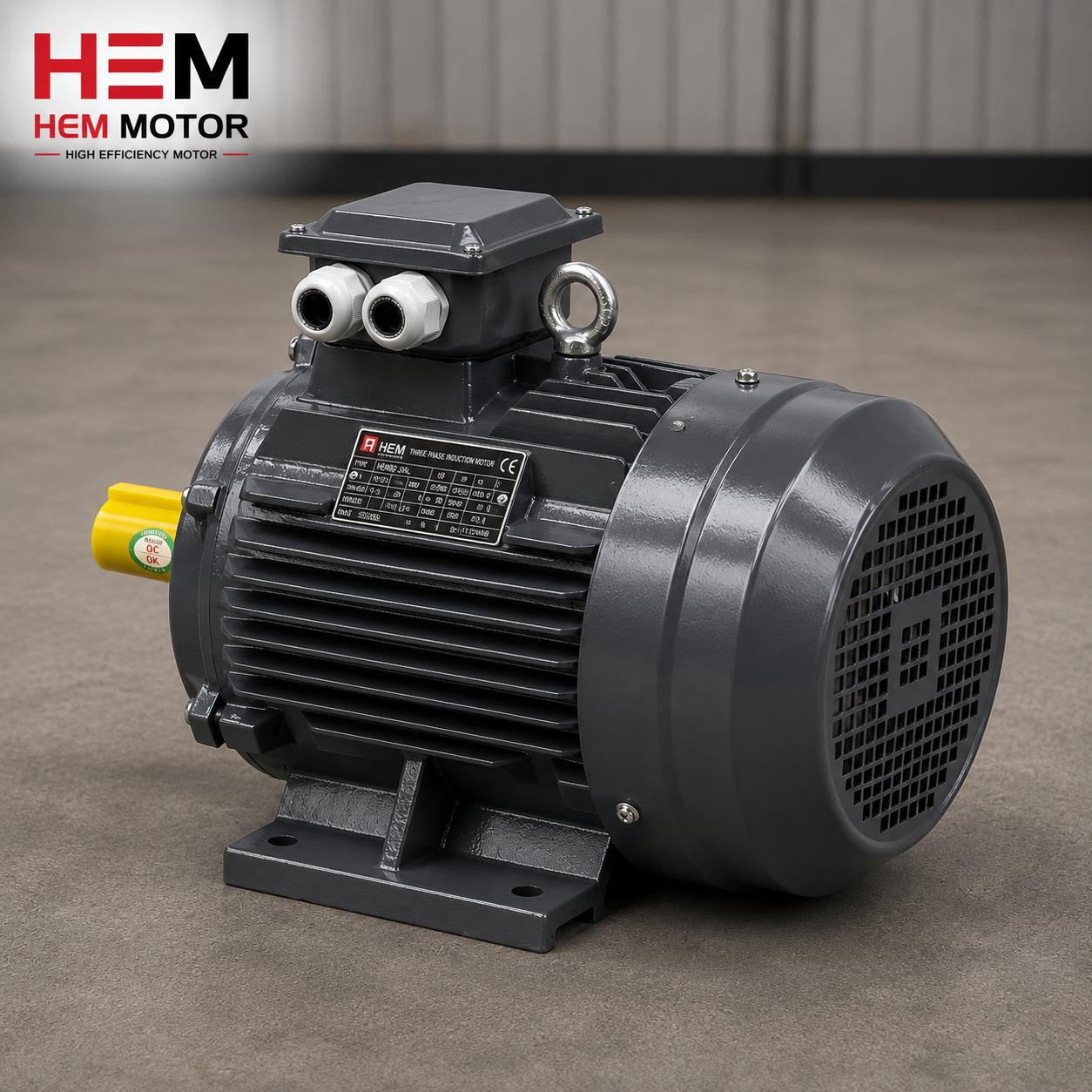

No matter how solid the outer shell of a cast iron electric motor is, the inside is not a perfectly sealed box. While the motor runs, the windings heat up and the air inside expands; when the motor stops, that air cools and contracts. This continuous heating-and-cooling cycle creates pressure swings inside the frame and makes the motor tend to "breathe in" humid outside air. This is where a small but critical component comes into play: the breather valve, or in its more advanced form, the breather valve and condensation drain assembly. In humid, coastal, outdoor environments, or anywhere with large day-night temperature swings, choosing the right breather is the first line of defense protecting the motor's internal windings.
At HEM Motor, one of the main reasons we ask about your environment before delivering a cast iron motor is exactly this. The same IE4 motor that runs flawlessly inside a dry factory may quickly suffer internal condensation at a coastal treatment plant if it lacks a breather valve and proper ingress protection. In this article we cover why a breather is needed, how internal condensation forms, the logic of pressure equalization, and the correct supply criteria for humid environments — in engineering terms but framed around the purchasing decision. While searching for the right motor, you can start from our electric motor prices page and plan the frame and accessory package suited to your conditions together with us.
How Internal Condensation Forms and Why It Is Dangerous
Internal condensation is the transformation of humid air inside the motor frame into water droplets as it cools. The physics is simple, but the consequences creep up quietly. When the motor runs at full load, the winding and frame temperatures rise; the internal air heats, expands, and some escapes. When the motor stops, the frame cools rapidly, the internal air contracts, and humid air is drawn in from outside. The moisture in that drawn-in air condenses into water on the cooling internal surfaces once it reaches the dew point.
This accumulating water triggers several distinct failure chains:
- Insulation resistance drop: Moisture accumulating on the winding insulation drops the insulation resistance from megohm levels to dangerous values. This means leakage current and even winding breakdown risk on the first start.
- Bearing corrosion: If condensed water seeps into the bearing cavity, the grease emulsifies, and rusting and premature failure begin on the bearing balls.
- Terminal box dampness: Oxidation at connection points, increased contact resistance, and localized heating occur.
- Static water buildup: In motors that sit idle for long periods, water collecting at the bottom of the frame can cause a direct short circuit at commissioning.
The most dangerous aspect of internal condensation is that it gives no external warning. The motor looks perfectly healthy; yet a megger test reveals the insulation resistance has already fallen below the critical level. That is why condensation management must be considered at the design stage for motors operating in humid environments. In our article on the condensation drain hole you can study in detail how condensed water is removed from the frame.
Environmental Conditions That Increase Condensation Risk
Not every motor carries the same condensation risk. The following conditions markedly increase the risk and call for additional moisture protection alongside a breather:
- High relative humidity environments such as seashores, ports, and fish farms
- Outdoor installations with large day-night temperature differences
- Motors that frequently stop and start and are left to cool for long stretches
- Cold storage rooms, treatment basins, greenhouses, and protected-cultivation farms
- Semi-open roofed areas, open-sided boiler rooms, and pump stations
What Does a Breather Valve Do?
A breather valve provides a controlled pressure-equalization path between the internal volume of the motor frame and the outside atmosphere. Its basic logic is this: it releases the pressure difference that forms as the motor heats and cools through a defined path, without stressing the gaskets and seals. If this path does not exist, the internal pressure either escapes through the seals (shortening their life over time) or draws humid outside air in through the weakest gasket.
A well-designed breather equalizes pressure while also filtering the incoming air to block dust and liquid water droplets from entering. Three basic types are commonly used:
- Simple vent hole: The cheapest solution; it only relieves pressure and provides no filtration. Suitable for dry, clean internal environments.
- Membrane breather valve: Contains a semi-permeable membrane that keeps water and vapor out while allowing air molecules to pass. Preferred in humid environments.
- Drained breather (breath + drain): Both equalizes pressure and discharges condensation water collected at the frame bottom in a controlled way. The standard solution for outdoor and high-humidity environments.
The advantage of the cast iron frame stands out here: because the frame wall is thick and rigid, the threaded ports needed for the breather and drain plug can be safely machined into the frame, and the sealing stays durable for a long time. We detail why the cast iron frame is preferred in harsh environments in our cast iron vs aluminum frame comparison.
Positioning the Breather and Drain Plug
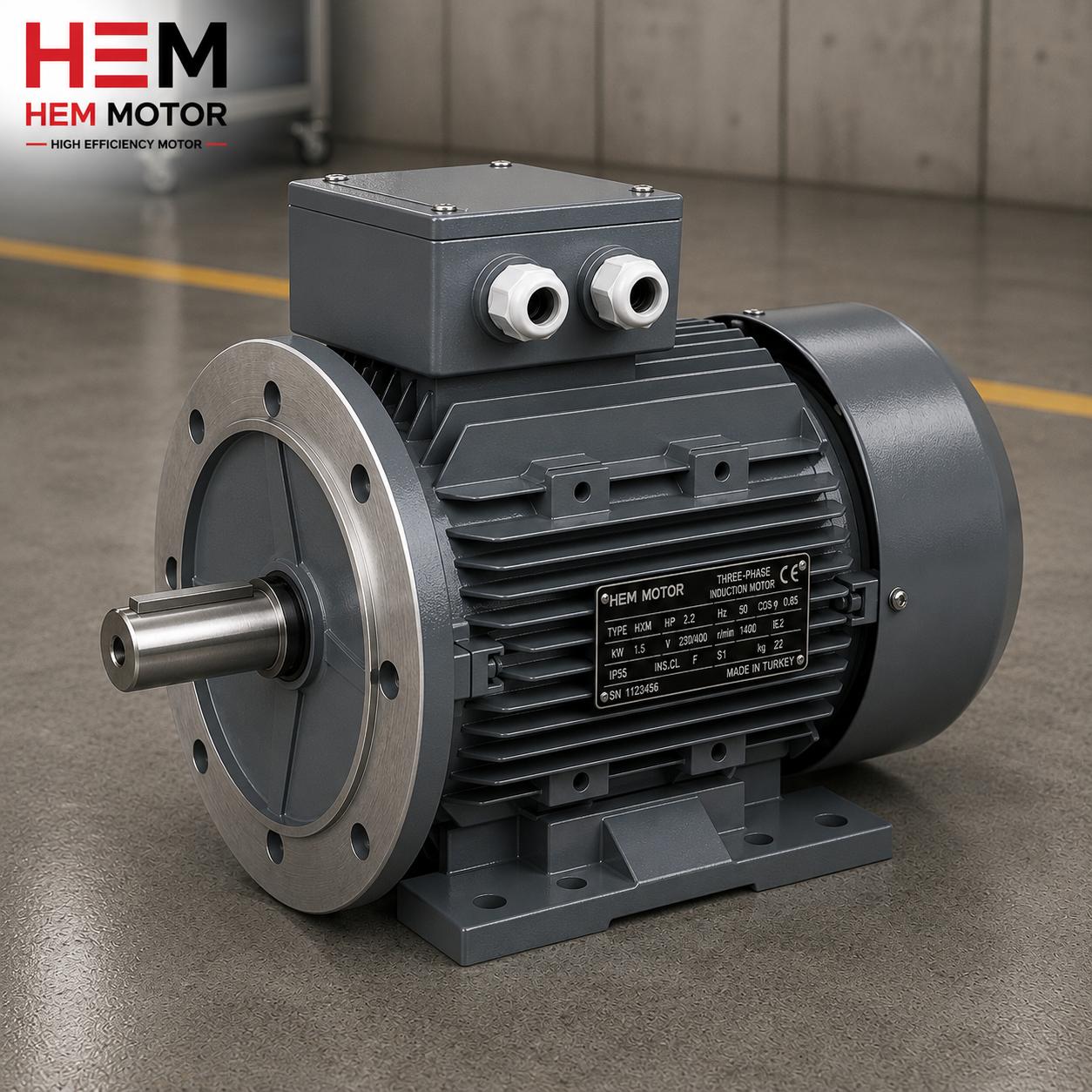
Where the breather valve is placed depends on the motor's mounting position (B3, B5, B35) and its axis of rotation. The basic rule is this: the breather valve should be on the upper side of the frame, and the drain plug at the lowest point where condensation water collects by gravity. When the motor is mounted horizontally (B3), the drain hole is usually at the lower corner of each end shield; in vertical mounting the drain point changes accordingly.
For this reason, stating the motor's operating position at the order stage is critical. On a motor shipped in the wrong position, if the drain hole ends up on top it serves no purpose; on the contrary it becomes an open door for water ingress. At HEM Motor, the mounting position is confirmed before delivery and the breather and drain points are set accordingly.
Correct Motor Supply for Humid Environments: The Accessory Package
A breather valve alone may not be enough for a humid environment. For high-risk installations, an accessory package that complements the breather is recommended:
- Anti-condensation heater (space heater): A resistance element that keeps the windings a few degrees above ambient when the motor is stopped, preventing condensation at its source. It is the most effective solution for motors that frequently stop and start or sit idle for long periods.
- Increased IP protection class: An IP65/IP66 frame instead of standard IP55 provides an extra barrier against direct water jets and dust.
- Tropicalization (tropical insulation): Coating the windings and insulation with special varnishes resistant to moisture and mold.
- Class F or H insulation: High thermal reserve extends insulation life in humid environments.
- PTC/PT100 temperature sensors: Monitor winding temperature, giving early warning against condensation and overheating.
Which package is required depends on the relative humidity of the environment, the motor's operating regime, and idle durations. In a continuously running pump motor, the winding stays warm anyway, so condensation risk is low; but in a motor sitting as a spare or running seasonally, an anti-condensation heater is almost mandatory. We addressed this topic specifically for outdoor equipment in our article on tropicalization and space heater selection.
The Right Information Flow Before Ordering
So that we can deliver the correct motor for a humid environment quickly, we recommend sharing the following information:
- The type of environment where it will be installed (enclosed factory, semi-open, outdoor, coastal)
- Approximate relative humidity and ambient temperature range
- The motor's operating regime (continuous, frequent stop-start, spare/seasonal)
- Mounting position (B3, B5, B35 and axis orientation)
- If replacing an existing motor, the nameplate data of the old motor
With this information we can plan both the correct frame material and accessories such as the breather, drain, IP class, and anti-condensation heater in one go, ensuring commissioning without surprises in the field. For high-efficiency, durable frame options you can review our cast iron body electric motors product group.
Breather Maintenance and Field Inspection
The breather valve and drain assembly are not parts to be forgotten once installed. Especially in environments containing dust, fiber, or oily vapor, the breather membrane can clog over time; a clogged breather valve cannot equalize pressure and becomes unable to do its job. For this reason, checking the breather and drain points should be part of the periodic maintenance schedule.
A few easy-to-apply inspection steps in the field are useful:
- Opening the drain plug: During periodic maintenance, the drain plug at the frame bottom is opened to discharge accumulated condensation water, then resealed.
- Membrane check: The membrane breather is visually inspected for clogging; if dirty, it is cleaned or replaced.
- Insulation resistance measurement: In motors that have sat in a humid environment for a long time or run seasonally, the insulation resistance is checked with a megger test before commissioning.
- Terminal box inspection: The connection points are checked for moisture, oxidation, or water marks.
We explained how insulation resistance is measured and which values are considered safe in our insulation resistance and megger test article. We addressed how long-stored motors should be protected in terms of moisture and bearings in our motor storage and long-term standstill article. These simple checks markedly extend the motor's life in a humid environment.
Special Attention for Spare and Seasonal Motors
In continuously running motors, the winding stays warm, so condensation risk is low; the real danger is in spare motors that sit idle for long periods and motors that run only in certain seasons. These draw humid air inside while cold and begin operating with accumulated internal moisture when commissioned. In such motors, an anti-condensation heater is an almost mandatory protection layer alongside the breather; the heater keeps the winding dry even while the motor is stopped. If there are units in your spare motor stock sitting in a humid environment, we recommend reviewing their protection package together.
Frequently Asked Questions
Should every motor have a breather valve?
No. In dry, clean enclosed factory environments with low temperature swings, standard ventilation is sufficient. A breather valve and drain assembly become critical especially in humid, outdoor, coastal, and frequent stop-start motors. If you tell us your environmental conditions, we will determine together what level of protection is needed.
Do a breather and an anti-condensation heater do the same job?
No, they complement each other. The breather valve equalizes pressure and filters incoming moisture; the anti-condensation heater keeps the winding warm while the motor is stopped, preventing condensation from forming in the first place. In the highest-humidity installations, using both together is recommended.
My existing motor has a condensation problem — can a breather be added later?
Thanks to the rigid structure of the cast iron frame, a breather and drain plug can be added at suitable points; however, the correct position must be determined according to the mounting orientation. In most cases, if condensation-driven insulation loss has already progressed, replacement with a new motor equipped with the correct accessory package is safer and more economical. If you share the existing motor's nameplate data, we will recommend an exact equivalent solution.