English
 Türkçe

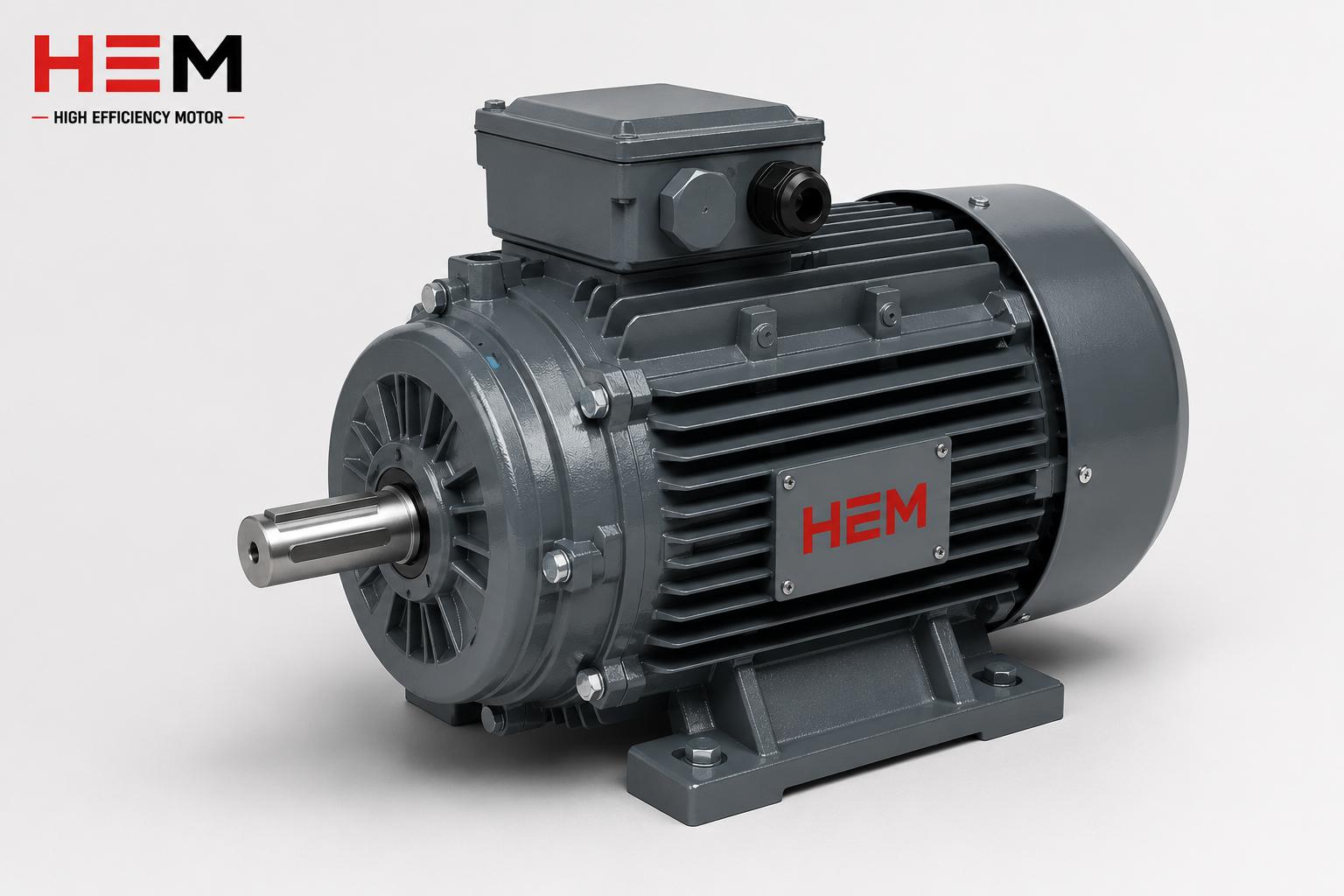

In screening, feeding, discharging and compaction applications, the most critical component that moves material in a controlled way is the asynchronous vibrator motor. Unlike a conventional electric motor, a vibrator motor converts rotary motion into linear or circular vibration through eccentric weights fitted to both ends of its shaft. This vibration enables material to flow, separate and convey across vibrating screens, vibratory feeders, bunker dischargers and compaction tables. Correct vibrator motor selection directly determines both production efficiency and the plant's fault-free running time. A motor chosen with the wrong centrifugal force leads to screen blinding, insufficient material flow, or premature fatigue of the housing and bearings.
As HEM Motor, with our identity as both a manufacturer and a supplier, we provide end-to-end support in vibrator motor selection — from centrifugal force calculation and eccentric weight adjustment to pole-count choice and protection class. In this guide we cover, in detail, the parameters you should evaluate when buying an asynchronous vibrator (vibration) motor, the relationship between eccentric weights and centrifugal force, the pole-speed trade-off, and the points to watch for correct supply.
How Does a Vibrator Motor Work?
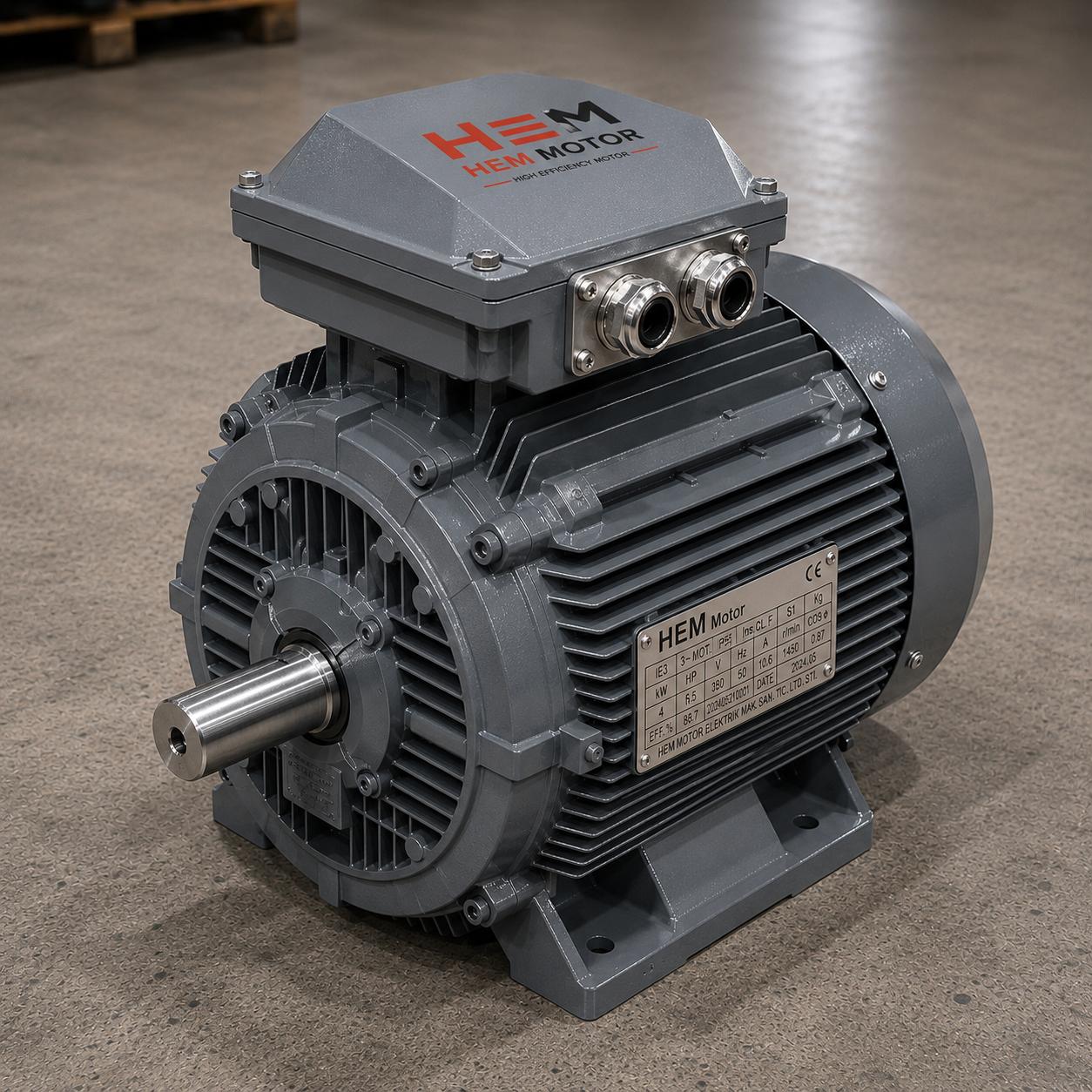
A vibrator motor is essentially an asynchronous AC motor with half-moon shaped eccentric (off-center) weights fitted to both ends of its shaft. As the motor turns, these weights generate centrifugal force, and this force is transmitted to the housing as vibration. When a single motor is used, a circular or elliptical vibration is generally obtained; in arrangements where two motors run synchronously in opposite directions, a linear vibration is achieved. Linear vibration is preferred for conveying material in a specific direction, while circular vibration is preferred for screening and separation.
The magnitude of the generated vibration depends on two main variables: the distance of the rotating mass from the center (eccentricity) and the square of the rotational speed. For this reason, the same motor exhibits a completely different vibration character when the pole count is changed. Because centrifugal force is proportional to the square of the rotational speed, a high-speed motor produces far greater force than a low-speed one; however, the amplitude (vibration magnitude) is larger at low speed. Establishing the correct balance requires selecting the pole count and weights according to the application.
The Relationship Between Eccentric Weights and Centrifugal Force
The most distinctive feature of vibrator motors is that the eccentric weights are adjustable. The weights at the shaft ends usually consist of a fixed inner plate and a rotatable outer plate. By changing the angle of the outer plate, the active mass ratio — and therefore the generated centrifugal force and amplitude — is adjusted. On most vibrator motors this adjustment is made on a percentage scale; full force is obtained at the 100% position and partial force at lower settings.
- High centrifugal force: Required for moving heavy, sticky or wet materials (ore, coal, wet aggregate).
- Low centrifugal force: Prevents scattering of fine-grained, light or sensitive materials (flour, granules, plastic raw material).
- Adjustment flexibility: The optimum screening/feeding rate can be captured by trial and error on site, allowing a single motor to adapt to different recipes.
- Symmetry: Setting the weights at both ends to the same ratio is mandatory for balanced bearing loading and even vibration distribution.
When selecting a motor, the manufacturer's stated centrifugal force (kN) and static moment (kg·cm) values are taken as the basis. The required total force is calculated taking into account the weight of the screen or feeder, the material load on it, and the desired acceleration; then one or two motors are selected to meet this force. The correct torque class and starting characteristic also matter here; our guide on asynchronous motor torque classes (Design N/H) and starting torque offers complementary information.
Pole Count and Speed Selection
Vibrator motors are mostly produced with 2, 4, 6 and 8 poles. As the pole count increases, the speed decreases; as the speed decreases, the centrifugal force produced at the same eccentricity drops but the vibration amplitude grows. Typical preferences by application are as follows:
- 2 poles (around 3000 rpm): High-frequency, low-amplitude vibration. Suitable for compact screens and fine screening; centrifugal force is high.
- 4 poles (around 1500 rpm): The most common choice. Provides balanced force-amplitude in most screening and feeding applications.
- 6 poles (around 1000 rpm): Suitable for heavy screening and bunker discharge applications that require larger amplitude.
- 8 poles (around 750 rpm): Preferred for high-amplitude, low-frequency vibration in very coarse, heavy materials.
The nature of the application is decisive in speed selection. To screen fine products, a high-frequency, low-amplitude vibration increases screening efficiency while protecting the screen from blinding. To convey coarse and heavy materials, a low-frequency, high-amplitude vibration is more effective. Wrong pole selection causes the screen to under-separate or the feeder to under-advance the material.
Mechanical Strength, Bearings and Protection Class
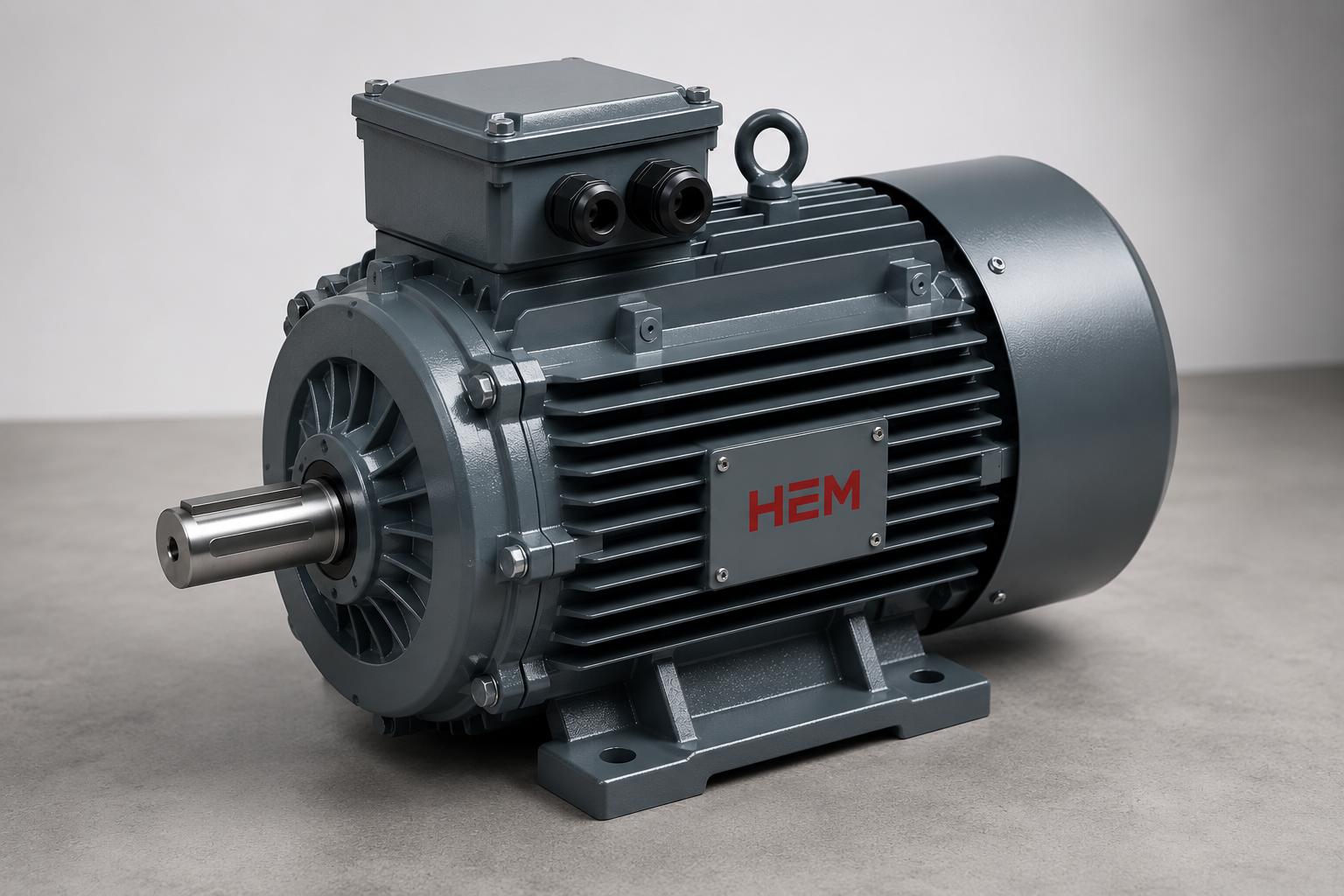
A vibrator motor operates in a far harsher mechanical environment than a normal motor. Because the housing is continuously exposed to variable-direction vibration loading, it needs a specially reinforced structure, unlike a standard asynchronous motor. For this reason, the following points are decisive in vibrator motors:
- Reinforced housing: A cast iron or high-strength cast housing resists cracking and fatigue under continuous vibration.
- Heavy-duty bearings: A vibrator motor carries very high dynamic load in the radial direction. Therefore bearings with wide tolerance, high load capacity and an adequate grease reserve are used. Bearing life is the main factor that determines the practical service life of these motors.
- IP protection class: IP55 and above protection is essential in dusty and humid environments. IP66-level sealing is preferred in mining, aggregate and recycling plants.
- Insulation class: Class F or H insulation secures the thermal endurance of the winding under continuous load.
- Connection and mounting: Footed mounting surfaces and bolt connections must be tightened with appropriate torque and locking elements against loosening under vibration.
Noise and unwanted secondary vibration are also important issues in vibrator motors. Balanced weight adjustment and correct mounting both extend machine life and reduce the noise level in the working environment. For businesses seeking quiet and balanced operation, our article on noise and vibration control in electric motors and low-noise motor selection is a useful reference.
Typical Application Areas
Asynchronous vibrator motors are used in almost every sector where material flow must be controlled:
- Vibrating screens: Separation of material by size in aggregate, mining and recycling plants.
- Vibratory feeders: Controlled, constant-rate feeding from a bunker to a crusher or belt.
- Bunker and silo dischargers: Preventing bridging (arching) so material flows without clogging.
- Compaction and molding tables: Compacting material in concrete paving, briquette and precast production.
- Vibrating channels and troughs: Advancing product in food, chemical and bulk material handling.
Especially in crushing-screening and aggregate plants, feeder and bunker vibration plays a critical role in keeping the line running without interruption. For application details in this area, our content on crusher feeder and bunker vibration (vibrator) motor selection covers a plant-based selection approach in detail. Those who want to examine the underlying asynchronous motor technology and range variety can see the product family on our IE3 efficient asynchronous electric motors product page.
Key Points for Correct Supply
A vibrator motor is an investment decision, and correct supply affects the entire operating life beyond the moment of purchase. The following points should be observed during the supply process:
- Centrifugal force and static moment match: The motor's values must align with the design force of the screen/feeder. Insufficient force means low efficiency, while excessive force means structural fatigue.
- Eccentric weight adjustment range: A wide percentage weight adjustment is an advantage so that the same motor can adapt to different recipes.
- Twin-motor synchronization: If linear vibration is desired, the two motors must be matched to run synchronously in opposite directions at the same force and speed.
- Spare part and bearing access: The bearing is the most frequently replaced part of these motors; fast spare part access shortens downtime.
- Ex-stock delivery and lead time: Fast supply during plant failures directly reduces production loss. Being able to deliver suitable housing and pole options from stock is a major advantage.
For vibrator and asynchronous motor solutions in the pole, housing and protection class that suit your operation's needs, you can review our current electric motor prices and supply terms, and get support from our technical team for the correct centrifugal force and eccentric weight configuration specific to your application. Being both a manufacturer and a supplier enables us to produce fast and flexible solutions even for non-standard requests.
Frequently Asked Questions
How are eccentric weights adjusted on a vibrator motor?
The weight sets at the shaft ends usually consist of a fixed inner plate and a rotatable outer plate. By changing the angle of the outer plate, the active mass ratio — and therefore the generated centrifugal force and vibration amplitude — is adjusted. The adjustment is made on a percentage scale, and setting the weights at both ends to the same ratio is mandatory; otherwise the bearings are loaded unevenly and motor life shortens. At first commissioning, the safest method is to start at a low percentage and increase it gradually until the desired flow rate and screening efficiency are reached.
How many motors are needed for linear vibration?
To obtain linear vibration, two vibrator motors are usually mounted in opposite directions and synchronized to each other. While the horizontal components of the circular forces produced by the two motors cancel out, the components in the vertical or desired direction add up, creating a linear motion. For this reason, a twin-motor arrangement is preferred in feeders and conveying troughs. In screening and separation applications, single-motor circular vibration is often sufficient.
What is the most critical durability factor in a vibrator motor?
The main factor that determines the practical life of vibrator motors is the bearings. Because these motors operate under continuous and high dynamic radial load, heavy-duty, high-load-capacity bearings and an appropriate lubrication regime are critical. In addition, a reinforced cast housing and correct mounting (bolt tightening torque, locking elements) prevent structural fatigue. In dusty environments, an IP55 and above protection class directly extends bearing and winding life.