English
 Türkçe

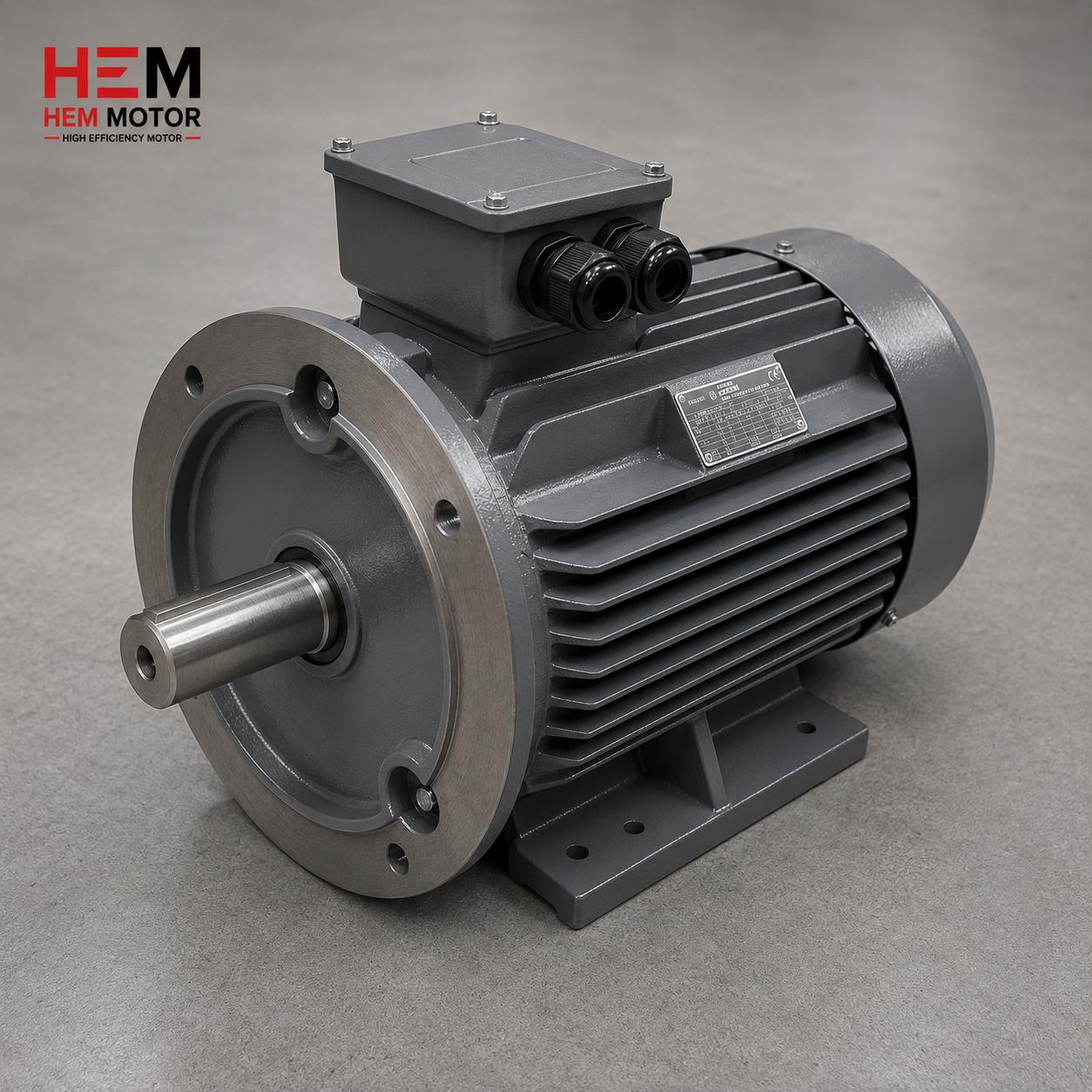

Asynchronous motors are generally designed to be supplied from a strong, stable grid voltage. However, on construction sites, mining areas, agricultural irrigation facilities, ships and off-grid projects, motors are often supplied from a generator or transfer to a generator when the grid is interrupted. This mode of operation is generally called island mode: the motor is supplied from a limited-capacity and relatively "soft" source. This produces very different dynamics compared with being supplied from a grid that can be considered infinite. If island mode and generator supply for an asynchronous motor are not planned correctly, the motor drags the generator into a voltage collapse at starting, protection relays trip and the system cannot start. In this guide we cover the starting problem in off-grid operation, voltage dip and the correct motor/generator selection.
Why Is Island Mode Different from the Grid?
A public grid has nearly infinite capacity next to the starting of a single motor; even if the motor draws a high current at starting, the grid voltage remains practically constant. A generator, by contrast, has limited capacity and a relatively high internal impedance (especially subtransient reactance). At starting, an asynchronous motor draws a starting current several times its rated current; this large current suddenly drops the generator's terminal voltage. When voltage drops, the motor's starting torque also drops (torque is roughly proportional to the square of voltage), the motor cannot accelerate, it keeps drawing current, and the system enters a vicious circle.
For this reason, motor selection in island mode is not merely a question of "how many kVA of generator for how many kW of motor"; the starting method, the motor's load profile and the generator's voltage-recovery capability must be evaluated together. Our generator kVA and motor kW matching guide, which addresses this topic from a matching perspective, covers the starting-current dimension in detail.
The difference between the grid and island mode also shows itself in frequency stability. The frequency of a public grid is constant; in a generator, however, sudden load changes (such as a large motor coming online) can affect both the voltage and, transiently, the frequency. A frequency drop affects the motor's speed and therefore the performance of the machine it drives. A well-designed generator recovers from these deviations quickly thanks to its voltage regulator (AVR) and speed governor; but if the motor start is aggressive enough to exceed the response capability of these regulators, the system becomes unstable. Therefore, in island mode it is far more correct to think of the motor and generator as a whole rather than to evaluate them separately.
Voltage Dip and Its Consequences
The most critical concept in generator supply is voltage dip. When a large motor starts direct-on-line (DOL), the generator terminal voltage can drop significantly for a transient period. This drop creates two problems. First, other consumers connected to the same generator (lighting, control panels, sensitive electronics) are affected by this collapse; lights dim and contactors drop out. Second, the collapsed voltage reduces the motor's starting torque, lengthening the start or making it impossible. Therefore, the permissible voltage-dip limit in island mode becomes decisive in selecting the motor starting method.
The magnitude of the voltage dip depends on several factors: the ratio of the motor's power to the generator's power, the motor's starting-current characteristic, the starting method and the generator's internal reactance. The larger the motor relative to the generator, the deeper the dip. Likewise, if the generator's subtransient reactance is high, the same starting current creates a larger voltage drop. For this reason, in island-mode design the reactance values given by the generator manufacturer and the motor's starting-current curve must be examined together. A correct analysis makes it possible to predict, before going to the field, whether the start will succeed, and prevents surprise failures to start.
It must also be remembered that voltage deviation is not specific to the starting moment alone. Sudden load rejections (for example a large consumer dropping off the line) can cause transient voltage overshoots; these too can affect sensitive electronic equipment. A well-designed island-mode system is planned to keep both the dip and the overshoot within defined limits.
Managing Voltage Dip Through the Starting Method
There are several ways to start an asynchronous motor in island mode, and each reduces the starting current, and therefore the voltage dip, to a different degree:
- Direct-on-line (DOL): The simplest method but draws the highest starting current. Suitable in island mode only if the generator is sufficiently large relative to the motor.
- Star-delta starting: Reduces the starting current, thereby limiting the voltage dip. Suitable for applications that start unloaded or at low load. Our article on motor selection on generator-powered sites explains this method with field examples.
- Soft starter: Controls the starting current by ramping the voltage gradually; effectively limits the voltage dip in island mode.
- Frequency drive (VFD): Keeps the starting current at the lowest level and increases speed gradually; it is the gentlest method for the generator, but harmonics and compatibility must be considered.
- Autotransformer starting: At higher powers it limits the starting current by applying voltage in steps; in some island-mode applications it is an alternative to star-delta.
Which method to choose depends on the ratio of the motor's power to the generator's power, the load's starting-torque requirement and the other sensitive consumers present in the system. While direct-on-line starting causes no problem when small motors are connected to a large generator, a method that reduces the starting current must be adopted as the motor power approaches the generator. On temporary facilities such as construction sites, a soft starter often offers a practical and economical balance; in continuous and sensitive processes, a frequency drive is the solution that best controls both the start and the operation.
When selecting the starting method, the load's starting-torque requirement must not be overlooked: in star-delta and some soft-starter scenarios the starting torque drops; a conveyor or crusher that starts fully loaded may not start with this reduced torque.
Sizing the Generator Capacity Correctly
The most common mistake in island mode is to size the generator only according to the motor's continuous (rated) power. Yet what is decisive is the transient power the motor draws at the moment of starting. At direct-on-line starting an asynchronous motor draws several times its rated current for a short time; the generator must be able to meet this sudden demand without dropping the voltage excessively. For this reason, when sizing a generator not only the kW but also the kVA demand during starting and the permissible voltage-dip limit are evaluated together.
As a practical rule, if a large motor starts direct-on-line the generator is sized markedly larger than the motor's rated power; if a method that reduces the starting current (star-delta, soft starter, frequency drive) is used this ratio shrinks and a smaller generator may suffice. Therefore the starting method and the generator size are directly related: every method that reduces the starting current lowers the required generator capacity and thereby the investment and fuel cost.
In systems where more than one motor is connected to the same generator, bringing the motors online sequentially (in stages) rather than simultaneously largely prevents voltage collapse by distributing the sudden load on the generator. An automatic sequential-start arrangement is a simple and effective solution that improves stability in island mode.
Motor Selection Criteria in Island Mode
When selecting an asynchronous motor to operate off-grid, evaluate the following criteria together:
- Correct power and safety margin: Choosing a motor larger than needed creates unnecessary starting load on the generator; correct, application-specific power selection is essential.
- Efficiency class: Because fuel-generated electricity is expensive, an IE3/IE4 efficient motor provides fuel savings in island mode.
- Protection and insulation: IP55 protection suited to field conditions, Class F insulation and a cast iron frame provide durability in dusty/humid sites.
- Starting torque characteristic: In applications that start fully loaded, a high-starting-torque motor and a suitable starting method must be selected together.
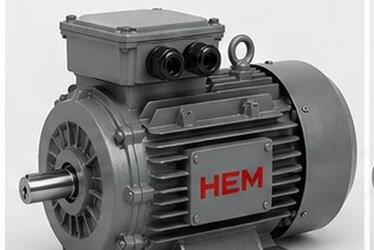
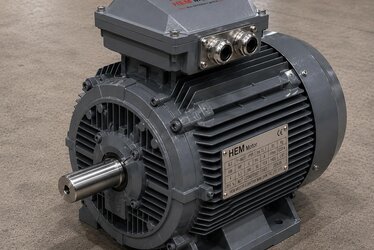
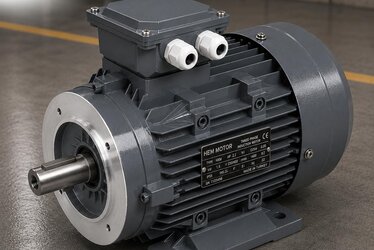
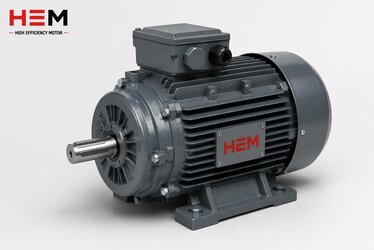
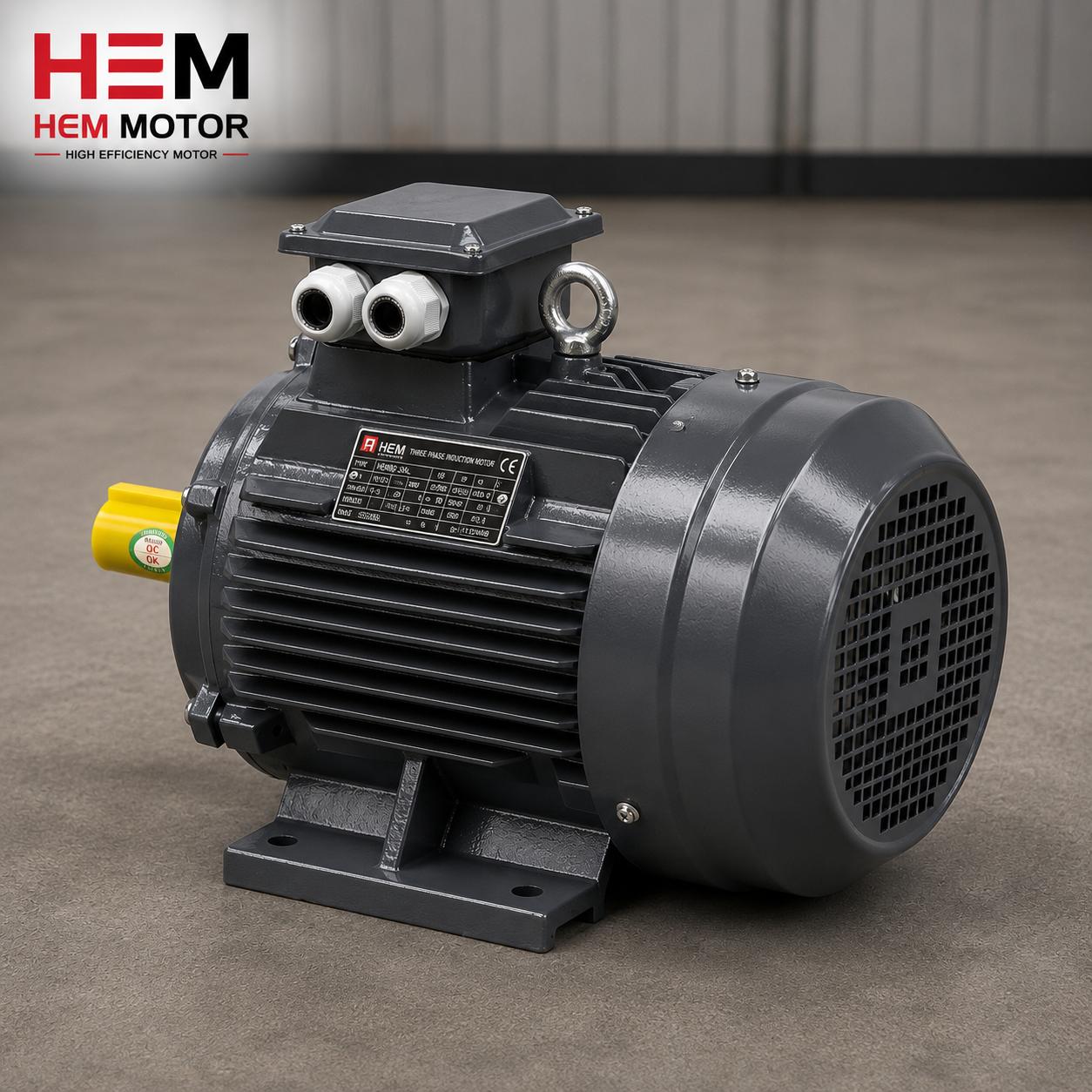
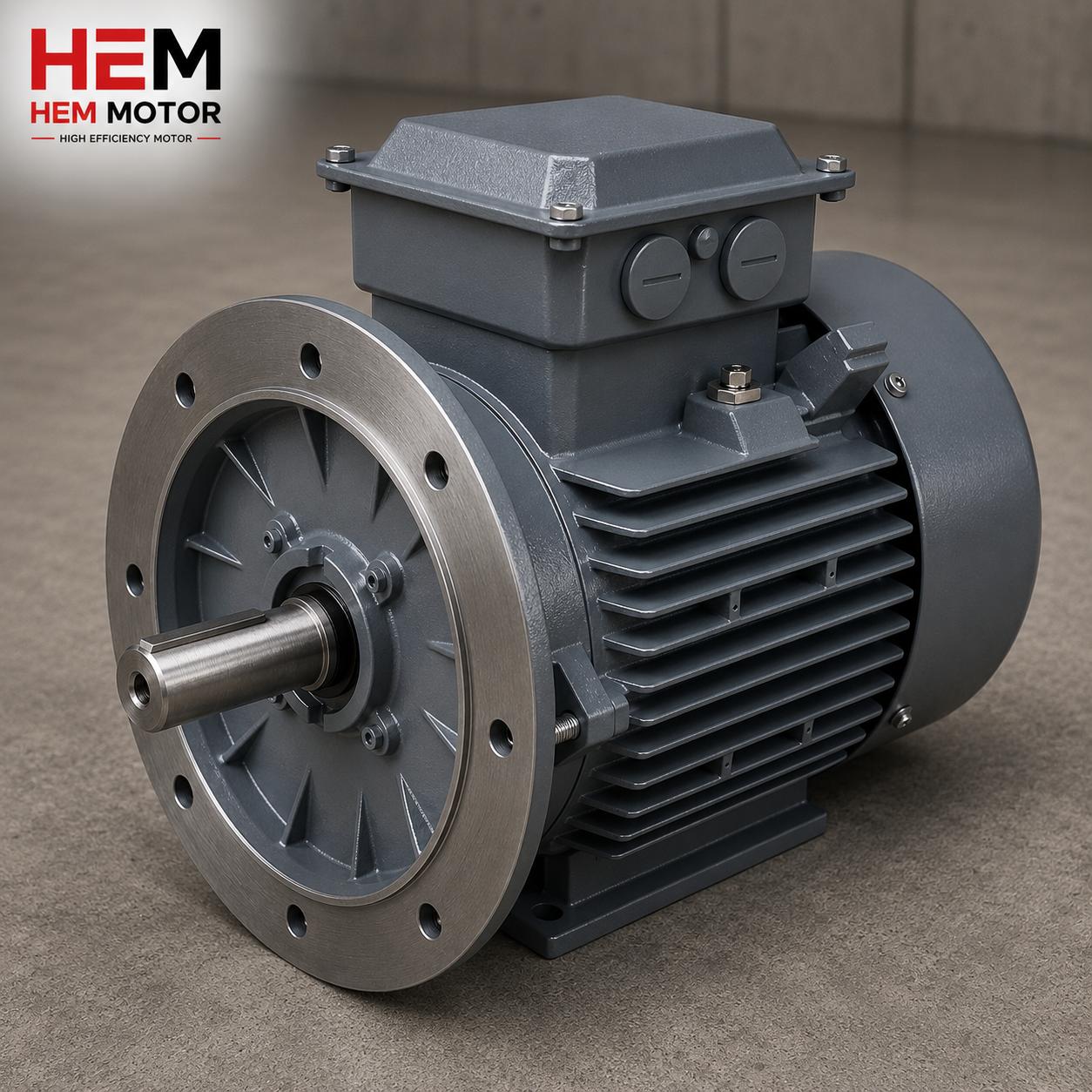
The HEM Motor range offers IE3 and IE4 asynchronous motors from 0.25 kW to 355 kW, with 100% copper windings and cast iron frames, suited to off-grid and generator-supplied applications. To review the basic operating logic of the asynchronous motor and pole/speed selection, our asynchronous motor pole selection guide is a useful reference.
Field and Procurement Planning
In off-grid projects, a motor failure leads to long downtime when there is no spare motor. For this reason it is wise to plan stock for critical powers. For stock and fast shipment across a wide power range, simply share your requirements (motor power, speed, starting method, generator capacity, load type) with us. For current electric motor prices and model recommendations suited to island mode, our technical team offers a solution based on your application.
Frequently Asked Questions
The generator can carry the motor but the motor will not start; why?
This is a classic island-mode problem. The generator can carry the motor in continuous operation (at rated load), but at direct-on-line starting the high starting current drawn by the motor collapses the generator voltage; with the dropped voltage the starting torque decreases and the motor cannot accelerate. The solution is to use a method that reduces the starting current (star-delta, soft starter or frequency drive) or to size the generator to handle the starting current.
Which starting method is most suitable in island mode?
It depends on the load's starting-torque requirement. For applications that start unloaded or at low load, star-delta or a soft starter is often sufficient. For applications that start fully loaded and require high torque, a frequency drive is usually the most suitable solution, as it provides both low starting current and controlled torque. For the correct choice, the load profile and generator capacity must be evaluated together.
Is there an advantage to using an IE3/IE4 efficient motor in island mode?
Yes, there is a serious advantage. Electricity produced by a generator is much more expensive than grid electricity because of the fuel cost. Therefore an efficient IE3 or IE4 motor provides direct fuel savings by doing the same work with less energy. In continuously operating off-grid facilities, an investment in an efficient motor pays for itself quickly.