English
 Türkçe

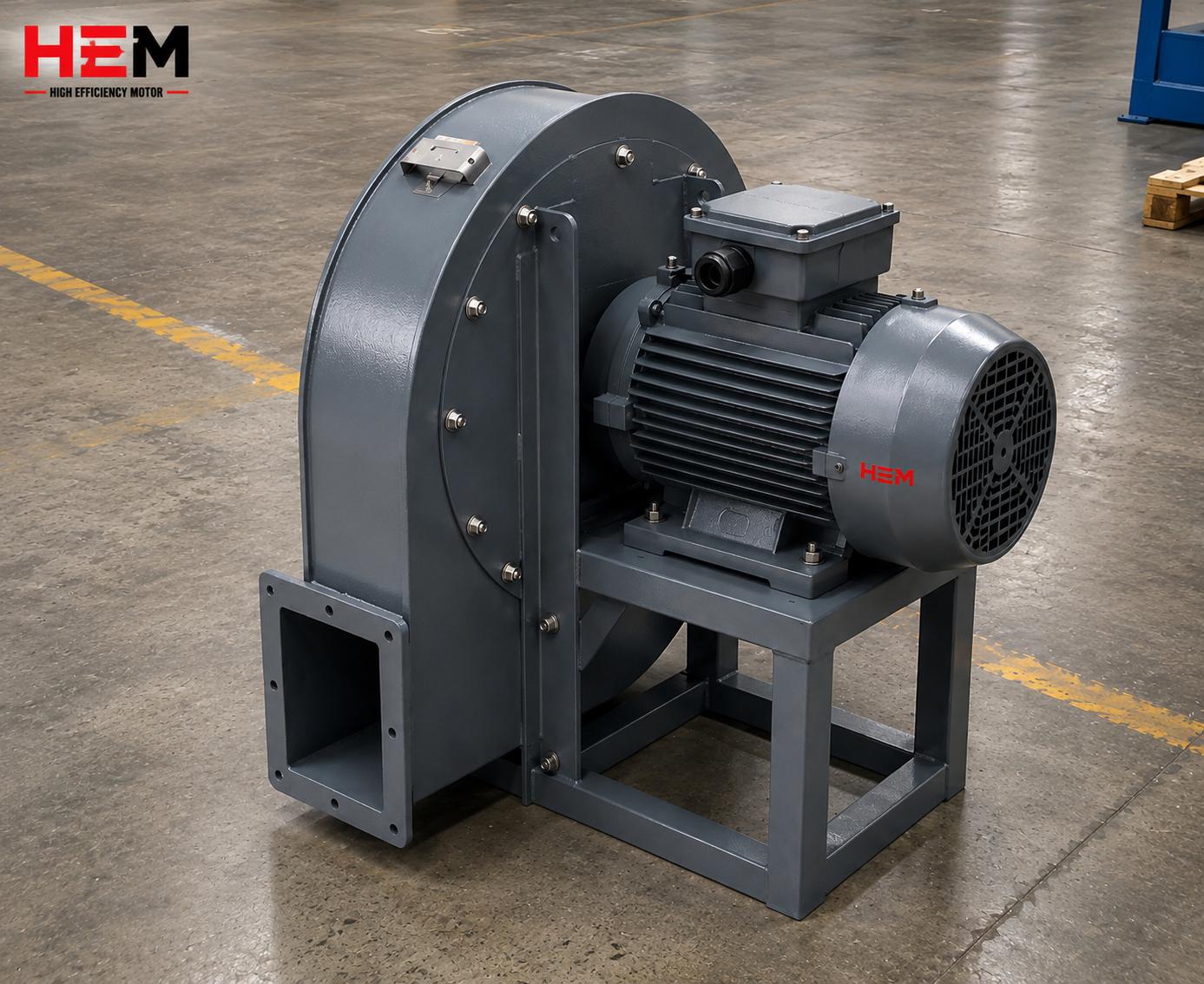

Contrary to what most users assume, a significant portion of the noise an asynchronous motor makes while running comes not from the winding or the bearing, but from the cooling fan seated on the motor's rear endshield. Fitted onto the shaft end, this fan blows air over the housing fins to keep the body cool; but this airflow, combined with the blade-passing frequency and the shroud geometry, produces a distinct aerodynamic noise. Especially in high-speed two-pole motors, this sound becomes the most dominant component of the motor's total sound power. In HVAC installations, hospitals, studios, office towers and applications near residential areas where quiet operation is critical, this directly becomes a purchasing criterion. In this article we cover, step by step, how the cooling fan generates noise, how the fan cowl design and blade direction affect this sound, which fan type is quieter at which speed, and how to specify the quiet motor option at order. The aim is to help you select the right motor for your project — one that both cools sufficiently and avoids unnecessary noise — with HEM Motor assurance and a stock-supply logic.
Where Does Cooling Fan Noise Come From?
The vast majority of standard asynchronous motors are of the IC411 self-cooled (TEFC) type: a fan fitted on the shaft end draws air through the cowl, passes it over the housing fins and expels the heat. This simple, reliable system has a natural side effect; the rotating blades constantly push air, and this pushing produces two kinds of sound. The first is broadband turbulence noise — a continuous, whistle-like hum created by air vortices shedding from the blade edges. The second is blade-passing frequency noise; each time a blade passes in front of the cowl's air inlet opening, a pressure pulse forms, and a sharp, tonal sound arises at a frequency equal to the blade count times the speed.
Together these two components determine the motor's total sound power level. The key point is this: aerodynamic noise rises with roughly the fifth power of rotational speed. In other words, doubling the speed can increase fan noise tens of times over. Therefore a motor of the same power runs much quieter at lower speed. We cover the general picture of motor noise sources in our asenkron motorda gürültü kaynakları article; this content focuses specifically on the aerodynamic sound produced by the fan.
Effect of Speed and Pole Count on Aerodynamic Noise
Because the cooling fan turns at the same speed as the shaft, the motor's pole count directly determines the fan noise. In practice the loudest motors are the two-pole models turning at 3000 rpm, because the fan also turns at this speed and high air velocity means high turbulence. As pole count increases, speed drops and fan noise decreases markedly:
- 2-pole (3000 rpm): Aerodynamically the loudest group. When unavoidable in high-speed pump and fan applications, a quiet fan option and a good cowl design are essential.
- 4-pole (1500 rpm): The most common choice. Much quieter than 2-pole; the ideal balance in most HVAC and circulation applications.
- 6 and 8-pole (1000/750 rpm): The quietest group. Low speed minimises fan noise; the priority choice in environments where silence is critical.
So in an application requiring quiet operation, meeting the duty with a low-speed motor where possible is the most direct solution. You can find the general assessment of how pole and speed selection affect noise and vibration in our düşük sesli motor seçimi content.
The Role of Fan Cowl (Shroud) Geometry
The fan cowl covering the cooling fan serves both as a safety guard and as a means of directing air over the housing. But the cowl geometry is also one of the most important determinants of aerodynamic noise. A well-designed cowl keeps the air inlet openings at sufficient distance from the blades, guides the flow smoothly and reduces turbulence. A poorly designed or deformed cowl, on the other hand, both weakens cooling and increases whistle-like tonal sounds.
Factors in Cowl Design That Affect Sound
- Shape and number of air inlet openings: Sharp-edged, irregular openings produce turbulence and tonal sound; smooth-contoured, evenly distributed openings lower the sound.
- Distance between cowl and blade: If the blades are very close to the opening, blade-passing noise intensifies; sufficient distance softens this tonal sound.
- Inner surface smoothness: Rough or burred inner surfaces disturb the flow and add extra sound.
- Material and rigidity: A vibrating, thin or loose cowl adds its own resonance to the fan noise.
We address the cowl's safety and protection aspect, together with finger and dust protection, in detail in our fan kapağı ve koruma kafesi seçimi article; and for cases requiring a conductive cowl in dusty environments, our anti-statik fan davlumbazı content provides guidance.
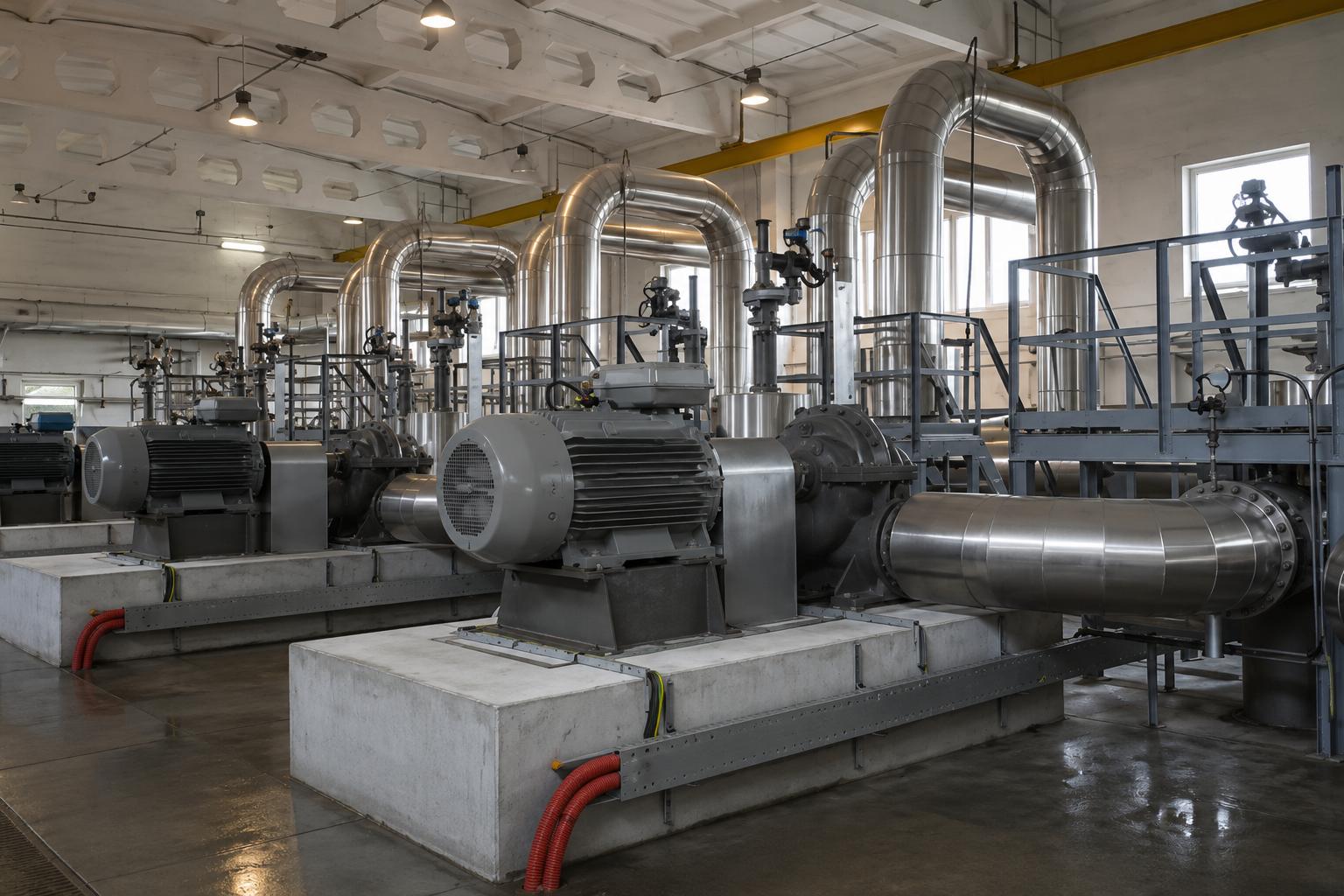
Standard Bidirectional Fan vs Unidirectional (Low-Noise) Fan
The cooling fan used in standard asynchronous motors is usually of the bidirectional (symmetric-bladed) design; the blades are flat-radial so the motor cools equally in either direction of rotation. This is a practical advantage, but a flat-radial blade is aerodynamically the noisiest solution because it pushes air inefficiently and with turbulence.
When silence is critical, the unidirectional (skewed-blade) low-noise fan comes into play. In these fans the blades are aerodynamically angled for a specific direction of rotation; air is pushed more smoothly and with less turbulence. The result is a markedly lower sound level at the same cooling performance. The only condition of this solution is that the motor runs in a fixed direction of rotation; the fan direction is specified at order according to the motor's running direction.
- Bidirectional standard fan: Cooling in both directions, simple and economical; but the highest aerodynamic noise.
- Unidirectional low-noise fan: Marked sound reduction for fixed-direction applications; ideal for HVAC and quiet environments.
At HEM Motor, for projects where quiet operation matters, we supply motors with the low-noise fan option, with correct direction-of-rotation definition and manufacturer assurance.
Cooling at Low Speed with a VFD and the Forced (External) Fan
When a motor is driven by a variable-frequency drive (VFD) and runs at low speed for long periods, the shaft-end self-cooling fan also slows and the air it produces decreases. Two outcomes arise together: cooling weakens and, at low speed, fan noise lessens. If there is a risk of insufficient cooling, the solution is a forced (external) cooling fan that runs independently of the shaft. This auxiliary fan turns at constant speed with its own small motor, and the main motor is cooled continuously even at low speed.
Interestingly, since the external fan stays at constant speed even as the main motor's speed rises, it can also limit total fan noise at high speeds. However, the external fan is itself a noise source; therefore, in quiet environments, choosing a low-noise type of external fan too is important. For VFD-driven applications requiring continuous torque and adequate cooling at low speed, HEM Motor offers motors with the forced external fan option on a project basis.
Relationship Between Cooling Method and Quietness
The most common cooling method in asynchronous motors is the IC411 (self-cooled, shaft-fan TEFC) structure. This method is reliable, maintenance-free and economical; but it inevitably brings fan noise with it. In some special applications, fanless cooling solutions are preferred:
- IC411 (shaft fan): The standard and most common solution. With IP55 protection and F-class insulation it suits continuous duty; fan noise is managed through cowl and blade design.
- External fan (IC416): For VFD applications requiring continuous cooling at low speed; provides cooling independent of shaft speed.
- Surface-cooled (fanless) solutions: Come up at very low powers or where special quietness is required; thermal capacity is limited.
In practice, for most applications wanting quietness, the right path is to select the IC411 standard motor at low speed and, if needed, add the low-noise fan option. This balance provides both adequate cooling and an acceptable sound level together.
Applications Where a Quiet Motor Matters
There are many sectors where aerodynamic noise comes to the fore and the choice of a quiet motor becomes a direct requirement. In these applications the sound the motor produces is not merely a matter of comfort but often a condition of quality and suitability:
- HVAC and ventilation systems: In air-handling units, fan-coil units and duct fans, motor noise carries into the building; low-noise fans and low speed are therefore preferred.
- Hospitals and healthcare facilities: In mechanical spaces near patient rooms, intensive care and operating theatres, quietness is of critical importance.
- Hotel, office and residential towers: In machine rooms adjacent to floors where people live or work, motor noise is a direct subject of complaint.
- Studio, library and stage applications: The quietest solution is sought in these environments requiring very low background sound.
- Facilities operating at night: A low sound level may be mandatory for compliance with environmental regulations.
What these applications share is that noise must be managed by design from the start. Quieting a motor after installation is very difficult; selecting it from the outset with the right speed, the right fan type and the right cowl is the soundest path. HEM Motor supplies low-noise motor options for these sectors, evaluated according to the application.
Maintenance, Deformation and Fan Noise That Increases Over Time
A motor may be quiet at first delivery, but fan noise can rise over time. The reason is usually not the motor itself but degradation in the cooling fan and cowl. The main causes of aerodynamic noise rising later are:
- Deformed or cracked fan: An impacted plastic or metal fan loses its balance and produces turbulence and vibration noise.
- Bent cowl: A crushed cowl comes too close to the blade, intensifying blade-passing sound.
- Dust and dirt build-up: When cowl openings and housing fins clog with dust, the flow is disturbed, both raising sound and weakening cooling.
- Loosened fan or cowl bolts: Vibrating parts add their own resonance and raise the sound.
Periodic inspection is therefore important for sustaining quiet operation; cowl openings should be kept clean and the fan and cowl inspected for damage. On motors it supplies with manufacturer assurance, HEM Motor also provides support in sourcing spare fans and cowls, helping the motor stay quiet throughout its life.
Specifying the Quiet Motor Correctly at Order
Buying a quiet motor is not just a matter of specifying power and speed; the options affecting sound must also be clearly defined at order. At HEM Motor, for correct supply, we evaluate the following information together:
- The acceptable sound power / sound pressure expectation for the application (the sensitivity of the environment).
- Speed and pole preference; evaluating the lowest possible speed for quietness.
- Whether the motor will run in a fixed direction or both directions; this is essential for the unidirectional low-noise fan option.
- The need for a forced external fan if continuous low-speed operation with a VFD is planned.
- Housing material (cast iron or aluminium) and mounting type; a cast-iron body dampens vibration and resonance, also benefiting total sound.
Once you clarify these criteria, you can source — from stock or on a project basis — the motor that provides both the right power for your fan, pump and ventilation applications and quiet operation together. For current elektrik motoru fiyatları and quiet motor options, contact us and we will determine the most suitable solution for your application together.
Frequently Asked Questions
What should I do for a quieter motor at the same power?
The most effective method is to meet the application with the lowest-speed motor possible, because aerodynamic noise rises very quickly with speed. A 4 or 6-pole motor is markedly quieter than its 2-pole counterpart. In addition, a unidirectional low-noise fan option and a well-designed cowl lower the sound further. Share your need and we will determine the right combination together.
Can the low-noise (unidirectional) fan be fitted to any motor?
A unidirectional low-noise fan is applicable provided the motor runs in a fixed direction of rotation. If the motor will turn in both directions, a symmetric bidirectional fan is required. Therefore it is important to specify the motor's running direction at order; HEM Motor supplies the correct fan type according to this information.
Does fan noise decrease if I run at low speed with a VFD?
Yes, fan noise decreases at low speed because the shaft fan slows; but for the same reason, cooling also weakens. If continuous torque and adequate cooling are needed at low speed, a forced external cooling fan running independently of the shaft is recommended. In quiet environments this external fan should also be chosen in a low-noise type.