English
 Türkçe

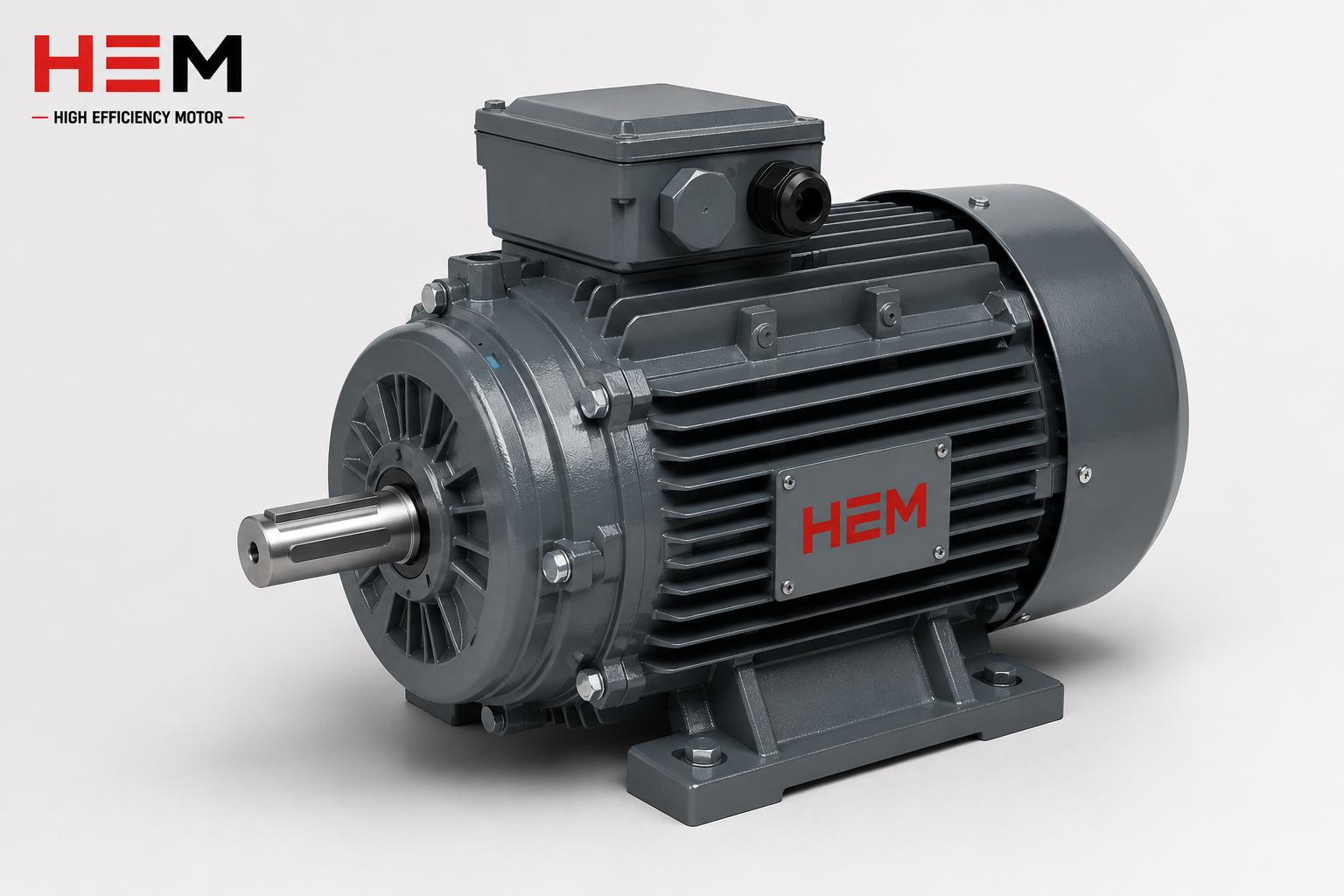

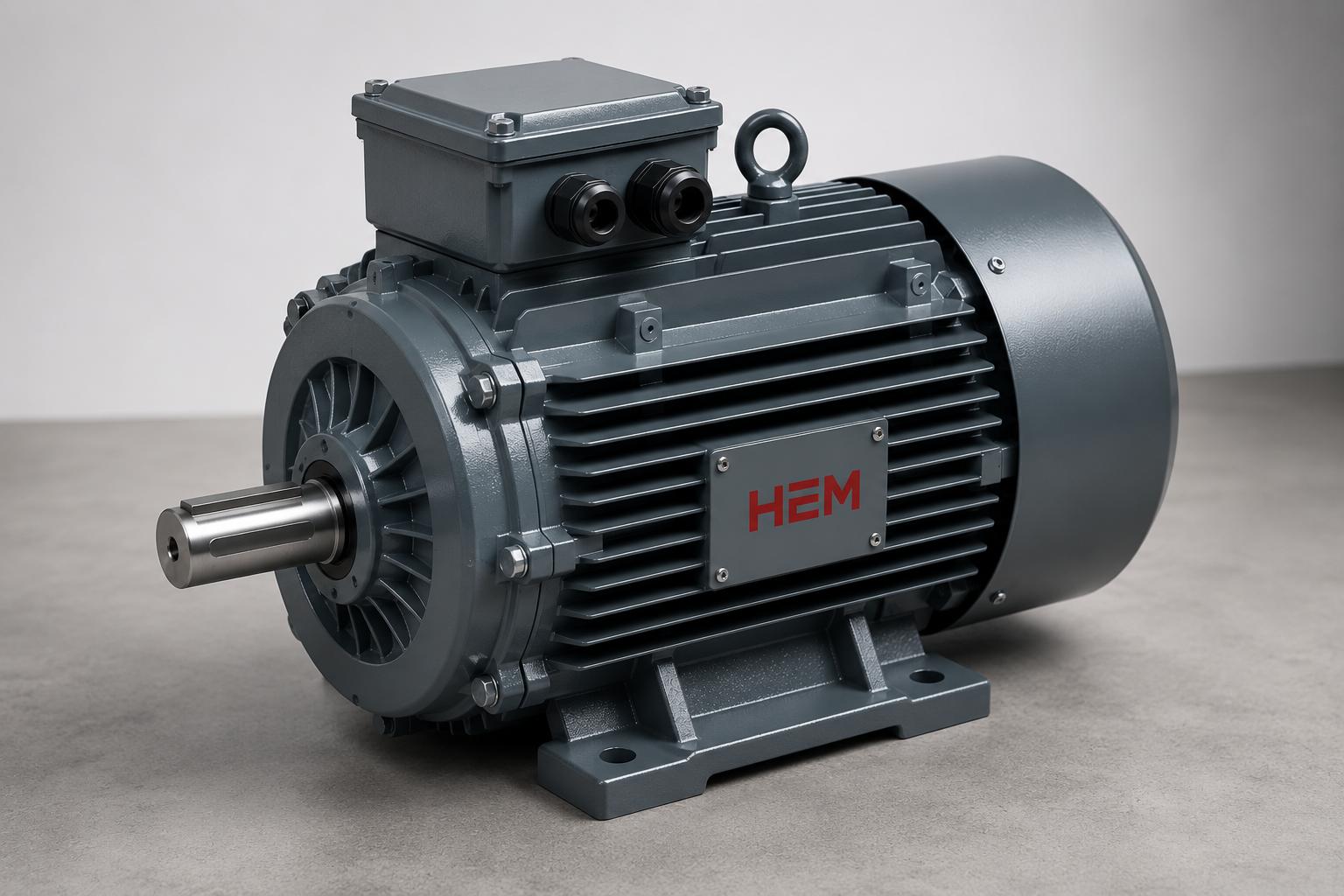
Two-pole asynchronous motors rotate at approximately 3000 RPM synchronous speed on a 50 Hz grid, which makes them the fastest-running members of the electric motor family. High speed delivers high power in a compact size and is sought after especially in pumps, compressors, high-speed fans and some grinding applications. However, this speed also brings a series of limits on the mechanical side of the motor. Bearing rotation speed, rotor balance quality and the critical speed of the shaft become far more important in 2-pole motors than in 4- or 6-pole motors. In this guide we address the mechanical limits of 3000 RPM class high-speed asynchronous motors under the headings of bearing speed, balancing and critical speed, and explain what to consider for correct 2-pole motor selection and purchasing.
Why Do Mechanical Limits Stand Out in 2-Pole Motors?
A motor's speed is inversely proportional to its pole count. A two-pole motor rotates around 3000 RPM, a four-pole around 1500, and a six-pole around 1000 RPM. When speed doubles, the centrifugal forces on rotating parts increase with the square of the speed. That is, a rotor turning at 3000 RPM instead of 1500 RPM feels forces from imbalance roughly four times more intensely. This simple law of physics explains why balancing, bearing and shaft design are so critical in high-speed motors.
If you want to see the general effect of pole count on application and mechanical behaviour comparatively, our content on the asynchronous motor buying guide: which of 2, 4, 6 poles for which job addresses pole selection on an application basis.
Bearing Speed: Bearing Load at High RPM
The maximum rotation speed a bearing can carry is limited, and this limit depends on the bearing type, its diameter and the lubrication method. In a high-speed motor the bearing both rotates faster and enters operating conditions where the oil film is thinner. This makes bearing selection, temperature management and lubrication intervals far more sensitive in 2-pole motors.
Lubrication and Temperature Management
At high speed the bearing heats up more. The wrong grease type or too much grease causes churning of the lubricant and overheating. Therefore the correct grease quantity and an appropriate grease type are critical in 2-pole motors. You can find the effect of bearing greasing and lubrication on maintenance cost and life in detail in our article on bearing greasing and lubrication in IE3 motors: reducing maintenance cost.
Bearing Type Selection
Deep groove ball bearings are common at high speed, but different bearing arrangements may be required according to the axial and radial load profile. In addition, in large-power 2-pole motors, the use of insulated bearings against shaft currents should be considered; this extends bearing life especially in motors driven by a frequency converter. We detail bearing type and insulated bearings in our content on bearing type and life in asynchronous motors: insulated bearings.
Balancing: The Source and the Solution of Vibration
The more a rotor's centre of gravity deviates from the axis of rotation, the greater the vibration force it produces while turning. While a small imbalance can be tolerated at low speed, the same imbalance at 3000 RPM leads to severe vibration, noise and a serious reduction in bearing life. For this reason, the rotors of high-speed motors are balanced with tighter balance tolerances, usually in a higher balance quality grade.
Balance Quality and the Key Method
Whether the rotor is balanced with the key fitted to the shaft or without a key matters, because the key can be a source of imbalance in a coupling or pulley connection. In motors balanced by the standard half-key method, balancing the element fitted to the shaft to the same method minimizes vibration. In a high-speed motor, vibration is not just a comfort issue but a mechanical risk that directly affects bearing and housing life.
Mounting and Alignment
In a high-speed motor, poor alignment (misalignment of the coupling axis) increases vibration exponentially. In B3 foot-mounted, B5 or B35 flange-mounted installations, fixing the motor to a solid, planar base and aligning the coupling precisely are essential to preserve balance in the field. Even a well-balanced motor can produce high vibration with poor mounting.
Critical Speed: The Resonance Limit of the Shaft
Every rotating shaft enters its natural vibration frequency (resonance) at a certain speed; this speed is called the critical speed. If the motor's operating speed is close to this critical speed, shaft vibration increases dangerously. In well-designed standard 2-pole motors, the operating speed is kept sufficiently below the first critical speed and this does not create a problem. However, when the motor is taken above its rated speed with a frequency converter, the risk of approaching the critical speed arises.
Operation Above Rated Speed with a Frequency Converter
A frequency converter can run a 2-pole motor above 50 Hz, for example to 60 Hz or higher, operating it above its rated speed. This provides higher speed but changes both the mechanical limits (bearing speed, balance, critical speed) and the motor's torque-power characteristic. For operation above rated speed, the motor's mechanical strength must be approved by the manufacturer. You can examine the effects of VFD operation on the motor in our article on variable frequency drive (VFD) with asynchronous motor.
Correct 2-Pole Motor Selection: Purchasing Notes
When selecting a 2-pole motor for a high-speed application, evaluate the following points:
- Application suitability: Applications demanding high speed such as pumps, compressors and high-speed fans are the right choice for 2 poles.
- Bearing and lubrication: Bearing type suited to high speed and the correct grease interval.
- Balance quality: Tight balance tolerance and appropriate key method for low vibration.
- Body and insulation: A cast iron body provides mechanical strength, F-class insulation provides temperature resistance.
- Nameplate verification: Suitability of power, speed, cosφ and efficiency values for the application.
Reading the values on the motor nameplate correctly before ordering prevents the wrong motor being delivered. We explain nameplate reading in our article on reading the IE3 motor nameplate: kW, speed, cosφ and efficiency. For the most suitable 2-pole motor for your application and current electric motor prices, you can contact our product team.
Noise and Aerodynamic Effects at High Speed
Another often-overlooked issue in high-speed motors is the aerodynamic noise originating from the cooling fan and air flow. As speed increases, the sound produced by the cooling fan at the rear of the motor rises noticeably. For this reason, in 2-pole motors the fan design is balanced to provide adequate cooling while not producing excessive noise. Although noise often seems like a comfort matter, a suddenly rising noise or a hum accompanied by vibration can be the first sign of a mechanical problem (imbalance, bearing wear or an alignment error). Therefore, noting the field noise of a high-speed motor during commissioning creates a valuable reference for future fault tracking.
Aerodynamic forces mean not only noise but also additional mechanical load on the fan blades and the housing. For this reason, in high-speed motors the cooling fan is chosen from a material durable enough not to disintegrate or crack while rotating. A cast iron body offers an advantage over an aluminium body in both mechanical strength and noise damping, because a heavier and more rigid structure absorbs vibration better. In a motor working in field conditions and dusty environments, keeping the cooling fan and blades clean preserves both cooling efficiency and the noise level.
Commissioning and First-Run Checks
The first-run checks performed when commissioning a high-speed motor are among the most important steps determining the motor's field life. On first run, the motor should be run unloaded to observe vibration and noise, bearing temperature should be monitored and the direction of rotation verified. A small vibration or unusual sound noticed at this stage can be resolved before it turns into a major failure.
- Direction of rotation: The correct direction should be ensured by checking the phase sequence; the wrong direction lowers performance in some fans and pumps.
- No-load vibration: Vibration should be measured while the motor runs alone; this helps to isolate mounting-related problems.
- Bearing temperature: Bearing heating should be monitored in the first hours; sudden and excessive heating points to a lubrication or alignment problem.
- Coupling alignment: The coupling should be precisely aligned before connecting to the load; at high speed small misalignments create large vibration.
These checks, especially in 2-pole motors, are simple but critical steps that directly extend the motor's life. A high-speed motor that is correctly commissioned runs for many years with low vibration and a low failure rate.
2-Pole or 4-Pole? A View on Efficiency
In some applications either a 2- or a 4-pole motor can be selected; for example, a centrifugal pump can run at different speeds. In this case speed, efficiency and mechanical strength must be evaluated together. High speed provides a compact size but increases mechanical stress; low speed can be quieter and more durable. You can find the effect of pole count on efficiency comparatively in our content on efficiency and pole count in asynchronous motors: a 2, 4, 6, 8 pole comparison.
Frequently Asked Questions
Why does a 2-pole motor vibrate more?
Because it rotates around 3000 RPM and the centrifugal forces on rotating parts increase with the square of the speed. The same amount of imbalance produces roughly four times the vibration force compared with 1500 RPM. For this reason 2-pole motors are balanced with tighter balance tolerances, and their mounting and alignment must be done more precisely.
Do bearings have a shorter life in a high-speed motor?
When the correct bearing type, the correct grease and the correct lubrication interval are chosen, 2-pole motors also run with long life. However, because the bearing heats up more at high speed, lubrication and temperature management require more attention than in 4- or 6-pole motors. Too much grease, the wrong grease type and poor alignment are the main factors that shorten life.
Can I take a 2-pole motor above 50 Hz with a frequency converter?
It is technically possible and provides higher speed, but in this case mechanical limits such as bearing speed, balance and critical speed, as well as the motor's torque-power characteristic, change. For operation above rated speed, the motor's mechanical strength must be approved by the manufacturer; otherwise vibration and bearing life are put at risk.