English
 Türkçe

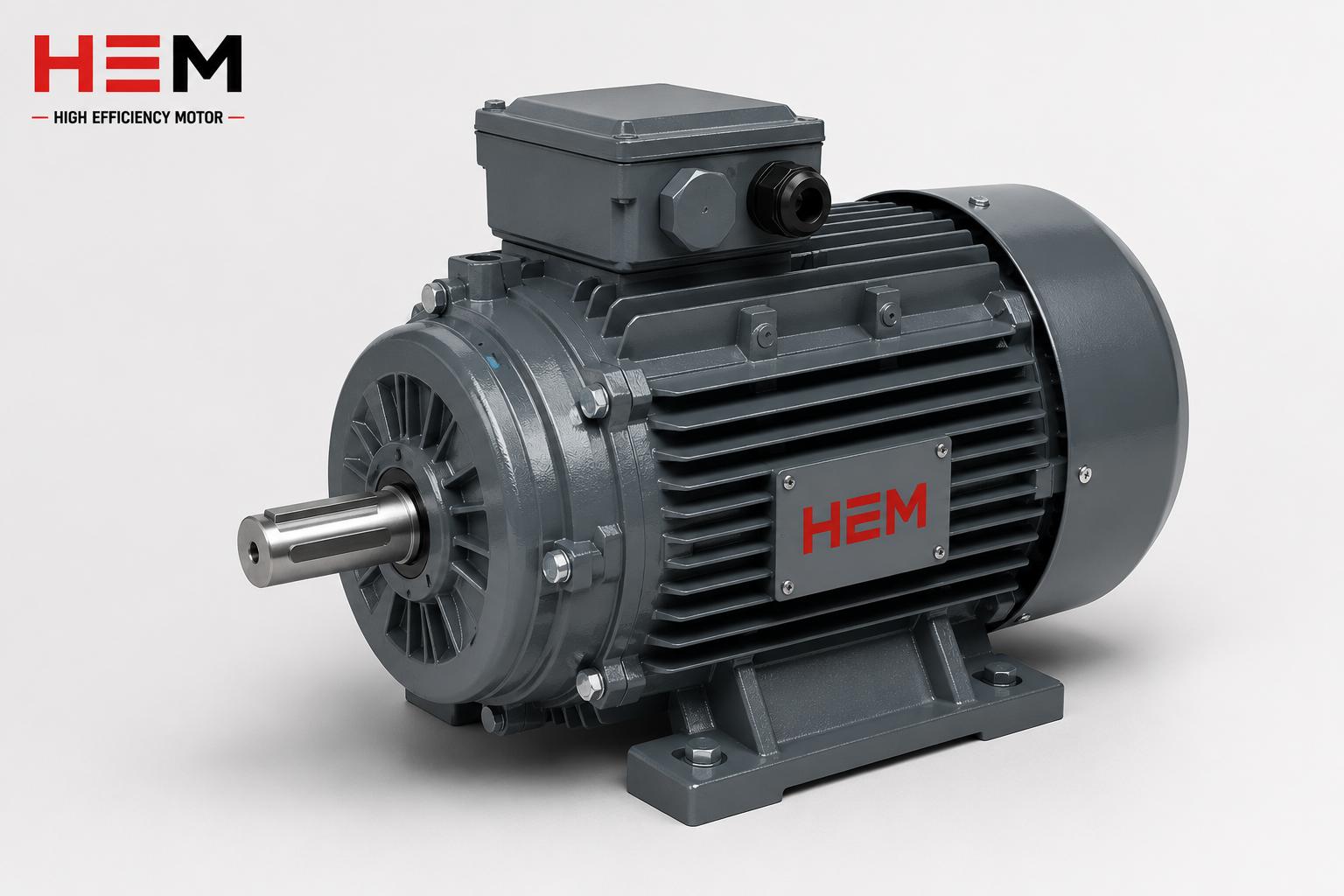

The moment an asynchronous motor (squirrel cage motor) is connected to the grid, it draws a current far above its rated value. This phenomenon, called starting current (inrush current, locked rotor current), occurs because the slip equals 1 at standstill and the rotor impedance is very low. In practice this means a current surge reaching 6 to 8 times the rated current, and even higher in high-efficiency motors. This surge affects not only the motor but the entire installation, the grid and neighbouring equipment. At HEM Motor we stress that selecting the right motor with the correct winding configuration and the right starting method protects both the grid and the motor. In this article we explain the physics of inrush current, its grid effects, and compare direct, star-delta, soft starter and frequency inverter methods to help you choose the best solution for your application. For current electric motor prices and stock availability, contact us.
What Is Starting (Inrush) Current in an Asynchronous Motor?
An asynchronous motor works on the principle that the rotating magnetic field created in the stator induces a current in the rotor. While the motor is at standstill the rotor is not yet turning; in this condition the slip equals 1. With slip at 1 the relative speed between stator and rotor is at its maximum and the induced rotor voltage is at its highest. Because the rotor impedance is very low at this point, the motor behaves almost like a short-circuited transformer and draws a very high current from the grid.
This condition is known as the locked rotor state. The locked rotor current is typically 5 to 8 times the motor rated current. As the motor accelerates the slip decreases, rotor impedance rises and the current quickly falls toward the rated value. However this transient surge, which may last several seconds, severely stresses protection devices, cables and the grid.
The locked rotor code letter on the motor nameplate defines the apparent power (in kVA/HP) drawn at start. These letters, starting from A and progressing onward, are critical for generator and protection selection. For details see our article on the locked rotor code letter and starting current.
Effects of Starting Current on the Grid
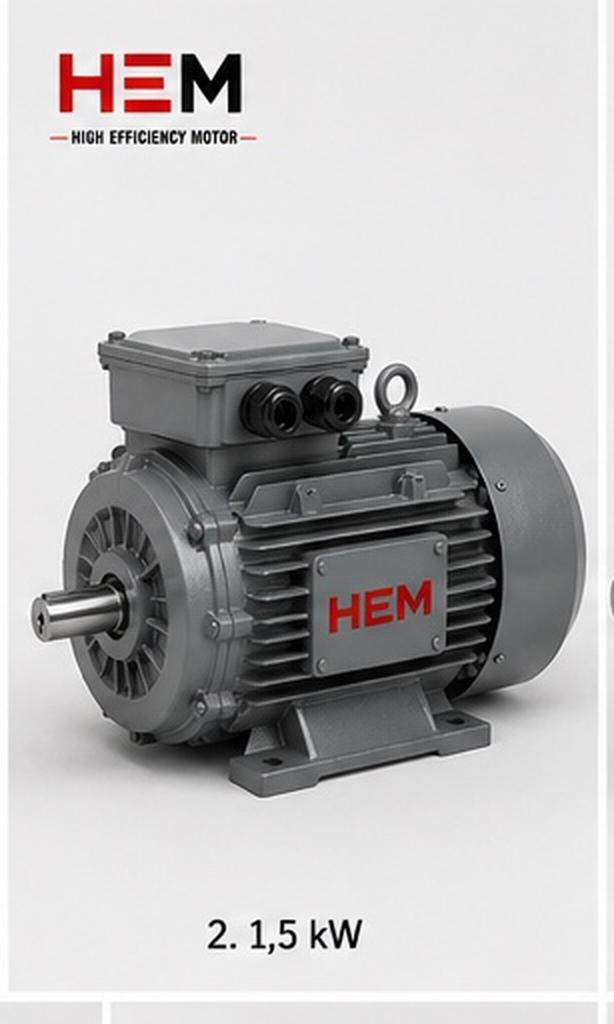
High starting current has multiple effects on the electrical infrastructure of an installation. Understanding these effects directly drives both motor and accessory selection.
- Voltage dip: The high current drawn when the motor switches on causes a significant voltage drop across the line impedance, momentarily lowering the voltage of other devices fed from the same busbar.
- Flicker: Visible light flicker can appear in lighting circuits, creating both comfort and regulatory problems.
- Fuse and breaker tripping: Incorrectly chosen thermal-magnetic breakers or fuses may interpret the starting surge as a fault and open the circuit. Motor protection devices must therefore match the starting curve.
- Generator sizing: In off-grid installations the generator kVA rating must be chosen based on the motor starting kVA. Otherwise the generator cannot start the motor or the voltage collapses.
- Transformer loading: Starting large motors briefly overloads the supply transformer, affecting transformer life and other consumers.
- Neighbouring equipment: Sensitive electronics, PLCs and drives can be adversely affected by sudden voltage dips.
All these effects can be managed by choosing the correct starting method. HEM Motor simplifies this process by supplying motors with the right winding structure from stock for your application.
Comparison of Starting Methods
Below we compare the four fundamental starting methods with their advantages and disadvantages. The right choice depends on motor power, grid stiffness, load type and cost expectations.
Direct On Line (DOL) Starting
Direct on line (DOL) starting is the simplest and most economical method. The motor is connected directly to full grid voltage. With this method:
- Full starting current (6-8 times rated) is drawn.
- Full starting torque is obtained; starting under heavy load is not a problem.
- No additional equipment is needed beyond a contactor, thermal relay and fuse.
DOL is generally suitable for small motors (typically below 4-7.5 kW, depending on grid stiffness) and stiff (strong) grids. The full starting torque is an advantage for loads requiring high starting torque such as crushers or compressors. We discuss starting torque behaviour in DOL starting in our article on starting torque in DOL starting.
Star-Delta Starting
Star-delta starting reduces the starting current to approximately 1/3. The motor is first energised in star connection (windings exposed to a lower voltage), then switched to delta after accelerating. Key points of this method:
- Starting current drops to about 1/3; the grid surge is reduced.
- However the starting torque also drops to 1/3, so it is only suitable for unloaded or lightly loaded starts (such as an unloaded fan or pump).
- The motor must have a 6-lead terminal structure and a dual-voltage winding (e.g. 400/690V).
- A current surge (transition spike) can occur at the moment of switching from star to delta.
Correct terminal connection is mandatory for star-delta; our guide on star-delta terminal connection provides guidance. HEM Motor supplies 6-lead, dual-voltage (230/400V and 400/690V) motors suitable for star-delta starting from stock.
Soft Starter
A soft starter controls the starting current by gradually ramping up the voltage applied to the motor through thyristors. Its advantages:
- Starting current is limited in an adjustable manner; mechanical and electrical shock is reduced.
- The smooth acceleration protects belts, couplings and pump lines.
- It prevents water hammer in applications such as pumps and conveyors.
- The motor must have the insulation and thermal capacity to tolerate this operating regime.
The soft starter is ideal for medium and large pumps, fans and conveyors. It is important that the motor is compatible with the soft starter; our article on soft starter compatibility explains the selection criteria.
Frequency Inverter (VFD)
A frequency inverter (VFD, drive) is the method that provides the lowest starting current while also offering speed control. By varying frequency and voltage together it accelerates the motor from zero speed at full torque. Its advantages:
- Lowest inrush; the grid is barely stressed.
- Full starting torque and infinitely variable speed control.
- Significant energy savings in pump and fan applications.
Points to consider when using a VFD are bearing current, winding insulation voltage spikes (dV/dt) and, when needed, the choice of insulated bearings or reinforced insulation. HEM Motor supplies IE3 electric motors with reinforced insulation suitable for inverter supply.
How Motor Design Affects Inrush Current
Starting current depends not only on the starting method but also on the motor design. Important points:
- Efficiency class: IE3 and especially IE4 motors often have higher starting current due to their low-loss design. As efficiency increases, inrush generally rises; this affects protection and starter selection.
- NEMA / IEC design class: The torque-speed characteristic of the motor (NEMA Design A/B/C/D or IEC equivalent) determines starting current and torque.
- Frame and kW: The absolute starting current rises in large frame and high power motors, which limits the use of DOL.
- Inertia: If the load inertia (flywheel effect) is high, the starting time lengthens and the motor draws high current for longer.
Starting Method Selection by Application
The right method is determined by the nature of the load:
- Pump: Soft starter or VFD; prevents water hammer and protects the line. DOL for small pumps.
- Fan: Since it starts under low load, star-delta or soft starter is suitable; VFD if speed control is needed.
- Conveyor: Soft starter protects the belt and conveyed material; VFD for precise positioning.
- Crusher (high inertia): Requires high starting torque; DOL or a properly sized soft starter, VFD if necessary.
- Compressor: Requires full torque due to loaded starting; DOL for low power, VFD or a suitable soft starter for higher power.
Choose the Right Motor with HEM Motor
As both an electric motor manufacturer and supplier, HEM Motor reliably provides the motor suited to your starting method:
- Motors with a 6-lead terminal structure for star-delta.
- Dual-voltage 230/400V and 400/690V winding options.
- Soft starter and inverter compatible motors with reinforced insulation.
- Wide stock and fast supply; quotation and technical support with manufacturer assurance.
The wrong starting method both stresses the grid and shortens the motor life. To select the right motor and accessories for your application, review our wide product range and our IE3 electric motors options.
Calculating Starting Current and Nameplate Values
To predict a motor starting behaviour you must read the nameplate values correctly. The rated current (In), rated power (kW), power factor (cos φ), efficiency and especially the locked rotor current ratio (Ist/In) form the basis of the starting calculation. Many manufacturers do not state this ratio directly; instead the locked rotor code letter is used. The code letter expresses the locked rotor kVA range the motor draws per horsepower and increases alphabetically starting from the letter A. For example, a higher code letter means that a motor of the same power will draw more kVA at start.
When the locked rotor kVA value is known, the starting current can be estimated by dividing by the motor voltage. This value is used both in selecting protection devices and in generator sizing. In three-phase systems, apparent power equals the voltage and current multiplied by the root-three factor; therefore as the starting kVA grows, the required supply capacity rises rapidly. HEM Motor provides the nameplate values and starting characteristics of every motor it supplies together with technical documentation, helping project engineers make correct calculations.
Starting time is at least as important as starting current. If the load inertia is high, the time it takes for the motor to reach rated speed lengthens, and during this time the windings heat up under high current. Therefore for high-inertia loads not only the peak current but also the starting time and winding heating must be considered. Otherwise the motor thermal protection may trip or the winding insulation may be damaged over time.
Relationship Between Protection Devices, Cable Selection and Starting Current
As much as the starting method, the protection devices of the circuit feeding the motor must also be selected according to the starting current. The wrong choice leads either to nuisance tripping or to inadequate protection.
- Motor circuit breaker (MCB): Types with a high magnetic trip threshold (such as a D-type characteristic) are preferred in motor circuits so they do not trip on the starting surge.
- Thermal relay: It protects the continuous current of the motor, but it must have a time-delayed characteristic to let the starting surge pass.
- Contactor: Three contactors (mains, delta, star) are used in star-delta starting; selecting them at the correct rating determines the switching life.
- Cable cross-section: The cable is sized for the continuous rated current, but the voltage drop at start must also be taken into account on long cable runs.
Selecting all these elements in a compatible way ensures both safe starting and long-life operation of the motor. HEM Motor offers technical consultancy on the appropriate protection and starting topology during motor selection, so the facility owner sources both the right motor and the right set of accessories from a single point.
Common Mistakes and Correct Practice
In field applications, most starting-current problems stem from the wrong method or the wrong motor choice. The most common mistakes are:
- Using star-delta on a loaded start: Because the starting torque drops to 1/3, the motor cannot accelerate before switching to delta; it draws high current for a long time and trips on thermal overload.
- DOL starting with an insufficient generator: Trying to start a large motor directly with a small generator causes voltage collapse and tripping of the generator protection.
- Attempting star-delta with a single-voltage motor: A motor that is not 6-lead or is wound for the wrong voltage is not suitable for star-delta.
- Standard insulation on inverter supply: A motor without reinforced insulation may fail early under VFD pulse voltages.
All these mistakes can be prevented by selecting the right motor and the right starting method during the design stage. HEM Motor makes this process safe by offering fast supply from stock and a technical quotation with manufacturer assurance.
Frequently Asked Questions
How many times the rated current is the starting current of an asynchronous motor?
A squirrel cage asynchronous motor typically draws 5 to 8 times its rated current at start. In high-efficiency IE3/IE4 motors this value can be even higher. The exact figure depends on the locked rotor code letter and the design class of the motor.
When is star-delta starting preferred?
Star-delta reduces the starting current to approximately 1/3 but also reduces the starting torque by the same ratio. It is therefore preferred only in applications that start unloaded or lightly loaded (idle fan, unloaded pump) and where the motor has a 6-lead, dual-voltage winding.
Up to what power is DOL (direct) starting used?
DOL is generally used for small motors and stiff grids; in practice it is often preferred up to around 4-7.5 kW. However grid stiffness, generator capacity and the distribution utility limits can change this value. Larger motors can also be DOL started on a stiff grid.
Why is starting current important for a generator?
A generator is much softer than the grid; if the motor starting kVA exceeds the instantaneous power capacity of the generator the voltage collapses and the motor cannot be started. The generator kVA must therefore be selected based on the motor locked rotor kVA; if necessary the starting current should be reduced with a soft starter or VFD.