English
 Türkçe



Summary (TL;DR)
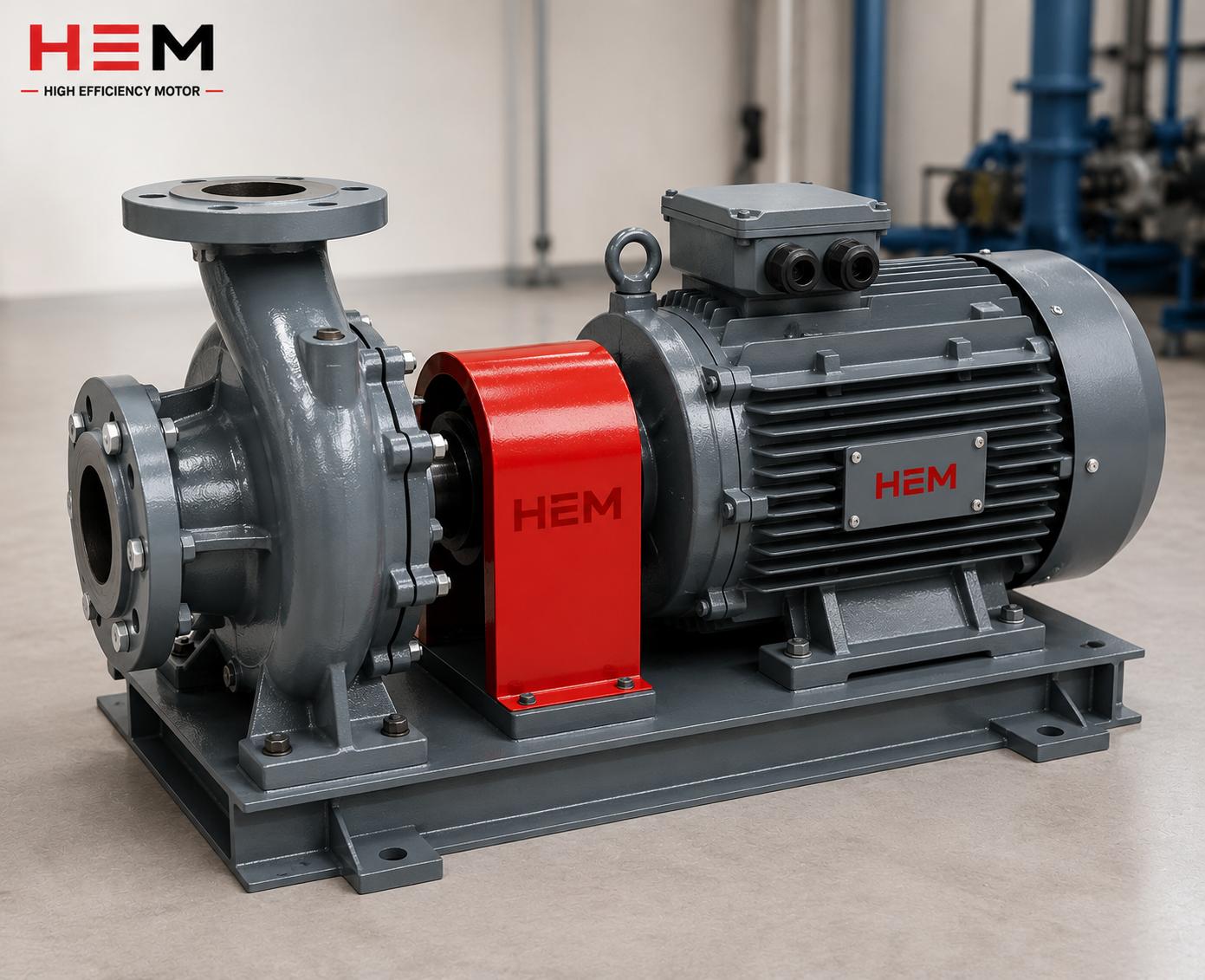
- Overload capacity and breakdown torque margin determine how much sudden load a motor can absorb while staying in stable operation; when choosing an IE4 motor, this margin matters as much as the rated power.
- The breakdown-to-rated torque ratio (Tb/Tn) is typically 2.0–3.5; the higher it is, the more confidently the motor handles shock-load applications such as crushers, conveyors, compressors and mixers.
- The service factor and thermal headroom allow sustained overload without tripping protection or burning the winding; correct selection is a deliberate balance between oversizing and torque margin.
- HEM Motor manufactures Super-Premium IE4 motors from 0.25–355 kW with cast-iron frames, IP55 protection, Class F insulation and 100% copper windings, offered from stock or with short lead times.
- To buy the right motor, share your load profile (continuous or shock), starting torque and required margin; with manufacturer assurance we will define the correct IE4 motor for your application together.
The rated power on a motor nameplate sits at the centre of most purchasing decisions, yet what actually damages, trips or prematurely fails a motor in the field is often not the rating but its overload capacity and breakdown torque margin. When a rock jams in a crusher, a conveyor starts under full load, a compressor cuts in against high back-pressure, or a mixer grabs a viscous mass, the demand on the motor briefly soars far above rated torque. This is exactly where an IE4 motor — a Super-Premium efficiency class machine — makes a difference, not only through energy savings but through thermal reserve and torque margin.
In this article we look at the topic as both manufacturer and seller: what breakdown torque is, why the Tb/Tn ratio matters, how an IE4 motor behaves under sudden and shock loads, what the service factor and thermal headroom do, and most importantly, how to select the right IE4 motor for a shock-load application. For current electric motor prices and stock availability contact us, and explore the range on our IE4 Electric Motors page.
What Is Breakdown (Pull-out) Torque?
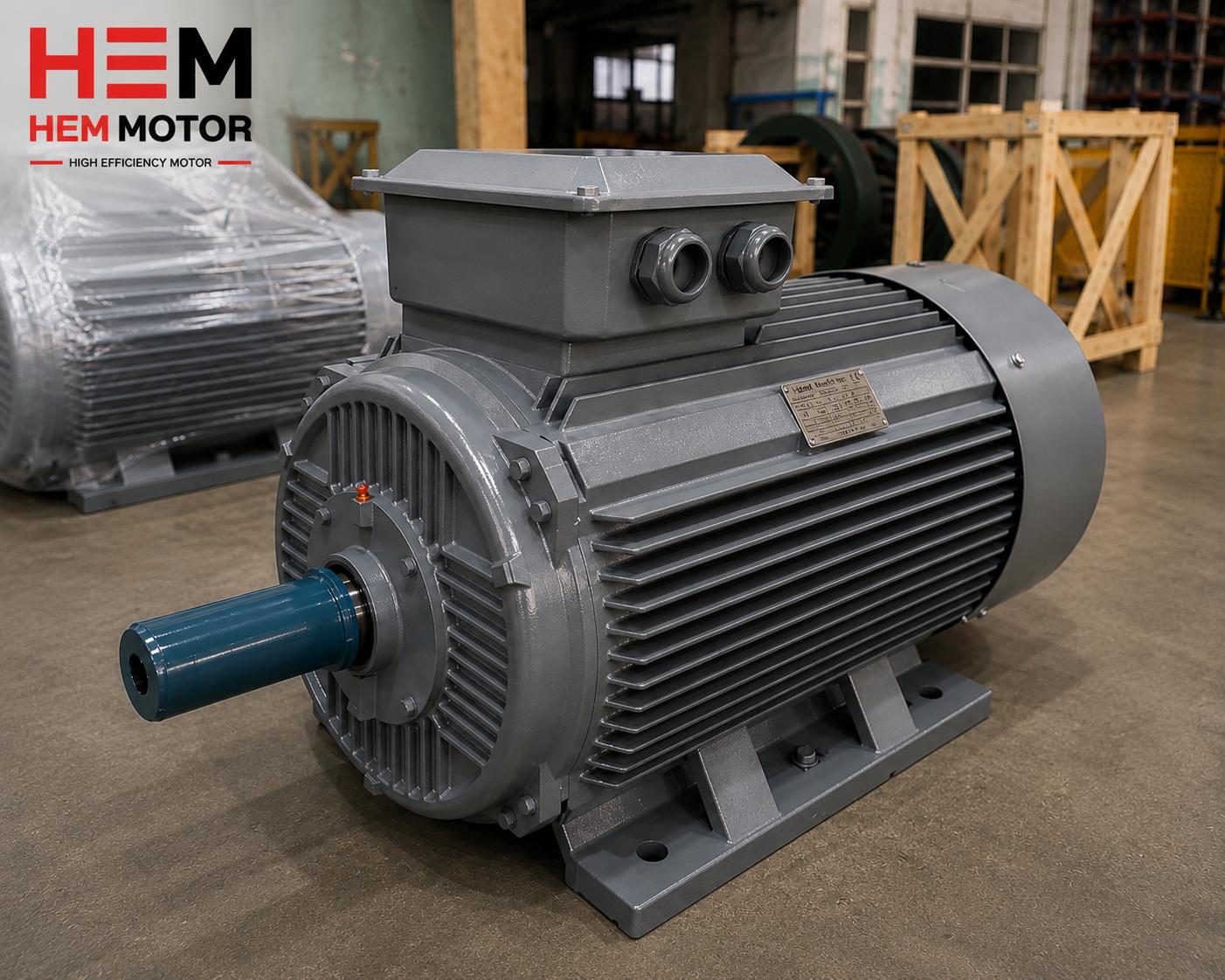
On the torque-slip curve of an asynchronous motor, torque follows a defined profile from the moment of starting to the rated operating point. As the motor loads up, slip increases and the produced torque rises to a certain peak. The peak of this curve is the maximum torque the motor can produce, and it is called the breakdown torque (or pull-out torque). If the load exceeds this peak, the motor can no longer maintain balance, slip grows rapidly, torque falls and the motor stalls — it "breaks down".
In practice this is the motor''s safety ceiling. If rated torque (Tn) is the normal torque the motor produces continuously, breakdown torque (Tb) is the highest value it can be momentarily pushed to. Their ratio, Tb/Tn, is the single most important number describing how much margin the motor has against sudden load. Industrial standards typically require a minimum of 1.6; well-designed general-purpose motors reach 2.0–3.5.
Why Is the Tb/Tn Ratio a Safety Margin?
Suppose a motor driving a conveyor runs at 100% of rated torque at full load. When a sudden pile of material drops onto the conveyor, the required torque can spike to 180% in an instant. A motor with a Tb/Tn ratio of 2.5 absorbs this shock, holds its speed and keeps running. A motor with a ratio of only 1.7 comes dangerously close to its peak; a small additional shock or a voltage dip pushes it past the breakdown limit and it stalls. A stopped production line almost always costs far more than the motor itself.
This is why correct selection asks not only "how many kW" but "how much torque margin". In HEM Motor production, IE4 motors are optimised so that the low-loss design required by the Super-Premium class delivers both high efficiency and a robust breakdown margin at the same time.
How an IE4 Motor Behaves Under Sudden and Shock Loads
IE4 motors belong to the Super-Premium efficiency class defined under IEC 60034-30-1. To reach this class, the designer minimises rotor-bar losses, stator winding resistance, iron losses and friction-windage losses. A direct side effect of this low-loss build is improved thermal behaviour: the motor generates less heat at the same load, so it can carry more overload before reaching the same temperature limit. In practice this is called thermal reserve or thermal headroom.
Let us examine sudden load in three typical scenarios:
- Momentary overload: A peak lasting seconds. The motor''s ability to ride through it depends directly on the breakdown torque margin. The high Tb/Tn ratio of an IE4 motor prevents stalling in these moments.
- Intermittent overload: Short load spikes above rated value that repeat periodically. Here both torque margin and thermal reserve matter, because each spike leaves a little heat and cooling spreads across the intervals.
- Continuous mild overload: Long operation slightly above rated value. Here the decisive factors are the service factor and the thermal capacity of the insulation class.
The low-loss winding and Class F insulation of an IE4 motor provide a wider safety window in all three scenarios. In the same application, an IE4 motor usually runs at a lower winding temperature than an IE2 or IE3 motor, extending life and improving resilience to intermittent overload. We covered part-load and low-load efficiency behaviour separately in our article IE4 Motor Efficiency at Partial and Low Load.
Service Factor and Thermal Headroom
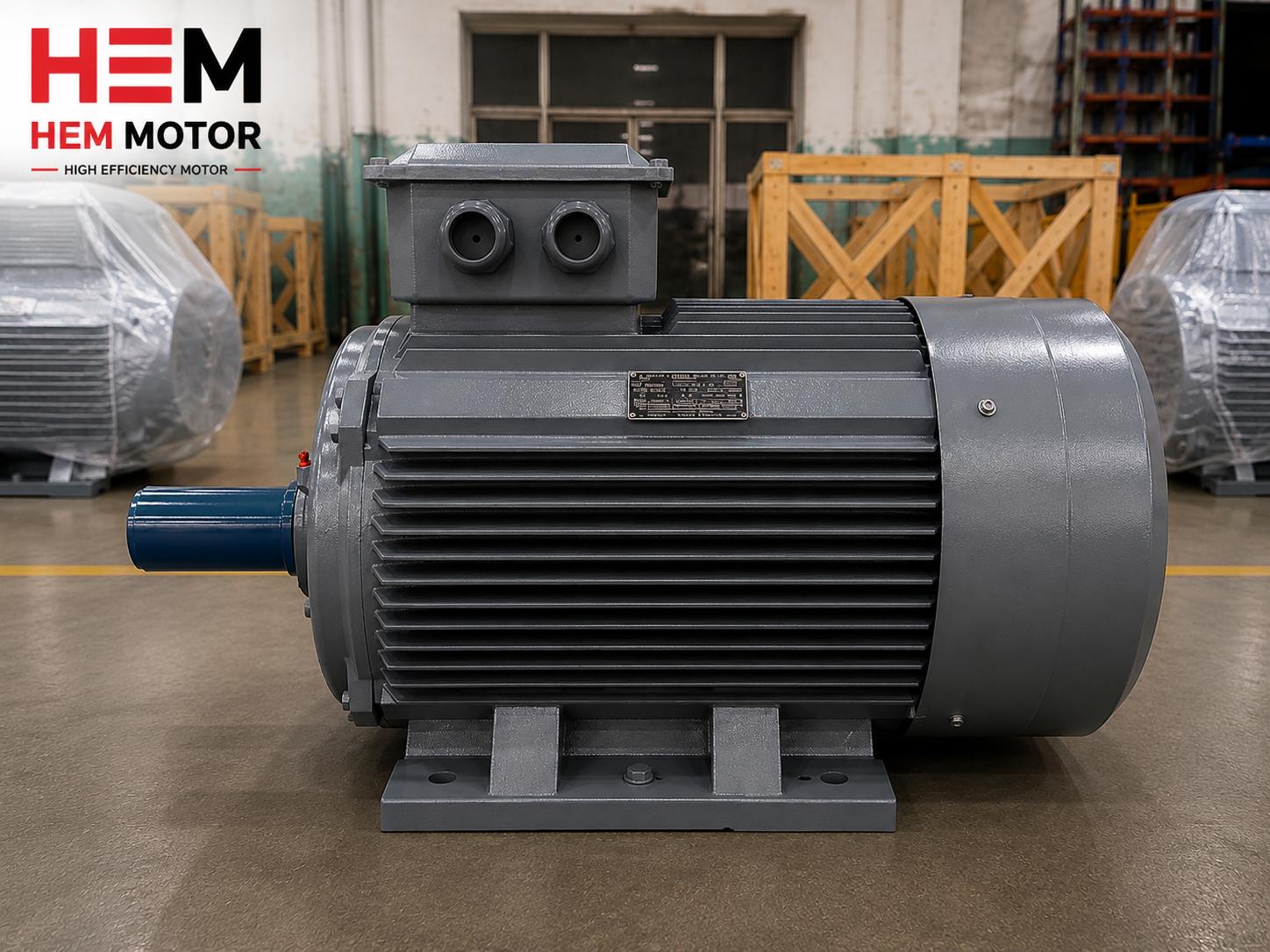
The service factor (SF) is the safe coefficient by which a motor may run continuously above its rated power. A motor with SF 1.15 can, under suitable conditions, run at 15% above rated power with an acceptable temperature rise. The key point is that the service factor is not "free power"; while operating in this margin the motor runs hotter, efficiency drops slightly, and holding it there permanently shortens life. The service factor is a buffer for unexpected or temporary overloads, not a continuous operating point.
Thermal headroom is the gap between the temperature limit allowed by the insulation class and the motor''s actual operating temperature. HEM Motor IE4 products use Class F insulation as standard; in most cases the winding is designed to operate below the Class F limit, at a Class B temperature rise. This gap gives the motor extra overload resilience and ambient temperature tolerance. In plants with high ambient temperature, high altitude or frequently repeated load spikes, this reserve is vital.
Is the Service Factor the Same as the Breakdown Margin?
No, they are different concepts that must be evaluated together. The breakdown torque margin (Tb/Tn) is a torque capacity; it is about absorbing sudden shocks lasting seconds. The service factor is a thermal capacity; it is about mild continuous overload lasting minutes or hours. If an application both contains sudden shocks and runs continuously at high load, the motor must provide adequate margin on both fronts. Correct selection matches these two margins to the application''s load profile.
Oversizing or Torque Margin?
A common field reflex is to choose a motor one or two sizes larger "just in case". This approach is sometimes necessary but often expensive and inefficient. An oversized motor usually runs at partial load, which lowers the power factor, moves efficiency away from the rated point and raises both capital and operating cost. Moreover, a larger motor draws higher starting current and forces the drive and protection equipment to grow as well.
The correct approach instead is to derive the application''s real load profile and select a motor whose rated power suits the application while offering enough breakdown torque margin and service factor. In some cases stepping up one size makes sense; in others, choosing an IE4 motor with a higher Tb/Tn ratio delivers the required shock resilience without any oversizing. Which path is right depends on whether the load is continuous or shock-type.
- Continuous heavy load: Select rated power correctly; a reasonable SF (1.15) may be enough.
- Frequent shock load (crushers, breakers): Prioritise a high Tb/Tn ratio; combine with one-size step-up if needed.
- High inertia, hard start (large fans, centrifuges): Starting torque and acceleration time are critical; rotor design and thermal capacity must be evaluated together.
- Intermittent cycle (cranes, hoist-type loads): Duty cycle and thermal reserve are decisive.
We detailed the effect of pole count on torque and efficiency in low-speed applications in our article Efficiency and Torque in Low-Speed 6- and 8-Pole IE4 Motors. For stone-crushing and crusher-specific motor selection, see our Crusher & Stone-Crushing Motors page.
Choosing the Right IE4 Motor for Shock-Load Applications
Crushers, breakers, fully loaded conveyor starts, compressors cutting in under load, and viscous mixers share one trait: sudden, unpredictable torque demand during operation. When selecting a motor for these applications, we recommend the following steps:
- Define the load profile: Is the load constant, periodic or randomly shock-type? Estimate the ratio of peak torque to rated torque.
- Calculate the starting torque: Does it start loaded or unloaded? High inertia (GD²) raises acceleration time and thermal load.
- Request the breakdown margin: Aim for a Tb/Tn ratio that leaves at least 30–50% margin above the peak load.
- Check the service factor and insulation: If continuous mild overload exists, SF and thermal headroom gain importance.
- Add ambient conditions: High temperature, dust and altitude all reduce effective overload capacity.
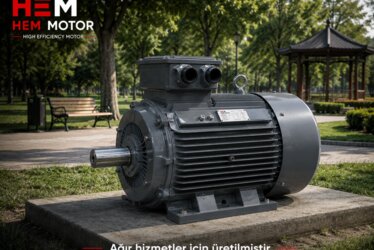
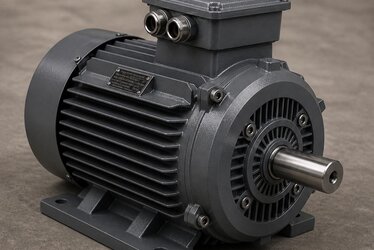
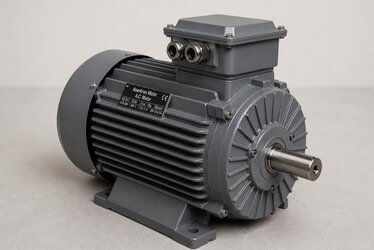
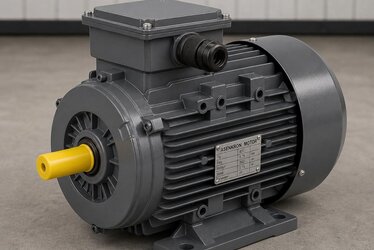
As HEM Motor we walk through these steps with you. Our Super-Premium IE4 range covers 0.25–355 kW, speed options of 1000/1500/3000 rpm, B3/B5/B35 mounting arrangements, cast-iron frames, IP55 protection, Class F insulation and 100% copper windings. When these features come together, you get both high efficiency and strong resilience under sudden load. You can review the general-purpose models on our General-Purpose Industrial Motors page.
Questions to Ask the Manufacturer When Buying
Buying the right IE4 motor starts with asking the right questions. When requesting a quotation, ask the manufacturer clearly for the following:
- What is this model''s breakdown torque / rated torque (Tb/Tn) ratio?
- Does the starting torque / rated torque (Ta/Tn) ratio meet my application''s starting need?
- What is the motor''s service factor and at which ambient temperature does it apply?
- What are the insulation class and design temperature rise (Class B or Class F)?
- Is the required power and speed in stock, or what is the lead time?
Being the manufacturer means we can provide this information directly and quickly. On stock availability, short lead times and application-specific quotations, we stand beside you with manufacturer assurance. When you select a motor not just by its kW label but by its real load behaviour, both your energy bill and your maintenance cost will prove you right over the long term. Contact us with your load data for current electric motor prices and suitability.
Frequently Asked Questions
Is an IE4 motor''s overload capacity really higher than an IE3''s?
An IE4 motor''s overload capacity advantage comes more from thermal behaviour than from the torque figure itself. Thanks to the low-loss design, an IE4 motor heats up less at the same load, which lets it carry more intermittent and continuous overload before reaching the same temperature limit. The breakdown torque ratio depends on the design; a well-engineered IE4 motor can deliver both high efficiency and a strong Tb/Tn ratio together.
Can I solve a low breakdown margin by oversizing the motor?
Partly yes, but this is often not the most efficient solution. Oversizing raises peak torque capacity but lowers part-load efficiency and power factor, and increases capital cost and starting current. In most shock-load applications, choosing a correctly rated IE4 motor with a high breakdown torque ratio offers a smarter balance. Your load profile determines which is appropriate.
Can I run a motor with service factor 1.15 continuously at 15% overload?
It is technically possible but not recommended. The service factor is a buffer for unexpected or temporary overloads; running there continuously keeps the motor hotter, lowers efficiency and shortens insulation life. If you expect sustained high load, the correct solution is to select the rated power accordingly and preserve the service factor as a genuine reserve.