English
 Türkçe

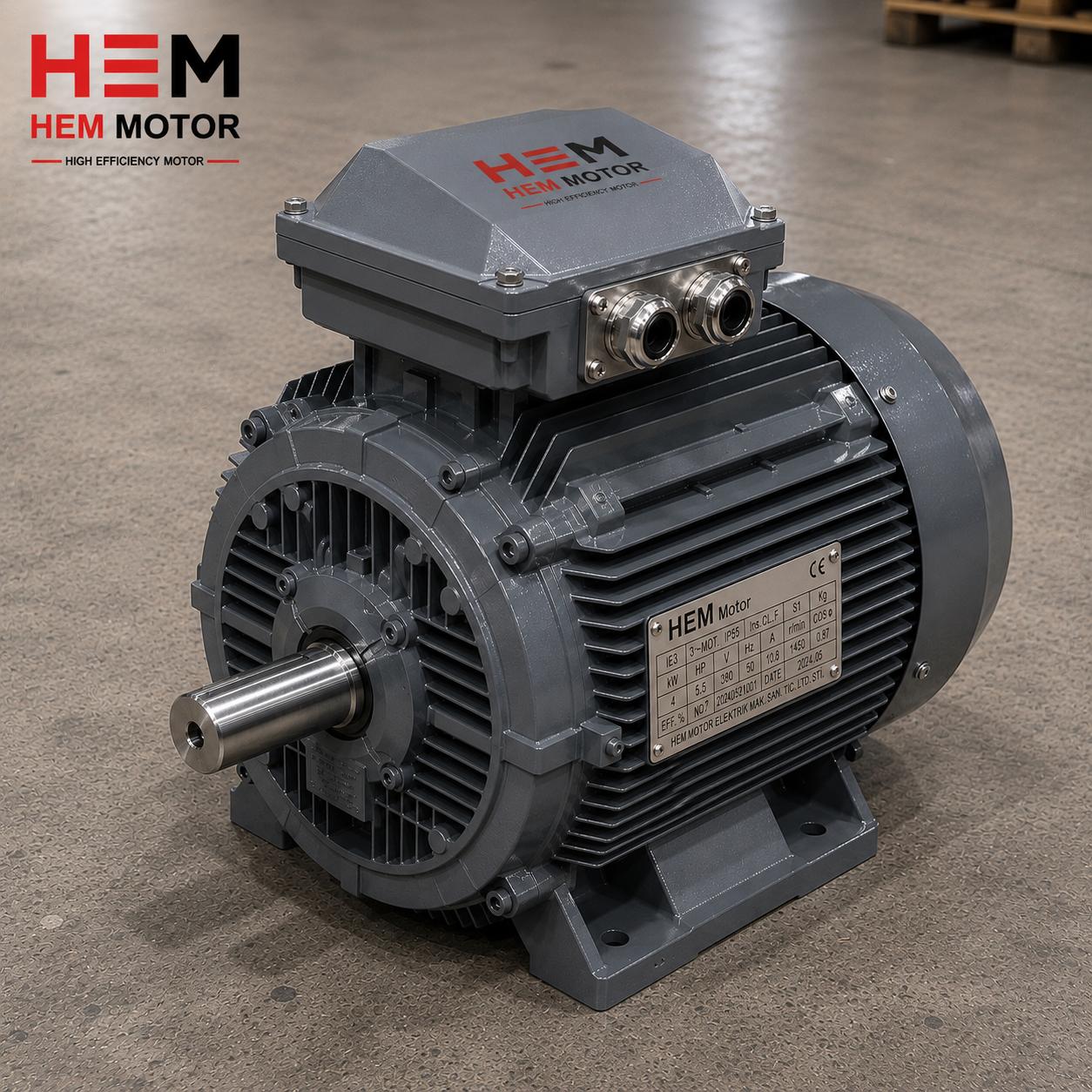

Storing an electric motor correctly is just as critical for protecting the investment as buying it. Especially for motors that will sit in stock for a long time or whose commissioning is postponed, wrong storage conditions can damage the motor before it ever runs. For an idle IE3 motor, the biggest danger is moisture and condensation, invisible to the eye but advancing insidiously. In this article we address the long-term storage and stock-holding process of IE3 motors through moisture, condensation, bearing and winding protection, in a way that prevents out-of-warranty damage, from a technical perspective.
A motor that sits in storage for a long time has two main damage mechanisms: moisture that degrades the winding insulation and inactivity that harms the bearing. These two mechanisms can largely be prevented with correct storage practices. When a poorly stored motor is commissioned, problems such as reduced insulation resistance, bearing noise or early failure may appear; moreover, because most of this damage is user-caused, it falls outside warranty coverage.
Below we explain step by step the correct storage conditions, winding and bearing protection, and the checks to be made before commissioning. The goal is to ensure that a motor sitting in stock is commissioned as healthy as on its first day.
The Biggest Risk: Moisture and Condensation
The biggest risk in an idle motor is moisture and condensation. The motor's winding is protected by insulation material wrapped around the copper wires. When exposed to moisture, this insulation loses its electrical resistance. Low insulation resistance can lead to leakage current, short circuit and burning of the winding when the motor is commissioned.
Condensation occurs especially in warehouses with temperature fluctuations. In an environment that warms during the day and cools at night, the air inside the motor carries moisture and water droplets form on cooling surfaces. Over time this water penetrates the winding insulation and lowers its resistance. For this reason, keeping the storage environment dry and at a stable temperature is the first condition for protecting the motor.
Insulation Resistance and Megger Measurement
The health of the winding insulation is measured with a megger (insulation test device). This measurement gives the resistance between the winding and the frame in megohms. Performing periodic megger measurements on motors stored for a long time allows early detection of any drop in insulation resistance. If the resistance has fallen below a certain threshold, the motor must be dried before commissioning. Regular measurement prevents surprises at the moment of commissioning.
Correct Storage Conditions
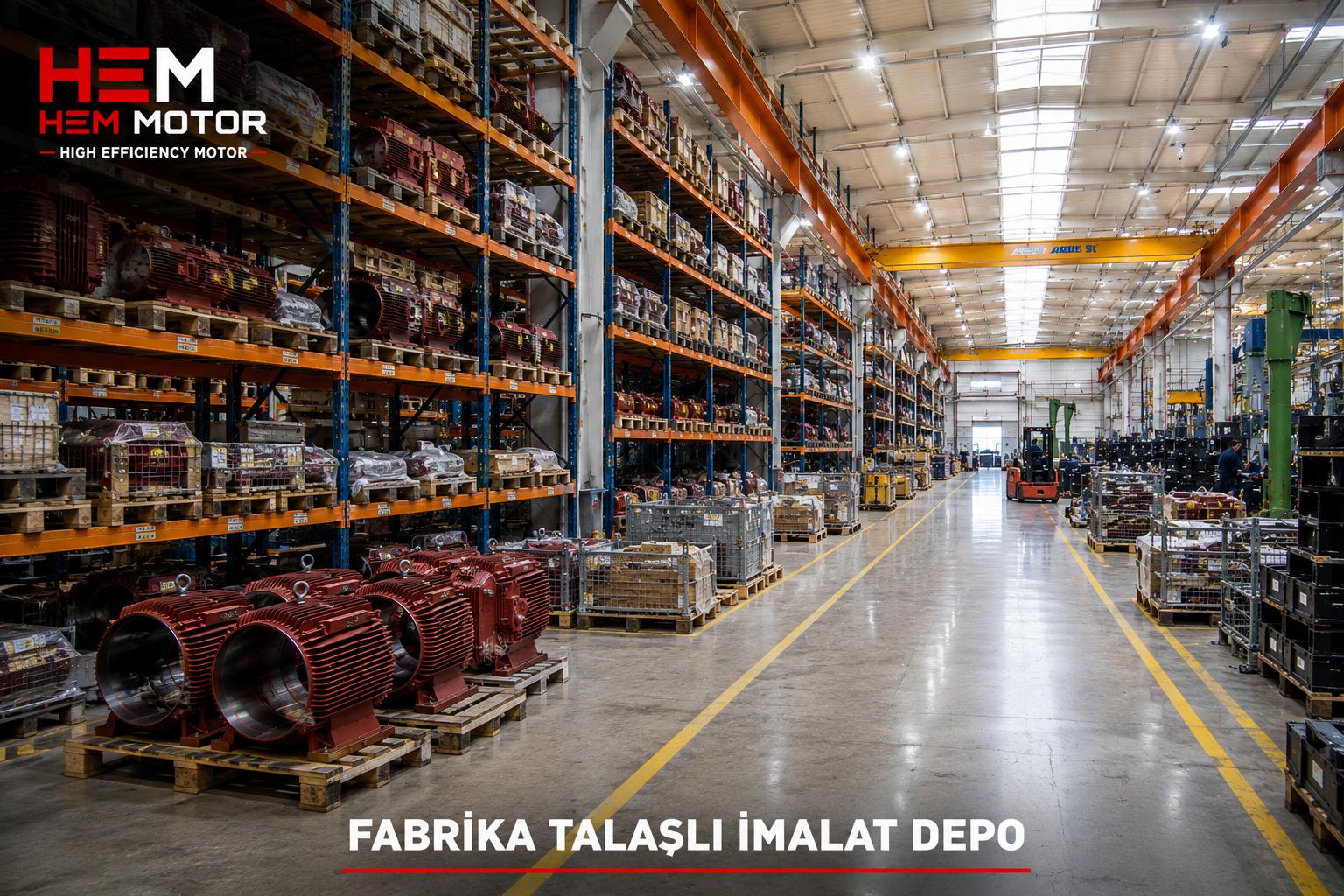
For a motor to stay healthy for a long time, the storage environment must meet certain conditions. The warehouse must be dry, kept at a stable temperature, have a vibration-free floor, and the motor must be placed not directly on the floor but on a pallet or shelf. In addition, the motor's original packaging should be preserved as long as possible until commissioning; the packaging protects the motor from dust, moisture and mechanical impact.
- The warehouse must be dry and well ventilated, with relative humidity kept low.
- The temperature must be stable; avoid sudden fluctuations.
- The floor must be vibration-free; vibration from nearby machines damages the bearing.
- The motor must be stored on a pallet or shelf, without contact with the floor.
- The original packaging and protective covers must be preserved until commissioning.
When these conditions are met, the motor stays healthy even if it waits in stock for a long time. For stock management, correctly stored motors can always be commissioned as on the first day; this is a great advantage for both keeping spare motors and fast supply. You can review the product family and technical content via the homepage.
Temperature and Humidity Monitoring
In environments where critical motors are stored, monitoring temperature and humidity values is useful. Ambient conditions are tracked with a simple thermometer-hygrometer, and measures are taken when humidity rises. Desiccant (silica gel) packs provide extra protection by holding moisture inside closed packaging. These small measures make a big difference in long-term storage.
Winding Protection: Space Heater and Periodic Checks
One of the most effective ways to protect the winding from moisture is to keep the motor's anti-condensation heater (space heater) energised. This heater keeps the inside of the motor slightly above ambient temperature and prevents condensation. Many IE3 motors can optionally be equipped with this heater. For motors that will sit in storage for a long time, keeping the space heater energised protects the winding most safely against moisture.
For motors without a space heater, periodic megger measurement and, when needed, a drying process come into play. When the insulation resistance drops, the motor is heated in a controlled way to remove the moisture. This process restores the electrical health of the motor winding. Regarding winding protection, for more information about the motor's efficiency class and character, our IE4 premium motor supply and stock content can be useful.
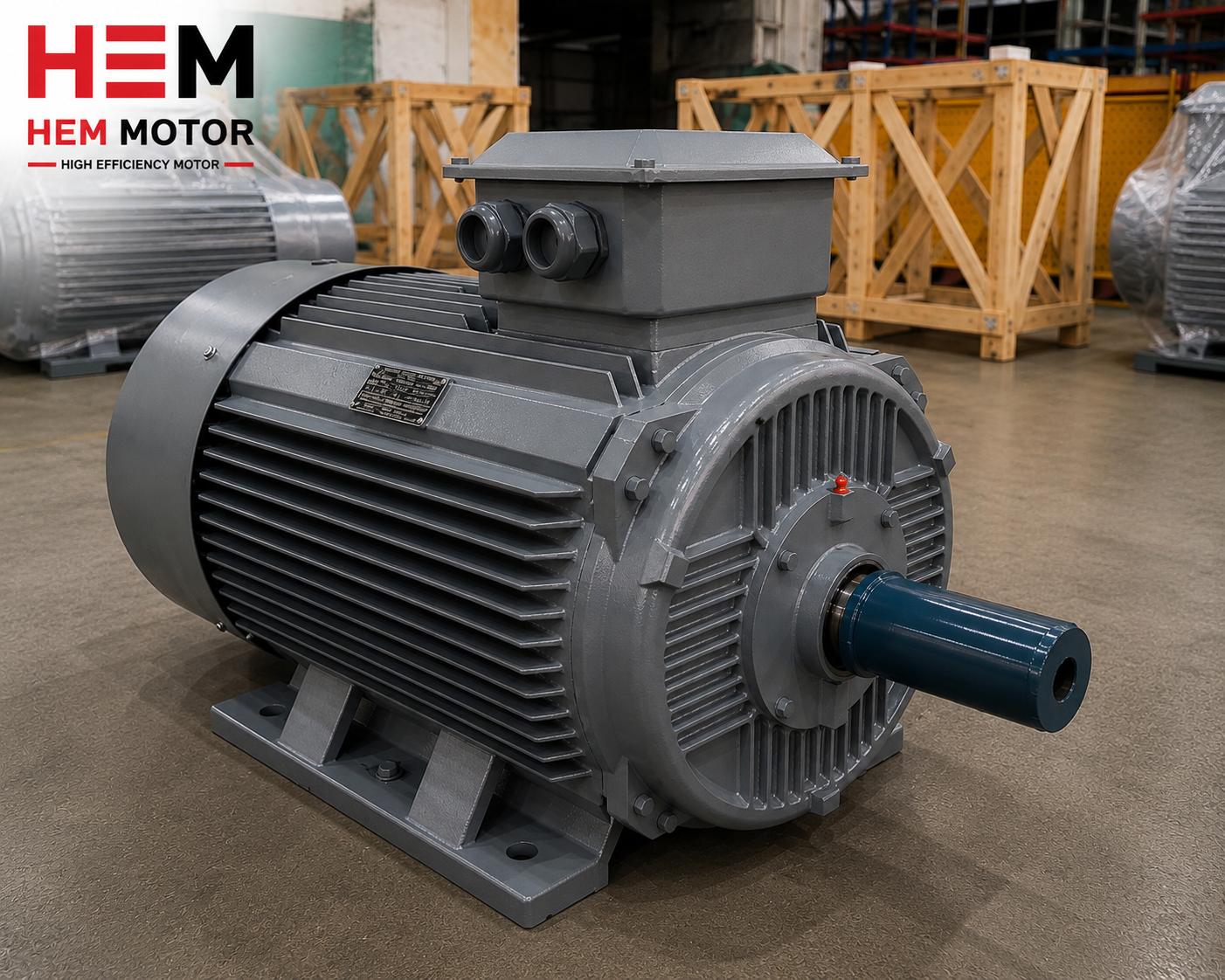
Bearing Protection: Preventing False Brinelling
The second big risk in a motor that sits motionless for a long time is in the bearing. When the motor waits a long time without turning, the bearing balls stay at the same point and the oil film thins at those points. A nearby vibration source causes micro-damage at these fixed points; this is called false brinelling. This damage appears as noise, vibration and early bearing failure when the motor is commissioned.
The simplest way to prevent false brinelling is to turn the motor's shaft by hand at regular intervals (for example, once a month) during storage. Turning the shaft so that it stops at a different angle each time prevents the balls from staying at the same point and renews the oil film. This simple practice protects the bearing life significantly and ensures a quiet, vibration-free start at commissioning, requiring no special equipment and being easy to apply.
Keeping Away from Vibration
Another condition of bearing protection is keeping the motor away from vibration sources. Continuous vibration sources such as a nearby compressor, press or forklift traffic can damage the stationary bearing. For this reason, the storage area should be chosen as vibration-free as possible. If vibration is unavoidable, turning the shaft regularly becomes even more important.
Checks to Be Made Before Commissioning
A motor that has sat in storage for a long time must not be started directly. Making a few basic checks before commissioning protects both the motor and the connected equipment. First, the insulation resistance is measured with a megger and confirmed to be sufficient. Then the bearing is checked by hand for free rotation; if there is seizure or noise, the bearing is evaluated. The direction of rotation and the terminal connections are checked, and the phase order is connected correctly.
- Insulation resistance is measured with a megger; if insufficient, drying is performed.
- The bearing is turned by hand to check whether it rotates freely and whether there is noise.
- The direction of rotation and phase order are verified.
- Terminal connections and their tightness are checked.
- If present, the space heater is verified to work and to be switched off during commissioning.
These checks allow a motor that has waited a long time to be commissioned safely. Most out-of-warranty damage results from skipping these simple steps, because manufacturers usually exclude moisture or bearing damage that occurs when correct storage and commissioning instructions are not followed. Therefore the pre-commissioning checklist is the way to protect both the motor and the warranty rights. A few minutes of checking is far more economical than a much more expensive rewinding or motor replacement.
Stock Management and Spare Motor Strategy
Many operations keep spare motors so they can respond quickly if a motor on a critical production line fails. But if these spare motors are not stored correctly, they can become unusable when needed. A correctly stored spare IE3 electric motor comes into service within minutes during a failure and minimises production loss; a poorly stored spare turns out to be useless at the exact moment of need, with an insulation or bearing problem.
For this reason, a spare motor strategy does not end with buying the motor; it also covers correct storage, periodic checks and record keeping. For each spare motor, the last megger measurement date, the last shaft-turning date and the storage conditions should be recorded. These records show whether the motor can be safely commissioned when needed. A well-managed spare motor stock is the insurance of uninterrupted operation.
Correct Supply and Fast Delivery from Stock
An alternative to keeping spare motors is fast delivery from stock from a reliable supplier. When motors in the most commonly used power and speed classes are kept in stock with manufacturer assurance, the right motor reaches the field in a short time during a failure. This approach reduces the burden of keeping many spares in your own warehouse. A correct supply strategy is to evaluate the spares in your own stock together with the fast supply option.
Protection During Packaging and Transport
Protecting the motor begins at the transport stage, even before the warehouse. During transport, the motor's shaft is fixed with a transport clamp or lock; this prevents road vibration from damaging the bearing. The motor must be transported in its original packaging and in an upright position, protected from impact and tipping. The terminal box cover and shaft protectors must be in place.
A motor that arrives at the warehouse should be stored without opening the packaging; the packaging should be opened only at commissioning. Packaging opened early exposes the motor to dust, moisture and mechanical impact. Therefore, preserving the packaging is an inseparable part of storage protection.
Lubrication After Long Storage
For motors that have sat in storage for a very long time, whether the bearing grease has kept its properties should be evaluated. Some bearings may need re-greasing. According to the manufacturer's lubrication instructions, the bearing is re-greased if necessary. Correct lubrication ensures the motor comes into service without bearing damage at the first start. This step should not be neglected, especially in motors that have waited years in storage.
Frequently Asked Questions
How long can a motor wait in storage?
A motor stored under correct conditions can wait a long time in a dry environment, on a vibration-free floor, with periodic maintenance. What matters is not the duration but the storage conditions. If humidity is kept under control, the shaft is turned regularly and the insulation resistance is measured periodically, the motor can stay healthy for years. Under wrong conditions, it can be damaged even in a short time.
Can a motor with reduced insulation resistance be used?
A motor with reduced insulation resistance must not be commissioned directly; otherwise there is a risk of leakage current or short circuit. In this case the motor is dried by heating it in a controlled way and the insulation resistance is measured again. When the resistance rises to a sufficient level, the motor can be run safely. The drying process restores the insulation by removing moisture from the winding and can be done with low-voltage winding heating, an external oven or a space heater, while monitoring that the insulation resistance rises steadily.
How do I protect a motor without a space heater?
In motors without an anti-condensation heater, moisture protection is provided by correct storage conditions and periodic checks. The warehouse is kept dry and at a stable temperature, desiccant packs are used, and the insulation resistance is measured regularly. When the resistance drops, the motor is dried. In addition, the bearing is protected by turning the shaft regularly. When these measures are applied together, the motor stays healthy for a long time even without a space heater.