English
 Türkçe

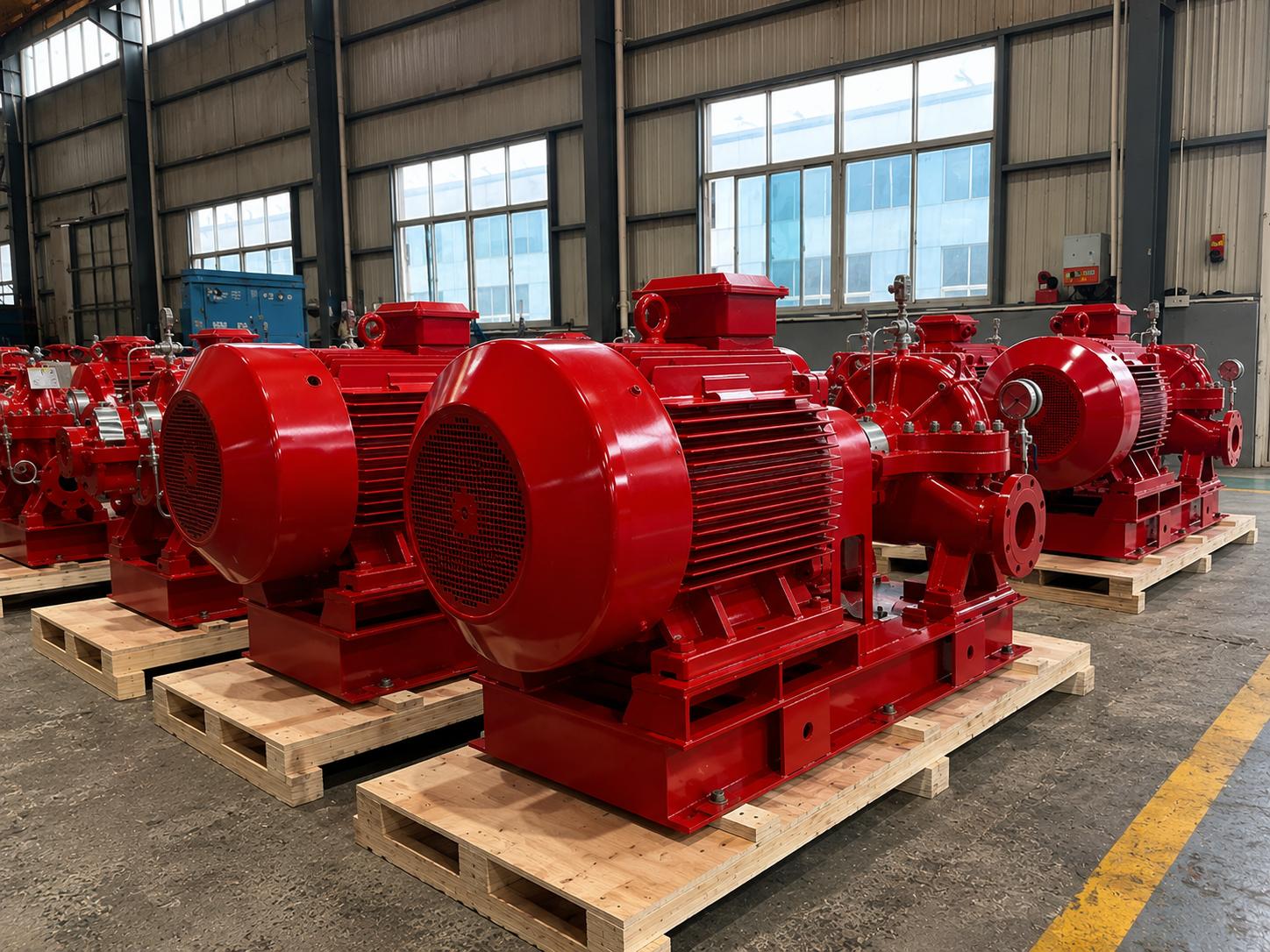

Self-priming pumps are the go-to solution wherever the water source sits below the pump axis, meaning the pump must draw water upward before it can move it. From agricultural irrigation and industrial process transfer to wastewater removal and marine ballast systems, these pumps appear across countless applications, and at the heart of each one is a correctly selected electric motor. No matter how good the pump casing is, if the motor driving it is the wrong power, the wrong speed or the wrong duty type, the system either fails to prime at all or breaks down prematurely. In this article we walk through self-priming pump motor selection step by step, based on suction lift, dry-run risk and power matched to airflow and flow rate.
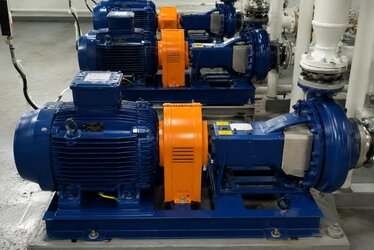
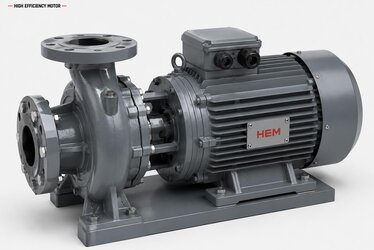
A self-priming pump motor is exposed to different operating conditions than a standard centrifugal pump motor. During priming the pump expels the air-water mixture inside it, placing unexpected torque demands on the motor; this makes the motor's starting torque, heating behaviour and correctly defined duty type critically important. At HEM Motor, the cast iron bodied motors we manufacture in IE3 and IE4 efficiency classes are designed precisely to withstand these demanding suction scenarios.
How a Self-Priming Pump Works and Why Its Motor Is Special
After the initial fill (priming), a self-priming pump uses the water retained in its casing to evacuate air from the suction line, create a vacuum and lift the water. This process can be longer and more energy intensive than that of a standard centrifugal pump. During the priming phase the pump partly moves an air-water mixture, which temporarily reduces hydraulic efficiency and forces the motor to operate under variable load.
The motor must produce enough torque during this phase without overheating. If the motor is selected right at its limit, long priming cycles can push the winding temperature beyond the insulation class (typically class F). For this reason, in self-priming applications, service factor and duty type are parameters that must be evaluated even before flow rate.
How Does Suction Lift Affect the Motor?
Suction lift is the vertical distance between the water surface and the pump axis. While atmospheric pressure theoretically allows suction lift up to a certain limit, in practice friction losses, liquid temperature and altitude above sea level lower that limit. As suction lift increases, priming becomes harder and the process lengthens; a longer priming process means the motor spends more time operating in a low-efficiency region.
When selecting a motor for high-suction applications, we focus on two things: first, a torque reserve to handle the load fluctuations of the starting and priming phase; second, a thermal margin to protect the winding during extended priming. That is why, in systems with high suction lift, we recommend the standard rating just above the calculated power.
Selecting the Correct Power Based on Flow Rate
The power a pump draws is proportional to the flow rate (Q) multiplied by the total head (H); liquid density and pump efficiency also enter the equation. In self-priming systems the total head is the sum of suction head and discharge head. For the correct motor power, the real power requirement at the pump's operating point must be the basis, not the maximum flow listed in the catalogue.
- Determine the operating point: Find the real flow-pressure point of the system on the pump curve. Select the motor power for this point, one step higher if needed.
- Density correction: For muddy, sediment-laden or higher-than-water density liquids, the required power increases; a power margin is essential here.
- Speed selection: 2-pole (3000 rpm) motors for high flow and low pressure; 4-pole (1500 rpm) motors for balanced, quieter operation.
- Efficiency class: For continuously running pumps, an IE4 motor instead of IE3 noticeably lowers energy cost with a short payback period.
The HEM Motor pump range spans a wide power band from 0.25 kW to 355 kW, so we can match the right rating from stock for both small garden irrigation pumps and large industrial transfer pumps. When you are unsure about power selection, our centrifugal pump motor selection by flow and head guide explains the calculation logic in detail.
Dry-Run Risk and Motor Protection
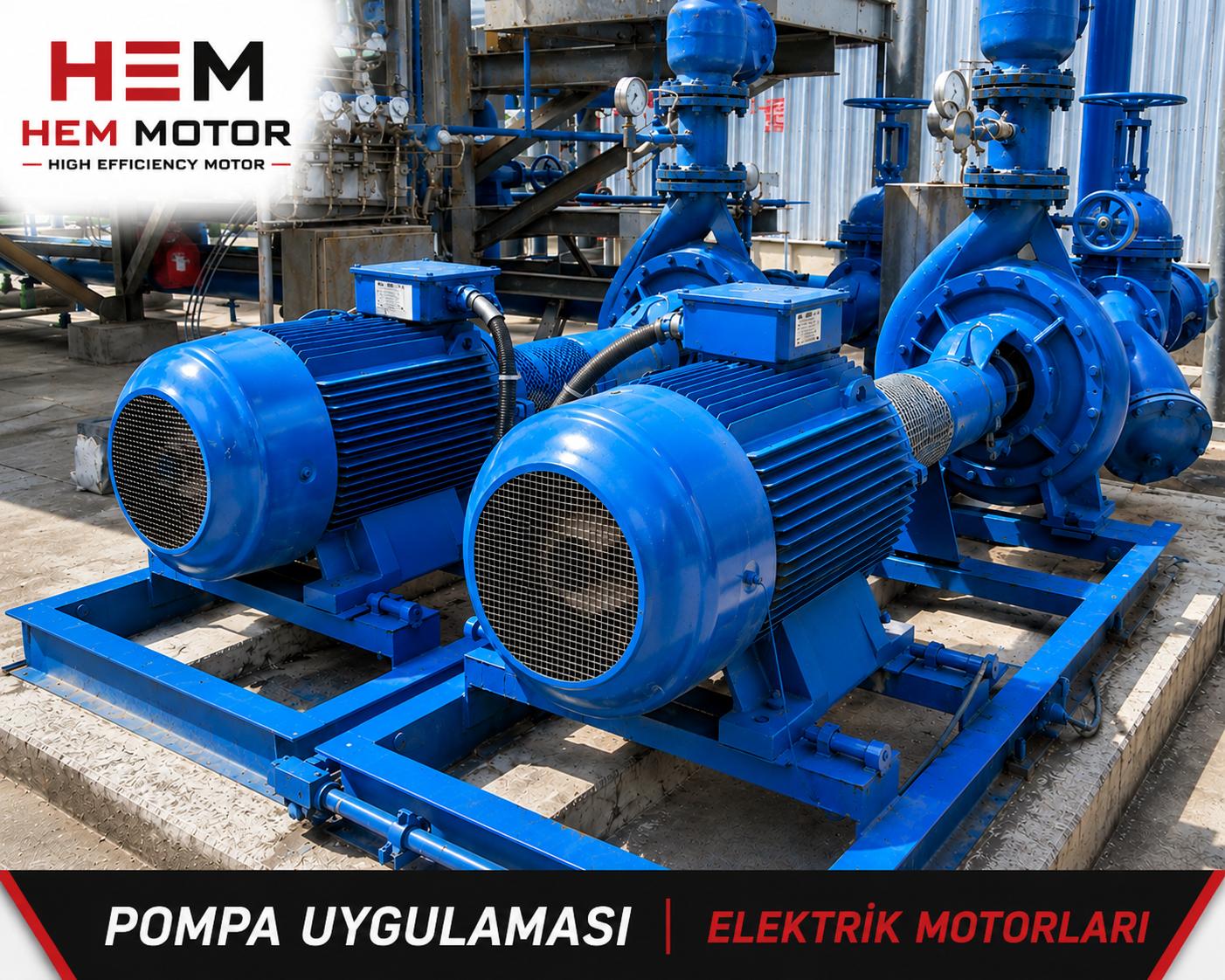
The most critical weak point of self-priming pumps is dry running. If the pump tries to prime without water in its casing, or if the suction line draws air, the seal and mechanical face are left without cooling, leading rapidly to wear and leakage. On the motor side, dry running creates cyclic thermal stress on the winding and bearings due to the sudden load drop followed by load increase.
The healthiest way to prevent dry running is to support the motor with correct protection devices. Thermal relays, motor protection circuit breakers and flow/level sensors stop the motor at the moment of dry running, protecting both the pump and the motor. To understand the motor's own thermal behaviour, our electric motor protection thermal relay and fuse selection content explains how to size protection elements.
How Does Dry Running Affect the Motor?
Under load the motor draws a certain current; when dry running begins the hydraulic load suddenly drops and the motor current decreases. This alone does not burn the motor, but repeated load changes in a pump trying to prime fatigue the motor's heating-cooling cycles. Prolonged dry running can also raise bearing temperature as heat transferred from the motor shaft to the pump reflects back. For this reason, in sites with high dry-run risk, we recommend heavy-duty motors with quality bearing construction.
Duty Type and Continuous Operation
Self-priming pumps mostly run in S1 continuous duty, but automatic fill-empty applications may involve frequent starts and stops (repetitive duty types such as S3, S4). In frequently starting applications, starting current and heating become critical; the motor must then be selected to withstand the starting frequency.
- S1 (continuous): Ideal for fixed-flow transfer and irrigation lines; a standard motor is sufficient.
- Repetitive duty: In automatic level-controlled systems, a motor suitable for frequent starts and an appropriate starting method are required.
- Starting method: At high powers, using star-delta or soft starter instead of direct-on-line protects both the grid and the motor.
The choice of starting method directly affects the pump's starting behaviour; on this topic our star-delta and soft starter methods in asynchronous motors article offers a decision matrix.
Mounting Type, Body and Field Conditions
Self-priming pumps generally run in horizontal mounting, with the pump and motor joined by a coupling or a direct flange connection. The pump body therefore determines whether a B3 foot-mounted, B5 flange-mounted or B35 combined mounting type is needed. At HEM Motor we offer all mounting types in IE3 and IE4 classes with cast iron bodies, providing high resistance to impact and vibration in field conditions.
Field conditions significantly affect motor selection. IP55 protection is standard for pumps operating in dusty, humid or outdoor environments; for harsher conditions we recommend IP56 and above. In applications where bearing and seal temperatures are high, the cooling fan and body fins must dissipate heat adequately. In pump motor supply, an approach that evaluates the motor together with the pump, supported by the solutions in our pump electric motors family, makes it easier to find the configuration best suited to the site.
Priming Time and Air-Locking Problems
One of the most common field problems in self-priming pumps is the pump failing to prime, or air-locking after priming. A loss of sealing in the suction line, a check-valve failure or incorrect installation causes the pump to fail to evacuate air and to keep trying to prime. In this case the motor turns without a real hydraulic load, which means both energy waste and unnecessary wear on the seal and bearings. The root cause of these problems usually lies on the pump and pipework side, but motor selection also affects the outcome. A motor with sufficient torque reserve and the correct duty type operates without strain during extended priming, and its winding stays below the insulation class. A motor selected at its limit, by contrast, heats up during repeated priming attempts and triggers the protection. For this reason, in systems with high suction lift and air-locking risk, choosing a motor one step larger is a practical precaution.
Correct Supply and Stock Delivery Advantage
In a pump system, a motor failure usually means the entire line stops; in agricultural irrigation it causes a lost season, in industry a production halt. That is why supply speed, not just technical suitability, is decisive in self-priming pump motor selection. At HEM Motor we keep a wide range of powers and mounting types in stock, aiming to deliver the right motor quickly.
In equivalent motor replacement, working from the existing pump's nameplate is the safest method. When the existing motor's power, speed, mounting type and shaft diameter are read correctly, we can match an equivalent motor seamlessly. On this topic our booster pump motor replacement and selection from the nameplate article shares the finer points of nameplate reading. For current electric motor prices and stock status, our quotation process is fast and clear.
Selection Process Checklist
- Suction lift: Leave torque and thermal margin for high suction that lengthens priming time.
- Flow and head: Select power based on the real operating point, consider one step higher.
- Dry running: Secure the motor with thermal protection and level/flow sensors.
- Duty type: Determine whether it runs continuously or repetitively and choose the starting method accordingly.
- Efficiency class: Lower energy cost with an IE4 motor in continuous operation.
- Field condition: Choose appropriate IP and cast iron body for dust, moisture and outdoor environments.
Frequently Asked Questions
Is there a difference between a self-priming pump motor and a standard pump motor?
The basic structure is the same asynchronous motor, but in self-priming applications the variable load during the priming phase and extended suction times mean the duty type and thermal margin must be selected more carefully. In systems with high suction lift we recommend a motor one step above the calculated power; this way the motor is not strained during priming and the winding temperature stays below the insulation class.
Does dry running burn the motor, and is it covered by warranty?
Dry running damages the pump's seal and gasket more than it directly burns the motor; however, repeated dry running can shorten motor life through cyclic thermal and mechanical stress. We therefore recommend using flow/level sensors and thermal protection. Damage caused by incorrect protection or dry running is generally outside warranty; choosing the right protection element both protects the motor and preserves the warranty assurance.
Which speed is more suitable for self-priming pumps?
In transfer applications requiring high flow and low pressure, 2-pole 3000 rpm motors are used; in irrigation and process lines where more balanced, quieter and longer-lasting operation is desired, 4-pole 1500 rpm motors are preferred. When you share your operating point, we can match the most suitable speed and power from stock based on flow rate and head.