English
 Türkçe

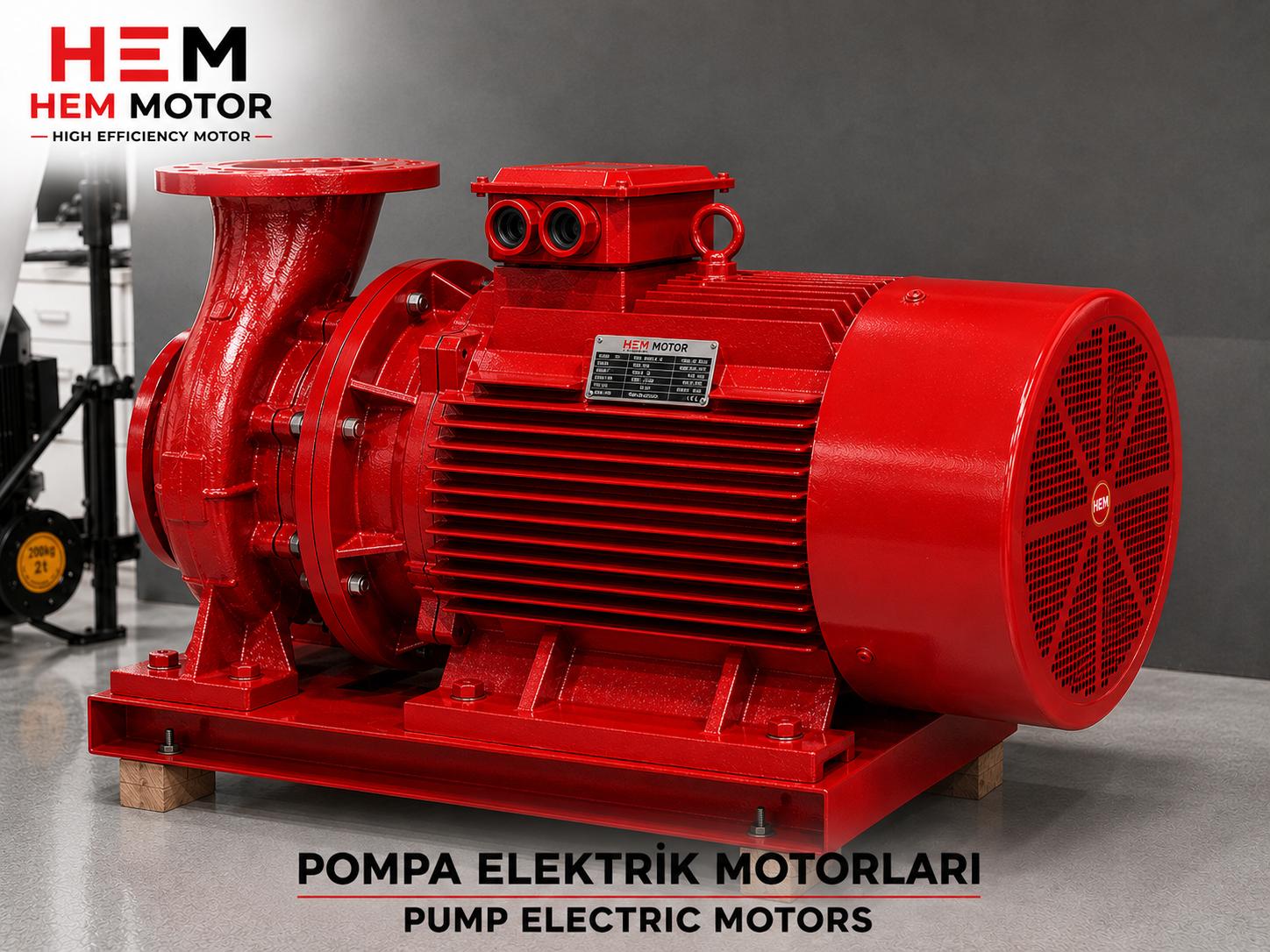

Humidity and temperature control inside a greenhouse is one of the most critical determinants of crop yield and plant health. Especially during summer, fogging systems are used to lower the indoor temperature, balance transpiration and keep humidity within an optimal range by breaking water into extremely fine droplets and releasing them into the air. For these droplets to form a genuine fog cloud, the water must be delivered to the nozzles at high pressure. Behind the heart that generates this pressure is a correctly chosen high-pressure pump motor. A motor selected with the wrong power rating or the wrong duty type degrades fog quality and, under continuous operation, fails prematurely, causing production losses in the greenhouse.
As HEM Motor, with our identity as both manufacturer and seller, we frequently see that the most common mistake in greenhouse fogging applications is choosing the motor based solely on a kW value on the pump label rather than on the actual duty profile. In this guide we cover humidity control, continuous duty (S1) requirements, the speed-pressure relationship and correct power sizing for greenhouse fogging pump motor selection in a way that simplifies your purchasing decision. For current electric motor prices and stock status, please review our product pages.
Why Is the Pump Motor Critical in a Greenhouse Fogging System?
Fogging systems raise water to high pressures such as 40-70 bar and spray it through special nozzles. This pressure level is usually provided by piston (plunger) pumps or multistage centrifugal pumps. The motor's job is to deliver the power the pump demands continuously and without fluctuation. The greenhouse environment is demanding for a motor: high relative humidity, water droplets and a corrosive atmosphere created by fertilizers and agricultural chemicals all coexist.
Humidity Control and Operating Regime
A fogging system may run in a regime that switches on and off throughout the day; however, during summer peak hours it remains in operation almost without interruption. For this reason the motor must suit a continuous duty (S1 duty) profile. A motor designed for short-time duty pushes the winding temperature above the safe limit during long operating periods and rapidly consumes insulation life.
Resistance to Environmental Conditions
The high humidity inside a greenhouse highlights the motor's protection class. The IP55 protection class provides protection against dust and low-pressure water jets, enabling safe use in the greenhouse environment. Higher protection levels may be requested in installations with a risk of more aggressive washing or direct water contact. A cast iron body offers mechanical strength and the option of cataphoresis coating against corrosion, extending life in the humid greenhouse environment. Class F insulation provides high temperature resistance, leaving a safe margin in continuous operation.
How Is the Correct Power (kW) Determined?
The power of a fogging pump motor is determined by the product of three basic variables: required pressure, flow rate and pump efficiency. The pump manufacturer usually states the required shaft power for a specific pressure-flow point. In motor selection a safety margin is added on top of this shaft power.
- Pressure requirement: As the number of nozzles and the spray amount per nozzle increase, the required pressure and therefore power increase. Hundreds of nozzles may be connected to the same line in a large greenhouse.
- Flow rate: The total water flow depends on the number of nozzles operating simultaneously. If zoning (fogging zone by zone) is applied, a smaller motor can be selected.
- Safety margin: A margin is usually left above the pump shaft power and the motor is rounded up to the next standard power rating. This protects the motor in situations such as pressure fluctuations and nozzle clogging.
- Service factor (SF): Motors with a high service factor provide extra safety for overload capacity during sudden pressure rises.
In practice, fogging pumps in small to medium greenhouses are selected in the lower power band, while larger commercial greenhouses require higher powers. For correct power calculation, the shaft power at the pump's operating point should be taken as the basis and the motor should be rounded up to the next standard rating. For a more detailed calculation approach, our article on required kW in pumps, fans and conveyors is a useful reference.
Speed and Pole Count: Matching to the Pump
In high-pressure pumps, speed directly affects pressure generation. Piston high-pressure pumps are generally designed to run at low-medium speed (4-pole, ~1500 rpm); multistage centrifugal pumps produce higher head at high speed (2-pole, ~3000 rpm).
2-Pole (3000 rpm)
Preferred in compact, high-pressure centrifugal fogging pumps. High speed provides high pressure in a small frame, but correct sealing and bearing selection become important in terms of wear and noise.
4-Pole (1500 rpm)
Common in piston plunger pumps. Lower speed means less wear in the pump mechanics and longer life. It is frequently chosen for durability in continuously running greenhouse fogging systems.
If you wonder about the speed-pole relationship and why the actual operating speed is slightly below the synchronous speed on the label, our article on slip and actual speed in asynchronous motors explains this topic.
Mounting Type and Mechanical Compatibility
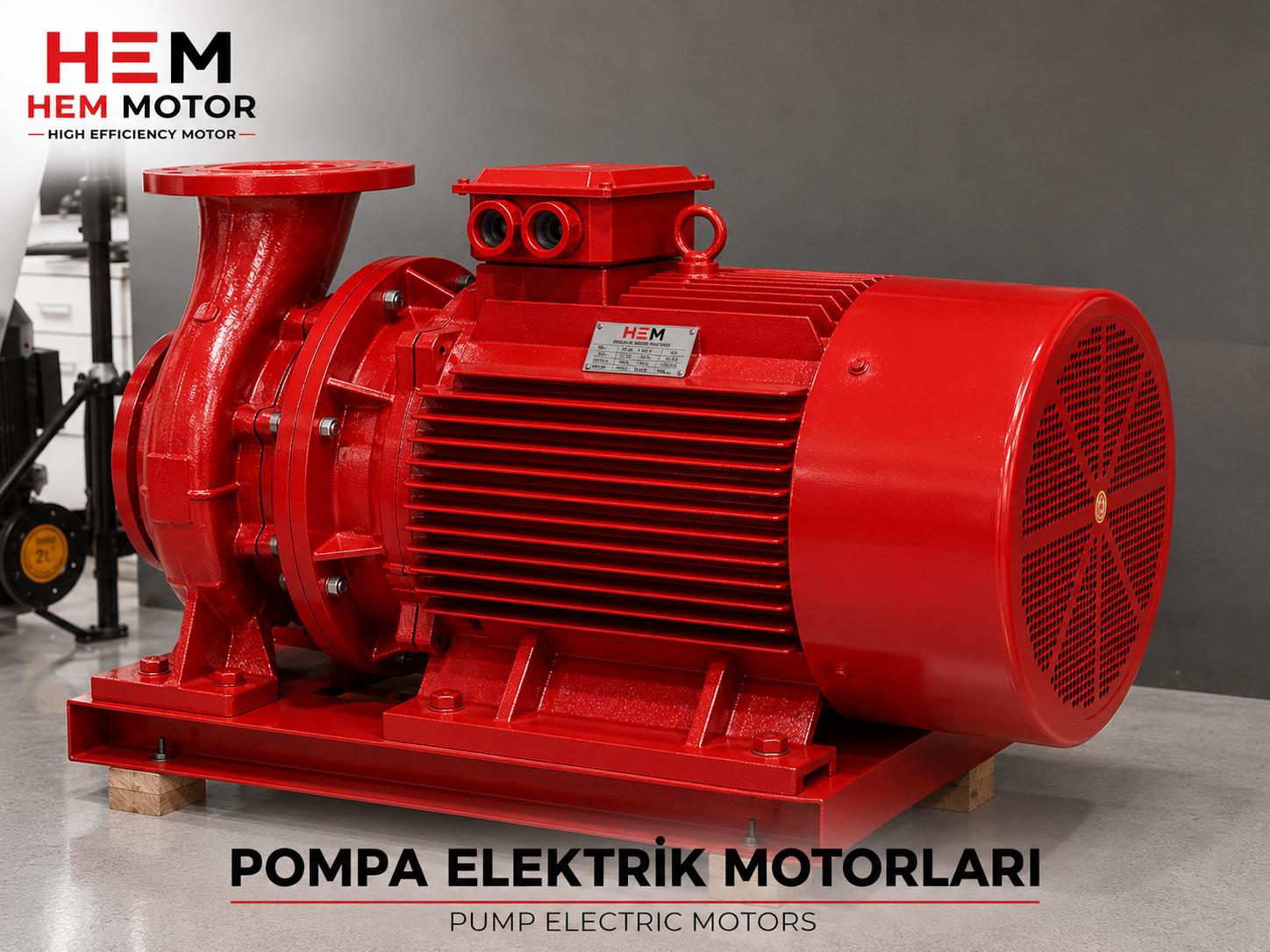
The way the fogging pump connects to the motor determines the mounting type. In directly coupled systems a B5 flanged motor or combined B35 mounting is preferred; in belt-pulley driven installations a B3 foot-mounted motor is suitable. Choosing the wrong flange or shaft diameter results in the pump and motor not matching mechanically at all.
- Shaft diameter and key: The motor shaft and the pump coupling must be exactly compatible.
- Flange hole pattern: B5/B14 flange dimensions depend on the frame size according to IEC standards.
- Axial alignment: In coupled systems, alignment error shortens bearing and seal life.
For a detailed comparison of mounting types, you can review our B5 flanged electric motors page. For a holistic view of motor selection in greenhouse, agriculture and irrigation applications, our article on high-efficiency motors in greenhouse and livestock facilities also offers a comprehensive perspective.
Efficiency Class and Energy Cost
Since a fogging pump runs for long hours throughout the season, the motor's efficiency class is directly reflected in the electricity bill. IE3 Premium and IE4 Super Premium efficient motors do the same job with lower losses, reducing operating costs. From a regulatory standpoint, a high efficiency class is also mandatory in certain power and pole bands. For details on which power requires which class from which date, see our article on the IE3 and IE4 efficiency mandate regulation.
Stock Status and Supply Planning
Greenhouse fogging systems are mostly installed before the season starts, or a failed motor must be urgently replaced during the peak season. For this reason, motors that can be delivered from stock and have common power-speed-frame combinations are a great advantage. As HEM Motor, we aim to keep the most sought-after power and speed bands in stock to minimize in-season downtime.
- Common combinations: Standard kW values and 2/4-pole options enable fast supply from stock.
- Spare motor plan: Keeping a spare motor in large greenhouses with critical production prevents production loss in case of failure.
- Replacement from nameplate: When replacing an existing motor, a correct substitute can be made using the kW, speed, frame and flange information on the old nameplate.
Continuous Duty (S1) and Winding Temperature Management
The point where the motor is most stressed in a greenhouse fogging system is the long, uninterrupted operating periods during summer. Here the duty type is decisive. S1 continuous duty means the motor can run indefinitely at rated load, reaching thermal equilibrium and staying there. For loads that can stay on all day, like fogging pumps, an S1 class motor must be chosen. A motor sized for short-time (S2) or intermittent (S3) duty pushes the winding temperature above the insulation class in continuous operation, drastically shortening life.
There are two basic ways to keep the winding temperature in the safe range: choosing the correct insulation class and ensuring adequate cooling. Class F insulation offers high temperature resistance; in more demanding applications class H may be preferred. Cleaning dust, fertilizer residue and moisture buildup off the cooling fan and body fins at the rear preserves cooling efficiency. In a greenhouse, moisture and chemical buildup can coat these fins over time; regular cleaning lets the motor complete its expected life. For thermal protection, equipping the motor with a PTC thermistor or thermal relay also saves the winding in sudden overload and phase-loss situations.
Corrosion and Chemical Resistance
Fertilizers, nutrient solutions and spraying chemicals used in the greenhouse can reach the motor surface through airborne droplets. This corrosive atmosphere affects a standard painted motor body over time, especially exposed metal areas such as the shaft end and flange face. A cataphoresis coating and quality top coat applied over a cast iron body form an important barrier against these effects. Shaft seal and terminal box sealing also prevent moisture from entering the motor, preserving insulation resistance.
Speed Control with a Frequency Inverter
In modern greenhouse automation systems, a frequency inverter (VFD) can be used to precisely adjust the fogging pump's flow rate and therefore ambient humidity. The inverter changes the motor speed based on data from an ambient humidity sensor, ensuring the pump sprays only as much water as needed. This means both energy savings and more balanced climate control. In motors that will run with an inverter, it is important that the winding insulation withstands surge voltages and, when necessary, has supplementary cooling support. For the basic logic of frequency inverter selection, our article on a frequency inverter (VFD) with an asynchronous motor is a good starting point.
Motor Characteristics by Pump Type
Two main pump families stand out in greenhouse fogging systems, and each demands a different characteristic from the motor. To choose the right motor, you must first understand the pump type and its load profile.
Piston (Plunger) High-Pressure Pumps
These pumps push water with pistons and produce very high pressure; they deliver the finest droplets in terms of fog quality. Piston pumps have a pulsating load characteristic; there are small load fluctuations on each piston stroke. Therefore it is important that the motor has sufficient starting torque and overload capacity so it does not stall at pressure peaks. Usually 4-pole, continuous-duty motors with a high service factor are preferred. Lower speed also extends the life of pump seals and pistons.
Multistage Centrifugal Pumps
Producing high pressure with consecutive impeller stages, these pumps run more smoothly and with lower vibration. They are usually operated at high speed with 2 poles, and pressure is directly related to speed. In centrifugal pumps, when the motor speed remains constant the pressure also remains stable; this is why they are frequently used together with a frequency inverter for speed control. In these high-speed motors, a balanced rotor, quality bearings and correct sealing stand out.
The common point for both pump types is that the motor is selected according to the pump's actual power demand at its operating point. An oversized motor means unnecessary initial investment and low part-load efficiency, while an undersized motor fails early by running continuously in overload. Correct sizing optimizes both the initial investment and the long-term operating cost.
Frequently Asked Questions
Should I buy a 2-pole or 4-pole motor for a greenhouse fogging pump?
This depends on the pump type. High-speed compact centrifugal fogging pumps are generally matched with a 2-pole (3000 rpm) motor, while piston plunger pumps are matched with a 4-pole (1500 rpm) motor. Basing the choice on the pump manufacturer's design speed is the safest method. To clarify speed-pole compatibility, check the nominal speed in the pump catalog.
Which protection class is sufficient in a humid greenhouse environment?
In standard greenhouse installations, the IP55 protection class provides adequate protection against dust and low-pressure water splashes. In installations with a risk of direct water jets, heavy washing or very high humidity, higher protection levels may be requested. In addition, a cast iron body and cataphoresis coating offer extra resistance against corrosion.
My existing fogging motor failed; how do I find the same one?
The fastest method is to note the power (kW), speed (rpm), frame size (IEC) and mounting type (B3/B5/B35) on the old motor's nameplate. With this information a one-to-one replacement motor can be selected; when the flange and shaft diameter are the same, mechanical compatibility is seamless. For fast supply from stock, you can confirm the suitable model on our product pages.