English
 Türkçe

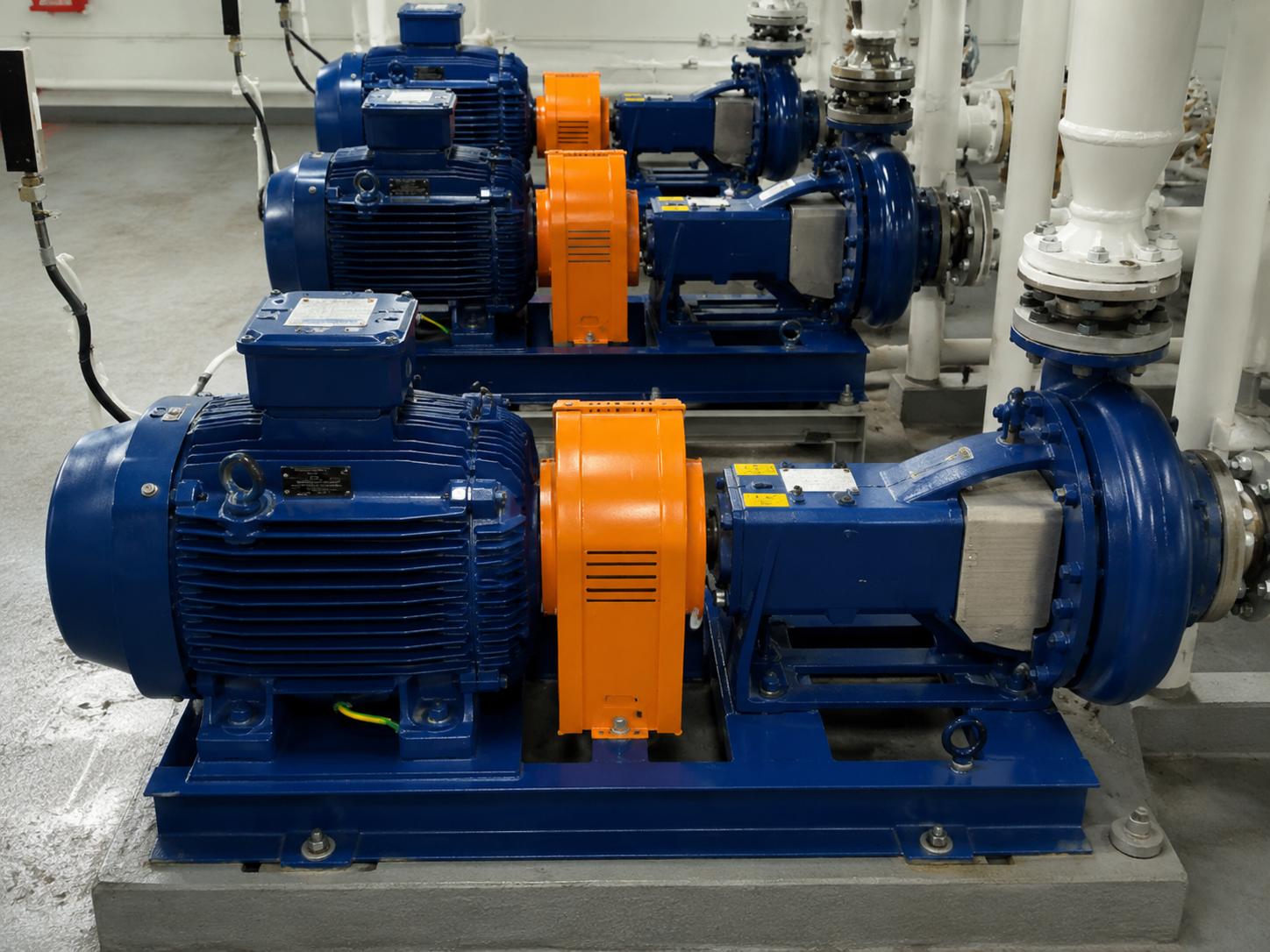

In building heating and cooling lines, process cooling circuits and industrial heat-recovery systems, the fluid being circulated is often not pure water. Ethylene glycol or propylene glycol is added to eliminate the risk of freezing, and this changes the viscosity, density and heat-carrying capacity of the fluid. That directly affects the selection of the electric motor driving the circulation pump. As the glycol ratio rises, the power the pump draws increases; a motor chosen with the wrong rating is either continuously overloaded or oversized, leading to lost investment and lost efficiency. In this guide we cover glycol and cooling-water circulation pump motor selection step by step, focusing on cold fluid, condensation, continuous duty and the correct power, and explaining what to watch for during supply.
At HEM Motor we supply circulation-pump motors from stock across a wide range, from 0.55 kW up to 355 kW, in IE3 and IE4 efficiency classes, with cast-iron and where appropriate aluminium frames. To choose correctly, you first need to understand what the fluid and the system demand of the motor.
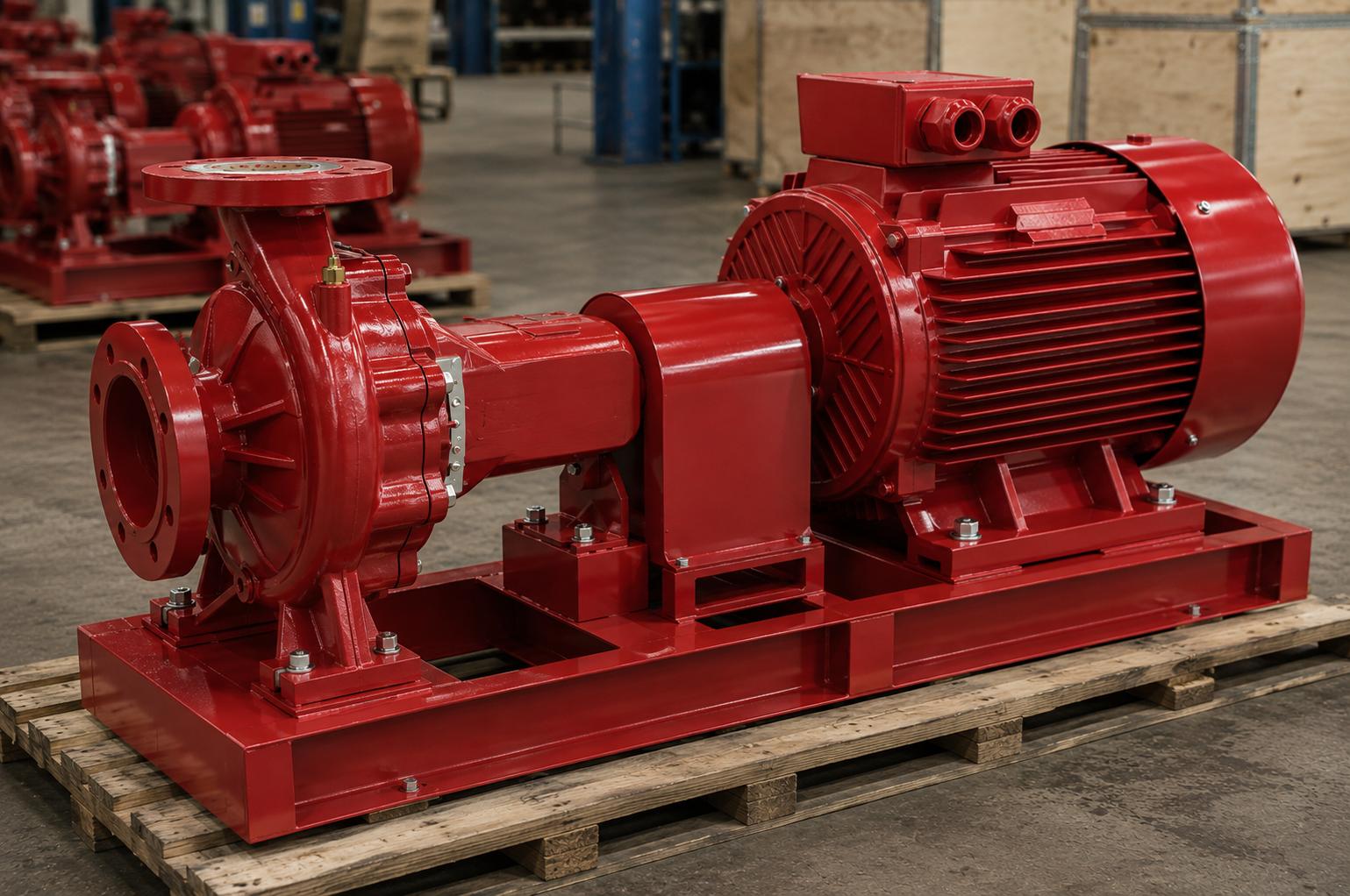
Why Does the Glycol Ratio Increase Motor Power?
The shaft power of a circulation pump is proportional to the flow rate, head and density of the fluid. A water-glycol mixture is denser and more viscous than pure water. As the glycol fraction rises in an antifreeze blend, the density of the fluid increases; to maintain the same flow, the pump must do more work, so the motor must draw more power. Viscosity also rises sharply at low temperature; on a cold start the pump effectively moves a thick liquid and the motor's starting-torque demand increases.
For this reason a motor sized for pure-water flow can fall short in a circuit running on glycol. The motor's rated power should be determined for the worst case created by the highest glycol ratio and the lowest operating temperature. Otherwise the motor runs continuously above its service factor, winding temperature rises and insulation life is shortened.
Starting and Continuous Running with Cold Fluid
Cold fluid has two effects. The first is the viscosity increase described above; the second is contact between the motor frame and a cold environment. A circulation-pump motor in an outdoor or chilled space loses heat to its surroundings and is exposed to condensation risk. Motors designed for continuous duty (S1), with class-F insulation and IP55 protection, run safely under these conditions. Because circulation circuits typically operate 24 hours a day, uninterrupted duty type is not negotiable here.
Condensation Risk and Protection
The most insidious enemy of a motor pumping cold fluid is condensation. When the motor stops, the air inside the frame cools; when it restarts, moisture in the environment combines with it and forms water droplets on the windings and bearings. Over time this moisture lowers insulation resistance and leads to corrosion and bearing failure. The main measures against condensation are:
- Anti-condensation (stand-still) heater: Keeps the windings above ambient temperature while the motor is stopped, preventing moisture from condensing. Recommended for outdoor pumps and those that start and stop frequently.
- Drain plugs: Drain holes at the lowest point of the frame allow accumulated condensation to escape. They must be placed on the correct side according to the mounting position.
- IP55 or higher protection: Protection against dust and splashing water keeps external agents away from the windings. Higher protection classes can be offered on request for harsher environments.
- Tropicalized windings: In high-humidity environments, selecting a winding varnish rated for tropical conditions extends insulation life.
Our guide on boiler-room and circulation pump motors, where we examine these topics in more detail for building heating circuits, is a complementary resource for supply planning.
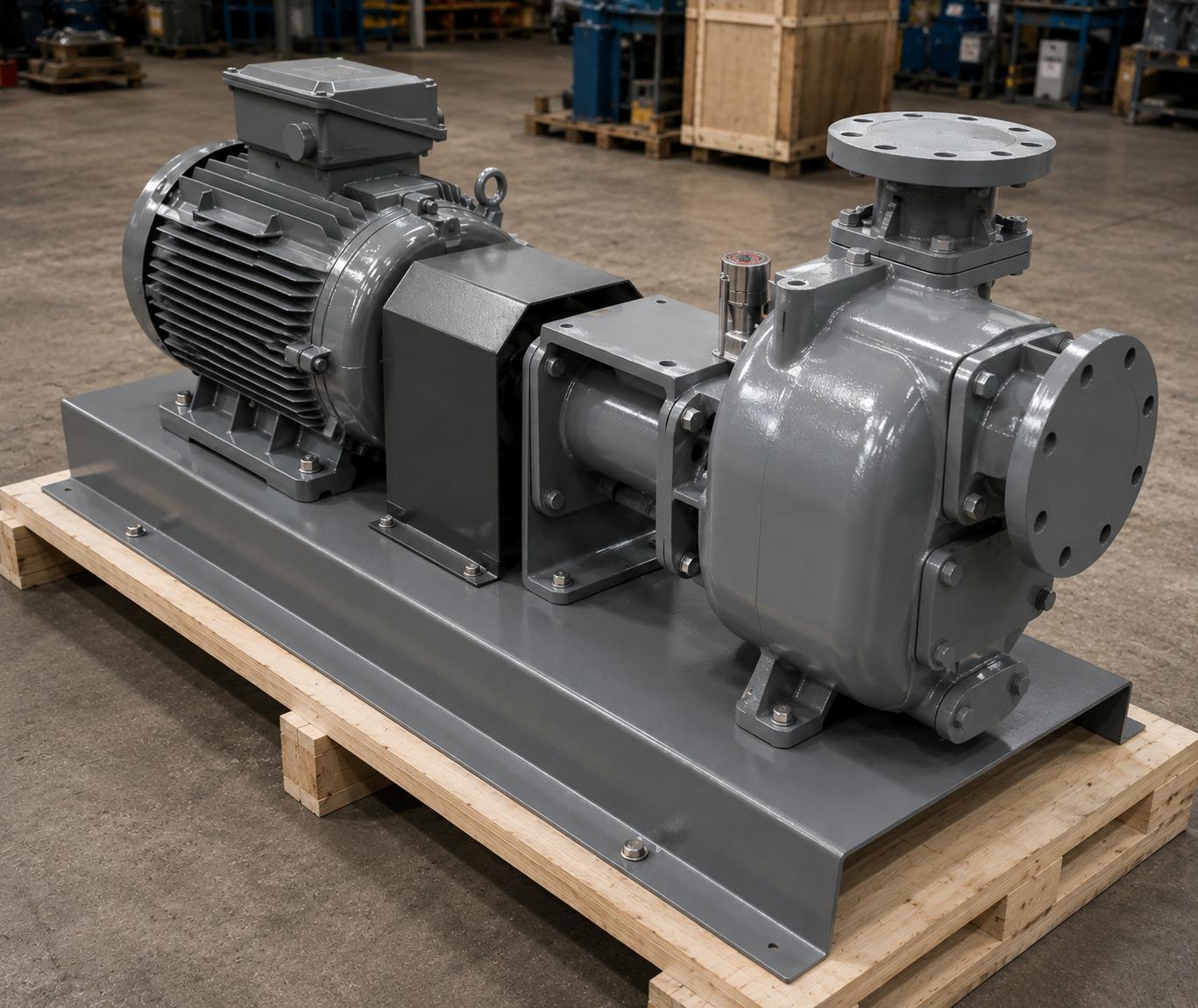
Speed and Pole Selection: 2, 4 and 6 Poles
The most common speed in circulation pumps is the 1500 rpm (4-pole) motor, which moves the fluid quietly and evenly. Compact systems needing high pressure may use 3000 rpm (2-pole), while large-diameter, low-pressure circuits may use 1000 rpm (6-pole). The speed choice must match the pump's characteristic curve; otherwise the pump loses efficiency at the desired operating point.
- 2-pole (3000 rpm): High pressure, small flow; compact circulation and pressurization lines.
- 4-pole (1500 rpm): The most common choice; balanced flow and head, quiet operation, long life.
- 6-pole (1000 rpm): High flow, low pressure; wide-section heating and cooling circuits.
If you wonder why a motor runs slightly below its nameplate speed, our article on slip and actual speed in asynchronous motors explains the topic clearly.
Mounting Type and Connection
Circulation-pump motors are mostly connected directly to the pump body with flange (B5) or foot-and-flange (B35) mounting. Vertical lines favour the B5 flange, while horizontal coupled systems use B3 foot or B35 combined mounting. Choosing the wrong mounting type means on-site incompatibility and lost cost. You can review the differences between mounting types and the correct choice on our B5 flange-mounted electric motors page.
Efficiency Class and Regulation
In continuously running circulation pumps the energy cost soon exceeds the purchase price of the motor. Choosing an IE3 and, where possible, IE4 efficiency-class motor is therefore both a legal requirement and economic common sense. In Türkiye, direct-on-line three-phase motors in the 0.75-1000 kW range must be at least IE3 class; in many applications in the 75-200 kW range the IE4 class comes into play. On a pump running continuous duty, the annual energy saving of an IE4 motor quickly amortizes the initial price difference.
A Practical Approach to Correct Power Selection
- Correct the shaft power given by the pump manufacturer for the highest glycol ratio and lowest temperature.
- Leave a service-factor margin over the calculated power so the motor does not run continuously at its rated limit.
- Assess whether derating is required according to operating temperature and mounting environment.
- Plan the spare-motor need from the outset; the stoppage of a critical circulation line can affect the whole facility.
For power matching in pump motors, our article on centrifugal pump motor selection: flow and head shows the flow-pressure calculation step by step. For all pump-motor options you can browse our pump and booster electric motors product group, and contact us for current electric motor prices.
Understanding Motor Load by Fluid Type
The fluids encountered in circulation lines are not limited to pure water and water-glycol mixtures. Some process circuits circulate heat-transfer oils, brine or various additive-bearing coolants. Each fluid has a different density and viscosity, and these two properties directly determine the power the pump draws. As density rises, the work the pump does to maintain the same flow increases; as viscosity rises, friction losses in the pipe increase and the pump is stressed more. For this reason the assumption that "power chosen for water suits any fluid" is dangerous in motor selection.
In glycol circuits running at low temperature in particular, viscosity rises dramatically. On a cold start the fluid is almost gel-like; as the pump sets this thick fluid in motion, the motor demands a high starting torque. As the system warms up, viscosity falls and the load returns to normal. This start-versus-run difference is exactly why the motor must be selected to meet both the high starting torque and not be overloaded in continuous running. For a correct selection, the fluid's viscosity at the lowest operating temperature and its highest density must be evaluated together.
Service Factor and Temperature Margin in Continuous Duty
The service factor is a margin showing how much short-term load the motor can carry above its rated power. In 24-hour systems such as circulation pumps, the motor running continuously at the service-factor limit raises the winding temperature and shortens insulation life. The correct approach is therefore to select the motor to suit the calculated power and keep the service factor as a safety margin, not to try to meet the continuous load with the service factor. Class-F insulation offers a wider temperature margin, giving the motor breathing room especially during transitions from a cold environment to a hot process temperature.
The Importance of Mounting Position and Drainage
Circulation-pump motors can be mounted horizontally, vertically or at an angle. The mounting position is not just a mechanical preference; it determines how condensation water is drained and how bearing lubrication behaves. In vertical mounting the bearing loads are distributed differently and the position of the drain plugs must be chosen accordingly. In horizontal mounting, condensation collects at the lowest point of the frame; the drain plugs must be positioned to reach this point. A wrongly positioned drain plug prevents accumulated water from draining and over time damages the windings.
- Horizontal (B3/B35) mounting: The most common position; drain plugs must reach the lowest point of the frame.
- Vertical (B5) mounting: Common in systems connected directly to the pump by flange; bearing selection and drain direction are set by the position.
- Angled mounting: In special systems; here the lubrication and drainage behaviour must be evaluated from the outset.
The effect of mounting type and position on motor life should not be overlooked. For all mounting options and the correct connection, our electric motor mounting types page provides detailed information.
Correct Selection from the Nameplate During Replacement
When replacing an existing circulation-pump motor, the most reliable starting point is the old motor's nameplate. The nameplate states the power (kW), speed (rpm), mounting type, frame size, protection class and efficiency class. However, simply copying the nameplate does not always give the right result, because the system may have changed over time. For example, if glycol was added to the circuit later, the old motor's power may now be insufficient. The nameplate information is therefore the basis, but the current operating conditions are also reassessed.
We explained the method of selecting a correct replacement from the nameplate in booster and pump motors in detail in our article on booster motor replacement: selection from the nameplate. At the same time, if your old motor is of a low efficiency class, using the replacement opportunity to move to an IE3 or IE4 equivalent noticeably reduces your energy cost on a continuously running pump.
The HEM Motor Supply Advantage
In circulation-pump projects the biggest risk is that a motor delivered with the wrong rating or mounting type does not fit on site. At HEM Motor we evaluate your project's fluid type, glycol ratio, operating temperature and mounting conditions together, recommend the correct motor and provide fast delivery from our broad stock. Our standards of cast-iron frame, 100% copper windings, class-F insulation and IP55 protection ensure long service life even under cold-fluid and condensation conditions. On a critical circulation line running continuous duty, spare-motor planning, alongside the correct motor, is an inseparable part of supply security; by evaluating your need from the outset we build both the correct motor and the redundancy plan together.
Frequently Asked Questions
How many sizes larger should I choose the motor compared with pure water in a glycol mixture?
There is no fixed "one size larger" rule; the correct approach is to correct the pump manufacturer's shaft power for the glycol ratio and lowest operating temperature you use. As the glycol ratio rises, the density and viscosity of the fluid increase, so the power drawn also increases. A motor should be chosen to suit this corrected power while leaving a service-factor margin. If you send us your mixture ratio and temperature range, we will determine the suitable power together.
Is an anti-condensation heater mandatory for a circulation motor running in a cold environment?
For motors that start and stop frequently, or that sit outdoors or in a chilled space, an anti-condensation heater is strongly recommended. It keeps the winding above ambient while the motor is stopped, preventing condensation and thereby avoiding a drop in insulation resistance and bearing corrosion. The risk is lower on a line that runs continuously (S1) and never stops; even so, drain plugs and a suitable protection class are advised.
When replacing my circulation pump, should I buy a motor of the same power?
The power, speed, mounting type and frame size on the existing motor's nameplate are the basic reference; however, if the glycol ratio or temperature conditions in the system have changed, this should be reassessed. Sending us the nameplate information lets us find an exactly compatible replacement motor. At the same time, if your old motor is of a low efficiency class, replacing it with an IE3 or IE4 equivalent will noticeably reduce your energy cost on a continuously running pump.