English
 Türkçe

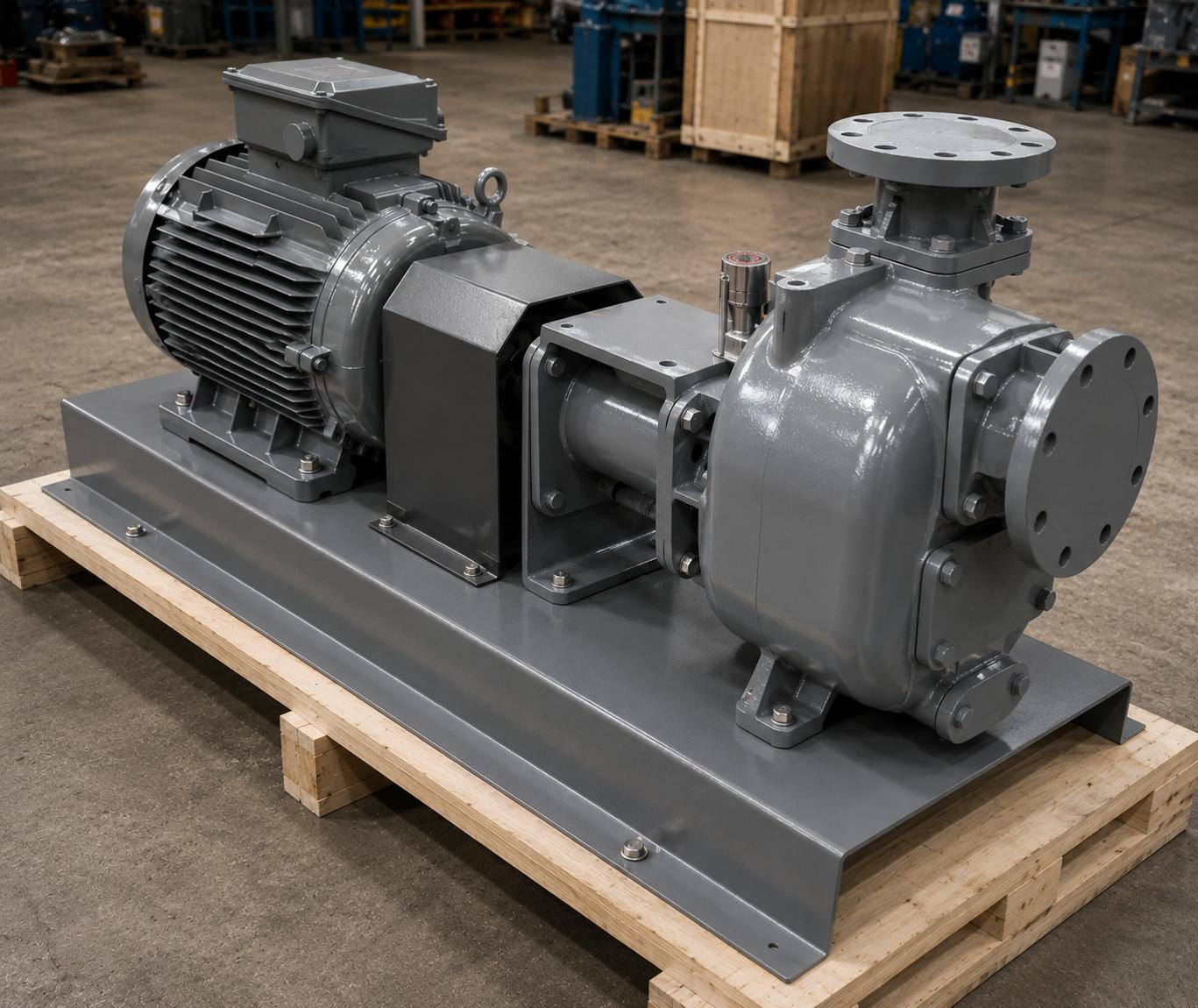

Agricultural irrigation is one of the most demanding applications, requiring the motor to deliver uninterrupted performance under harsh field conditions and long seasonal operating hours. The agricultural irrigation pump motor used in fields, orchards, vineyards and greenhouses demands a different balance of flow, pressure and power for each of the drip, sprinkler and centrifugal pump systems. A wrongly chosen motor either wastes energy or fails to feed the pump, reducing efficiency. In this guide we explain step by step how to select the right motor for your irrigation system type, how to calculate power from flow (Q) and head (H) values, and which protection class suits your field conditions. As a manufacturer we support you with fast supply from stock and accurate technical matching.
Why Does Motor Need Change by Irrigation System?
The type of irrigation method directly determines the pump operating point and therefore the motor power requirement. Drip irrigation runs at low flow and moderate pressure, while sprinkler systems raise both flow and pressure; in centrifugal pumps the flow-head curve varies over a wide range. Therefore the speed (number of poles), power and mounting type of the motor must be evaluated separately for each system. When planning irrigation, accounting not only for today demand but also for parcels or emitters to be added in future prevents the motor from becoming undersized too early.
Drip Irrigation Pump Motor
Drip irrigation is an efficient method that delivers water to the plant root at low flow and controlled pressure. To overcome the pressure loss in filters and emitters, it typically operates in the 2-4 bar range. Since the motor will run continuously (S1 duty) for long hours, choosing an IE3 efficient electric motor or IE4 class provides significant energy savings by the end of the season. Because sudden pressure drops can occur in drip lines, the motor service factor and thermal protection must be set correctly. A clogged filter can raise pressure and strain the motor, so filter maintenance and a pressure regulator prevent the motor from being needlessly overloaded.
Sprinkler Irrigation Pump Motor
Sprinkler systems require a higher head to overcome sprinkler discharge pressure and pipe friction losses; operating points of 3-6 bar and above are typical. This requires a higher-power motor. In large fields with pivot and gun systems, the high pressure demand is met with 3000 rpm (2-pole) motors. To maintain end-of-line pressure, it is critical that the motor power exactly matches the pump operating point. Because gun systems experience instantaneous flow changes, peak load must be considered in motor selection; otherwise pressure drops as the number of sprinklers increases and irrigation uniformity is lost.
Centrifugal Pump Motor
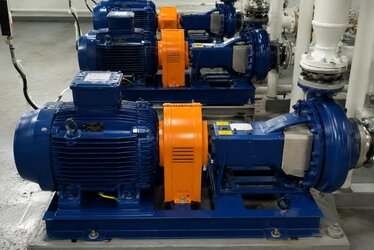
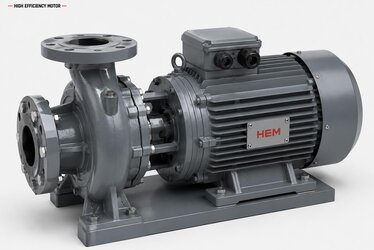
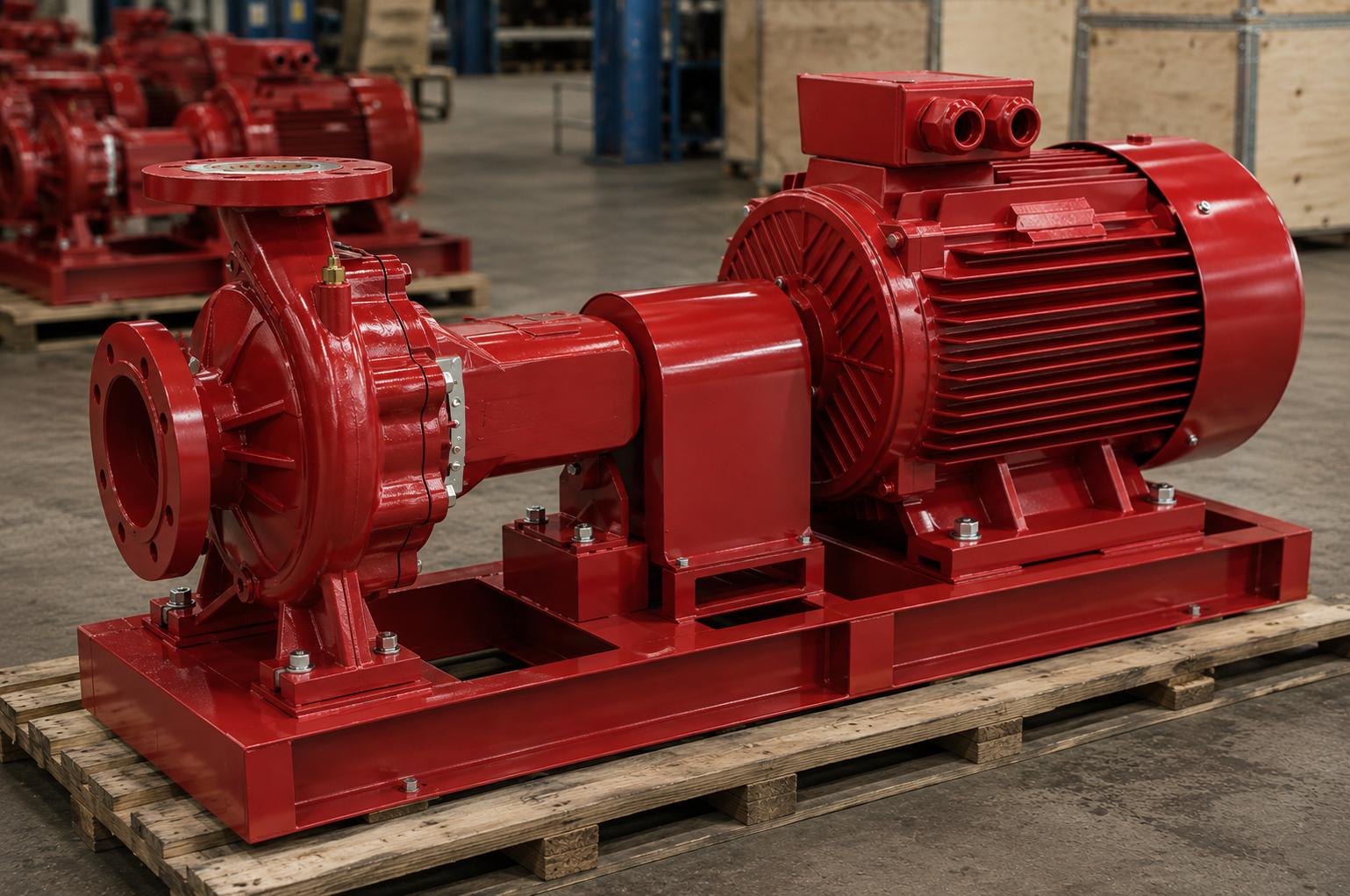
Centrifugal pumps are the most common solution for drawing water from surface water, ponds, canals or well heads. In these pumps, head decreases as flow increases; therefore the motor must be selected according to the power demand at the pump real operating point. Centrifugal pumps are usually matched with 2900 or 1450 rpm motors. The most common mistake in centrifugal pump motor selection is ignoring the pump maximum power point and sizing the motor only for nominal flow. When a valve opens and flow rises, the pump curve shifts right and shaft power increases; if the motor is not sized for this maximum point, the thermal trips.
Surface Pump or Submersible (Well) Pump?
The location of the water source also determines motor selection. Surface pumps drawing from an open source (pond, canal, river) use a standard foot or flange-mounted motor that stays above ground with the pump. If water is drawn from a deep well, a submersible motor or deep-well pump motor is required; these motors are sealed to operate underwater and require a different supply approach. Surface pumps have a limited suction lift; if the water level is far below the pump, cavitation risk arises and a submersible solution may be needed.
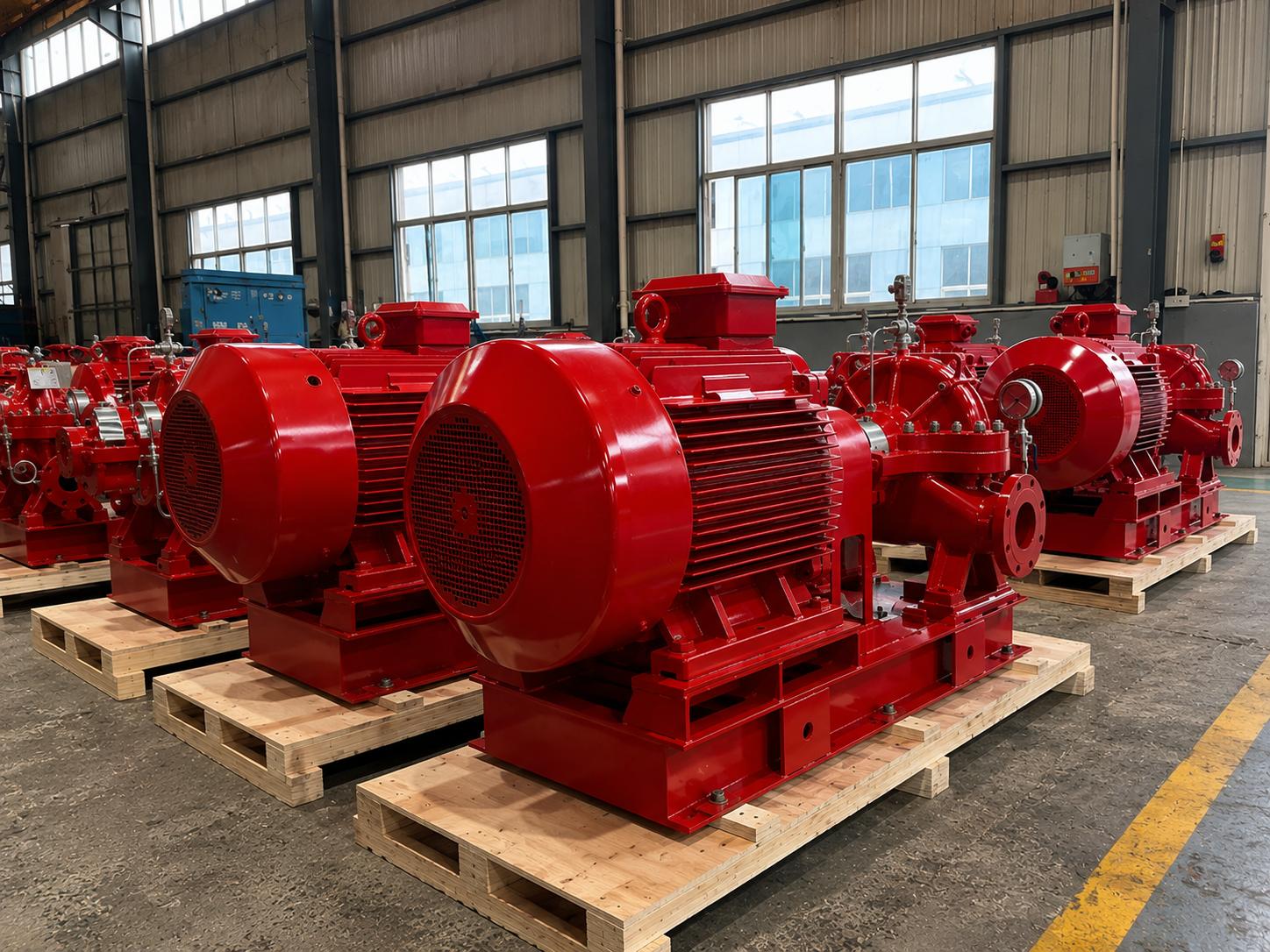
The Relationship Between Flow (Q), Head (H) and Power (P)
The basis of correct sizing is calculating the hydraulic power the pump will draw. The pump shaft power depends on flow, head, water density and pump efficiency. The motor must be selected above this shaft power, leaving a safety margin.
- Flow (Q): The amount of water delivered per unit time (m³/h or L/s). The area to be irrigated, plant water demand and number of simultaneously operating emitters or sprinklers determine the flow.
- Head (H): The total height and pressure the pump must overcome; the sum of static height, friction losses and operating pressure.
- Pump efficiency: The factor converting hydraulic power to shaft power; a low-efficiency pump requires a stronger motor.
- Safety margin: The motor is selected a certain percentage above the calculated shaft power to protect it from overload.
To set up the calculation correctly, the pump manufacturer curve data must be used as a basis. After clarifying the pump operating point, a standard-step motor corresponding to the shaft power at that point (e.g. 0.75; 1.1; 1.5; 2.2; 3; 4; 5.5; 7.5 kW) is selected. Keeping the operating point close to the pump best efficiency point (BEP) reduces both energy cost and mechanical wear.
NPSH, Suction Lift and Cavitation
The life of an irrigation motor is often determined directly by the pump suction conditions. If the net positive suction head required by the pump (NPSH required) is greater than the NPSH the installation provides, cavitation begins. Cavitation means impeller erosion, noise, vibration and indirectly an irregular load on the motor. Keeping the suction line short and large in diameter, reducing the number of elbows and keeping the suction strainer clean prevents cavitation. In hot climates or at high altitude suction conditions worsen; in that case a submersible or flooded-suction pump is safer.
Dry-Run Protection
The most common failure an irrigation pump faces is dry running when the water source is cut off. A pump turning without water quickly burns the mechanical seal and the motor. Therefore dry-run protection with a flow switch, pressure switch or level sensor is essential. On the motor side, a well-set thermal relay and phase protection relay provide a second layer of safety. Without these protections in automated irrigation systems, the motor can be damaged in a way that voids the warranty.
Speed and Number of Poles: 2900 or 1450?
In irrigation pumps, speed directly affects the pressure and flow character of the pump. 2-pole (about 2900 rpm) motors provide high pressure, while 4-pole (about 1450 rpm) motors provide more balanced and quieter operation.
- 2 poles / 3000 rpm: Suitable for high-pressure sprinklers, gun lines and vertical multistage pumps.
- 4 poles / 1500 rpm: Preferred for large-flow, medium-pressure centrifugal pumps and continuously running drip lines; offers lower noise and vibration.
- 6 poles / 1000 rpm: Used in special applications requiring very high flow and low pressure.
The speed recommended by the pump manufacturer determines the number of motor poles. When replacing a motor on an existing pump, the rpm value on the old motor nameplate must be respected; otherwise the pump operating point shifts.
Pressure Control with a Variable Frequency Drive (VFD)
Using a variable frequency drive in large, staged irrigation systems offers a major advantage. The drive adjusts the speed to keep the motor at constant pressure, so at partial load the pump energy drops markedly. For quadratic-torque loads such as pumps, a small reduction in speed means a large saving in power consumption. In drive operation it is important that the motor has insulation suitable for the drive and, where necessary, is protected against bearing currents with a shaft grounding ring. In continuously running large irrigation plants, a VFD offers both energy savings and soft-start benefits.
Field Conditions: Protection Class, Body and Mounting
Agricultural fields are harsh environments in terms of dust, mud, water splash, high humidity and temperature swings. Therefore the protection and body structure of the motor directly determine its life.
IP Protection Class
For irrigation motors operating outdoors, at least IP55 protection is standard, providing safe operation against dust and water jets. In positions exposed to canal edges, high greenhouse humidity or washdown, an IP65/IP66 upgrade is recommended. In the manufacture of pump electric motors, standard IP55 protection and higher protection classes on request can be offered.
Cast Iron Body Advantage
Under field conditions, a cast iron body motor provides long life against mechanical impact, vibration and external factors. The cast iron body is superior to aluminium in heat dissipation, mechanical strength and vibration damping. Cast iron should be preferred in large continuously running irrigation systems. At smaller powers and in portable systems, an aluminium body can be practical thanks to its light weight.
Water Quality, Sandy Water and the Shaft Seal
Well and river water often carries sand, silt and abrasive particles. These particles wear the pump mechanical seal and indirectly the shaft seal; water leaking to the motor side leads to bearing and winding damage. In abrasive-water applications the motor side must be protected with an additional shaft seal, V-ring or labyrinth seal. If salty or corrosive water is involved, a higher protection class and a suitable surface coating should be considered.
Mounting Type
For coupled connection in centrifugal pumps, B3 foot mounting is chosen, while for flanged pumps B5 or B35 mounting is selected. Vertical multistage pumps may require V1 vertical mounting. The mounting type must match the pump housing exactly; therefore the mounting code and shaft diameter must be clarified before ordering. B5 flange motors bolt directly to the pump housing via the flange, while B3 foot motors sit on a base and are coupled to the pump; B35 offers both foot and flange connection for flexibility.
Power Supply: Cable Size, Voltage Drop and Generator
In field irrigation the distance between the panel and the motor is often long. On long cable runs, voltage drop can cause the motor to run at low voltage and overheat. Therefore a cable cross-section suited to the distance and current must be selected, stepping up a size if necessary. On parcels without grid supply, if generator operation is involved, a generator of sufficient kVA to handle the motor starting current must be chosen; otherwise the generator voltage collapses at start and the motor cannot run up.
- Increase the cable cross-section by calculating the voltage drop on long runs.
- Protect the motor against phase loss and imbalance with a phase protection relay.
- Consider the motor starting (inrush) current when sizing the generator.
- Keep the panel and terminal box at an IP class suitable against moisture and dust.
Efficiency and Operating Cost in Irrigation Motors
Throughout the irrigation season, motors run long hours daily, making energy cost a major item in the operating budget. IE3 and IE4 efficient motors operate with lower losses, significantly reducing the electricity bill over the season. Especially in continuously running pumps of 4 kW and above, a high efficiency class pays for itself quickly. As the efficiency class rises, motor losses fall; in a continuously running system this difference can reach a level that recovers the initial price difference within the season. Keeping the pump at its most efficient operating point reduces cost as much as choosing the right motor.
- Prioritise a high efficiency class in continuously running drip and centrifugal systems.
- Size the motor according to the pump real operating point; an oversized motor is both expensive and inefficient.
- Set the thermal protection and motor protection circuit breaker correctly to prevent dry-run and overload risk.
- Keep a spare motor in stock at the start of the season to eliminate downtime risk during harvest.
Off-Season Storage and Moisture Protection
Irrigation motors stand unused for most of the year. The biggest risk in long-idle motors is moisture condensing in the winding and corrosion forming in the bearing. Storing the motor in a dry, ventilated place at the end of the season and, if possible, keeping the winding temperature above ambient with an anti-condensation heater (space heater) prevents moisture. Measuring insulation resistance (megger) before commissioning at the start of the season prevents starting the season with a burned motor. These simple measures noticeably extend the expected life of the motor.
Periodic Maintenance Schedule
Because the motor runs at the highest load during the irrigation period, neglecting maintenance is costly. Throughout the season, bearing noise, vibration, winding temperature and current balance should be monitored regularly. Following the greasing interval, cleaning the fan cowl of dust and threads, and checking the tightness of terminal connections are basic maintenance steps. Regular maintenance prevents both sudden failure and efficiency loss.
Supplying the Right Motor from Stock
The irrigation season is short and intense; a motor failure can cause crop loss due to irrigation downtime. Therefore it is important to source the most sought-after power and speed combinations quickly from stock. Working with manufacturer assurance means accurate technical matching, fast shipment and a competitive offer. By sharing the power, speed and mounting type you need, you can get information on current elektrik motoru fiyatları and stock availability and quickly obtain the most suitable motor for your field, greenhouse or orchard irrigation system.
For solutions specific to irrigation applications you can review our pump electric motors and agricultural machinery electric motors product groups; for pump matching, our centrifugal pump motor selection guide will help. For broader field and greenhouse supply topics, our irrigation and agricultural pump motors supply guide also offers guidance.
Frequently Asked Questions
How many poles should I choose for drip irrigation?
Since moderate pressure is usually sufficient in drip irrigation, 4-pole (1500 rpm) motors provide balanced and quiet operation. For long lines requiring high pressure, 2-pole (3000 rpm) motors are preferred. The decision should be based on the pump operating pressure and the speed recommended by the manufacturer. The correct speed must match the nameplate value.
My pump motor burned out, how do I find the same one?
It is enough to share the power (kW), speed (rpm), mounting type (B3/B5/B35), frame size and shaft diameter from the old motor nameplate. We can supply from stock a replacement motor that matches these values exactly, even with a higher efficiency class. If the nameplate is unreadable, matching can also be done via the pump brand and model.
Which protection class is sufficient for an irrigation motor?
IP55 protection is sufficient for open fields and standard conditions. However, in positions exposed to washdown, continuous water splash or heavy dust, upgrading to IP65/IP66 extends motor life. In high-humidity environments such as greenhouses, an anti-condensation heater can also be considered.
Can I run my irrigation pump on a generator?
Yes, but the generator must have enough capacity to handle the motor starting current. An asynchronous motor draws several times its rated current while running up; if the generator is not sized accordingly, voltage collapses at start and the motor cannot run up. A soft starter or star-delta starting reduces the starting load on the generator and allows operation with a smaller generator.