English
 Türkçe

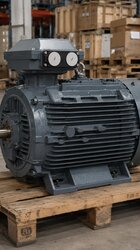
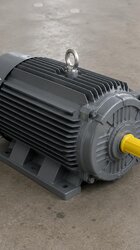
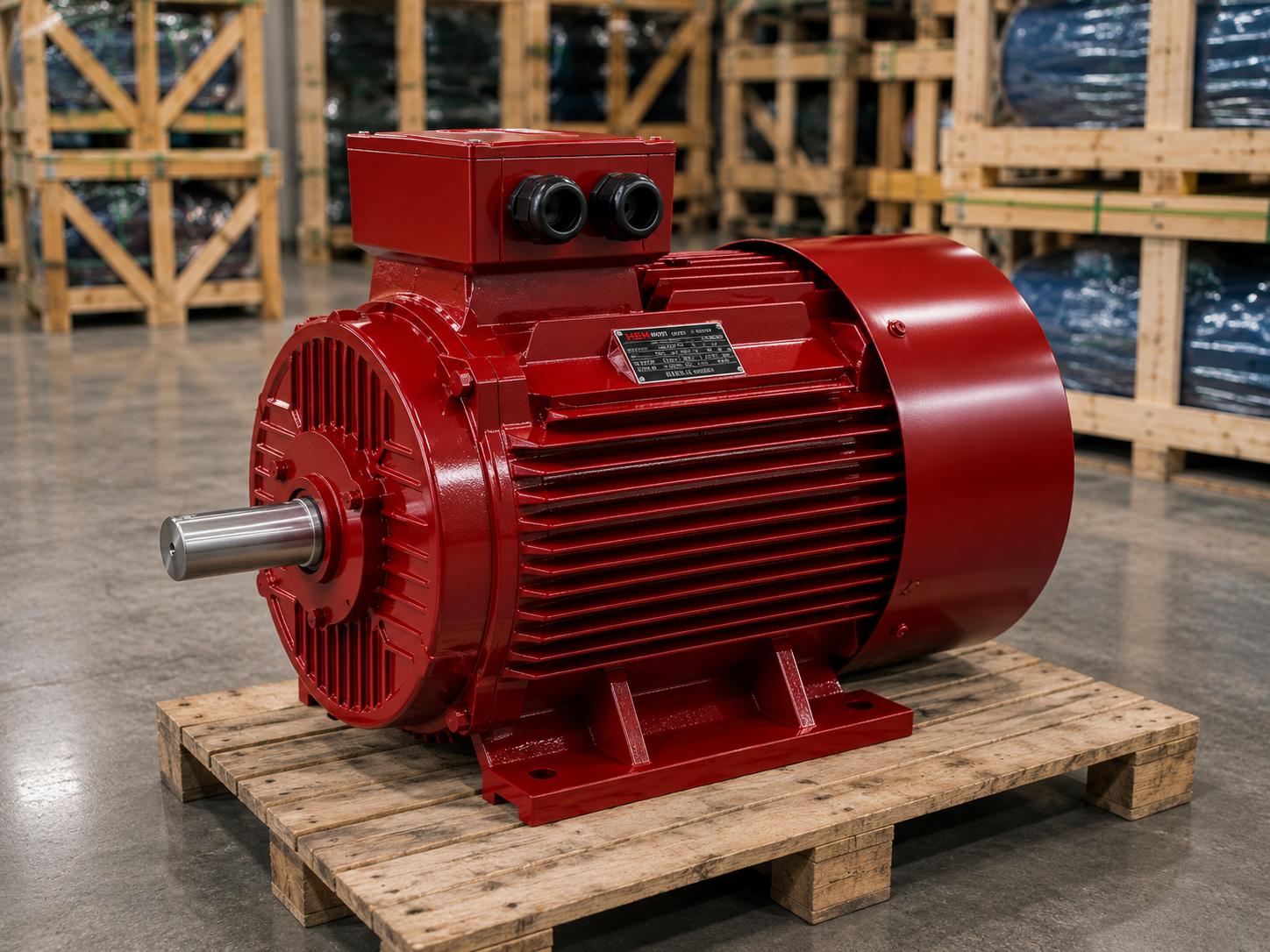

Large-power electric motors form the backbone of a plant. A 280 kW class motor takes on the most critical drives in a facility, from the primary crusher to large fans and blowers, from high-capacity pumps to heavy conveyor lines. A wrong choice in this power class means both a high investment cost wasted and prolonged production stoppages. For this reason, selecting a 280 kW electric motor requires far more careful engineering and supply planning than lower powers. In this article we explain how to make the right purchase by considering pole count, speed, frame size and lead-time plan together.
At HEM Motor we manufacture and supply cast iron bodied motors in IE3 and IE4 efficiency classes in the large-power class. At a power class like 280 kW, you must look not only at the motor's technical specifications but also at delivery time, spare-part availability and commissioning support. Because at this scale a motor is not a component taken off the shelf and fitted, but an investment planned together with the project.
Why Is the 280 kW Power Class a Separate Category?
In large-power motors, starting current, mechanical stresses and heat management behave very differently from low powers. When a 280 kW motor is started direct-on-line, the inrush current it draws from the grid reaches a magnitude that strains both the transformer and the distribution panel. That is why, in this power class, the starting method is an inseparable part of motor selection.
Furthermore, in large frames the rotor inertia is high; this lengthens the starting time and increases winding heating during start. When driving high-inertia loads (large fans, crushers with flywheels), the calculation of starting torque and starting time becomes critical. For correct supply at high power, these mechanical realities must be evaluated from the outset.
Pole Count and Speed Selection: 2, 4, 6 Pole
In a 280 kW motor, the pole count directly determines the speed and therefore the application. As the pole count increases, the speed drops and the torque rises. The correct pole selection is made according to the character of the load.
- 2-pole (≈3000 rpm): For large fans, blowers and high-pressure pumps requiring high speed. High speed provides compact power density.
- 4-pole (≈1500 rpm): The most common choice; for pumps, conveyors, general industrial drives and applications needing a balanced torque-speed mix.
- 6-pole (≈1000 rpm): Heavy applications requiring high torque and low speed; for crushers, mills and heavy conveyor lines.
Pole selection should often be considered together with the gearbox or pulley ratio. If the load already requires a low-speed drive, choosing a higher-pole motor can reduce the gearbox stage. To understand the pole-speed relationship in depth, our asynchronous motor pole selection and 2-4-6 pole comparison article is a clear guide.
Speed and Efficiency Relationship
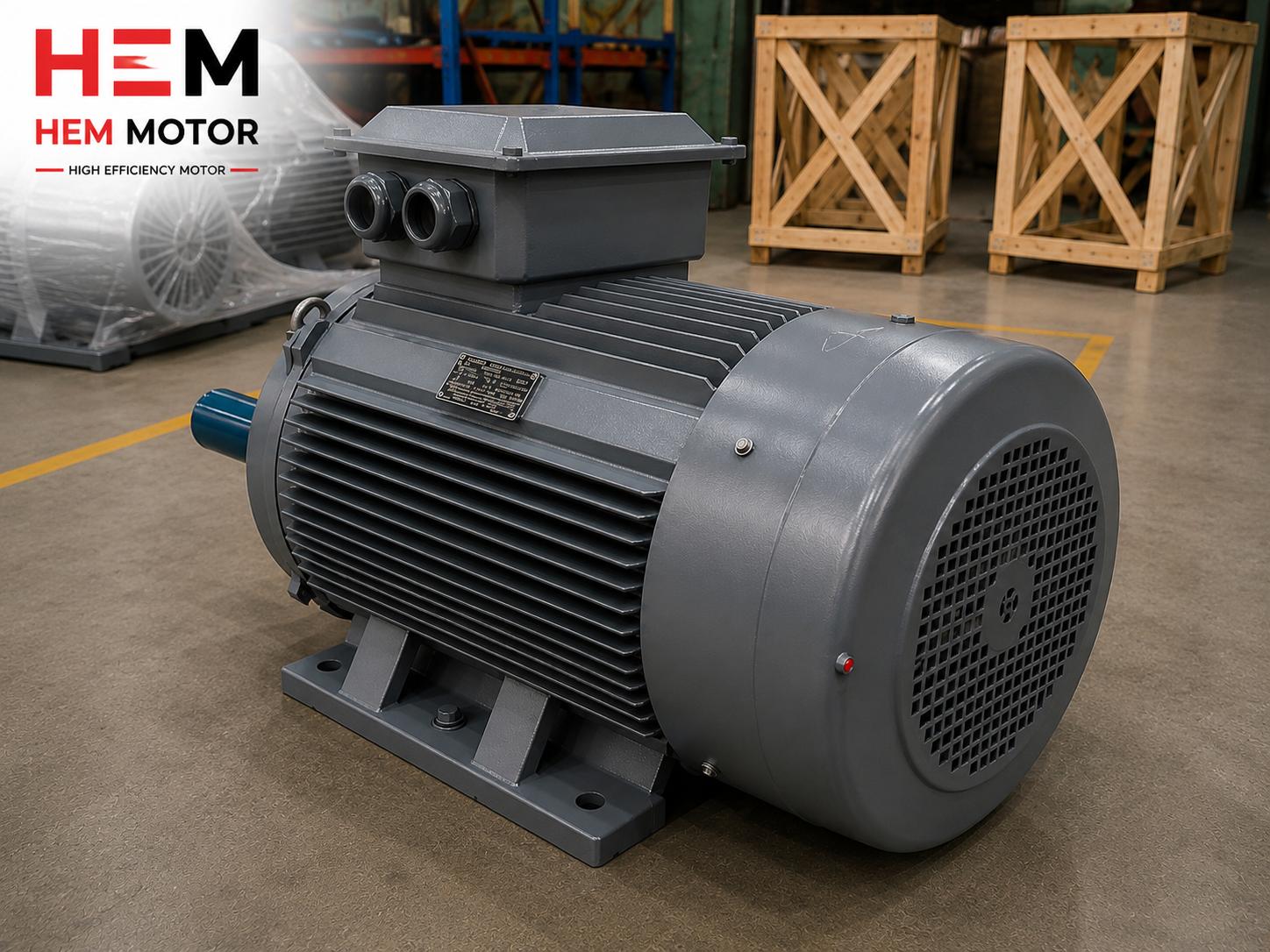
Motors of the same power but different pole counts have different efficiencies and physical sizes. In general, 4-pole motors offer the broadest efficiency-cost balance. 2-pole motors are more compact at high speed, but noise and vibration management gain importance at high speed. 6- and 8-pole motors produce high torque at low speed, but at the same power are physically larger and generally more costly. For details on low-speed applications, see our 6 and 8 pole low-speed motor selection content.
Frame Size and Mounting Type
In the 280 kW power class, the motor is generally in frame size 315 and above. In these frames, the shaft diameter, foot dimensions and flange connections require large-scale mechanical connection. In the Turkish market, large powers commonly use the 355 frame and large shaft diameters. How the motor joins the load side (coupling, pulley or gearbox) determines the mounting type.
- B3 (foot-mounted): The most common mount, seated on a chassis or reinforced concrete base, suitable for coupling and pulley connection.
- B5 (large flange): Applications connected directly by flange to a gearbox, pump or machine body.
- B35 (foot + flange): The mechanically most robust combined mount, connecting both by foot to the chassis and by flange to the machine.
In large-frame motors, base design, alignment and vibration management directly affect commissioning quality. Therefore, when selecting the motor, mounting details and field conditions must be planned together. For mounting type selection, our B3 foot-mounted electric motors product page offers a dimensional and compatibility reference.
Starting Behaviour and Inertia Compatibility
In large-power motors, starting is a process that must be planned carefully. A 280 kW motor reaches its speed in a certain time depending on the inertia of the load it drives. If the load inertia is high (large fan, crusher with flywheel, heavy conveyor), the starting time lengthens, and during this period the motor draws high current and heats up. The starting time must be compatible with the motor's thermal capability; otherwise the motor triggers the protection during start or its winding is strained.
For this reason, when selecting a motor at high power, the load inertia and the required starting time must be taken into account. For high-inertia loads, the motor's starting torque and heating behaviour during start become critical. The right starting method (soft starter or VFD) protects both the motor and the grid by managing the starting time and starting current. Inertia compatibility is a factor that directly determines the reliability of a large-power investment.
How Does the Load Character Affect Starting?
Loads such as pumps and fans demand low torque during starting; these loads generally move comfortably with low starting torque. By contrast, loads such as crushers, mills and heavy conveyors require high starting torque due to loaded starting. At a power like 280 kW, the load's starting character determines the motor's torque class and starting method. When you share the load's real starting profile, we can determine the most suitable motor and starting combination together.
Efficiency Class and Regulation
A power like 280 kW, running many hours throughout the year, sees its energy cost quickly exceed the motor's purchase price. For this reason, in this power class, the efficiency class is not merely a regulatory requirement but a direct matter of operating economics. Current regulations make a high efficiency class mandatory in certain power ranges; the right choice provides both regulatory compliance and energy savings.
In continuously running large-power applications, switching to an IE4 motor brings a noticeable reduction in the annual energy bill with a short payback period. To evaluate the impact of efficiency class on the investment decision, our energy savings with high-efficiency motors and a frequency drive article quantifies the gains, especially in pump and fan applications.
Effect of Starting Method and Protection on Selection
Direct-on-line starting of a 280 kW motor is not possible in most plants; the starting current causes a voltage drop on the grid and affects other equipment. In this power class, starting with a soft starter or frequency drive (VFD) is common. Because the starting method affects both the electrical infrastructure and the motor's heating behaviour, it must be planned together with motor selection.
In large motors fed by a frequency drive, additional protective measures such as insulated bearings and shaft grounding come into play. We address the effects of VFD supply on the motor and the necessary measures in detail in our asynchronous motor with a frequency drive (VFD) article. Correct starting and protection directly extend the life of the large-power investment.
Cooling, IP Protection and Field Conditions
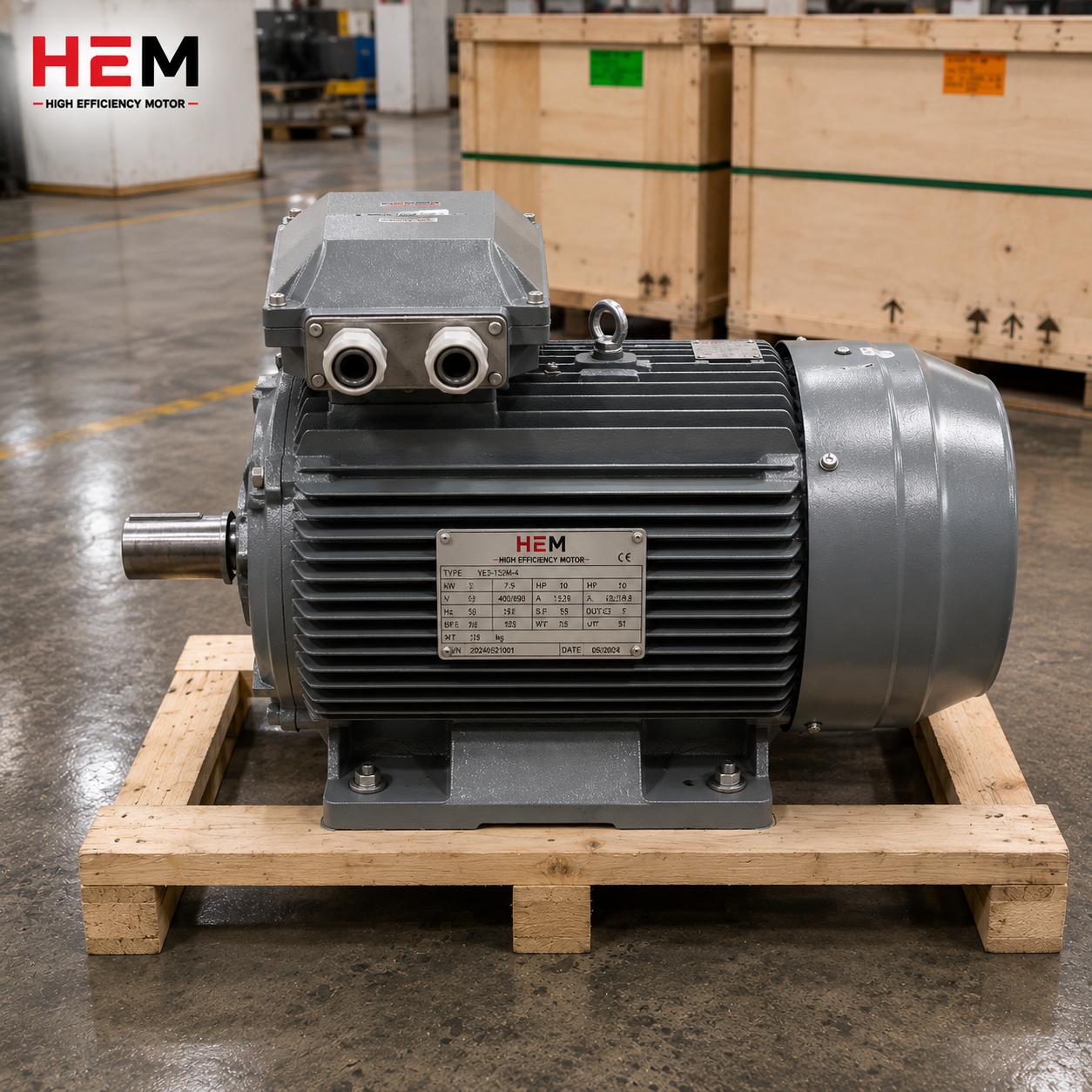
At large powers like 280 kW, dissipating the loss heat the motor produces effectively is critically important. Large-frame motors are generally cooled by their own fans (IC411), but in very demanding applications, externally fan-cooled (IC416) or water-cooled solutions may come into play. If cooling is insufficient, the winding temperature rises above the insulation class and the motor's life is shortened. For this reason, when selecting a large-power motor, the cooling method and the site temperature must be evaluated together.
Field conditions also determine the IP protection class selection. IP55 is standard in large motors operating in dusty, humid or outdoor environments; in very dusty mining and stone-crushing plants we recommend IP56 and above. A cast iron body is critical at large powers for mechanical strength and vibration management; unlike an aluminium body, it withstands impact and vibration far more safely under heavy-duty conditions. To evaluate the behaviour of a large-power motor at high ambient temperature, our bearing type and life in asynchronous motors article explains the factors affecting bearing life.
Supply and Lead-Time Plan: The Critical Factor at High Power
Large-power motors are usually supplied on a project basis, and delivery time can be longer than for small powers. For this reason, a 280 kW motor must be planned early according to the project's commissioning schedule. The lead-time plan should cover not only the motor's delivery time but also the spare parts and service support required during commissioning.
- Early planning: Align the project schedule with the motor's procurement time; do not leave it to the last moment.
- Backup strategy: On critical lines, a spare motor or critical spare-part stock reduces downtime risk.
- Commissioning: Include alignment, vibration measurement and first-run support in the supply plan.
- Equivalent selection: If you are replacing an existing motor, verify equivalent frame and connection compatibility in advance using the nameplate data.
At HEM Motor we manufacture and supply across a wide range in the large-power class, aiming for delivery times that match projects' lead-time plans. In heavy-duty applications such as mining sector electric motors, the suitability of large-power motors to field conditions is especially important. For current electric motor prices, stock status and lead time, our quotation process responds quickly.
Summary Selection Criteria
- Load character: Determine 2, 4 or 6 pole based on torque and speed need.
- Speed: Evaluate together with gearbox/pulley ratio.
- Frame and mounting: Choose B3, B5 or B35 based on the load connection.
- Efficiency: Lower energy cost with IE4 in high-hour operation.
- Starting: Manage starting current with a soft starter or VFD.
- Lead time: Set up early supply aligned with the project and a backup strategy.
Frequently Asked Questions
Should I choose 2-pole or 4-pole for a 280 kW motor?
This depends entirely on the load's character. 2-pole (3000 rpm) is suitable for large fan and blower applications requiring high speed. For pumps, conveyors and general industrial drives, 4-pole (1500 rpm), which offers the broadest efficiency-cost balance, is preferred. In crusher or mill applications requiring low speed and high torque, 6-pole motors are more appropriate. When you share your load profile, we determine the most suitable pole and frame together.
Can a 280 kW motor be started direct-on-line?
In most plants, direct-on-line starting of a 280 kW motor is not recommended; the starting current adversely affects the grid and other equipment. In this power class, soft starting with a soft starter or frequency drive (VFD) is generally applied. Because the starting method directly affects the motor's heating behaviour and the electrical infrastructure requirement, it must be planned together with motor selection.
Why is delivery time important for a large-power motor?
Large powers like 280 kW are usually supplied on a project basis, and delivery time can be longer than for small powers. If the motor is not planned early according to the commissioning schedule, the project is delayed. For this reason, aligning the lead-time plan with the motor's procurement time, setting up a backup strategy on critical lines and clarifying commissioning support in advance are at least as important as the technical selection in a large-power investment.