English
 Türkçe

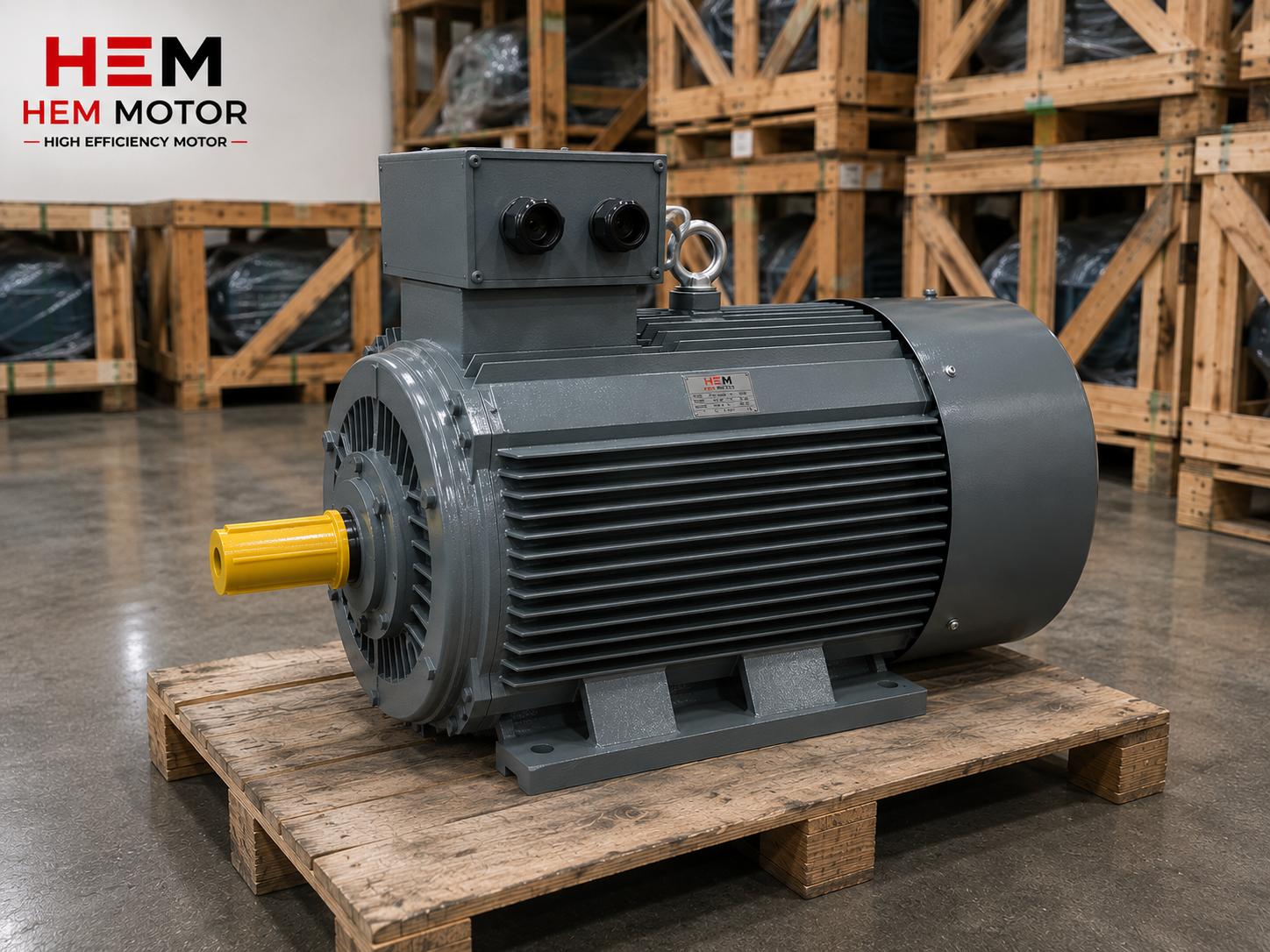

When a plant needs to drive a large-diameter fan, a heavy agitator, or a slow-moving conveyor, the first question is almost always the same: should you take a high-speed motor and slow it down with a reducer, or should you select a low-speed motor from the start? This is exactly where the 10-pole motor earns its place. With a synchronous speed of around 600 RPM, these motors are designed for applications that demand low speed and high torque through direct drive, without a gearbox in between. In this guide we examine, from a buyer's perspective, how a 10-pole motor works, where it is economical, the technical limits to watch for, and the reality of stock versus production lead times.
As HEM Motor, working as both a manufacturer and a seller, we see that the most frequently confused topic in the field is the relationship between speed and torque. Choosing the right pole count is not just a technical preference; it is a commercial decision that directly affects upfront cost, energy consumption, maintenance load, and delivery time.
What Is a 10-Pole Motor and Why Does It Run at 600 RPM?
In asynchronous (induction) motors, two things determine the rotation speed: the grid frequency and the motor's pole count. The synchronous speed is found by dividing the frequency by the number of pole pairs. On a 50 Hz grid, a 2-pole motor runs at 3000, a 4-pole at 1500, a 6-pole at 1000, an 8-pole at 750, and a 10-pole motor at roughly 600 RPM synchronous speed. In short, as the pole count rises, the motor slows down.
In practice, the motor runs slightly below the synchronous speed; this is called slip. So even if the nameplate reads "600 RPM," the actual loaded speed drops to around 580-590 RPM. This is the natural operating principle of asynchronous motors and must be considered in direct drive applications. If you want to dig deeper into slip and pole count, see our comparison of asynchronous motor efficiency and pole count.
Why Does Low Speed Mean High Torque?
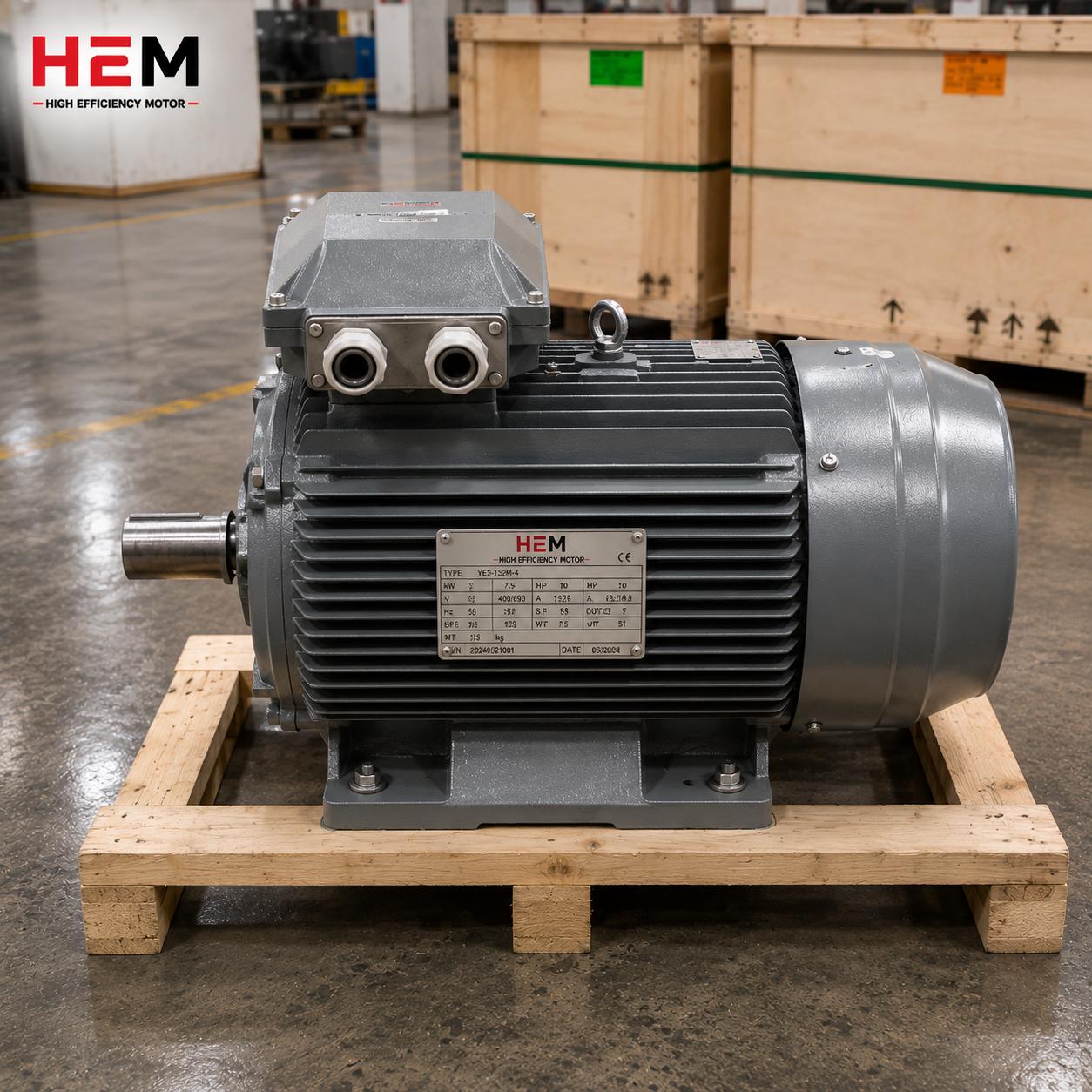
The core principle to understand is this: if a motor's shaft power (kW) is fixed, the torque taken from the shaft increases as the speed drops. That is because power is, roughly, torque multiplied by speed. At the same kW rating, a 10-pole motor turns at a far lower speed but delivers much higher torque than a 4-pole motor. This is precisely the secret behind being able to direct drive hard-starting, high-inertia loads such as large fan blades, full agitators, and loaded belts.
This characteristic simplifies the system. When the motor can be connected directly to the load without intermediate elements such as a gearbox, coupling, or belt-pulley set:
- Mechanical losses drop and overall efficiency rises.
- The maintenance, oil changes, and failure risk of intermediate components disappear.
- The system becomes more compact and quieter.
- Alignment errors are minimized.
- Spare-parts and service costs fall over the long term.
Direct Drive or Motor + Reducer?
A 10-pole motor is not the right answer for every low-speed need. The deciding factor is the target speed range. If your requirement is around 600 RPM, a 10-pole motor in direct drive is usually the most elegant solution. But if you need much lower speeds (for example, a few RPM), a geared solution becomes unavoidable.
When Direct Drive Wins
If the required speed is around 600 RPM, the system runs continuously, and efficiency matters, direct drive usually wins. The extra efficiency loss, lubrication need, and maintenance burden of a reducer are eliminated. Our article on low-speed high-pole motors and gearless direct drive explains, with examples, which applications can run without intermediate elements.
When a Reducer Is Required
For applications that must go below 600 RPM, for example to 100, 50, or lower, increasing the pole count is not enough. Even at 12 poles the synchronous speed stays at around 500 RPM; going further is neither practical nor economical. Jobs requiring very low speed need a reducer. To see where the limit lies, read our guide on 12-pole 500 RPM motor selection.
Typical Applications for 10-Pole Motors
The combination of low speed and high torque is almost indispensable in certain industrial applications. The areas where 10-pole motors and their 8-pole neighbors are most often chosen include:
- Large-diameter industrial fans and blowers: Wide-bladed fans running at low speed are quieter and more efficient.
- Cooling tower fans: High air volume with low speed; direct drive is ideal.
- Agitators and mixers: Stirring dense, viscous material demands high starting torque.
- Slow conveyors and belts: Moving heavy loads at low speed.
- Mills and grinding systems: Loads with high inertia.
- Crane and hoist drive groups: Controlled, low-speed motion.
Most of these applications run in continuous (S1) duty, so the motor's thermal endurance, bearing life, and body material are critical. If you want to compare 6- and 8-pole alternatives, our article on 6- and 8-pole low-speed asynchronous motor selection covers the neighboring speed ranges in detail.
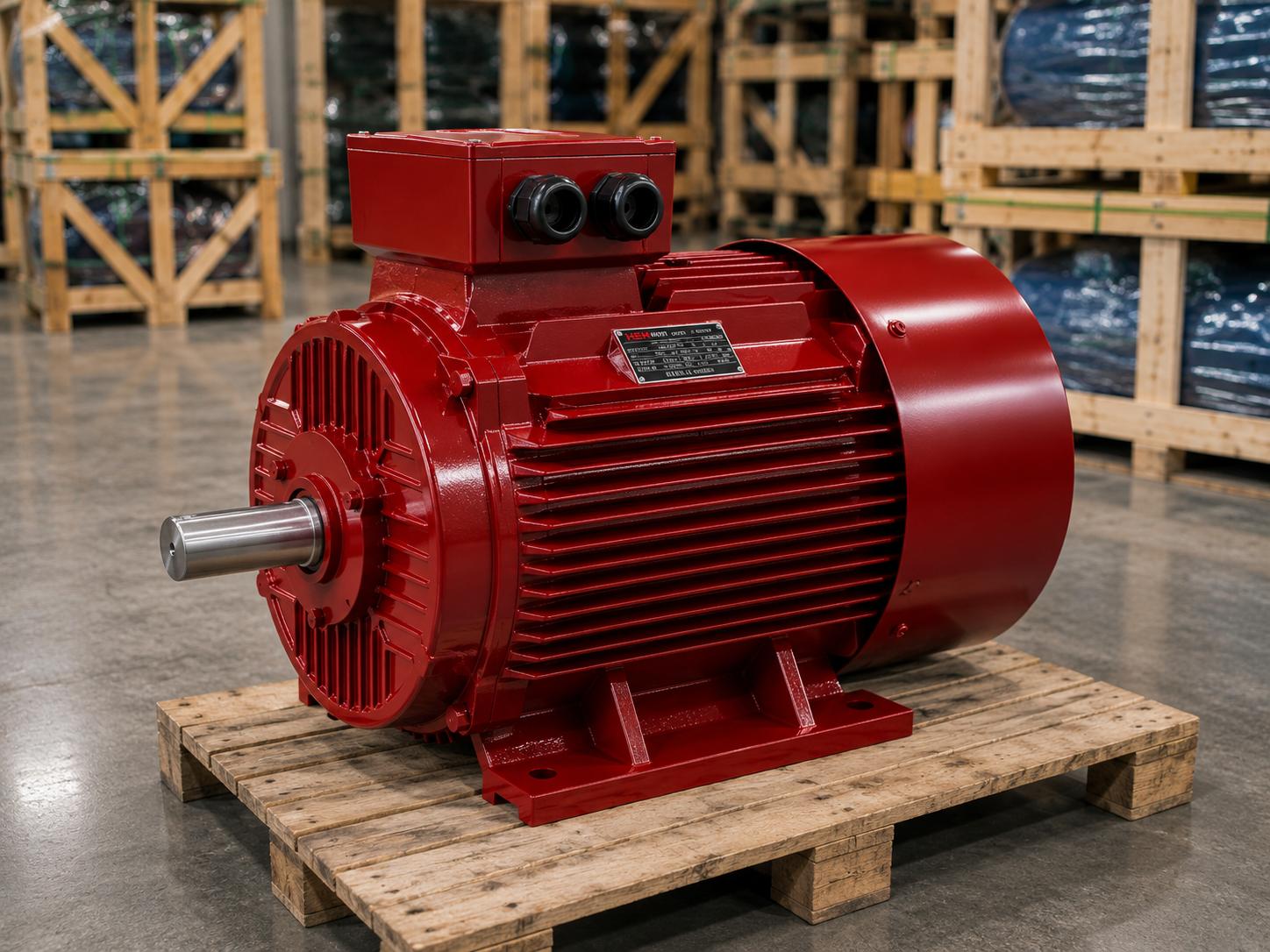
Technical Limits of 10-Pole Motors and What You Should Know
A high pole count never comes entirely for free. A high-power motor buyer should know these constraints upfront for correct budgeting and planning.
Larger Frame and Higher Weight
At the same kW rating, the motor frame grows and gets heavier as the pole count rises. A 10-pole motor is noticeably bulkier and heavier than its 4-pole equivalent of the same power. This affects the installation footprint as well as transport and lifting planning. The base, foundation, and crane capacity must be considered accordingly.
Lower Power Factor and Efficiency Balance
High-pole motors usually run with a lower power factor (cos φ), which may require managing reactive power consumption. On the other hand, because reducer losses are eliminated in the right application, the overall system efficiency can still stay high. On the efficiency-class side, choosing an IE3 or IE4 low-speed motor matters for both energy cost and compliance.
Cost and Lead Time
10-pole motors are not as common as standard 2- and 4-pole motors. Because they are a less-demanded product group, their unit cost is higher and they are often supplied by production order rather than from stock. This makes it essential to clarify the lead time at the start of project planning.
How to Specify the Right 10-Pole Motor? An Order Checklist
To prevent the wrong motor from arriving, the following information should be provided completely at the quotation stage:
- Power (kW): The load's real power need; oversizing lowers efficiency, undersizing strains the motor.
- Pole count / speed: 10 poles and ~600 RPM must be stated clearly.
- Mounting type: Foot (B3), flange (B5), or combined (B35), depending on how it connects to the load.
- Frame size and shaft diameter: For coupling, pulley, or direct-connection compatibility.
- Efficiency class: IE3 or IE4.
- Protection and insulation class: IP55 and Class F insulation as standard in dusty/humid environments; higher classes for harsher conditions.
- Duty type: Continuous (S1) or intermittent operation.
- Body material: Cast iron is preferred for heavy-duty use.
To see how these criteria come together in general-purpose industrial use, you can review our general-purpose industrial motors product group. For current electric motor prices and stock status, simply share your requirement details.
Stock or Production Order? The Reality of Low-Speed Motors
Standard 2- and 4-pole motors in the most-requested power-speed combinations can often be delivered from stock. But with unusual-speed products such as 10-pole motors, the situation is different. Because they serve a more niche demand, they may not be on the shelf in every power rating. The way to shorten delivery time on a high-power motor project is to clarify the need early and share the technical documents (nameplate data, connection dimensions, load profile) from the start.
As HEM Motor, with both our stocked standard products and our manufacturing capacity for special speed and frame requests, we provide solutions for low-speed applications that require direct drive. When the right pole count, the right frame, and the right efficiency class come together, both the initial investment and the operating cost are optimized.
Efficiency, Cooling, and Lifespan in a 10-Pole Motor
A motor turning at low speed behaves thermally differently from a high-speed one. Because its own cooling fan on the shaft also turns slowly, dissipating the heat the motor produces can become harder in some cases. For this reason, choosing the right cooling solution for a low-speed motor running continuously at full load directly affects its lifespan. Heavy-duty applications may require an independent cooling fan (forced cooling) or a higher insulation class. Class F insulation provides sufficient thermal margin in most industrial applications; however, if the ambient temperature is high and the load profile is heavy, moving up to Class H increases the motor's safe operating margin.
Bearing life is another important part of this equation. Because 10-pole motors usually drive high-torque and high-inertia loads, the radial and axial forces on the bearings increase. Choosing quality bearings, observing the correct lubrication interval, and ensuring proper alignment prevent unexpected stoppages. On large directly driven fans and agitators, a selection made without accounting for the side loads on the shaft can lead to early bearing failure. So at the selection stage, you must evaluate not only the load's power but also the mechanical forces acting on the shaft.
The Importance of the Cast Iron Body
High-power, low-speed motors usually operate in harsh industrial environments: dusty quarries, humid cooling towers, heavily loaded agitator systems. In these conditions, the mechanical strength of the body material is decisive. A cast iron body provides high resistance to impact and vibration, dissipates heat better, and increases the motor's rigidity, reducing vibration. In a high-power motor investment, a cast iron body raises the initial cost slightly but means lower failure rates and a longer service life over the long term.
On the protection-class side, IP55 provides sufficient protection against dust and water spray for standard industrial applications. But if the motor sits directly under a dust cloud, in the open field, or in a washdown location, higher protection classes (IP65/IP66) should be considered. These details become clear once the exact operating environment is described; that is why sharing ambient conditions at the quotation stage ensures the right product arrives the first time.
The 10-Pole Choice from a Total Cost of Ownership View
A motor's real cost is far more than its sticker price. The purchase price is only a small part of the total amount most industrial motors spend over their lifetime; the real cost comes from energy consumption. So a 10-pole motor providing direct drive, even with a higher upfront cost than a geared alternative, can deliver an advantage in total cost of ownership thanks to eliminated mechanical losses and reduced maintenance.
When deciding, three items must be evaluated together: the initial investment (motor + reducer if any + installation), the operating cost (energy + maintenance + oil), and the downtime cost (production loss in case of failure). When the reducer is eliminated, the second and third items usually drop. On a continuously running, critical line, this difference reaches a significant amount over the years. Therefore, if the low-speed need is around 600 RPM, increasing the pole count to move to direct drive is often the smarter choice both technically and commercially.
Frequently Asked Questions
Exactly how many RPM does a 10-pole motor run at?
On a 50 Hz grid, the synchronous speed of a 10-pole motor is about 600 RPM. However, asynchronous motors run slightly below synchronous speed under load due to slip, so the actual speed usually drops to around 580-590 RPM. The rated speed on the nameplate reflects this real loaded value.
Why choose a 10-pole motor instead of a 4-pole motor plus a reducer?
If your requirement is around 600 RPM, direct drive is usually a more efficient solution with less maintenance. A reducer adds efficiency loss, lubrication needs, intermediate alignment, and failure risk. But when much lower speeds are required, a geared solution becomes unavoidable; the decision depends entirely on the target speed range.
Are 10-pole motors delivered from stock?
Because they are a far more niche product group than standard 2- and 4-pole motors, 10-pole motors may not be on the shelf in every power rating and are often supplied by production order. To clarify the delivery time for your project, it is recommended to share the power, speed, mounting type, and frame information early.