English
 Türkçe

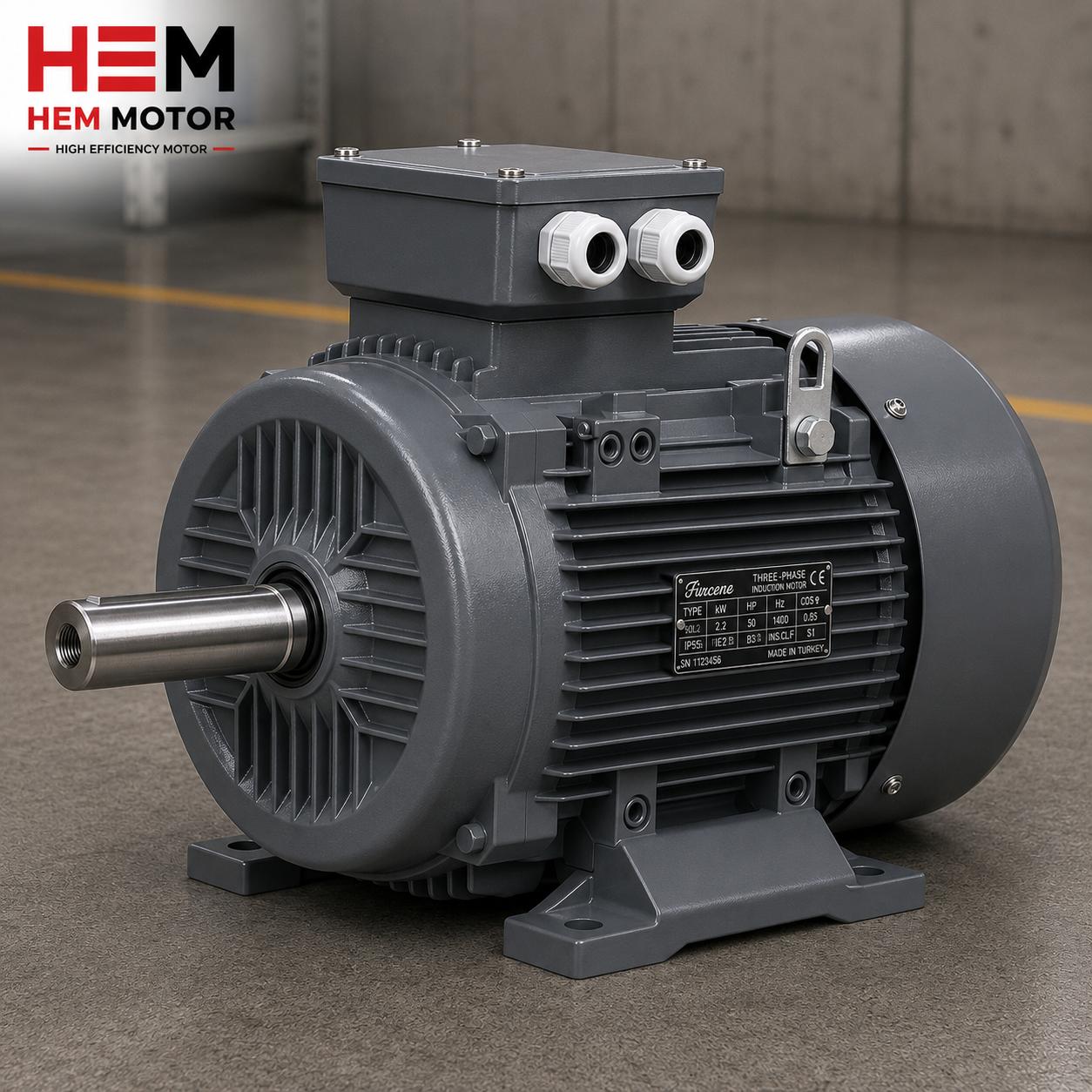

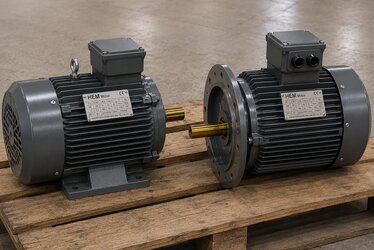
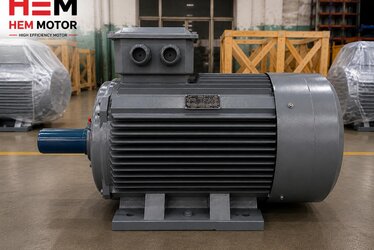
7.5 kW is one of the most frequently used mid-power steps in industry and plant investments. Pumps, fans, compressors, conveyors, gearboxes and many general-purpose applications run in this power band. For this reason the selection of a 7.5 kW electric motor is a very common decision in both new facilities and renovation projects. However, "7.5 kW" alone does not define a motor; there are many options at the same power but with different speed, different frame and different mounting type.
The key to selecting the right 7.5 kW motor is to evaluate the speed determined by the pole count, the mounting type suitable for the application, the protection class and the efficiency class together. A wrong speed selection leads to cavitation in a pump, insufficient flow in a fan, or incompatibility in a gearbox. In this article we examine the 2, 4 and 6 pole options and how to make a correct single-power purchase based on speed, frame and stock status from a field perspective.
Our goal is to help you determine the 7.5 kW motor that exactly matches your application and to supply suitable types quickly from stock. You can reach the product families from the homepage.
The Pole Count and Speed Relationship
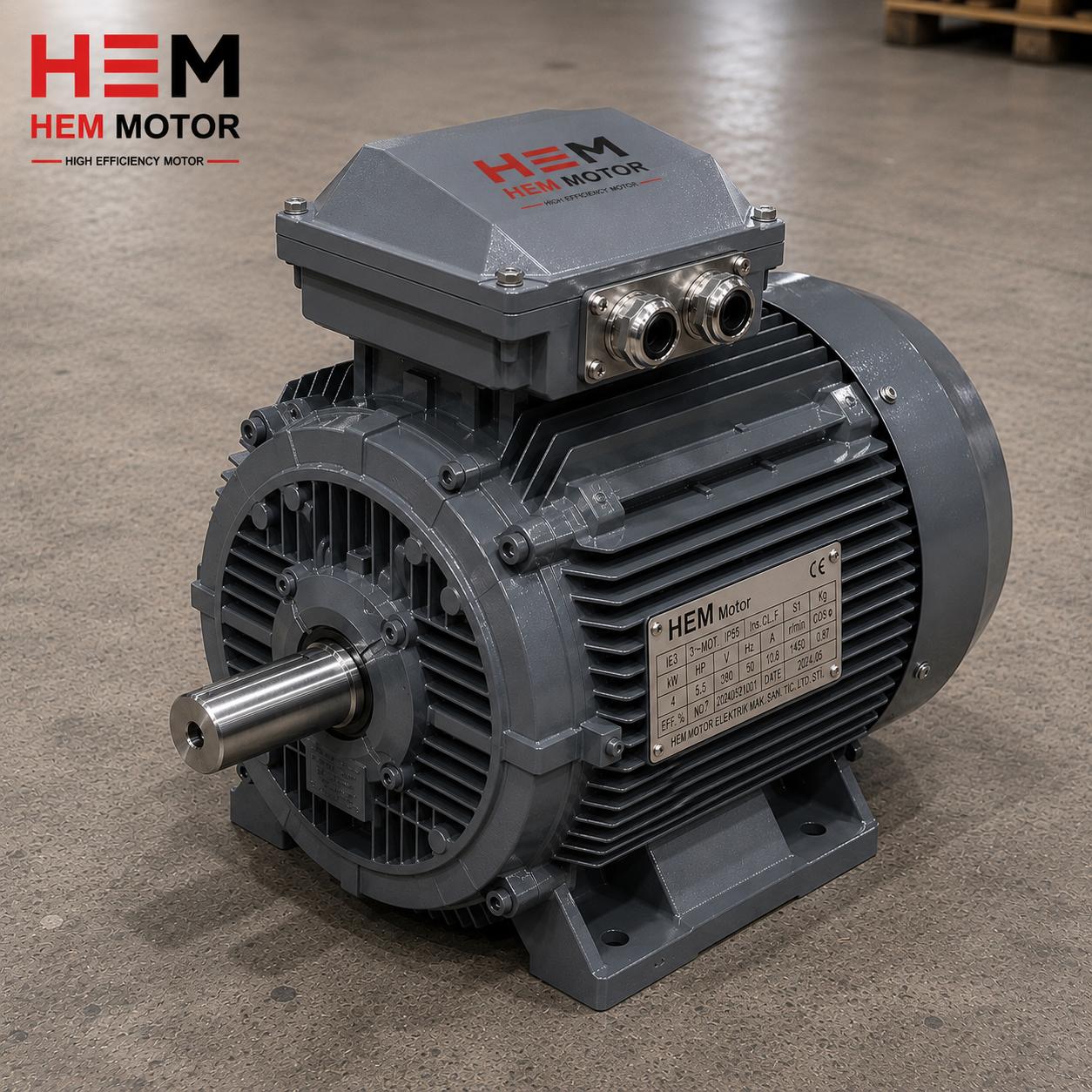
In asynchronous motors the speed is directly determined by the pole count. On a 50 Hz grid the synchronous speed falls as the pole count rises: 2-pole ~3000 rpm (~2900 under load), 4-pole ~1500 rpm (~1450 under load), 6-pole ~1000 rpm (~960 under load). The real speed is slightly below the synchronous speed due to slip. The 7.5 kW power can be produced at all three pole counts; but which one is chosen depends entirely on the application.
2-Pole (~2900 rpm) Applications
2-pole 7.5 kW motors are ideal for applications requiring high speed: centrifugal pumps, high-pressure fans, compressors and some high-speed drive systems. High speed provides high power density in a compact frame; however, noise, vibration and bearing stress also increase. A 2-pole 7.5 kW electric motor is usually produced in a 132 frame size.
4-Pole (~1450 rpm) Applications
4-pole 7.5 kW motors are standard in most general industry applications. Conveyors, gear drives, medium-speed pumps and fans, mixers and many machines run at this speed. 1450 rpm offers a balanced speed between high and low; it provides both sufficient torque and reasonable noise-vibration values. 4-pole is the most demanded and most widely stocked option.
6-Pole (~960 rpm) Applications
6-pole 7.5 kW motors are for jobs requiring high torque and low speed: heavy conveyors, low-speed mixers, some gear drives and special process machines. Low speed means higher torque; however, at the same power a 6-pole motor is produced in a larger frame (usually 160) than its 4-pole counterpart. This means the shaft diameter and foot dimensions also change.
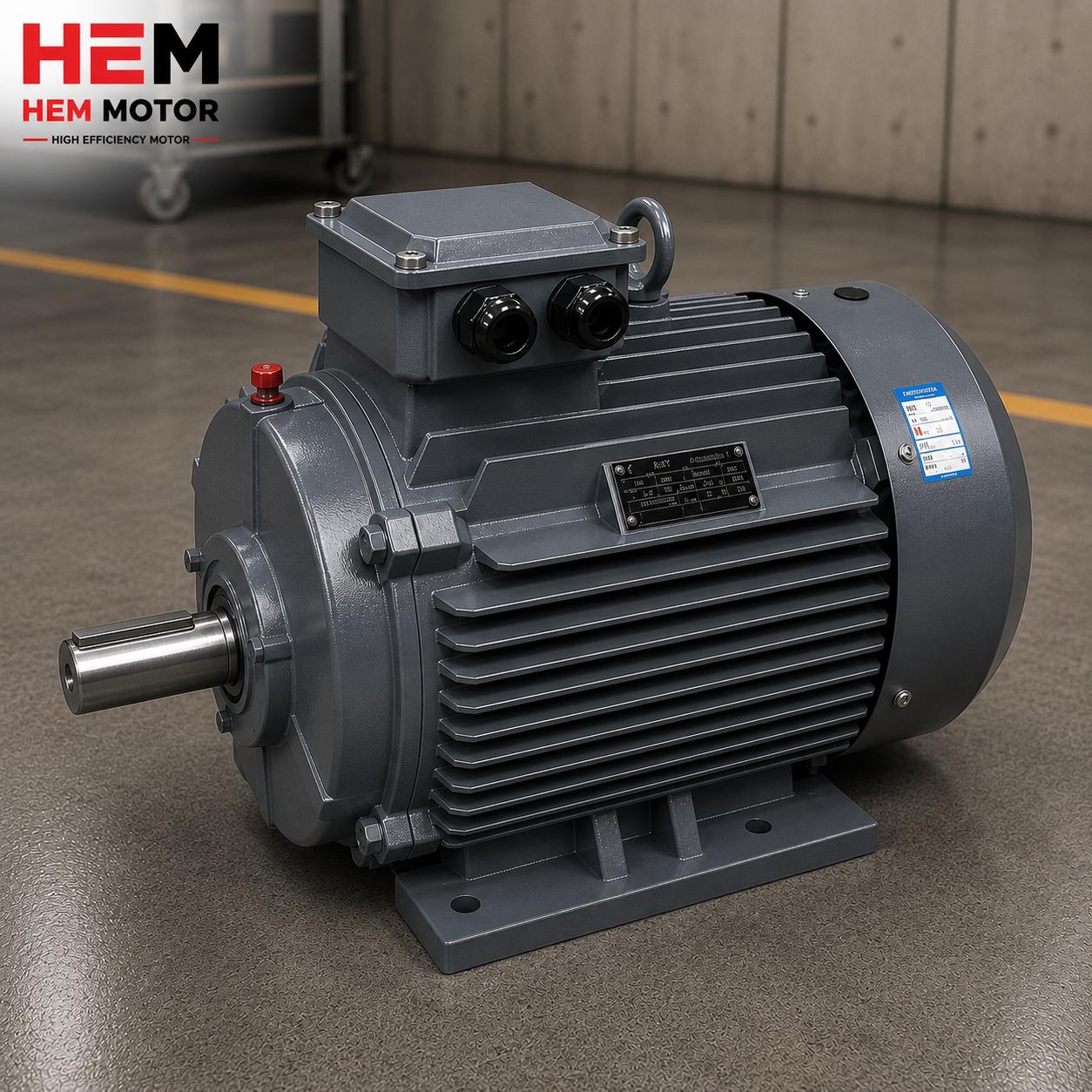
Frame Size and Mechanical Compatibility
The pole count affects not only the speed but also the frame size. At 7.5 kW, 2- and 4-pole motors are usually produced in a 132 frame, while a 6-pole motor can go up to a 160 frame because it produces higher torque. As the frame size changes, the shaft diameter, foot hole spacing and flange dimensions also change. For this reason, when replacing one motor with another, not only power and speed but also frame size and mounting code must match exactly.
IEC standards standardize the frame size, shaft diameter and mounting dimensions; this allows motors of the same code from different manufacturers to be used interchangeably. When selecting a 7.5 kW electric motor, correctly determining the frame code of the machine's original motor is critical for trouble-free field mounting. To examine pole and speed selection in more detail, see our pole selection article.
Efficiency Class: IE3 Mandatory, IE4 Optional
At the 7.5 kW power step, at least IE3 efficiency class is legally mandatory under current regulations. This means the motor cannot be below a certain minimum efficiency value. IE3 provides serious energy savings over the years in a continuously running motor compared with an IE2 counterpart.
In applications wanting higher savings and running continuously, the IE4 efficiency class is also an option. IE4 further reduces losses compared with IE3, lowering energy cost; especially in motors running thousands of hours a year, the additional cost of IE4 is quickly recovered through energy savings. In drive-fed, variable-speed applications, the IE5 synchronous reluctance motor offers the highest efficiency.
Rated Current, Starting and Protection
The rated current of a 7.5 kW motor is around 14-15 A on a 380-400 V grid, depending on voltage and efficiency class. This current directly determines the cable cross-section, fuse and thermal relay selection. At direct-on-line (DOL) starting, the motor draws an inrush current of about 6-8 times the rated current; this can cause a short but high voltage drop and grid stress. 7.5 kW is generally a power step that can be DOL-started; but in sensitive grids or applications requiring frequent starts, star-delta or a soft starter may be preferred.
A correctly set thermal overload relay is essential for motor protection. The relay is set according to the motor's rated current and disconnects the motor in case of overload to protect the winding. In drive-fed applications the drive's own protection functions protect the motor; the drive also reduces the inrush current and mechanical shock by providing a soft start.
Points to Watch in Correct 7.5 kW Motor Selection
- Determine the speed required by the application: 2-pole high speed, 4-pole general industry, 6-pole high torque.
- Choose the frame size and mounting type (B3 foot, B5/B14 flange, B35 combined) according to the machine.
- Determine the protection class according to the environment; at least IP55 in humid and dusty environments.
- Prefer at least IE3 in efficiency class, IE4 in continuous operation.
- Verify the duty type (usually S1 continuous) and insulation class (F).
- Standardize the most-used speed and mounting type for the spare plan.
Combining the right speed, right frame and right efficiency class ensures that the 7.5 kW motor runs long and efficiently in the application. You can review the efficient motor families on the efficient electric motors page.
Mounting Type Options
The 7.5 kW motor is offered in different mounting types according to the application. B3 foot mounting, where the motor is bolted to a chassis or foundation, is the most common type; it is used in coupled and belt-pulley drives. B5 flange mounting is for applications where the motor is directly connected to a machine body with a flange; it is common in pump and gearbox mountings. B14 face flange mounting is used for smaller flange connections. B35 offers a combined foot-and-flange mounting.
Correct selection of the mounting type ensures that the motor physically fits the machine and is correctly aligned. A wrong mounting type results in the motor not fitting in the field or vibration problems. For this reason it is important to clearly determine the mounting code at the ordering stage. To clarify power and speed selection, review our power and speed guide.
Stock Status and Fast Supply
Since 7.5 kW is one of the most demanded power steps in industry, it is among the most widely stocked motors. Especially 4-pole, B3/B35 mounted, IP55 protected and IE3 efficiency class 7.5 kW motors are readily available at most suppliers. This means fast supply and short commissioning time in case of failure or a new project.
2- and 6-pole options and the IE4 efficiency class are also widely available; however, early planning is recommended in cases requiring special mounting or high protection class. By keeping the most-used 7.5 kW configurations in stock, we provide fast solutions for both new projects and spare needs.
Energy Cost and Life-Cycle Calculation
The real cost of a motor is not so much its purchase price as the energy it consumes over its life. A continuously running 7.5 kW motor consumes a very large amount of energy when it runs thousands of hours a year; for this reason even a small difference in efficiency class turns into a serious figure over the years. The additional cost of choosing IE4 over IE3 is usually recovered through energy savings within a few years, sometimes sooner, in a continuously running application.
For this reason, in 7.5 kW motor selection, not only the initial price but the total cost of ownership should be evaluated. In a continuously running, high-load-factor application, choosing the highest efficiency class is the most economical decision in the long run. In intermittent or low-load-factor applications, IE3 can be a balanced choice. The application's operating profile is the basis of the correct efficiency-class decision.
Frequently Asked Questions
Which pole count should I choose for a 7.5 kW motor?
The choice depends entirely on the application. 2-pole (~2900 rpm) is suitable for high-speed applications such as pumps, fans and compressors; 4-pole (~1450 rpm) for general industry and conveyor applications; 6-pole (~960 rpm) for jobs requiring high torque and low speed. The pole count should be determined according to the speed required by the application.
Which efficiency class is mandatory for a 7.5 kW motor?
Under current regulations, at least IE3 efficiency class is legally mandatory at the 7.5 kW power step. An IE4 option is also available for higher savings; in drive-fed, variable-speed applications the IE5 synchronous reluctance motor offers the highest efficiency.
Why does the pole count change the frame size?
At the same power, lower speed means higher torque, and this torque requires a larger frame. At 7.5 kW, 2- and 4-pole motors are usually in a 132 frame, while a 6-pole motor goes up to a 160 frame. When the frame changes, the shaft diameter and foot dimensions also change; so the frame code must match exactly in a motor replacement. We supply the most-used configurations quickly from stock.
Can a 7.5 kW motor be DOL-started?
Yes, 7.5 kW is generally a power step that can be direct-on-line (DOL) started. However, at DOL the motor draws an inrush of 6-8 times the rated current, which can cause a voltage drop in sensitive grids. In applications requiring frequent starts or sensitive to voltage drop, star-delta, a soft starter or a frequency drive may be preferred. We evaluate the starting method together with the application profile and supply the right configuration from stock.