English
 Türkçe

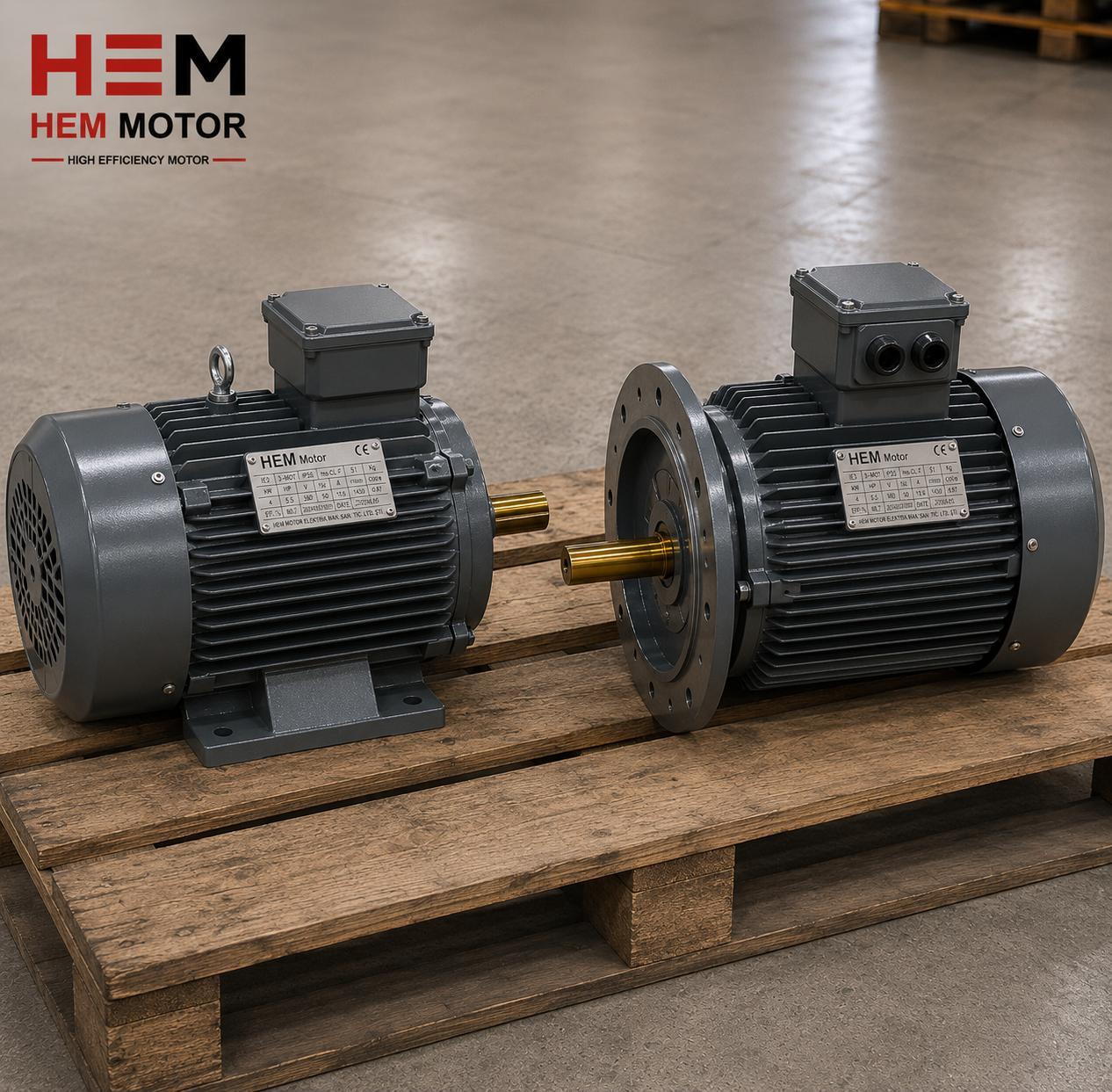

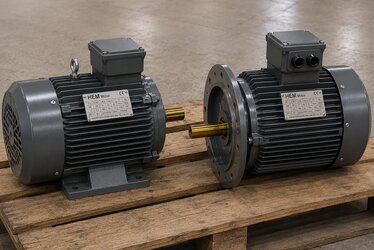
When searching for a motor at a specific power rating, most buyers' first question is "at which speed, in which frame size, and is it in stock?" A 6 kW electric motor is a typical example in this respect: motors of the same power exist as 2, 4 or 6-pole, in different frame sizes and different mounting types. Choosing the wrong pole count or frame size results in the motor not fitting your machine mechanically or not delivering the speed you want. The right choice, on the other hand, directly affects both the initial investment and the long-term energy cost.
As HEM Motor, with our identity as both manufacturer and seller, we have gathered the most common selection mistakes in the 6 kW band and the right purchasing approach in this guide. We address all purchasing criteria in order: the effect of pole count on speed, frame size matching, mounting type, efficiency class and stock status. For current electric motor prices and stock information, you can review our product pages.
What Does 6 kW Power Mean?
A motor's rated power (kW) expresses the mechanical power it can continuously deliver from its shaft. 6 kW is in the medium power band and appears in many industrial applications such as pumps, fans, conveyors, compressors and general machine drives. In this power band, motors are usually produced as three-phase (380/400V) and the efficiency class is kept high as required by regulations.
Part of understanding power correctly is knowing the relationship between HP (horsepower) and kW. Since some machines on the market are defined in horsepower, converting correctly prevents ordering mistakes. Our article on HP or kW? Understanding electric motor power and ordering correctly helps with this.
A power value alone such as 6 kW does not fully define a motor; choosing the right one among dozens of different motor variants at this power requires evaluating the application's speed, torque, mounting and environmental requirements together. In other words, saying "I want a 6 kW motor" is only the starting point of the order. When the right pole count, the right frame size and the right mounting type are determined, the motor both fits the machine seamlessly and operates efficiently throughout its expected life. Below we address these criteria one by one.
2, 4, 6 Poles: Speed Difference and Application Matching
In an asynchronous motor, the pole count determines the motor's synchronous speed. Even at the same 6 kW power, as the pole count changes the motor's speed and therefore shaft torque change significantly. This is perhaps the most critical decision in selection.
2-Pole (~3000 rpm)
High speed means low torque. Preferred in applications requiring high speed such as centrifugal pumps, high-speed fans and compressors. At the same power, a 2-pole motor can be in a smaller and lighter frame than its 4-pole equivalent.
4-Pole (~1500 rpm)
The "default" speed of industry. It is the most common choice in general machine drives, conveyors, reducer inputs and many pump-fan applications. It offers a balanced point between torque and speed.
6-Pole (~1000 rpm)
Low speed means high torque. Preferred in mixers, heavy-starting machines and slow applications requiring high torque. At the same power, a 6-pole motor is usually in a larger frame.
To see the effect of pole choice on the application in detail, our article on which pole count is for which job offers a comprehensive comparison. You can also find why the actual speed is slightly below the synchronous speed in our article on slip and actual speed in asynchronous motors.
Why Is Frame Size Important?
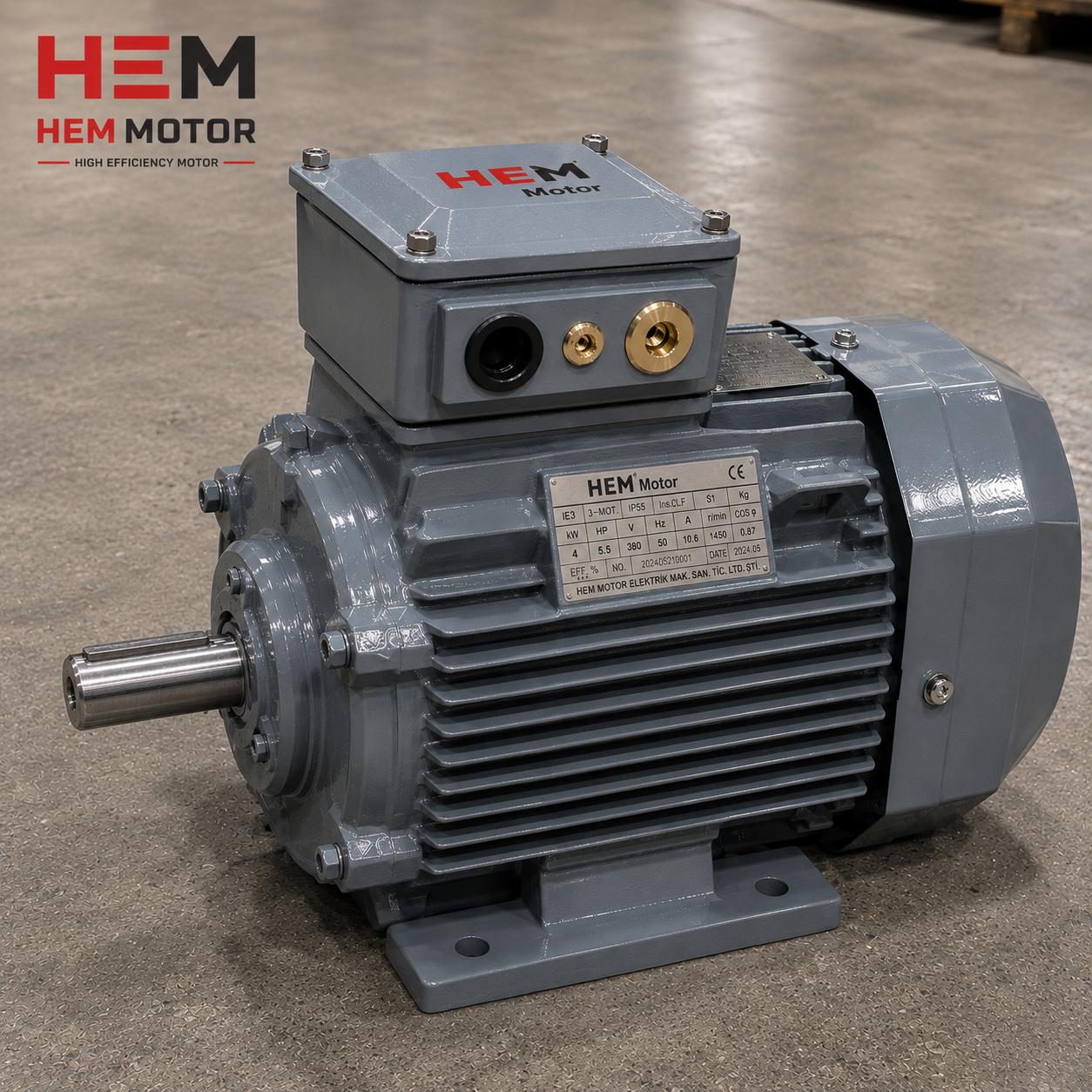
The frame size (IEC frame size) determines the motor's physical dimensions, the position of the foot holes, the shaft height and the shaft diameter. Motors at the same 6 kW power with different pole counts may be in different frame sizes. If you are replacing an existing motor, when the frame size is not the same the motor's foot holes or shaft height may not fit the machine.
- Shaft height: The distance from the floor to the shaft axis determines belt-pulley alignment.
- Foot hole pattern: In mounting to a chassis, the hole dimensions must match exactly.
- Shaft diameter and key: The coupling or pulley connection depends on the shaft diameter.
To examine frame size and power matching in detail, our article on frame size and power matching in cast iron body motors is a good resource.
Mounting Type: B3, B5, B35
How the 6 kW motor connects to the machine determines the mounting type. The wrong mounting type results in the motor not being physically mountable at all.
- B3 (foot-mounted): Connected to a chassis, floor or base by its feet. Common in belt-pulley and coupled systems.
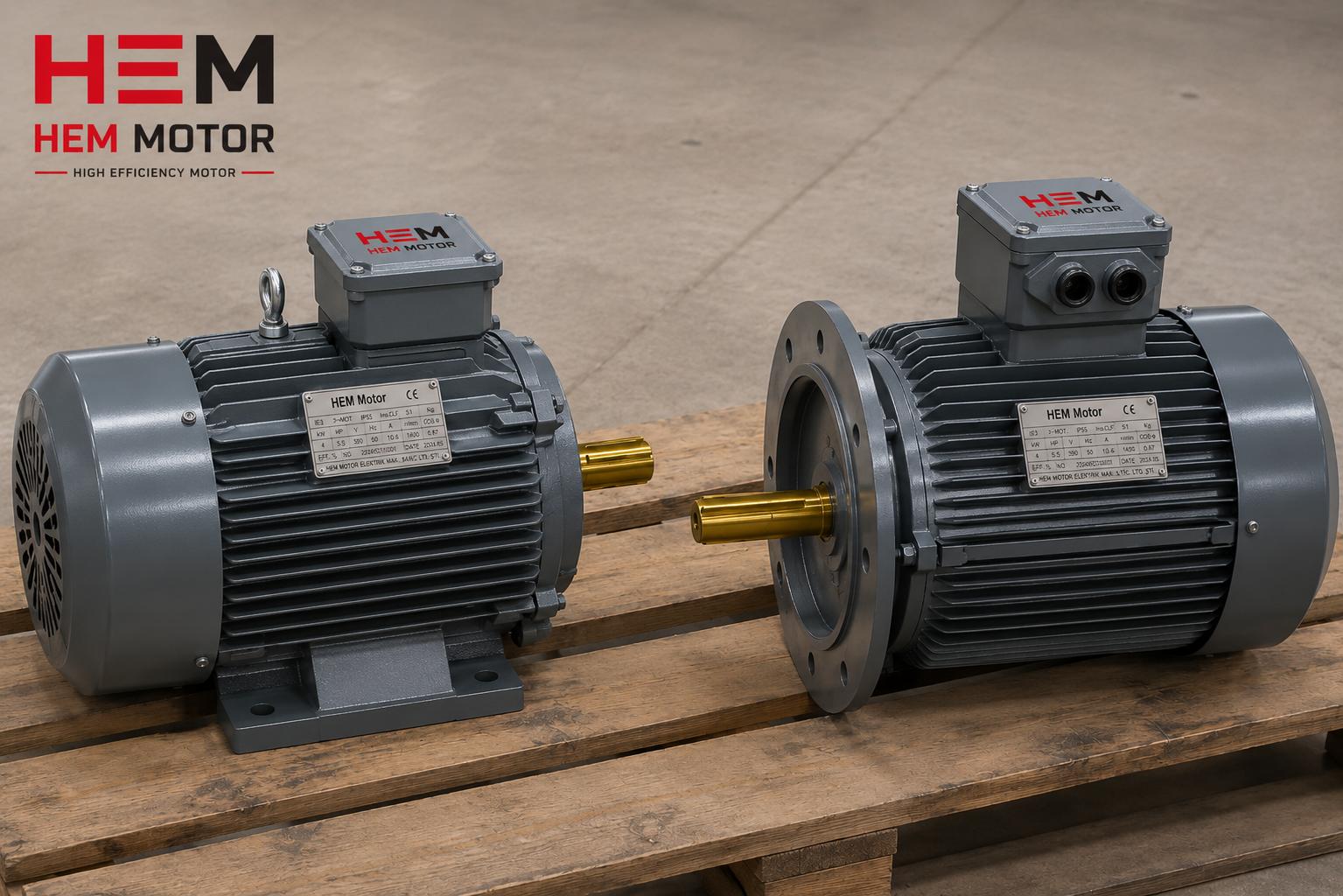
- B5 (large flange): Connected directly to a pump, reducer or machine body via the front flange.
- B35 (foot + flange): Offers both foot and flange connection; provides flexibility in reducer and pump applications.
To compare mounting types, you can review our B5 flanged electric motors page.
Efficiency Class: IE3 and IE4
6 kW is in the power band where a high efficiency class is mandatory by regulation. IE3 Premium efficient motors are the standard choice at this power; businesses targeting lower energy cost may prefer IE4 Super Premium. In a continuously running 6 kW motor, the difference in efficiency class makes a noticeable difference in annual energy cost.
To learn which efficiency class is mandatory at which power from which date, see our article on the IE3 and IE4 efficiency mandate regulation. If you want to evaluate the investment decision between IE3 and IE4, our article on IE3 or IE4? The right electric motor investment addresses the topic in terms of payback.
Duty Type, Protection Class and Insulation
A 6 kW motor has different technical requirements depending on the environment and operating regime in which it will be used. For a continuously running conveyor or pump, S1 continuous duty is essential; in a frequently starting-stopping application, the duty type is evaluated differently. Reaching thermal equilibrium and staying within safe limits under continuous duty is possible with correct insulation and cooling.
The protection class is determined by the dust and water risk in the environment. The IP55 protection class provides adequate protection against dust and low-pressure water jets in an industrial environment and is commonly offered in a standard 6 kW motor. In dustier, more humid or wash-down environments, higher protection levels may be requested. Class F insulation leaves a safe margin in continuous operation with its high temperature resistance; class H may be preferred in hotter environments. For insulation and body selection in hot and dusty environments, our article on motor insulation class and cast iron body in hot and dusty environments offers detailed information.
Cast Iron or Aluminum Body?
In the 6 kW power band, motors are usually produced with a cast iron body; while an aluminum body can also be used at this power, cast iron stands out in heavy-duty and demanding environments. A cast iron body offers high mechanical strength, better vibration damping and impact resistance. An aluminum body is lighter and easier to handle; it may be preferred in cleaner and lighter-load environments. The vibration level of the driven machine, environmental conditions and mounting form determine this decision. To evaluate body material selection according to environmental conditions, our article on cast iron or aluminum body motor selection offers a useful comparison.
Starting Method: DOL, Star-Delta or Inverter
In a medium-power motor such as 6 kW, the starting method is selected according to grid conditions and the driven load. In direct-on-line (DOL) starting, the motor is connected directly to the grid and draws a high inrush current at startup. Star-delta starting lowers this inrush current and provides a softer start. A frequency inverter (VFD) both softens the start and offers energy savings through speed control. For starting method selection, our article on starting AC asynchronous motors: star-delta or soft starter addresses the topic in detail.
Stock Status and Fast Supply
When searching for a motor at a specific power, the biggest uncertainty is whether the correct pole-frame combination is in stock. At a common power such as 6 kW, the standard 4-pole variant is usually the fastest-supplied option; 2 and 6-pole variants may be application-specific. As HEM Motor, we aim to provide fast delivery by keeping the most sought-after power-speed-frame combinations in stock.
- Standard variants: 4-pole and B3/B5 mounting are usually delivered from stock.
- Special variants: Requests for a specific frame, special flange or high protection class may require lead time.
- Replacement from nameplate: When replacing an existing motor, a one-to-one substitute can be selected using the nameplate information.
Typical Application Areas of a 6 kW Motor
The 6 kW power band is a practical range that appears in a very wide segment of industry. A motor at this power is capable of driving many medium-sized machines. The most common applications include medium-flow centrifugal pumps, ventilation and exhaust fans, conveyor belt drives, small-medium compressors, mixers and reducer inputs.
- Pump applications: 6 kW is a common choice in medium-flow water transfer, booster and circulation pumps; usually a 2 or 4-pole variant is preferred.
- Fan and exhaust: In ventilation and dust collection systems, the 4-pole variant provides a balanced speed-torque balance.
- Conveyor and reducer input: In conveying systems requiring low output speed, a 4 or 6-pole motor is matched with a reducer.
- Mixer and heavy starting: A 6-pole motor offers an advantage in mixers requiring high starting torque.
Shaft Diameter, Key and Mechanical Matching
The most frequently overlooked detail when connecting a 6 kW motor to a machine is the shaft diameter and key dimension. Even at the same power and frame size, the shaft diameter must match the coupling, pulley or reducer input exactly. The wrong shaft diameter means the coupling does not seat or the pulley cannot be mounted. The dimension and depth of the keyway are also important for torque transmission. In a motor that will connect to an existing transmission element, verifying shaft diameter, key and coupling compatibility in advance prevents surprises during installation. On this topic, our article on shaft diameter, key and coupling in cast iron motors is a comprehensive guide for correct mechanical matching.
Frequently Asked Questions
Should I buy a 2-pole or 4-pole motor in 6 kW?
This depends on the speed the application requires. For centrifugal pumps, high-speed fans and compressors requiring high speed, 2-pole (~3000 rpm); for general machine drives, conveyors and reducer inputs, 4-pole (~1500 rpm); for heavy-starting, high-torque slow applications, 6-pole (~1000 rpm) is preferred. Base the choice on the nominal speed of the driven machine.
Why are different pole counts at the same 6 kW power in different frames?
As the pole count increases, the speed decreases, but when the power remains constant the shaft torque increases. It is natural for the motor to require a larger magnetic circuit and therefore a larger frame to produce higher torque. For this reason, a 6-pole 6 kW motor is usually in a larger frame than its 2-pole equivalent. When replacing an existing machine, always verify the frame size.
How do I find the same one to replace my existing 6 kW motor?
Note the power (kW), speed (rpm), frame size (IEC) and mounting type (B3/B5/B35) on the old motor's nameplate. When you select a one-to-one replacement motor with this information, both the speed and the mechanical connection match seamlessly. For fast supply from stock, you can confirm the suitable model on our product pages.