English
 Türkçe

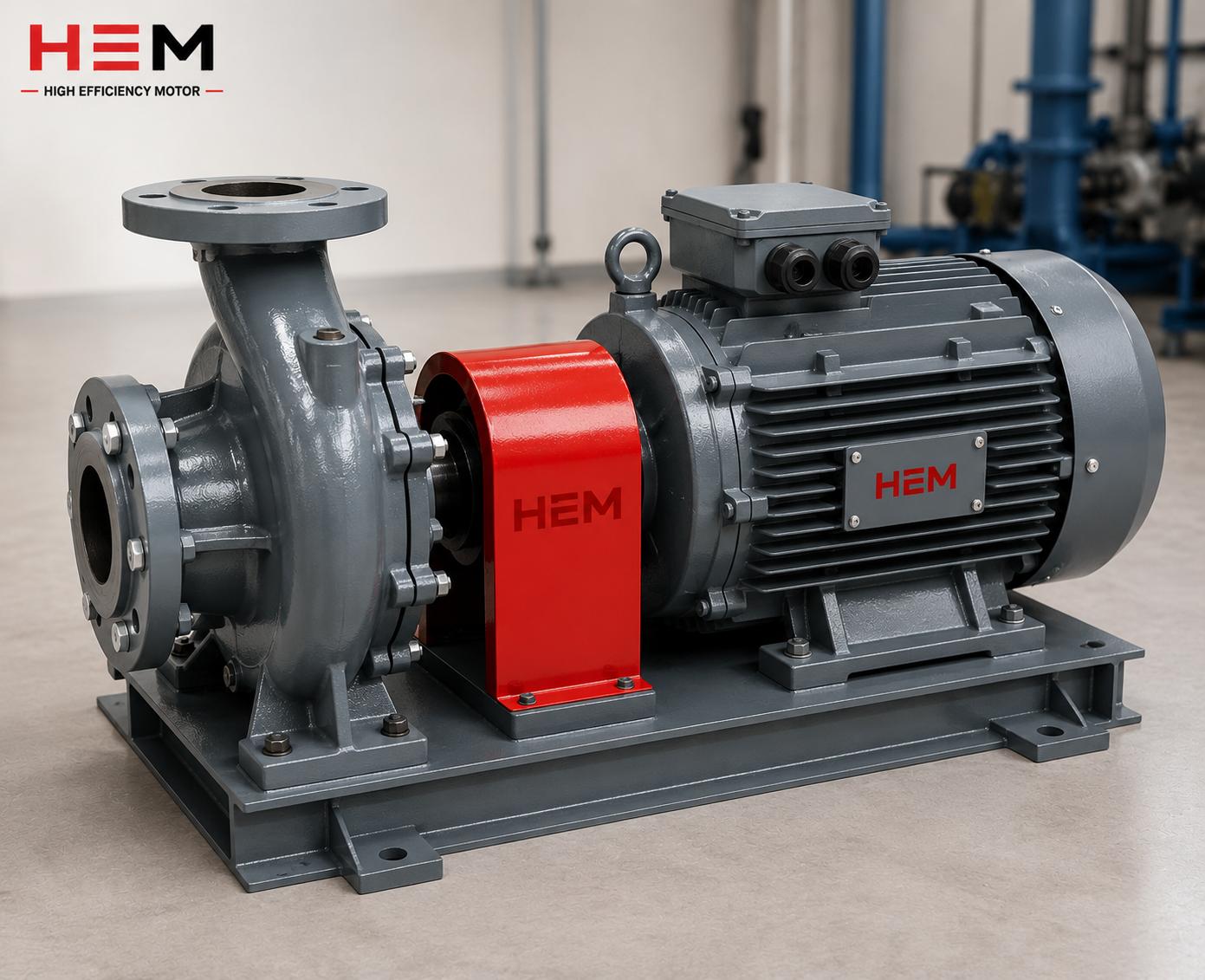

A 160 kW or 200 kW electric motor is no longer an off-the-shelf purchase; it is an investment decision. In this power band, selecting a motor does not end with saying "I need 200 kilowatts." Pole count, speed, frame size, shaft diameter, mounting type, starting method and — most importantly — delivery lead time must be evaluated together. A wrongly selected large-power motor affects not only the initial investment but also your transformer, your panel, your coupling and the energy cost of your line for years. In this guide we explain, with HEM Motor manufacturer assurance, how to buy a 160 kW or 200 kW motor with the correct specification, the right stock and the right lead time plan, step by step.
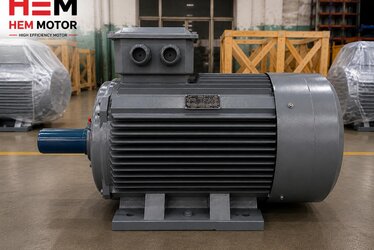
At HEM Motor we manufacture a wide power range from 0.55 kW to 355 kW in IE3 and IE4 efficiency classes, with cast-iron bodies, 100% copper windings, IP55 protection and Class F insulation. 160 kW and 200 kW sit on the "heavy" side of this range: motors that concentrate around the 315 frame and require a project-specific lead time and shipping plan. For an accurate quote we need to discuss your load profile, speed requirement and the starting infrastructure in your panel together.
2-Pole or 4-Pole in a 160 and 200 kW Motor?
In this power class the first and most critical decision is pole count, because it directly determines the motor's speed, frame size, shaft diameter and even how difficult it is to start. A 2-pole motor runs at roughly 3000 rpm at 50 Hz (about 2970-2980 rpm at rated load) and produces high speed with lower torque. A 4-pole motor runs at roughly 1500 rpm (about 1480-1490 rpm at rated load) and delivers roughly twice the torque at the same power.
At the 160 kW and 200 kW level the choice becomes clear by application:
- 2-pole (3000 rpm): High-pressure centrifugal pumps, high-speed compressors, some blower and fan applications. High speed means lower output torque; coupling and balancing precision become more important.
- 4-pole (1500 rpm): The most preferred speed. The majority of high-torque applications — conveyors, crusher drives, general industrial pumps, mixers, mill feed — are 4-pole. At the same kW it provides higher torque and a more balanced start.
- 6-pole (1000 rpm): For special direct-drive applications needing low speed and very high torque. At this pole count the frame grows one or two sizes for the same power.
Practical rule: select the motor speed closest to the rated speed of the machine you drive, so you can simplify the belt-pulley or gear stage. A wrong speed choice creates either an unnecessary gearbox cost or efficiency loss in the belt drive. To clarify pole and speed selection, you can also review our 200 and 250 kW high-power motor 2/4-pole supply plan article; it shows how the same logic works one power band up.
Frame Size, Shaft Diameter and Mounting Type
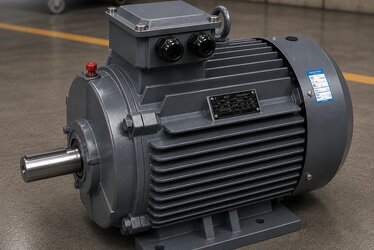
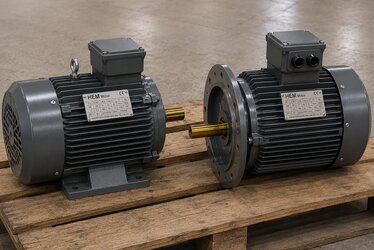
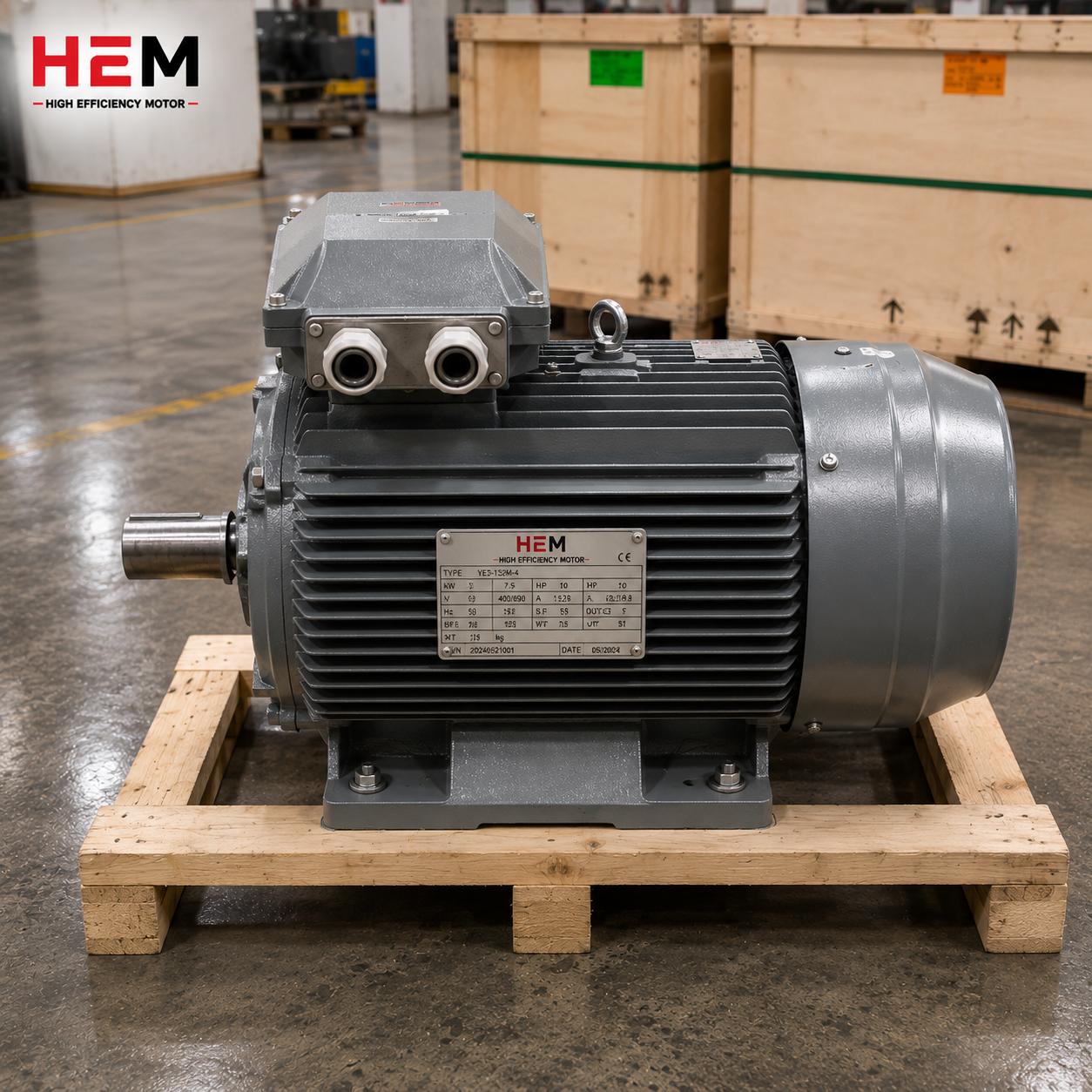
160 kW and 200 kW motors practically cluster around the 315 frame (315S, 315M, 315L and 315HT for high torque). At this point the frame is not just a "size"; the foot hole spacing, shaft height (about 315 mm shaft centre in a 315 frame), shaft diameter and flange dimension must match your machine base exactly.
- Shaft diameter: In a 315 frame the shaft diameter is typically in the Ø75 mm to Ø100 mm band; especially in 1500 rpm large powers, a Ø100 mm shaft is common in the Turkish market. The coupling and pulley hub must be machined to this diameter.
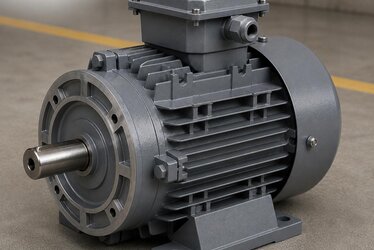
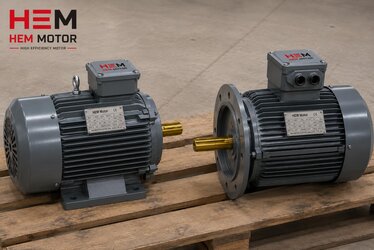
- Mounting type: B3 (foot-mounted) is the most common choice, bolted onto a base. B35 (foot + large flange) is preferred on lines needing pump or direct flange connection. Clarify the mounting code (IM B3, IM B35) before ordering.
- Weight and lifting: These motors weigh hundreds of kilograms. The lifting eyebolts on the body must be planned for your forklift/crane capacity, and the base anchoring must be sized to carry the motor weight and the starting shock.
Matching frame, pole and shaft diameter correctly as a whole is also vital in replacement orders. If you are replacing an existing motor with a new one, sending us the frame and shaft dimensions from the old nameplate speeds up a perfectly compatible large-power motor quote.
Why Does the Starting Method Become Mandatory at This Power?
In small motors, direct-on-line (DOL) starting is no problem. But at the 160 kW and 200 kW level, DOL starting draws an inrush current of roughly 6-8 times the rated current. This causes both a serious voltage dip in your transformer and fluctuation in other lines fed from the same bus. That is why, at this power, the starting method is not a luxury but a mandatory part of the design.
Star-Delta Starting
Star-delta starting reduces the inrush current to about one-third. It is a classic and economical solution; however, because it also lowers the starting torque, it can struggle on high-inertia loads (such as a loaded conveyor or a flywheel crusher). Star-delta requires the motor to have a 6-lead (delta-connectable) winding and the panel to suit this sequence.
Soft Starter and Part-Winding
A soft starter ramps the current up gradually, limiting both mechanical shock and voltage dip; it extends belt, pulley and coupling life. At the 160 kW and 200 kW level, a soft starter offers a more controlled start than star-delta. Alternatively, part-winding starting can be preferred on 12-lead motors. The starting method must be ordered compatible with the motor's winding connection; we covered this with heavy shock-load examples in our crusher motor starting: soft starter, star-delta and direct-on-line guide.
Starting with a Variable Frequency Drive (VFD)
In pump and fan applications requiring variable speed, a frequency drive (VFD) provides both a soft start and energy saving. In that case, ordering a VFD-ready motor with reinforced insulation and insulated bearings where needed reduces the bearing-current risk.
IE3 Efficiency Is a Legal Requirement at This Power
For 160 kW and 200 kW motors, the efficiency class is not up for debate. Under the Ecodesign 2019/1781 regulation, three-phase DOL motors in the 0.75-1000 kW range have required at least IE3 since 1 July 2021. Turkish regulation also mandates IE3 in this power band. Buying an IE2 motor in this class is therefore both non-compliant and costly in terms of annual energy.
- Because losses are low in IE3 and IE4 motors, the fuel/electricity saving pays back quickly in a large motor with high annual running hours.
- In the HEM Motor range, IE3 and IE4 options up to the 315 frame are manufactured with cast-iron bodies and 100% copper windings; they are suitable for continuous (S1) duty in terms of heating and efficiency.
- To compare the correct efficiency class and frame, our IE3 132 and 160 kW motor stock, speed, pole and frame selection article gives a detailed table for an adjacent power band.
Inrush Current, Transformer and Generator Impact
When buying a large-power motor, you must account not only for the motor itself but for the infrastructure feeding it. In 160 kW and 200 kW motors, the high current drawn at start momentarily loads your transformer heavily. If the transformer power cannot comfortably handle the motor's inrush current, voltage drops during start, affecting other devices fed from the same bus.
- Transformer sizing: Running the motor with a soft starter or star-delta instead of DOL significantly reduces the momentary load on your transformer and thus the voltage dip. If you plan a new line, size the transformer to the motor's starting profile.
- Operation on a generator: In site or backup-supply scenarios, running a motor of this power on a generator requires special care. The generator must be heavily oversized to handle the inrush, or the motor must always be started with a soft starter.
- Cable cross-section and protection: Since the rated current is high at this power, the cable cross-section, lugs, fuse and motor protection circuit breaker (MPCB) must be selected to the rated current and starting profile.
For this reason, before ordering a 160 kW or 200 kW motor, we recommend evaluating your panel's starting infrastructure, transformer power and cabling together. At HEM Motor we help you position the motor not as a standalone item but as part of a system suited to your line.
Continuous Duty, Cooling and Duty Type
Large-power motors usually run long hours daily, often in shifts and continuously (S1 continuous duty). This makes cooling and insulation endurance critical. In the HEM Motor range, these motors are produced with Class F insulation and IP55 protection; they are suitable for continuous full-load duty. Still, planning a few points before commissioning extends their life:
- Ambient temperature and altitude: High ambient temperature (above 40 °C) and high altitude reduce the power the motor can deliver (derating). If it will run in a hot or high-altitude plant, state this when ordering; a larger frame may be recommended.
- Airflow: In standard surface-cooled (IC411) motors, the front of the fan cover must be clear and hot air must not recirculate. In tight, dusty rooms, additional ventilation should be planned.
- Dust and moisture: In dusty sites (quarry, cement, crusher), IP protection level and sealing come to the fore. Give the duty type and ambient conditions clearly and we will quote the correctly optioned motor.
When duty type, cooling and efficiency class are planned together, a motor in this class offers a reliable service life of over ten years. Wrong sizing or inadequate cooling is the leading cause of early bearing and winding failure.
Stock, Lead Time and Shipping Plan
The most common mistake with large-power motors is leaving the supply lead time to the last moment. A 160 kW or 200 kW motor does not always come straight off the shelf like small powers; depending on the frame, pole and mounting combination there may be production or preparation time. Therefore:
- Plan the right stock buffer for your critical lines in advance; the cost of downtime far exceeds the motor cost.
- In project work, clarify the lead time and shipping plan at the order stage; motors of this power are shipped on pallets with special packaging.
- For replacement needs, send us the existing motor's nameplate data (kW, speed, frame, shaft diameter, mounting code); we speed up a perfectly compatible supply quote.
- With HEM Motor manufacturer assurance, you receive the quote, lead time and commissioning support from a single point.
To get the right power-speed-frame combination and current electric motor prices information, you can contact us and request a quote specific to your project. You can review our entire IE3 range on our IE3 electric motors product page.
Frequently Asked Questions
Should I buy a 2-pole or 4-pole 160 kW motor?
It depends on the application's speed requirement. For high-speed pumps, compressors and some fans, 2-pole (3000 rpm) is suitable. For high-torque applications such as conveyors, crushers and mixers, 4-pole (1500 rpm) is preferred; it delivers roughly twice the torque at the same kW. Selecting the motor speed closest to the driven machine's rated speed reduces gearbox and pulley cost.
Can I start a 200 kW motor direct-on-line?
In practice, no. At this power, DOL starting draws 6-8 times the rated current and causes a voltage dip in your transformer. Star-delta, soft starter, part-winding or VFD starting is mandatory in this class. You must order the starting method compatible with the motor's winding connection.
What is the delivery time for a 160 and 200 kW motor?
It varies by frame, pole, mounting type and stock status. Frequently preferred 4-pole 315-frame configurations can be supplied faster; special mounting or VFD-ready options may require lead time. For proper planning, we recommend ordering early and building the shipping and commissioning schedule together. As HEM Motor, we offer a project-specific supply plan.