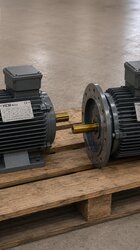
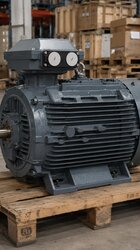
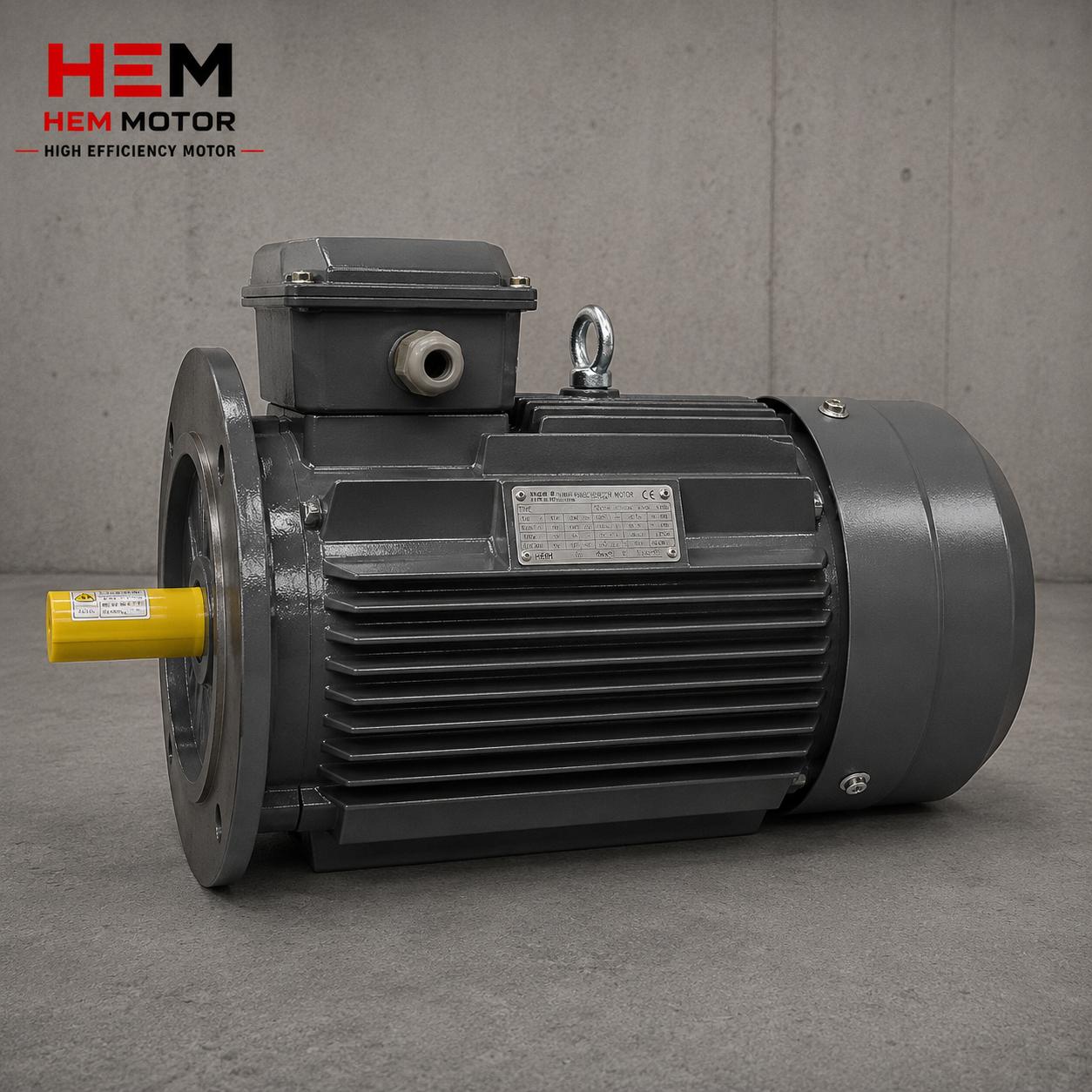
Buying a 132 kW high-power electric motor is a very different process from taking a small-power motor off the shelf and bolting it on. In this class, the motor becomes a project item that must be planned together with its weight, frame size, shaft diameter, starting method and shipping. A 132 kW motor is usually in the 315 frame class, an equipment weighing several hundred kilograms, and a wrong choice or incomplete planning can cause serious delays both on the installation site and during commissioning. In this guide we cover step by step whether to choose 2 or 4 poles for a 132 kW motor, its frame and shaft features, crane lifting and installation preparation, starting options, and a sound lead-time, shipping and commissioning plan.
In Which Applications Is a 132 kW Motor Used?
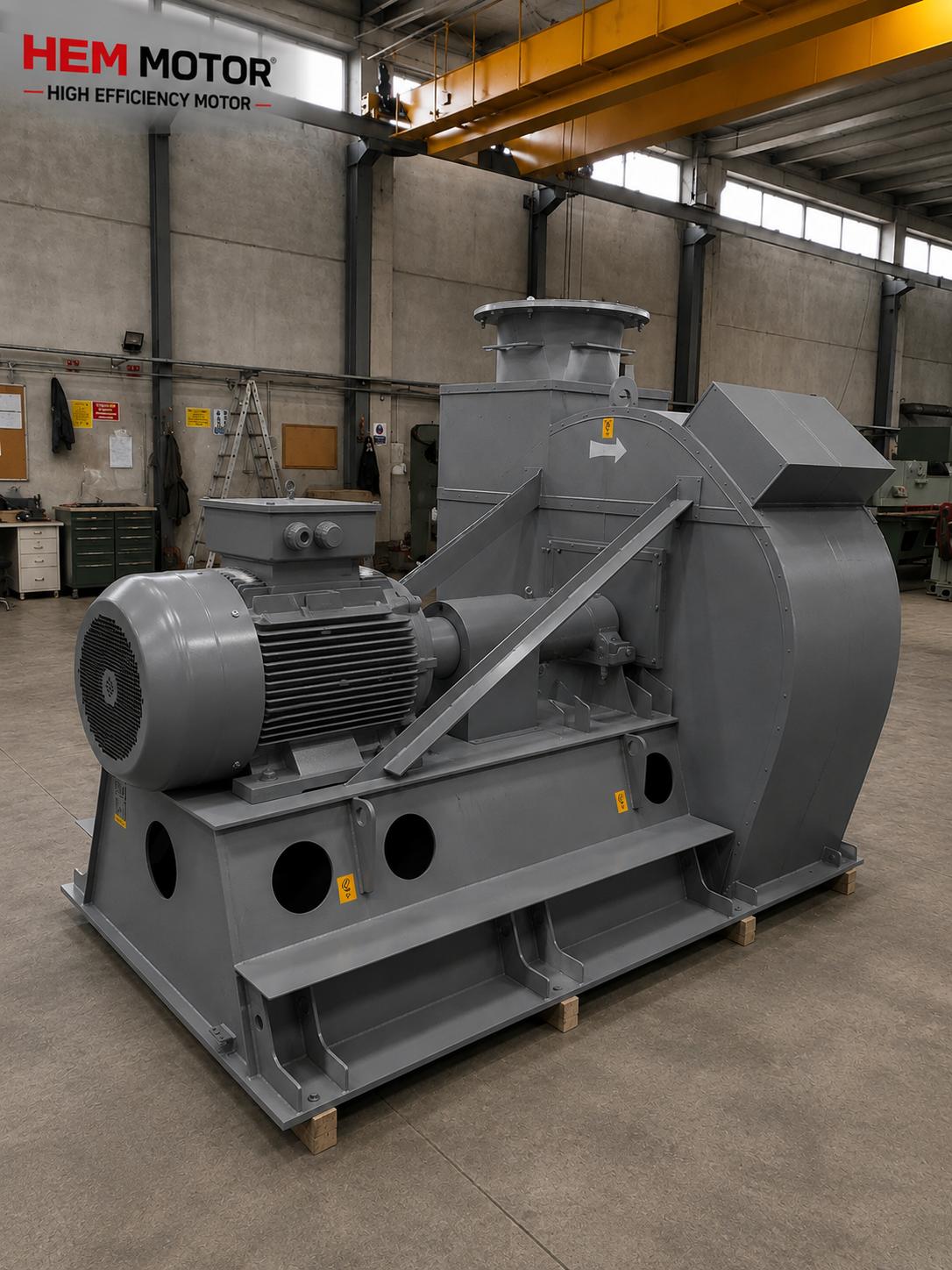
132 kW is a power value frequently encountered in heavy loads in industry, such as pump, fan, compressor, crusher, mill, extruder and large conveyor drives. Because this power class is one of a facility's main drive motors, its selection directly affects production continuity. 132 kW motors are offered in IE3 and IE4 efficiency classes, with cast iron frames and a design suitable for continuous duty (S1). When selecting a motor in this class, not only the power but also the speed required by the application, the starting torque, the load profile and the environmental conditions are evaluated together.
We covered the general logic and project approach of high-power supply in our high-power motor supply above 90 kW article; 132 kW sits right in the middle of this class. For those who need higher powers, our 160 and 200 kW motor selection and 315 kW motor selection articles carry the supply plan to higher powers.
2 Poles or 4 Poles? Speed Selection
One of the most critical decisions for a 132 kW motor is the number of poles, because the pole count determines the motor's speed. A 2-pole motor rotates at about 3000 rpm (in practice 2900-2980 rpm), while a 4-pole motor rotates at about 1500 rpm (in practice 1480-1490 rpm). Which one to choose depends entirely on the application.
When 2 Poles (3000 rpm)?
Applications requiring high speed, such as high-pressure centrifugal pumps, high-speed fans and some compressors, are driven by a 2-pole 3000 rpm motor. In these applications speed is directly related to pressure and flow. 2-pole motors are usually more compact, but because of the high speed, bearing and vibration balance must be managed more carefully.
When 4 Poles (1500 rpm)?
In conveyor, crusher, mill, extruder and general industrial drives, the 4-pole 1500 rpm motor is the most common choice. A 4-pole motor offers higher torque and more balanced operation; when used with a reducer, lowering the output speed also becomes easier. For most heavy drive applications, 4 poles are the standard starting point. We detailed the effect of pole selection on efficiency and application in our pole count and efficiency article, and from a purchasing perspective in our which pole count for which job article.
315 Frame, Shaft Diameter and Mechanical Compatibility
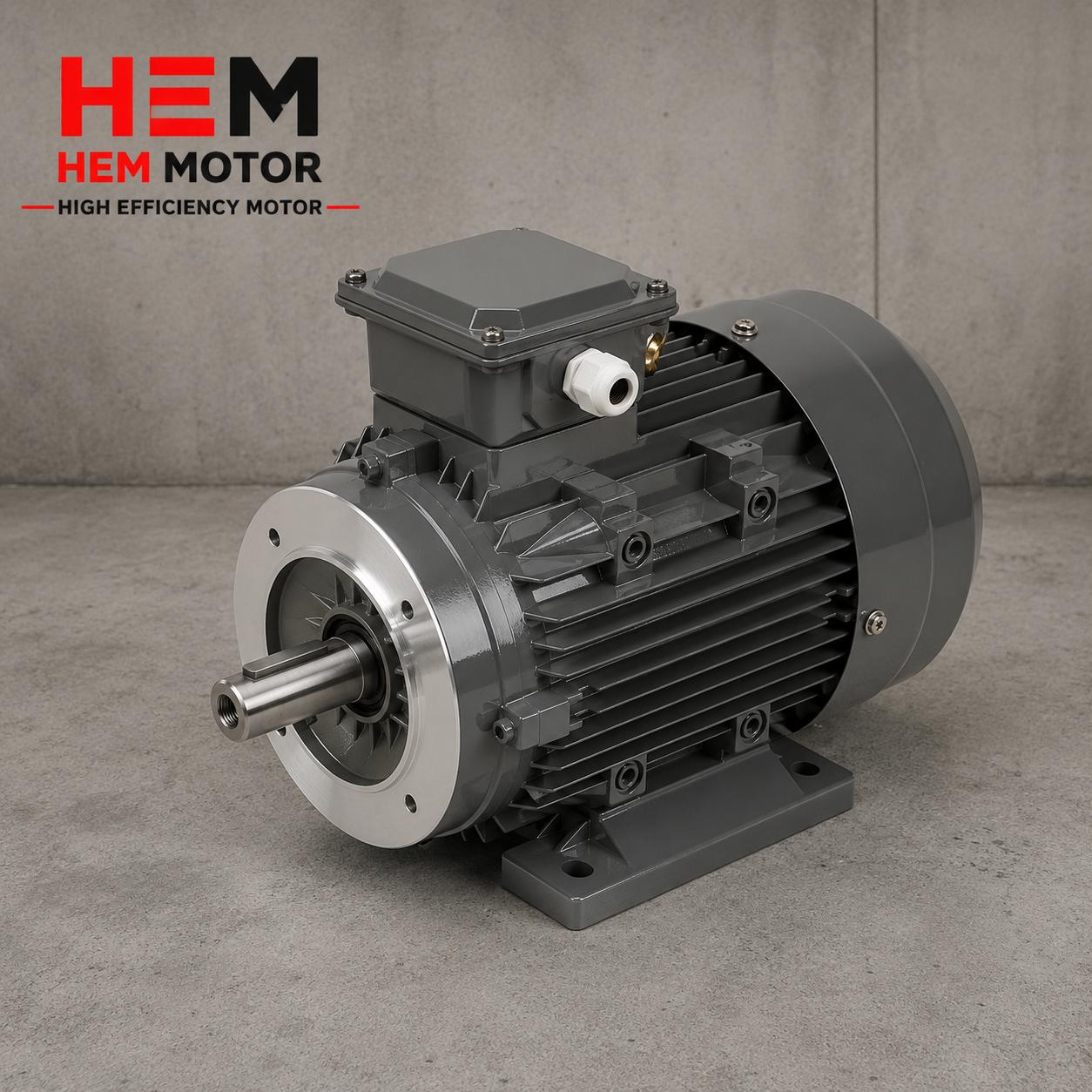
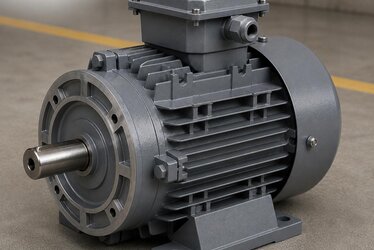
132 kW motors are usually produced in the 315 frame class (IEC 315). This means a standard mechanical framework, from the foot hole spacing to the shaft height, and from flange dimensions to shaft diameter. In the 315 frame the shaft diameter is typically around Ø80 mm; this shaft diameter requires the coupling or pulley connection to be selected accordingly. If you are replacing an existing motor, the foot holes, shaft diameter and key dimensions matching exactly is essential for a trouble-free installation.
Frame Size and Weight Relationship
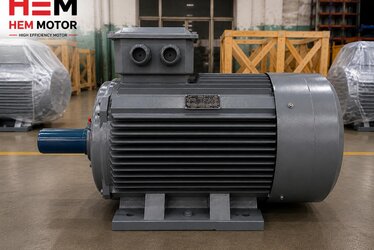
A motor in the 315 frame class, together with its cast iron body, reaches a weight of several hundred kilograms. This weight affects both shipping and on-site installation. We covered frame sizes and weight in detail in our cast iron motor frame sizes and handling article. For shaft, key and coupling compatibility, our shaft diameter and key dimensions article provides a reference for correct ordering.
Crane Lifting, Installation and Lifting Eyebolts
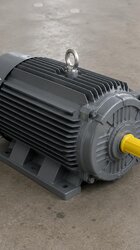
The most frequently overlooked topic in high-power motors is how the motor will be lifted and placed on site. A 132 kW motor cannot be handled by hand; a crane, forklift or appropriate lifting equipment is required. These motors have lifting eyebolts (lifting lugs) on the body, and lifting must be done only from these eyebolts. Lifting from the wrong point both damages the motor and creates a work-safety risk.
Before installation the site must be ready: the motor base (chassis or concrete foundation) must be solid and level, with enough access for coupling alignment and maneuvering space for the lifting equipment. During commissioning, checking the direction of rotation and phase sequence is critical; the wrong direction causes the pump or fan to run incorrectly. Our direction of rotation and phase sequence article explains this check. To inspect for damage that may occur during shipping when receiving the goods, see our shipping damage checklist article.
Starting: Soft Starter and Star-Delta
Running a large motor such as 132 kW by connecting it directly to the mains (direct-on-line starting) draws a very high inrush current. This current causes both voltage drop on the grid and mechanical shock loads. Therefore, the starting method must always be planned for high-power motors.
Soft Starter
A soft starter limits the inrush current and mechanical shock by gradually increasing the motor voltage. In applications such as pumps, fans and conveyors, a soft start both protects the mechanical components and relieves the grid. After starting, the soft starter is bypassed and the motor runs at full voltage.
Star-Delta and Variable Frequency Drive
Star-delta starting is a classic and economical method that reduces the inrush current to about one third; however, it does not provide a smooth transition. If speed control is also required, a variable frequency drive (VFD) provides both a soft start and variable speed. We compared the differences between starting options in our star-delta vs soft starter article, and VFD use in our VFD with asynchronous motor article. On sites fed by a generator, such as construction sites, the inrush current carries separate importance; motor selection on generator-powered sites addresses this topic.
Lead Time, Shipping and Commissioning Plan
A 132 kW motor often requires a decision between delivery from stock and a project order. If a motor with a suitable speed and efficiency class is in stock, the lead time is shorter; if a special configuration is needed, the production and supply time must be planned. Our delivery from stock vs production order article clarifies this decision.
On the shipping side, the motor's weight and size require a suitable vehicle and loading-unloading equipment. We covered freight, cargo and project delivery options for shipments to facilities in Anatolia in our Anatolia shipping guide. To speed up the quote process, it is important to convey the motor's nameplate information and application details completely; our information required when requesting a quote article presents this list. For a wide power range you can review our efficient electric motors category and reach all product groups from our home page.
Efficiency Class: IE3 or IE4?
At high powers such as 132 kW, the efficiency class choice determines the long-term energy cost directly, beyond the purchase cost. If this power class is a main drive motor running thousands of hours per year, even small percentage differences between efficiency classes translate into significant figures in annual energy consumption. IE3 premium efficiency motors are a common and economical starting point; however, in applications running continuously at high load, the extra efficiency the IE4 super premium motor provides can pay for itself over time.
On the regulatory side, the efficiency class is a requirement at high powers as well. We summarized which power and from which date efficiency requirements apply in our IE3 and IE4 efficiency mandate article. To evaluate the investment decision numerically, the total cost of ownership (TCO) approach lets you look not only at the label price but at the lifetime energy cost. For those undecided between IE3 and IE4, our IE3 vs IE4 investment article explains the payback logic.
Load Profile, Duty Type and Correct Sizing
When selecting 132 kW, you need to understand the motor's actual load profile correctly. A pump running at a constant, continuous load and a crusher running at an impact, variable load require different motor characteristics even at the same power value. For continuous operation the S1 duty type is standard; however, in frequently stopping-starting or variable-load applications, the duty type and thermal capacity must be evaluated separately. We covered what duty types mean in our duty type (S1-S6) selection article.
Choosing the motor larger than necessary (oversizing) may look safe at first glance, but when the motor runs at a low load ratio, efficiency and power factor drop. Conversely, choosing the motor at the limit creates a risk of overheating and early failure. To determine the right power margin, our motor load ratio and correct sizing article offers a useful framework. The motor selection under impact load article, which evaluates the flywheel and inertia effect, is also a guide for applications such as crushers.
Cast Iron Frame and Environmental Conditions
132 kW motors are produced with a cast iron frame; this is a necessary feature for high powers in terms of mechanical strength and heat dissipation. While the cast iron frame offers high resistance to vibration and impact, it also increases the motor's weight. If it will operate in harsh environments such as dusty, humid or open-field conditions, the protection class (IP) and body protection must be evaluated additionally. Standard IP55 protection is sufficient for many industrial environments; however, in quarry, mine or very dusty facilities, higher protection may be required. We compared the advantages of the cast iron frame in our cast iron vs aluminium frame article.
Frequently Asked Questions
Should I buy 2 poles or 4 poles for a 132 kW motor?
The decision depends on the application. For high-pressure pumps, high-speed fans and some compressors, 2 poles (3000 rpm) are preferred. For conveyor, crusher, mill and general heavy drive, 4 poles (1500 rpm) are the standard choice. If you are replacing an existing system, base your decision on the old motor's speed and nameplate.
Can a 132 kW motor be started direct-on-line?
Although technically possible, it is not recommended. At this power, direct-on-line starting draws a very high inrush current, causing voltage drop on the grid and mechanical shock. Controlled starting with a soft starter, star-delta or VFD is advised.
What is the shaft diameter of a 315 frame motor?
In the 315 frame class the shaft diameter is typically around Ø80 mm. However, the exact value may vary according to the precise motor type and standard; if you are replacing an existing motor, always verify the shaft diameter, key dimension and foot hole spacing before ordering.
Get a Quote
For your 132 kW high-power motor needs, contact us by specifying the speed, efficiency class, mounting type and application details; we will plan the most suitable solution based on stock availability and your lead time. For a fast quote and project support, reach us at +90 (532) 345 49 86 or send your request through our contact page.
Purchase and Project Checklist
- Have you determined the pole count (2/4) and speed according to the application?
- Have you clarified the efficiency class (IE3/IE4) and duty type (S1)?
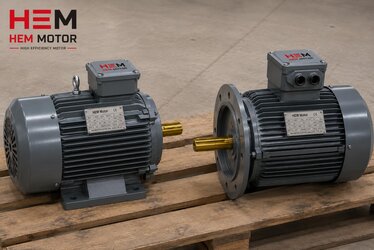
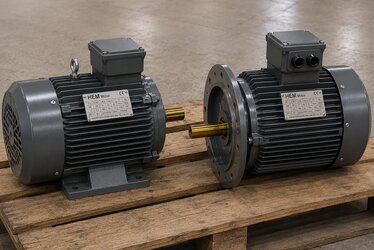
- Have you verified the frame (315), shaft diameter (Ø80) and mounting type (B3/B5/B35)?
- If replacing an existing motor, have you compared the foot and shaft dimensions exactly?
- Have you planned the installation with a crane/forklift and lifting eyebolts?
- Have you chosen the starting method (soft starter/star-delta/VFD)?
- Have you planned the lead time, shipping vehicle and site preparation?
- Have you anticipated the direction-of-rotation and phase-sequence check at commissioning?