English
 Türkçe

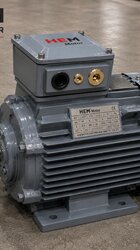
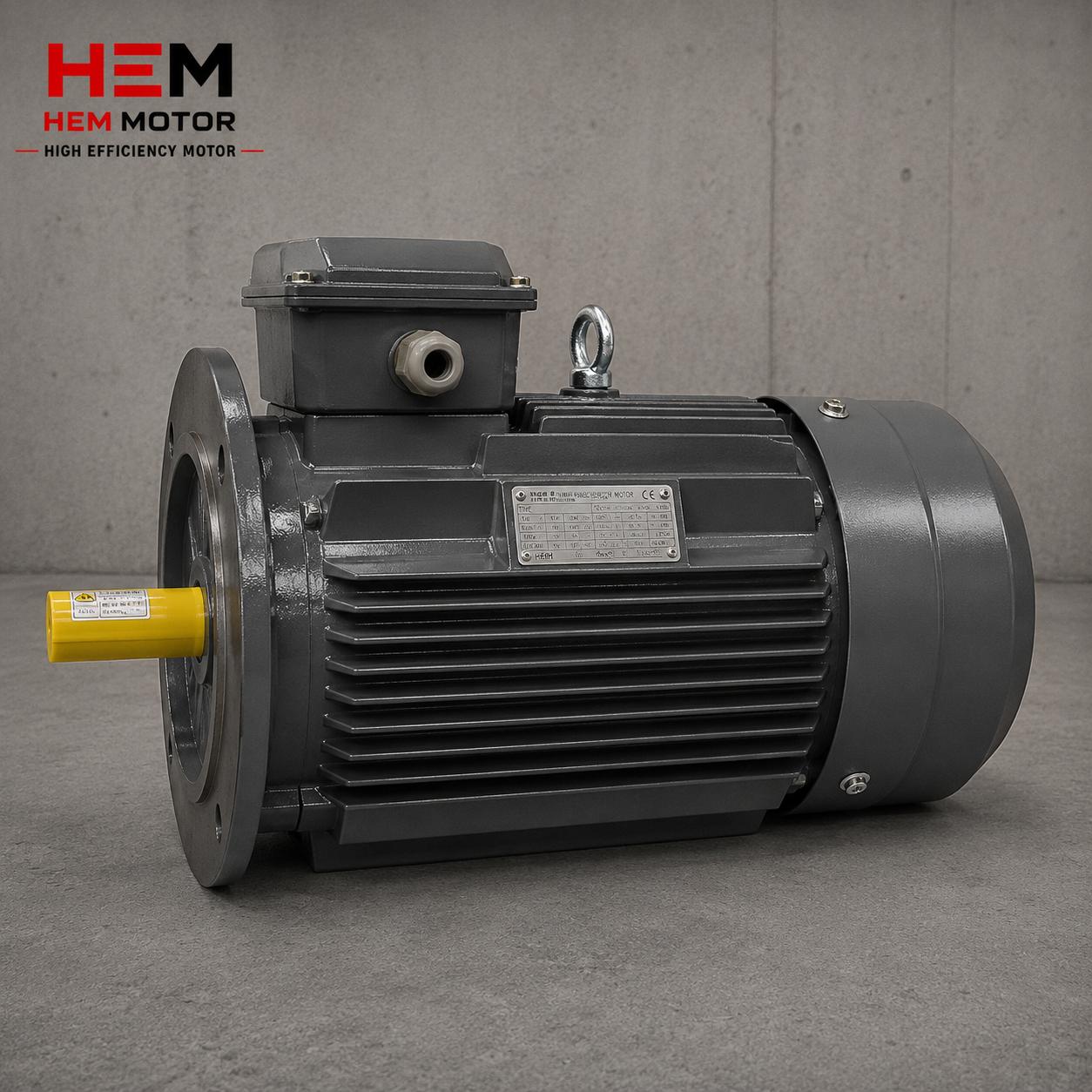

Whenever an efficiency-class discussion comes up, the same question surfaces: "Does stepping up to a higher class really pay for itself?" Today the overwhelming majority of the market runs on IE3 Premium and IE4 Super Premium motors, while the IE5 Ultra Premium class rises on the horizon. IE5 represents a step above on the efficiency ladder; but the cost of climbing that step, and its payback, are not the same for every application.
In this article we treat the matter not as an engineering definition but as a purchasing decision. Because the real question a business asks is not "what is IE5?" but "how quickly will the extra energy saving from IE5 earn back the extra money I pay?" The right answer depends on how many hours a year the motor runs, its load profile, and the electricity tariff.
At HEM Motor we make this decision together with you, based on what actually happens in the field. In some applications IE5 is a clear gain; in many more scenarios IE4 is still the most sensible total-cost choice. The goal is not to sell the highest class but to supply the right class for you, from stock, with a realistic lead time.
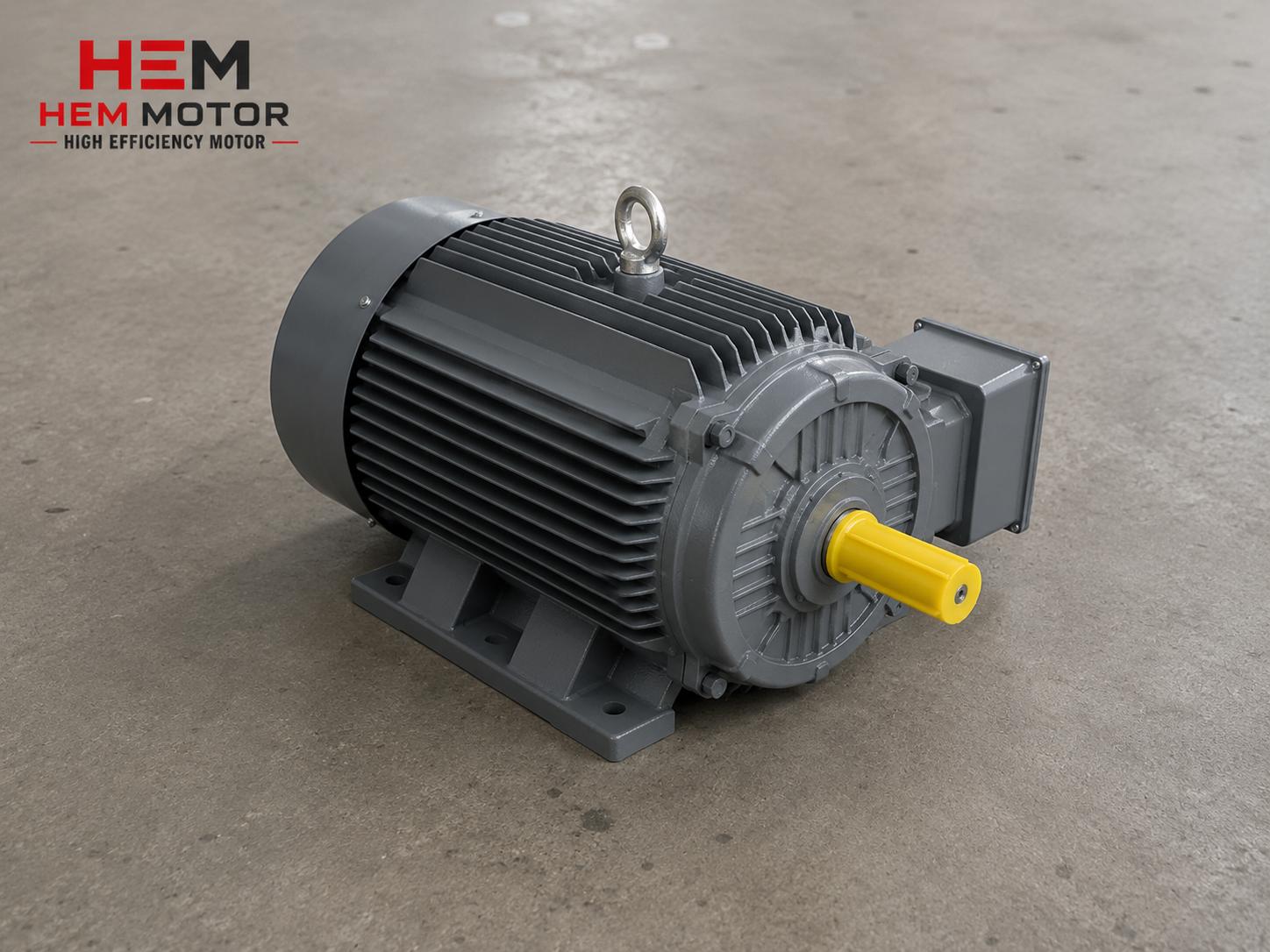
The Efficiency Ladder: Where Do IE3, IE4 and IE5 Stand?
Electric motor efficiency is classified according to the IEC 60034-30-1 standard. This classification expresses how much less loss a motor draws from the grid while producing the same output power. The higher the class number, the lower the motor's losses, meaning it does the same job with less electricity.
- IE3 (Premium): In many applications today this is the legal minimum and the most widely installed base in the sector.
- IE4 (Super Premium): Markedly reduces losses versus IE3; the rising and increasingly standard backbone of the market.
- IE5 (Ultra Premium): A step above IE4 as well; the lowest loss, the highest efficiency. Still limited in availability, it makes sense mostly in special, high-running-hour applications.
An important point: the efficiency gap can look small as a percentage. The difference between IE4 and IE5 is below a few points at most power ratings. Yet that small percentage becomes a large kilowatt-hour difference over the year if the motor runs 20 hours a day. This is exactly why an efficiency-class decision must always be read together with running hours.
Why Does IE5 Usually Come With Synchronous Reluctance Technology?
Reaching the IE5 efficiency level with a classic asynchronous (squirrel-cage rotor) design is very difficult. Therefore IE5 motors are mostly built with synchronous reluctance (SynRM) or magnet-assisted designs, and are almost always commissioned as a package together with a variable frequency drive (VFD). This means that when evaluating IE5 you must account not only for the motor but for the drive and the commissioning process too.
IE4, by contrast, offers broad flexibility with both direct-on-line asynchronous versions and drive-fed applications. That flexibility makes IE4 the "easiest to migrate to" upper class for many businesses.
The Real Question: How Fast Does the Extra Investment Pay Back?
An efficiency-class decision is actually a simple financial equation. The extra purchase cost of a higher class, divided by the annual energy saving it delivers, gives the payback period. If that period is short, the investment makes sense; if it is long, the motor may not even pay for itself over its whole life.
Three core variables determine the payback period:
- Annual running hours: How many hours a year does the motor run? The difference between 2,000 and 8,000 hours turns the same efficiency gap into a completely different saving.
- Load profile: Does the motor run near rated power, or mostly at light load? Heavy, continuous load magnifies the gain of a higher efficiency class.
- Electricity tariff: The higher the unit energy cost, the more valuable each saved kilowatt-hour becomes, shortening the payback period.
If these three variables are all high at the same time — that is, the motor runs almost continuously, under heavy load, in a high-tariff plant — IE5's extra cost can return within a reasonable period. Conversely, if the motor runs a few hours a day or at light load, the gap between IE5 and IE4 will not close even over years.
High Running Hours: The Scenario Where IE5 Shines
The place IE5 makes most sense is in applications where the motor turns non-stop for most of the day, even across three shifts. Continuously running pumps, fans, compressors and process lines fall into this profile. Here even a small improvement in efficiency, multiplied over thousands of hours a year, becomes a meaningful energy line item.
In such critical, continuously running applications, understanding where efficiency losses occur also clarifies the decision; because you see exactly which loss the premium you pay for the higher class actually reduces.
The Wide Middle Ground Where IE4 Is Still the Smartest
The reality in the field is this: for the bulk of industry, IE4 Super Premium is the most balanced total-cost choice. Because IE4:
- Delivers a clear energy saving over IE3, and that saving pays back within a reasonable period at most running hours.
- Can be commissioned without a drive requirement thanks to its direct-on-line versions.
- Is available from stock across a wide power range, in standard IEC frame sizes, with a short lead time.
- Is a mature, widespread technology with an established maintenance, spare-parts and service ecosystem.
For this reason, the "always buy the highest class" approach is wrong. The right approach is to measure the application's operating profile and choose the class with the fastest payback. In most cases, that class is IE4.
Practical Questions to Ask When Deciding
To answer the IE4-or-IE5 question for a motor purchase, you do not need a technical laboratory but a few correct questions:
- Roughly how many hours a year will this motor run?
- Is the load constant or variable; how close does it run to rated power?
- Does the application already use a variable frequency drive, or will it run direct-on-line?
- Is the plant's electricity tariff high; how dominant is energy cost in the decision?
- Is the IE5 option available in stock and at a suitable lead time in the required frame and mounting type?
The answers to these questions usually give a clear direction. If you have high hours + heavy load + high tariff + an already drive-fed line, IE5 deserves serious consideration. Otherwise IE4 is the winning side in both purchase and total cost of ownership.
The Stock, Lead Time and Manufacturer Assurance Dimension
An efficiency-class decision is not just a calculation on paper; when the product will be in your hands is part of the decision too. While IE4 motors can be supplied quickly from stock across a wide power range, IE5 may require a more project-based, planned supply. So when making your choice, sharing your operating profile with us lets us offer you both the right class and a realistic lead time together.
At HEM Motor we offer manufacturer assurance and correct specification matching on all our products. To clarify which class is right for you and to get a quote based on current electric motor prices, you can contact our technical team.
Frequently Asked Questions
Is IE5 always a better investment than IE4?
No. IE5 is technically more efficient, but being a "better" investment depends on its extra cost returning within a reasonable period. That requires high running hours, a heavy load profile and a high electricity tariff. In applications that run few hours or at light load, IE4 is often the more sensible total-cost choice.
Can I run an IE5 motor direct-on-line?
Motors at the IE5 efficiency level are usually built with technologies such as synchronous reluctance, so most models do not run direct-on-line and are commissioned as a package with a variable frequency drive (VFD). This means that when evaluating IE5 cost you must also account for drive and commissioning expenses. IE4, by contrast, is more flexible with its direct-on-line versions.
When replacing my existing IE3 motor, which class should I move to?
For most businesses the most sensible and accessible step is to move to IE4 Super Premium, because it delivers clear savings over IE3 and is usually supplied from stock in the same IEC frame sizes with a short lead time. IE5 is worth considering for high-running-hour, critical, continuously loaded lines. We can clarify the right decision together by reviewing your operating profile.