English
 Türkçe

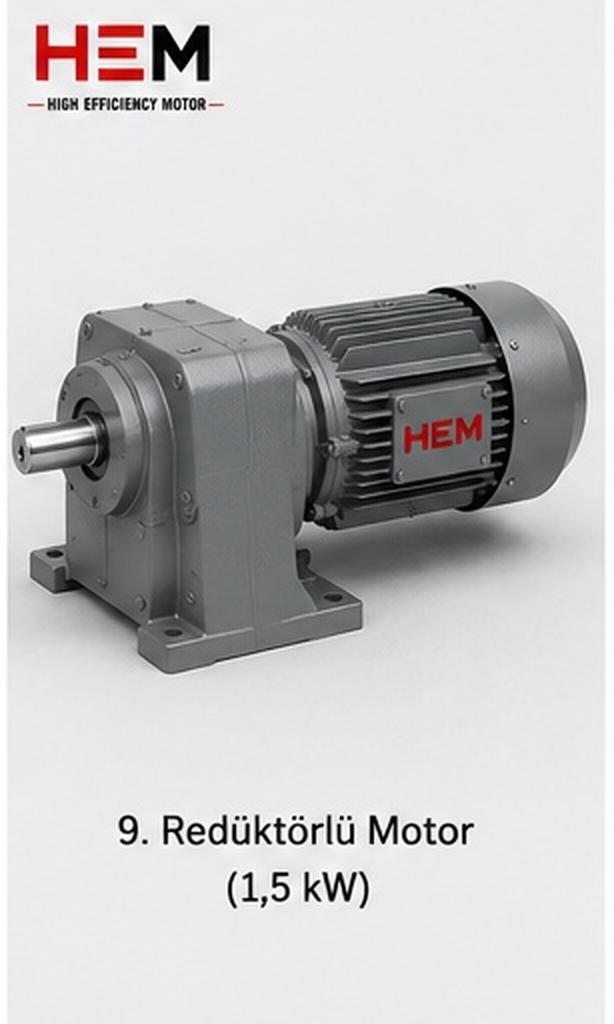

The synchronous reluctance motor (SynRM), the most widespread representative of the IE5 Ultra Premium efficiency class, has become a standout technology in recent years thanks to its high efficiency without any magnets. However, because this motor's operating principle relies on a salient (anisotropic) rotor geometry rather than the behaviour of an induction motor, one of the topics users ask about most is torque ripple and cogging torque. A motor expected to turn a pump, a fan or a machine tool quietly and smoothly may instead vibrate at low speed or give a faint "cogging" feel, and this directly affects the purchasing decision. In this article we explain where torque ripple in SynRM motors comes from, whether true cogging torque exists, which design and drive measures deliver smooth running, and what to watch for when selecting the right motor, in engineering language but with a buyer focus.
Why Does a Synchronous Reluctance Motor Produce Torque Ripple?
The torque of a synchronous reluctance motor comes not from permanent magnets or a rotor winding but from the rotor's magnetic reluctance difference (saliency). The rotor is built from laminations containing thin air gaps called "flux barriers." These barriers create one axis along which magnetic flux flows easily (the d-axis) and another axis that resists flux (the q-axis). When the stator applies a rotating field, the rotor tries to align so as to minimise the reluctance between these two axes, and in doing so it produces torque. This very mechanism is inherently position-dependent: at every angular position of the rotor the reluctance varies slightly, so the produced torque shows small fluctuations as the rotor turns. This is called torque ripple.
In an induction motor the rotor is magnetically more homogeneous, so torque ripple is relatively low. In a SynRM the salient structure delivers high efficiency but at the same time creates the conditions for harmonic torque components. Therefore, when selecting a synchronous reluctance motor, you should look not only at the efficiency class but also at how well the rotor design suppresses ripple. Two motors can both be IE5, yet one may produce noticeable vibration at low speed while the other turns smoothly.
Does Cogging Exist in SynRM?
The concept of cogging torque originates mainly from permanent-magnet (PM) motors. Cogging torque is a torque component that arises, even when no current is applied to the motor, from the interaction of the rotor magnets with the stator teeth (slots), trying to "lock" the rotor into specific positions. It is the detent/notchy feel you sense when you turn a PM motor shaft by hand. Because a synchronous reluctance motor has no magnets, cogging torque in the classical sense is either absent or negligible; when you turn the rotor with no current applied, you do not feel the locking you would in a PM motor. This is an important and often overlooked advantage of SynRM.
That said, SynRM is not entirely "ripple-free." When current is applied, the interaction of stator slot transitions with rotor saliency produces reluctance torque ripple and slot harmonics. So there is no static (currentless) cogging as in a PM motor, but a ripple linked to the slot/pole combination appears while turning under load. In practice the user perceives this as a slight vibration or acoustic noise at low speed. This distinction matters for purchasing: SynRM does not carry the static cogging drawback of PM motors but can exhibit loaded torque ripple if the rotor and drive design are weak. The article IE4 asynchronous vs synchronous reluctance difference complements this topic by comparing the behaviour of two technologies in the same efficiency class.
Main Causes of Torque Ripple
The magnitude of torque ripple in a SynRM depends not on a single factor but on a set of effects created jointly by the motor design and the drive control. The main causes are:
- Rotor flux-barrier geometry: The number, angle, width and rib (bridge) thickness of the barriers determine the d/q reluctance difference and therefore the harmonic content. A well-optimised multi-layer barrier design reduces ripple.
- Slot/pole combination: The relationship between the number of stator slots and rotor poles influences which harmonic orders dominate. A suitable combination is critical for low-ripple running.
- Drive current harmonics: A SynRM always runs with a frequency converter (VFD). Harmonics in the current waveform produced by the drive translate directly into torque ripple. Dead-time distortion and a low switching frequency increase ripple.
- Magnetic saturation: As the iron saturates under high load, the d/q inductances change; this non-linear behaviour creates additional ripple components.
- Manufacturing tolerances: Lamination cutting precision, stack tightness and axial alignment cause ripple to vary from motor to motor.
Effects of Torque Ripple: Why Should You Care?
Torque ripple may look like a minor technical detail, but it produces tangible field consequences. High ripple shows itself as mechanical vibration and acoustic noise, especially at low speed. This degrades surface quality on precision machine tools, causes discomfort in HVAC and building applications that must run quietly, and over the long term accelerates fatigue and wear in mechanical components such as bearings and couplings. In addition, torque ripple at low speed turns into speed pulsation, which can create process problems such as flow pulsation in pumps and sound modulation in fans.
For these reasons, smooth running and low noise are not just about comfort but about product quality and equipment life. Setting the right criteria for low-noise and low-vibration motor selection ensures that the SynRM investment delivers the expected benefit. Especially in applications running over a wide speed range, how the motor behaves at low speed can be more decisive than its performance at high speed.
Behaviour at Low Speed
Torque ripple in SynRM motors is felt most at low speed, because at high speed the system inertia absorbs the fluctuations, whereas at low speed each ripple pulse reflects more visibly in shaft motion. In applications requiring precise positioning or continuous torque at very low speed, this behaviour becomes critical. The torque response to sudden load changes is also part of smooth running; torque response and speed stability under sudden load change details how a SynRM should be selected for impact loads.
Measures That Reduce Torque Ripple
The good news is that torque ripple can be reduced effectively both in motor design and on the drive side. A smooth-running SynRM is the combination of the right design and the right drive setting:
- Rotor skewing: Slightly skewing the rotor lamination stack axially averages out slot harmonics and markedly lowers ripple. It is one of the most effective design measures for applications demanding smooth running.
- Multi-layer barrier optimisation: Designing the number and angles of the flux barriers to minimise ripple improves both efficiency and smooth running.
- Drive control quality: Dead-time compensation, advanced current-control algorithms and correct parameterisation suppress current harmonics.
- Switching-frequency selection: A sufficiently high switching frequency reduces current ripple and therefore torque ripple.
- Output filters: Sine (du/dt or sine-wave) filters smooth the current waveform, reducing both ripple and high-frequency losses.
Since a significant part of these measures is applied on the drive side, the motor and drive must be evaluated together. SynRM drive parameterisation and VFD autotune setting is the key to smooth running; the same motor can vibrate with a badly tuned drive yet turn smoothly with a correctly parameterised one.
SynRM Always Runs With a Drive
There is a critical point here from a purchasing standpoint: a synchronous reluctance motor cannot be connected directly to the mains; it always runs with a suitable frequency converter (VFD). This is because the rotor cannot start itself up to synchronous speed and the rotating field must drive the motor in synchronism. This means you should always think of a SynRM as a "motor + drive package." Torque ripple performance is also a property of this package, not of the motor alone. Introducing the motor to the drive with motor-specific parameters (d/q inductances, saturation curves) directly affects both efficiency and smooth running. So when buying a SynRM, it is a great advantage for the motor and drive to be compatible and, preferably, tested together. How SynRM rated current and power factor differ from an induction motor should also be considered in panel and drive sizing.
Selecting the Right SynRM for Smooth Running
To select the right motor from a torque-ripple perspective, evaluate the criteria below. They help you distinguish a quiet, long-life IE5 synchronous reluctance motor suited to your application:
- Application speed range: If it will run continuously at very low speed, a low-ripple design (skewed, with optimised barriers) is a priority.
- Noise/vibration sensitivity: In environments requiring quietness such as HVAC, hospitals and offices, the ripple criterion comes to the fore.
- Load type: Ripple is less critical in soft (quadratic) loads such as pumps and fans, but critical in precise positioning and machine tools.
- Drive compatibility: Choose a drive that can be parameterised for the specific motor and offers dead-time compensation.
- Manufacturing quality: Precise lamination cutting, tight stacking and good balancing reduce ripple variation from motor to motor.
For applications demanding continuous, smooth rotation such as pumps, fans, compressors and machine tools, you can review current electric motor prices together with suitable power and speed options and evaluate the low-ripple SynRM solution best suited to your application.
Frequently Asked Questions
Does a synchronous reluctance motor have cogging torque?
In the classical sense, that is the static detent torque that locks the rotor with no current applied, cogging is either absent or negligible in a SynRM because there are no magnets. When you turn the shaft by hand you do not feel the notchy detent you would in a PM motor. However, once current is applied, the interaction of rotor saliency with stator slots produces torque ripple under load. So SynRM does not carry the static cogging drawback of PM motors, but a ripple linked to the slot/pole combination can appear under load.
Does torque ripple affect the motor's life?
High torque ripple creates mechanical vibration and acoustic noise, especially at low speed, which over the long term can accelerate fatigue and wear in bearings, couplings and fasteners. It also affects product quality in precision processes. A well-designed motor (with rotor skewing and optimised barriers) and a correctly parameterised drive keep ripple low, protecting both comfort and equipment life.
For low torque ripple, should I take measures on the motor or the drive?
Both are needed together. On the motor side, rotor skewing, multi-layer barrier optimisation and a suitable slot/pole combination reduce ripple; on the drive side, dead-time compensation, a sufficient switching frequency, correct motor parameters and, where necessary, a sine filter suppress current harmonics. Since a SynRM always runs with a drive, having the motor and drive as a compatible package, preferably tested together, is the key to smooth running.