English
 Türkçe

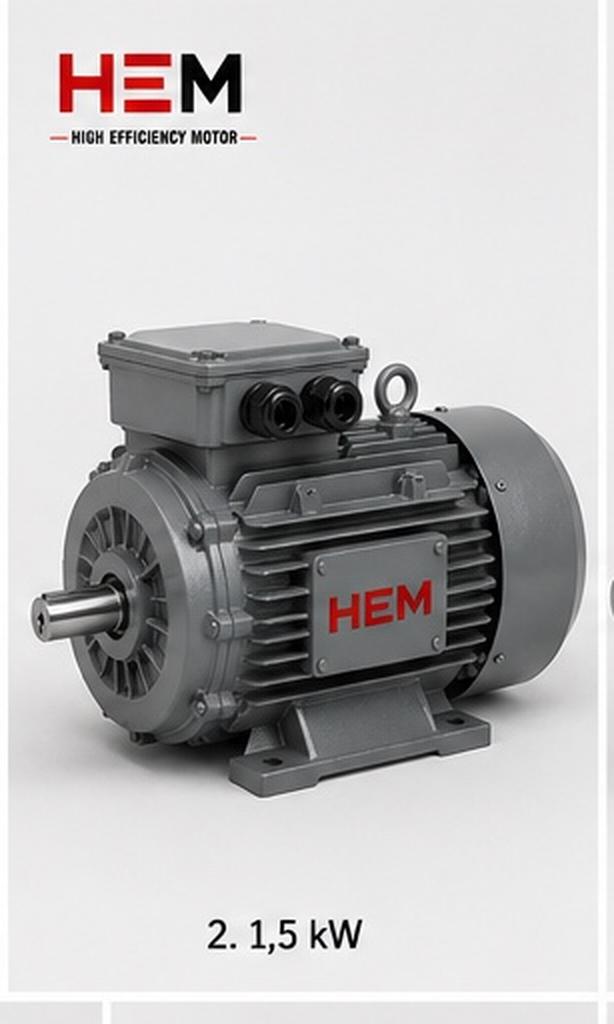

IE5 synchronous reluctance motors are ultra-premium solutions that deliver high efficiency even at partial load; however, these motors always run together with a drive (VFD), and the drive is a power-electronics device that generates heat of its own. Plant engineers often focus on the motor's efficiency gain while overlooking the panel heat the drive produces in the cabinet and the cooling demand that comes with it. Yet an under-cooled panel can trip the drive on thermal protection, shorten its life, and eat up the savings an efficient motor provides through unexpected downtime. In this article we examine where the losses come from in IE5 synchronous reluctance motor systems, how to design panel air conditioning and ventilation, and why correct drive procurement must be thought of as an integrated whole.
Why Does an IE5 Synchronous Reluctance Motor Run with a Drive?
The rotor of a synchronous reluctance (SynRM) motor has neither permanent magnets nor windings; torque is produced from the rotor's difference in magnetic reluctance. This structure means the motor cannot start by being connected directly to the grid on its own; for it to rotate at synchronous speed and produce correct torque, a variable-frequency drive must manage the field according to rotor position. Therefore an IE5 SynRM motor and its drive form an inseparable package. We explained in detail why this package must be selected as a whole in our content on why an IE5 synchronous reluctance motor cannot run without a drive.
This package structure shifts heat management to two separate points: the motor's own cooling and the drive's cooling inside the panel. While the efficient motor produces less heat, the drive creates a significant heat source in the panel due to power-switching losses.
Where Do the Losses Come From? The Drive's Heat Budget
A VFD switches direct current at high frequency to produce a variable-frequency voltage for the motor. This switching is not perfect; at each transition, conduction and switching losses occur in the semiconductor devices. These losses turn into heat and spread into the panel through the drive's heatsink. Even though the drive's efficiency is high, even a small percentage of the total power it draws means a significant heat load at high power.
- Conduction losses: Heat produced as current passes through the semiconductor; increases with load.
- Switching losses: Increase at high switching frequency; when the frequency is raised for quiet operation, the heat rises too.
- Auxiliary consumption: The drive's fan, control board and filters also produce heat.
This heat budget determines how much the panel must be cooled. The heat-dissipation figure in the drive's catalogue is the fundamental input for selecting panel air conditioning or a fan.
Thermal Behaviour on the Motor Side
Although IE5 SynRM motors run with low losses at partial load, their thermal behaviour differs from classic motors due to harmonics coming from the drive and the reduced self-fan cooling at low speed. In applications that require continuous high torque at low speed, it must be assessed whether the motor needs forced cooling. We detailed this topic in our article on thermal behaviour and cooling in IE5 synchronous reluctance motors.
Panel Cooling Design: Fan or Air Conditioner?
The temperature inside the panel must be kept below the drive's permitted ambient temperature limit. If this limit is exceeded, the drive either automatically reduces its power (derating) or trips on thermal protection. The cooling solution is selected according to the heat load and ambient conditions:
- Filtered fan + exhaust: If the ambient is cool and clean, pushing filtered air into the panel and exhausting the hot air is often enough. It is low-cost and simple; but it falls short in dusty, hot or humid environments.
- Panel air conditioner (cabinet cooler): If the ambient is hot, dusty or dirty, a closed-loop panel air conditioner is needed. It isolates the panel interior from the outside, controlling both temperature and humidity. Since dust is the chief enemy of drive life, an air conditioner is preferred in dirty environments.
- Heat exchanger: If the outside ambient is clean but hot, air-to-air or air-to-water exchangers isolate the panel interior and carry the heat outside.
The cooling capacity must always be sized according to the drive's heat-dissipation figure; the "we'll fit a fan" approach leads to downtime in summer with high-power drives.
Common Mistakes in Panel Cooling
- Cramming the drive into a narrow panel without calculating the heat dissipation.
- Routing cables and accessories in a way that blocks the air flow inside the panel.
- Not cleaning the filters periodically; a clogged filter kills the cooling.
- Neglecting the condensate drain line of the panel air conditioner.
- Gathering several drives in the same panel without accounting for the total heat load.
Correct Drive Procurement: Think of Motor and Drive Together
The most common mistake in IE5 SynRM systems is procuring the motor and the drive separately without checking compatibility. The drive must be selected to suit the motor's rated current, speed range and torque characteristic; the panel heat load must be calculated from the start and the cooling solution sized accordingly. For autotune steps in drive parametering and commissioning, our content on drive parametering in IE5 synchronous reluctance motors is a practical guide.
To understand where the SynRM motor's partial-load efficiency advantage comes from and why these motors stand out in variable-load applications, see our article on the efficiency curve of IE5 synchronous reluctance motors. At HEM Motor we supply the IE5 SynRM motor and a compatible drive together, also assessing the panel heat budget; contact us for current electric motor prices and package solutions.
The Logic of Calculating the Panel Heat Load
To size panel cooling correctly, you must establish the balance of heat entering and leaving the panel. When the sources adding heat inside the panel are balanced by the heat removed, the panel temperature settles at a stable value. The aim of the design is to keep this stable value below the ambient temperature the drive permits.
- Heat sources: The drive's heat dissipation is the largest item; the heat of terminals, contactors, transformers, braking resistors and cables inside the panel is added as well.
- External ambient effect: The panel is affected by the outside ambient; a panel standing in a hot boiler room or under a roof is far more strained than one in a cool location.
- Panel surface: The metal panel surface sheds some heat naturally; but in high-power drives this passive shedding is insufficient and active cooling is essential.
The most critical input in establishing this balance is the heat-dissipation figure in the drive's catalogue. A "by eye" cooling choice made without knowing this figure leads to the drive derating or tripping in summer. For this reason drive selection and panel-cooling selection must be done at the same table.
Braking Resistor and Regenerative Loads
In applications where the SynRM motor is stopped quickly or the load drags the motor in reverse (for example a lowering load, decelerating an inertial fan), the drive must dump the energy coming from the motor somewhere. This energy is usually converted to heat in a braking resistor, and this resistor adds an extra heat load to the panel or its vicinity. In such applications the heat of the braking resistor must be included in the cooling calculation and, where possible, placed outside the panel or in a separately ventilated section.
Cooling Practices That Extend Drive Life
The drive is the most expensive and most heat-sensitive component in the panel. The capacitors and semiconductors inside it age rapidly at high temperature; every rise in temperature shortens the drive's expected life. For this reason panel cooling is designed not just so it "does not trip" but so it "runs long".
- Correct placement: The drive is placed not in the hottest corner of the panel but in a position the air flow reaches easily; sufficient clearance is left above and below it.
- Air flow direction: Cool air is directed to the drive's heatsink; hot air is exhausted from the top of the panel.
- Filter maintenance: In filtered cooling, periodic cleaning of the filters must not be neglected; a clogged filter slowly kills the cooling and the drive quietly ages.
- Dust control: In dusty environments closed-loop cooling is preferred; dust both degrades insulation and clogs the cooling fins.
- Condensation control: In cold and humid environments condensation can form inside the panel; this risk is managed with a panel air conditioner or a heater resistor.
These practices prevent the savings of the efficient motor from being defeated by unexpected drive failures. The real gain in an IE5 system depends as much on the uninterrupted, long-lived operation of the drive as on the efficiency of the motor.
Frequently Asked Questions
The IE5 motor is already efficient, so why does the panel still heat up?
Because most of the heat in the panel comes not from the motor but from the drive. Since the motor is efficient it produces less heat, but as the drive performs power switching it inevitably produces conduction and switching losses, and this heat stays inside the panel. Therefore, no matter how high the motor's efficiency, panel cooling must be designed separately according to the drive's heat dissipation.
Is a panel air conditioner or a filtered fan enough?
The decision depends on ambient conditions. If the ambient is cool and clean, cooling with a filtered fan is often sufficient and economical. If the ambient is hot, dusty or humid, a closed-loop panel air conditioner is needed, because a filtered fan draws in the hot, dirty outside air and dust wears the drive. In every case the cooling capacity must be sized according to the drive's catalogue heat-dissipation figure.
Can I buy the drive independently of the motor, later?
Although technically possible, it is not recommended. The SynRM motor and drive work as a package matched in current, torque and control algorithm; an incompatible drive either cannot drive the motor correctly or loses the efficiency and thermal advantage. The best approach is to procure the motor and drive together, also accounting for the panel heat load.