English
 Türkçe

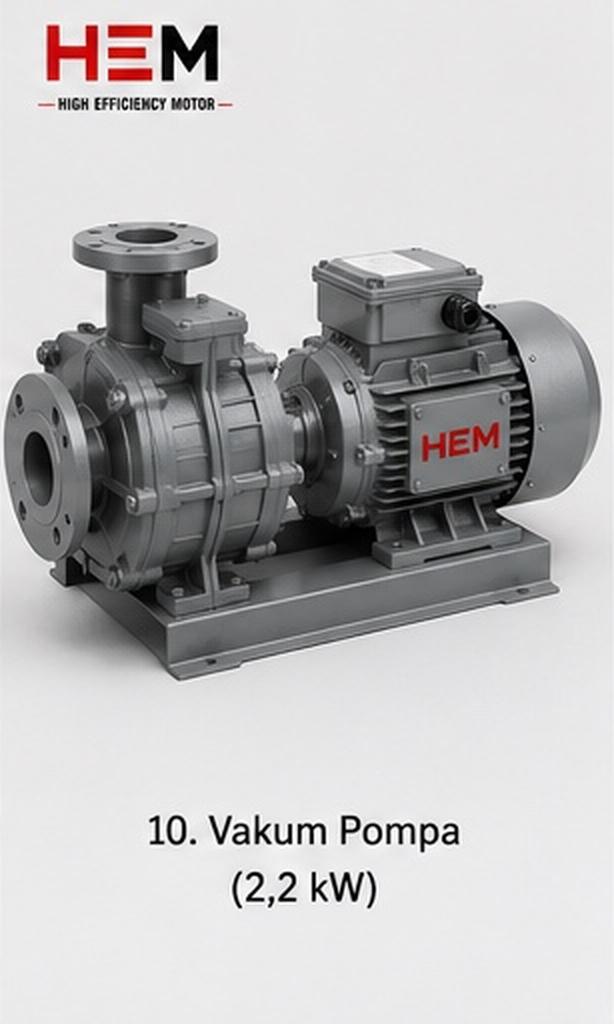

An IE5 Ultra Premium synchronous reluctance (SynRM) motor cannot be connected directly to the mains like a conventional induction motor; it always runs with a variable frequency drive (VFD). The PWM voltage at the drive output has extremely fast rising edges (high dV/dt) in the nanosecond range, and this fast switching triggers a series of electromagnetic compatibility (EMC) problems in the motor cable and in the motor itself. A drive train that is not installed correctly means common-mode currents, bearing currents, stray earthing and noise radiated into surrounding sensitive electronics. In this article we explain in detail why an EMC shielded symmetrical motor cable and a 360° earthed EMC gland are indispensable on IE5 SynRM motors, how bearing currents are prevented, and how to procure the motor with the correct accessory package.
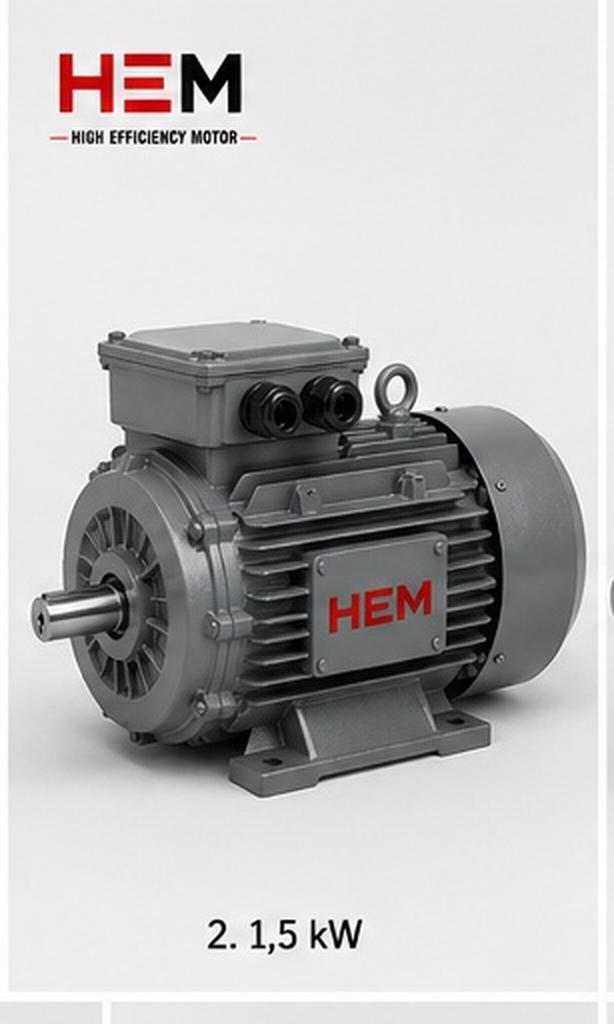
Why an IE5 SynRM Motor Runs on a VFD and Where the EMC Problem Begins
Synchronous reluctance technology produces torque purely from the difference in magnetic reluctance, without a cage winding or permanent magnets in the rotor. This architecture cannot start at line frequency on its own; the flux vector must be continuously controlled so that the rotor is captured at synchronous speed and torque is generated. For this reason IE5 SynRM motors are always supplied together with a drive and are never started direct-on-line. If you want to examine in detail why a SynRM motor cannot run without a drive and the cost logic of the package, our article on the SynRM drive package cost covers the subject in depth.
The output stage of the drive chops the DC bus voltage at very high frequency using IGBT semiconductors and sends square-wave-like pulses to the motor. What matters is not the switching frequency itself but the rise time of each pulse. Because these rise times are extremely short, the resulting voltage edges contain high-frequency components in the MHz range. All EMC problems originate from these high-frequency components: noise, common-mode current and bearing currents are all fed from the same root cause.
Common-Mode Voltage and Noise Currents
On a three-phase PWM output, the instantaneous sum of the three phase voltages is not zero; this difference creates a common-mode voltage, a potential oscillation between the motor and earth. This oscillation drives a common-mode current through the parasitic capacitances between cable and earth, and between motor winding and frame. This current is a real current and it always wants to return to the drive through earth. If a low-impedance, controlled return path is not provided, this current returns through random earthing lines in the plant, the shields of signal cables, or even through the motor bearings. Every uncontrolled common-mode current is a source of noise.
Bearing Currents: EDM Pitting and Fluting Damage
The most insidious failure mode on IE5 SynRM motors is bearing currents. Common-mode voltage also impresses a voltage onto the rotor shaft through the capacitive coupling between winding and rotor. This shaft voltage builds up across the two races of the bearing, which are insulated by the oil film. The oil film behaves like a thin insulator; the instant the shaft voltage exceeds the breakdown strength of the oil film, a sudden discharge occurs. Because this event behaves just like spark erosion (Electrical Discharge Machining), it is called an EDM bearing current.
Each discharge creates a microscopic crater on the race and the balls. When thousands or millions of discharges accumulate, the rolling surface first develops a matte frosting and then regular parallel grooves. This damage is called fluting. Its symptoms are:
- A low-frequency, rhythmic rumble or moan is heard from the bearing area.
- Bearing temperature and vibration levels rise over time.
- When dismantled, grey, evenly spaced lines (grooves) appear on the race surface.
- Metallic particles and darkened grease are found in the lubricant.
- Premature bearing failure leads to repeated bearing replacement far sooner than expected.
Bearing current damage is not a design fault of the motor but an installation and procurement fault. With the correct shielded cable, a 360° gland and shaft grounding measures, this damage can be completely prevented. That is why, when buying an IE5 motor, you should treat the motor not as a bare frame but as a package integrated with EMC measures.
Solution 1: EMC Shielded Symmetrical Motor Cable
The cable between drive and motor is the heart of the EMC chain. The cable to use here is not an ordinary four-core power cable but an EMC shielded symmetrical motor cable. The symmetrical design means the three phase conductors are arranged in a symmetrical star pattern with symmetrical protective earth (PE) conductors placed between them. This symmetry ensures that the magnetic fields of the phases largely cancel each other, minimising the magnetic noise radiated outward.
The copper braid shield surrounding the cable provides a low-impedance, controlled return path for the high-frequency common-mode current. The key concept here is this: the shield is not merely a barrier, it is also the actual path through which the common-mode current returns to the drive. If the shield is connected correctly and continuously, the common-mode current returns directly through the cable to the drive instead of scattering into random earthing lines in the plant. This significantly reduces both noise and bearing currents.
For the shield to be effective, two conditions must be met: first, the shield must be continuous (unbroken), and second, it must be properly earthed at both ends. Single-ended earthing is wrong for power cables because it interrupts the return of the common-mode current; on the motor cable the shield must be earthed 360° at both the drive end and the motor end. We explain step by step how drive, cable and installation compatibility is verified during commissioning in our article on IE5 drive and installation compatibility commissioning.
Solution 2: 360° Earthed EMC Gland
Choosing the right shielded cable is not enough on its own; how you connect the shield to the terminal box matters at least as much as the cable. A common and incorrect practice is to gather the shield into a "pigtail" braid and bolt it to a single point. This method creates high impedance at high frequency even on a short cable, because a thin, long wire behaves inductively at high frequency and blocks the path of the common-mode current. A pigtail connection largely destroys the entire benefit of the shield.
The correct method is to use a 360° circumferential earthed EMC gland. This special gland connects the cable shield to the metal body of the terminal box through an unbroken, all-around metal contact. Because the contact surface is spread over the entire circumference, the impedance is very low and the common-mode current is transferred to earth via the shortest, controlled path. The difference between a pigtail and a 360° gland can mean a tenfold or greater difference in impedance at high frequency. Below are the basic rules of a correct gland installation:
- The shield is stripped so that it contacts the inner ring of the gland around the full circumference; the insulating outer jacket is opened at this point.
- The terminal box must be metal and conductive; painted surfaces are cleaned at the contact point.
- A 360° gland is used at both the motor and the drive end; applying it on only one side leaves the chain incomplete.
- The PE conductor is connected to the terminal in addition to the gland; gland earthing complements rather than replaces the PE connection.
- Short, low-impedance equipotential bonding is established between the motor frame, the drive and the machine chassis.
Solution 3: Shaft Grounding, Insulated Bearing and Output Filters
An EMC shielded cable and a 360° gland bring most of the common-mode current under control, but they do not fully eliminate the shaft voltage capacitively impressed onto the rotor. To discharge the shaft voltage safely, two complementary methods are used. The first is a shaft grounding ring or carbon brush; this element transfers the voltage on the shaft to the frame through a low-resistance path before it crosses the bearing, so that the EDM discharge occurs at the controlled contact point rather than in the bearing.
The second method is the use of an insulated bearing. Particularly at the non-drive end (NDE), using a ceramic-coated or insulated-race bearing breaks the circuit of the circulating bearing current that passes through the bearing. On large frame motors, applying both an insulated NDE bearing and a shaft grounding ring at the drive end together is the safest combination.
As cable length increases, voltage overshoots (overvoltage) can occur at the motor terminals due to the reflected wave effect. On long cables and sensitive applications, a dV/dt filter or a sine filter is added to the drive output; these filters soften the steepness of the voltage edges, reducing both the insulation stress and the common-mode current. Filter selection is made according to cable length and motor insulation class. HEM Motor IE5 SynRM products are manufactured with class F insulation and reinforced bearings; this foundation, combined with the correct filtering and earthing measures, provides a long-lasting drive system.
Drive-to-Motor Distance and Installation Rules
As the distance between drive and motor increases, both the reflected wave risk and the common-mode current on the shield increase. The cable should be kept as short as possible, and motor and drive cables should be routed in separate trays from signal/control cables. If power and signal cables must run in parallel, a distance should be left between them and crossings should be made at right angles. The earthing architecture should be designed as a low-impedance equipotential mesh rather than a star; single-point earthing is not sufficient at high frequency.
All of these measures are necessary for IE5 efficiency to be genuinely realised in the field. Buying the most efficient motor and connecting it with the wrong cable drives the motor into early failure and disturbs surrounding equipment with noise. You can review the general advantages of IE5 technology and the class differences in our article on IE5 electric motors, and our full range of high-efficiency products on our efficient electric motors page. To learn more about all models and electric motor prices, please get in touch with us.
Correct Supply: Order the Motor as an EMC Package
On IE5 SynRM motors, the solution to EMC problems begins not with patching things up later on the installation site, but with the right procurement decision. The best approach is to order the motor not as a bare frame but as a whole, together with an insulated NDE bearing, a shaft end prepared for a shaft grounding ring, a 360° EMC gland and a suitable terminal box. In addition, the drive, the correct shielded symmetrical motor cable and, if required, a dV/dt or sine filter should be planned as part of the same package.
HEM Motor manufactures IE3/IE4 induction and IE5 Ultra Premium synchronous reluctance motors with cast iron and aluminium bodies, IP55 protection (optional IP65/66), 100% copper windings and reinforced bearings. Offered in the IEC 56–355 frame range with 1000/1500/3000 rpm speed options, these motors can be configured together with the bearing insulation, gland and filter choices your application requires. As a result, the product arriving on site becomes a complete drive solution, free of noise and protected against bearing currents.
Frequently Asked Questions
What happens if I use an ordinary power cable on an IE5 SynRM motor?
An ordinary unshielded power cable does not offer a controlled return path for the common-mode current. This current returns through random earthing lines in the plant and through the motor bearings; the result is high noise, faults in surrounding electronics and premature bearing damage caused by EDM bearing currents. An EMC shielded symmetrical motor cable must always be used on IE5 SynRM motors.
Why is a 360° gland essential instead of pigtail earthing?
Reducing the shield to a single wire (pigtail) creates high inductive impedance at high frequency and blocks the path of the common-mode current. A 360° circumferential earthed EMC gland, on the other hand, connects the shield to the terminal box with low impedance around the full circumference, so the current is transferred to earth via the shortest path. The difference can mean a tenfold reduction in impedance at high frequency and significantly lowers the bearing current risk.
Are both an insulated bearing and a shaft grounding ring needed?
It depends on the application. On small frame motors, a shaft grounding ring alone is often sufficient. However, on large frame, high-power IE5 motors, the safest solution is to use an insulated bearing at the non-drive end (NDE) together with a shaft grounding ring at the drive end; this both interrupts the circulating bearing current and discharges the shaft voltage in a controlled way.