English
 Türkçe

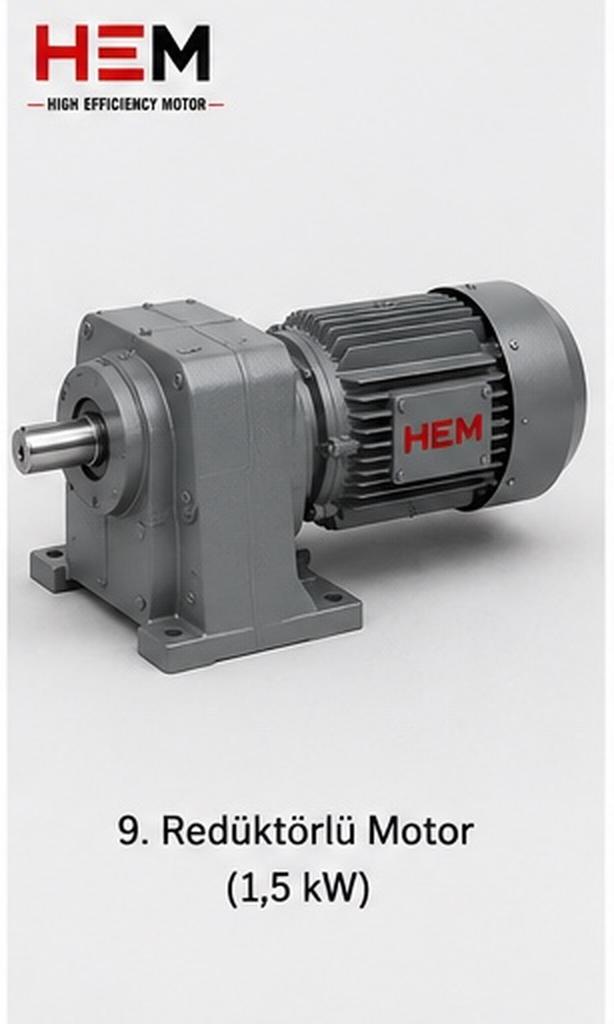

When a production line needs to stop a conveyor, a centrifugal pump, or a large fan within seconds, ordinary coast-to-stop deceleration is often not enough. If the load inertia is high, the motor can keep spinning on its own for minutes, lengthening cycle times, challenging operator safety, and making precise positioning impossible. This is exactly where DC injection braking comes in. Particularly on IE5 efficiency class synchronous reluctance motors, it is possible to achieve fast stopping using only a controlled direct current applied through the drive, without any external braking resistor or mechanical brake pad.
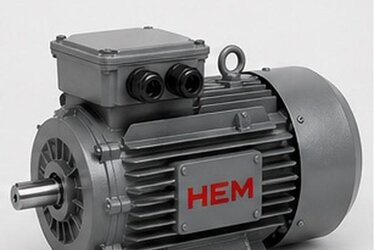
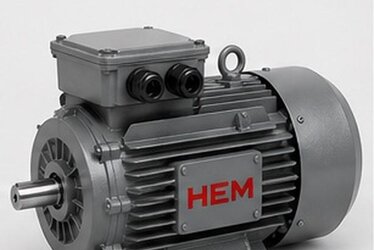
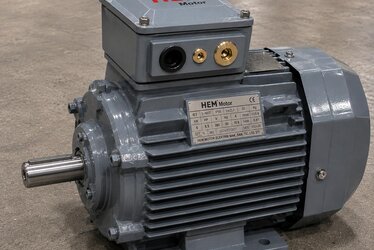
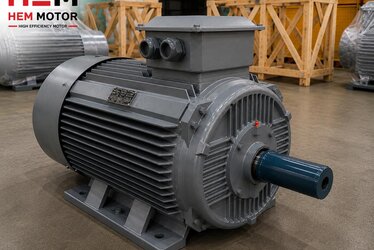
At HEM Motor, the IE5 class SynRM motors we manufacture feature a magnet-free rotor, IP55 protection, F insulation class, and cast iron bodies, covering a broad power range from 0.55 kW up to 355 kW. By design, these motors cannot be connected directly to the mains (direct-on-line); they always operate together with a compatible drive. This requirement actually becomes an advantage: since the drive is already in the circuit, you can manage stopping strategies, braking methods, and energy handling from a single control point. DC injection braking is one of the most practical results of this control flexibility.
In this article we examine, from a technical and applied perspective, how DC injection braking works on IE5 synchronous reluctance motors, the rotor and stator heating that occurs during braking, the duty-cycle limits, and most importantly, why the correct motor-drive package should be supplied together.
What Is DC Injection Braking and How Does It Work on SynRM?
DC injection braking is a method that has been used for many years on both asynchronous and synchronous machines, stopping a rotating rotor by applying a controlled direct current to the motor windings. In normal operation, the drive applies a variable-frequency alternating current to the stator windings, creating a rotating magnetic field. When braking is requested, the drive reduces the output frequency to zero and injects a fixed-direction direct current into the windings. This direct current creates a stationary (non-rotating) magnetic field in the stator.
In a synchronous reluctance motor, the rotor is magnet-free and tends to align based on the reluctance difference (the inequality between the d and q axes). The stationary field created in the stator magnetically holds and forces the still-rotating rotor toward alignment. The rotor's rotational kinetic energy is first converted into electrical losses and then into heat through the interaction between the rotor and the stationary field. The result: the rotor progressively slows down and comes almost to a locked position near zero speed. In this way, fast stopping is achieved without any mechanical contact or external braking resistor.
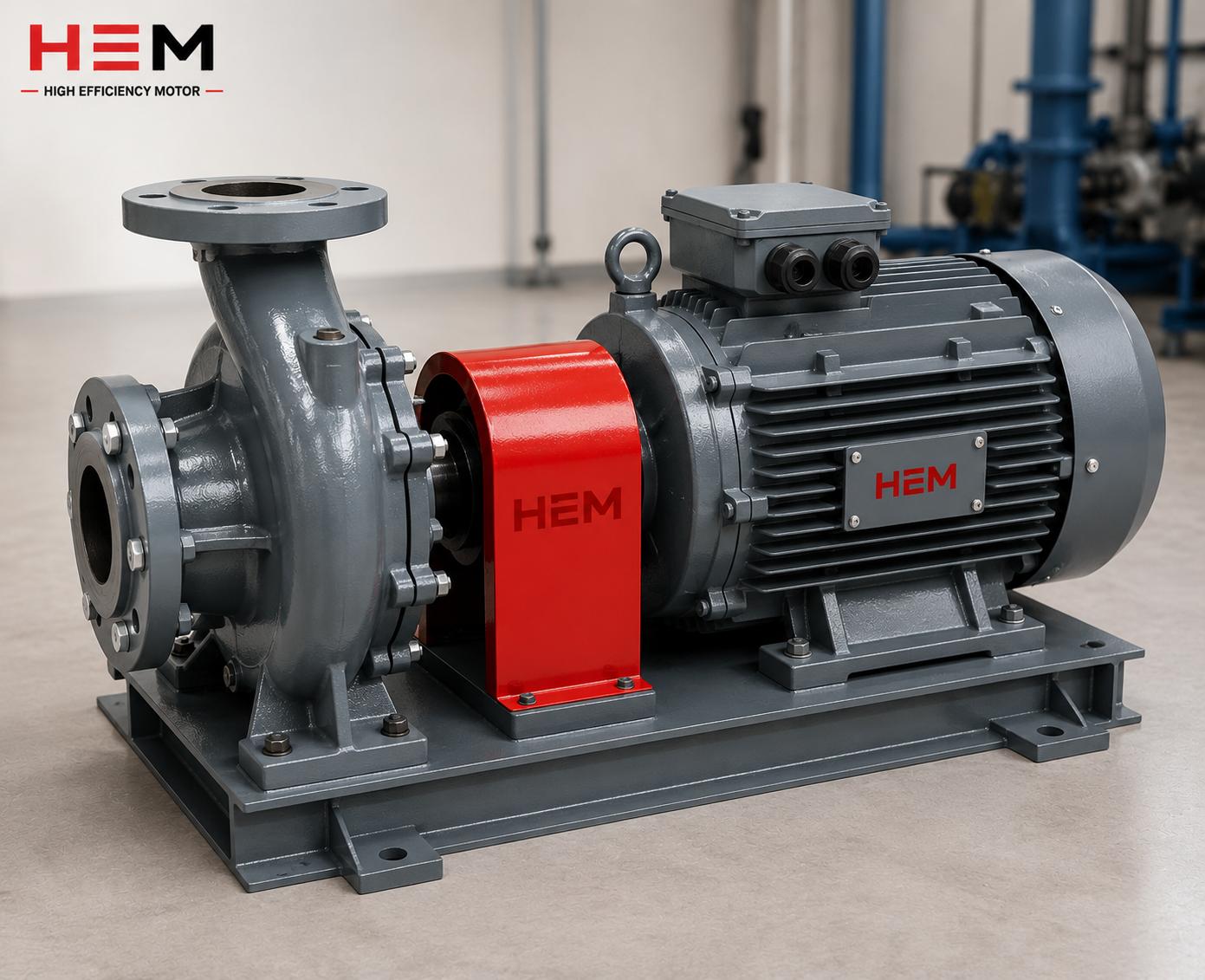
The critical point here is this: during DC injection braking, the rotor's kinetic energy is not fed back through the DC bus; instead, it is largely converted into heat inside the motor as copper and iron losses. This means the braking energy is dissipated in the motor, which directly raises the topic of heating. Therefore, while the method is a powerful tool, it is not unlimited; it must be used correctly.
Why Can We Stop Without an External Braking Resistor?
In conventional dynamic braking, when a high-inertia load is stopped quickly, the motor behaves like a generator and sends energy back to the drive's DC bus. If this energy is not dissipated somewhere, the DC bus voltage rises and the drive trips on overvoltage. For this reason, classic solutions use an external braking resistor, where the excess energy is converted into heat.
In DC injection braking, the mechanism is different. Instead of being returned to the DC bus, the rotor's energy is dissipated within the motor windings and rotor iron through interaction with the field created by the injected direct current. In other words, most of the energy is consumed inside the motor itself. This eliminates the need for an external braking resistor in many medium-inertia and low-to-medium speed applications. The advantages can be summarized as follows:
- Simpler panel: Since the external braking resistor, its wiring, and thermal protection components are eliminated, the panel layout becomes simpler.
- Lower cost: Fast stopping is achieved without the resistor unit and additional installation cost.
- No mechanical contact: There is no need for mechanical brake components that require pad wear, adjustment, and periodic maintenance.
- Easier positioning: Holding the rotor magnetically near zero speed helps with certain positioning accuracy requirements.
- Full control from the drive: The braking current, duration, and start threshold can be set through drive parameters.
However, not needing an external resistor does not mean "unlimited braking is possible." For loads with very high inertia, frequently repeated stops, or high-speed applications, a combination of dynamic braking and a braking resistor may still be required. Selecting the right method depends on the application's inertia, cycle frequency, and speed profile. To make this choice correctly, an approach that evaluates the motor and drive together is essential; our article on the IE5 synchronous reluctance motor drive package cost offers a total-solution perspective.
Heating During Braking: What Happens in the Rotor and Stator?
Because the braking energy in DC injection braking is largely converted into heat inside the motor, heating is the most critical design constraint of this method. Two main heat sources come into play during braking:
Stator Copper Losses
The injected direct current flows through the stator windings and produces I²R losses across the winding resistance. These losses heat the stator windings directly. If a high injection current is selected, the braking torque increases, but stator heating increases in the same proportion. Therefore, the current level must be chosen so that it remains within the temperature limits allowed by the motor's F insulation class.
Rotor Iron and Conductor Losses
Since the synchronous reluctance rotor is magnet-free, the magnet heating and demagnetization risk found in classic permanent magnet motors does not exist here; this is a significant advantage. However, during braking, while the rotor is still rotating relative to the stationary field, losses occur in the rotor iron. As the rotor speed decreases, these losses diminish. Nonetheless, in repetitive and frequent braking, the heat accumulated in the rotor affects the overall thermal balance of the motor.
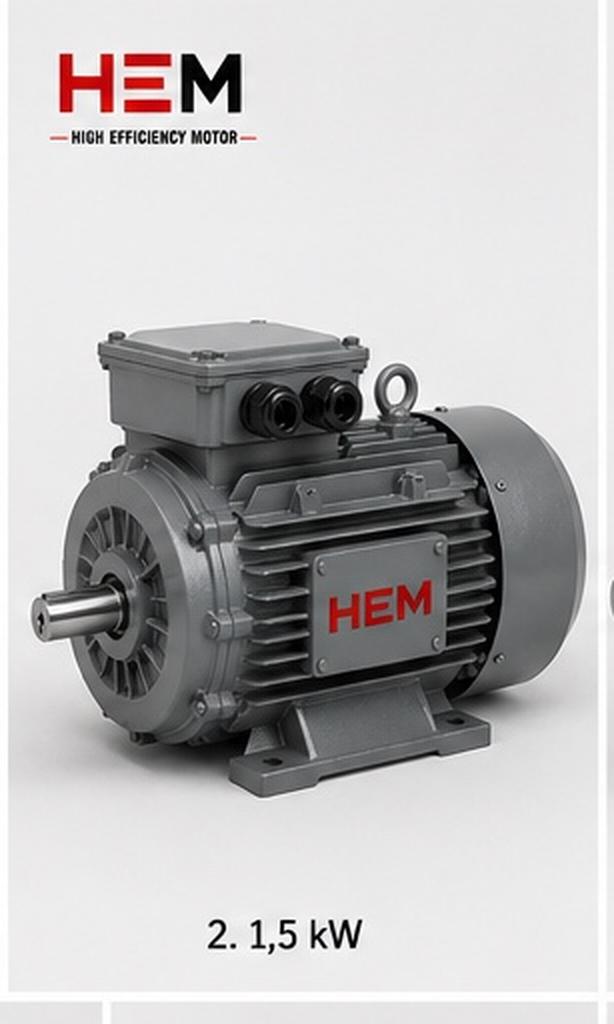
Here, an advantage of the IE5 class becomes clear: because IE5 motors already operate with very low losses in normal duty, the heat generated under normal load is low, and the motor has a wider thermal margin to absorb the brief additional heat during braking. The magnet-free rotor structure also removes any concern about magnet loss at high temperatures, providing an extra safety margin in braking applications. Even so, this margin is not unlimited; in applications with high-frequency braking in particular, the duty cycle must be calculated carefully.
Duty-Cycle Limits
The safe use of DC injection braking depends on correct duty-cycle management. The duty cycle expresses how long and how frequently braking is applied over a given time interval. The following principles protect service life and safety:
- Braking duration limit: The direct current should be applied only for the time needed to stop the rotor. Keeping the current on continuously after the rotor has stopped produces unnecessary heating.
- Repetition frequency: If the number of brakings per hour increases, the motor's cooling time decreases and the average winding temperature rises. There must be sufficient cooling time per cycle.
- Current level balance: A high braking current provides a faster stop but produces more heat. The minimum effective current required by the application should be preferred.
- Thermal protection: Excessive heating should be prevented by using the motor's PTC/thermistor protection together with the drive's motor thermal model.
- Ambient conditions: High ambient temperature and poor ventilation reduce the permissible braking frequency.
In practice, these parameters are determined by evaluating the motor's thermal capacity and the drive's protection functions together. That is why motor-drive compatibility is critical during commissioning; we address this process step by step in our guide on IE5 motor drive installation compatibility and commissioning.
Why Must a SynRM Motor Always Be Supplied With a Drive?
The defining characteristic of synchronous reluctance motors is that they cannot operate connected directly to the mains. These motors are not self-starting; the stator field must be rotated in a controlled manner in accordance with the rotor position. Only a compatible drive can do this. The drive runs special control algorithms (usually a control model matched to the motor parameters) suited to the reluctance characteristic of the motor.
This requirement is also decisive for DC injection braking. The braking current level, duration, and activation threshold are all managed by the drive. Wrong parameter selection or a drive incompatible with the motor both reduces braking performance and creates a risk of excessive heating and even failure. For this reason, HEM Motor recommends supplying IE5 SynRM motors together with a compatible drive, as a package solution.
The main benefits of package supply:
- Correct matching: The motor and drive are sized relative to each other; braking torque and current capacity are compatible.
- Ready parameter set: The synchronous reluctance control parameters come pre-configured, shortening commissioning time.
- Single point of contact: Since both the motor and the drive come from a single supplier, responsibility and service processes are clear.
- Optimized braking: The braking strategy for fast stopping is selected to match the motor's thermal capacity.
- Continuous efficiency: With the right drive, the IE5 efficiency advantage is preserved across the entire operating range.
If you are curious about the efficiency behavior of IE5 SynRM motors under partial load, you can review our content on the IE5 synchronous reluctance efficiency curve and part load. For current electric motor prices and a suitable motor-drive package, you are welcome to contact us.
Application Recommendations and the Correct Supply Approach
To get the best results from DC injection braking, evaluate your application under a few key headings: How high is the load inertia? How many stops per hour are needed? Is positioning accuracy required? What are the ambient temperature and ventilation? The answers to these questions determine both the power class of the motor (within the 0.55–355 kW range) and the drive's braking strategy.
In applications with low to medium inertia and moderate stopping frequency, such as conveyors, pumps, fans, and mixers, DC injection braking is usually sufficient without an external braking resistor. In applications with very high inertia, such as centrifuges and winding, or in lines that brake very frequently, a combination of dynamic braking and a braking resistor should be considered. Whatever method is used, the robustness provided by the motor's IP55 protection, F insulation, and cast iron body is the foundation of long-lived and reliable operation in industrial environments.
At HEM Motor, our goal is not merely to sell a motor; it is to deliver an IE5 SynRM motor-drive package that perfectly fits your application, correctly sized and correctly parameterized. This way, you meet your fast stopping need safely, efficiently, and economically.
Frequently Asked Questions
Is an external braking resistor required for DC injection braking on an IE5 synchronous reluctance motor?
In most low- and medium-inertia applications it is not required. In DC injection braking, the rotor's kinetic energy is converted into heat in the motor windings and rotor iron instead of being returned to the DC bus. Therefore, in many conveyor, pump, and fan applications, fast stopping is achieved without an external braking resistor. However, in applications with very high inertia or very frequent braking, a combination of dynamic braking and a braking resistor should be considered.
Does the heating during DC braking damage the motor?
If correctly parameterized, it does not. Because the braking energy is largely converted into heat inside the motor, heating is unavoidable, but when the braking current, duration, and repetition frequency are kept within duty-cycle limits, the motor's F insulation class handles this heat safely. The low base losses of IE5 motors and the magnet-free structure of the synchronous reluctance rotor provide an additional thermal safety margin. PTC/thermistor protection and the drive's thermal model should be used together.
Can I connect a SynRM motor directly to the mains and perform DC braking?
No. Synchronous reluctance motors cannot operate connected directly to the mains (direct-on-line); they always work with a compatible drive. The current level, duration, and activation threshold of DC injection braking are also managed by the drive. For this reason, supplying the motor with a correctly parameterized and compatible drive, as a package solution, is the best approach for both performance and safety.