English
 Türkçe

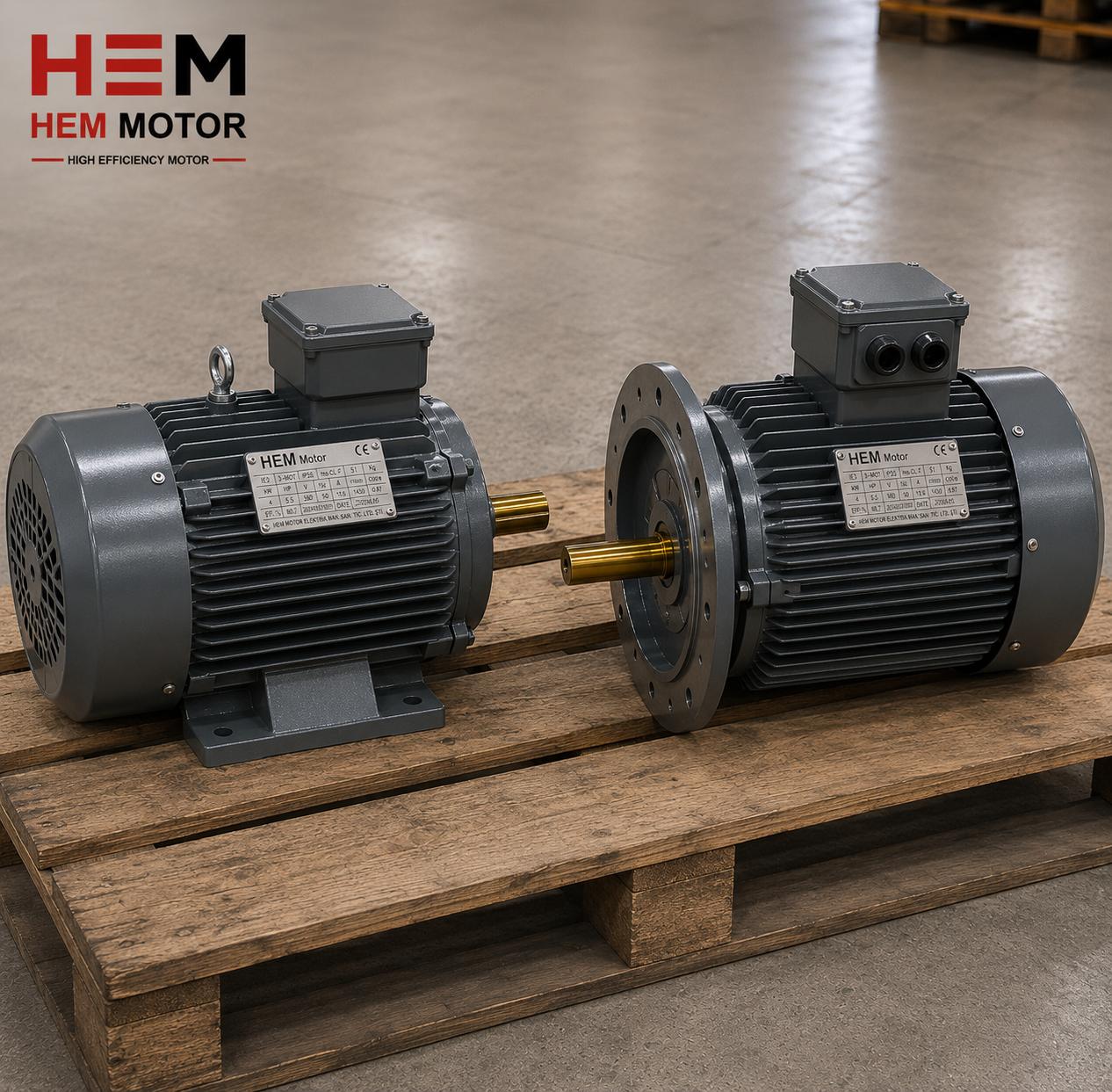

When dozens of electric motors run in a facility, the first question that comes to mind is usually: can I run all these motors from a single drive and reduce the number of cabinets and the cost? With IE5 synchronous reluctance motors this question becomes even more critical, because these motors always need a drive (a variable frequency drive). In this article we cover, with a buying focus, when group drive of multiple motors from one drive makes sense, how load sharing works, what to watch for in terms of protection, and how to plan the correct supply.
IE5 synchronous reluctance motors offer the highest efficiency class currently available thanks to their magnet-free rotor structure and low-loss design; however, unlike asynchronous motors, they cannot run when connected directly to the mains. The synchronous reluctance rotor needs the controlled magnetic field produced by the drive in order to turn. This structural requirement directly affects the group drive topic: when more than one IE5 motor is connected to a single drive, the drive cannot keep each motor at its own optimum point.

What Is Group Drive and Why Is It Chosen?
Group drive (or multi-motor drive) is when a single variable frequency drive feeds more than one motor at the same time. The aim of this approach is most often cost and space savings: instead of buying a separate drive for each motor, similarly operating motors are connected to one drive. Typical use cases include several conveyors running in parallel on the same line, a group of fans, or pumps.
- Cost: A single large drive can be more economical than many small drives.
- Panel space: Fewer drives mean a smaller panel and less cabling.
- Synchronous operation: Motors fed with the same frequency run at speeds close to each other.
However attractive these advantages look, group drive on IE5 synchronous reluctance motors is not as easy as on asynchronous motors. The reason lies in the working principle of the synchronous reluctance motor.
Why Does the IE5 Synchronous Reluctance Motor Struggle in Group Drive?
Asynchronous (squirrel-cage) motors can adjust their speed somewhat according to their own load thanks to slip, even when the drive gives a single frequency-voltage output; that is why several asynchronous motors connected in parallel to one drive can run together even at different loads. In a synchronous reluctance motor, however, the rotor turns in synchronism with the field produced by the drive; there is no slip. This is exactly the feature that gives the motor its high efficiency, but it creates a constraint in group drive.
The highest efficiency is possible only when the drive keeps each motor at its own optimum operating point. When you connect one drive to several IE5 motors, the drive sends a common command to the whole group and cannot control each motor individually. Even the smallest difference in load or parameters between the motors can cause some of them to lose synchronism (step out). So IE5 group drive should be applied only under very specific conditions and with careful engineering.
The Constraints Brought by Synchronous Operation
- All motors in the group must be of the same power, the same pole number and, if possible, from the same production batch.
- The motor loads must be very close to each other and constant; variable and differing loads break the synchronism.
- A sudden load change on one motor can affect the whole group.
- All motors must be guaranteed to synchronise simultaneously and smoothly during starting.
When Should One Motor + One Drive Be Preferred?
For the vast majority of facilities that want to take full advantage of the efficiency of IE5 motors, the correct solution is the own drive for each motor approach. This way each motor runs at its own optimum point, efficiency stays at a maximum, and protection is provided per motor. Especially in applications with differing or variable loads, one motor-one drive is almost mandatory.
Group drive should be considered only in special cases where the loads are almost identical to each other, run at constant speed and can genuinely be managed with additional engineering. Otherwise, the drive cost saved in the initial investment is more than repaid through efficiency loss and failure risk.

Protection: The Most Critical Topic in Group Drive
In a multi-motor layout connected to a single drive, the biggest risk is protection. The drive internal overcurrent protection works according to the total current of the whole group; so it cannot distinguish the overload or failure of a single motor. In this case, adding separate protection to each motor is essential:
- A separate thermal overload relay or motor protection circuit breaker must be used for each motor.
- PTC thermistors or PT100 sensors should be preferred to monitor the winding temperature.
- It must be planned in advance whether the rest of the group will continue safe operation when one motor goes offline.
- The cable lengths and distribution between the drive and the motors must be assessed in terms of voltage drop and EMC.
When protection is not set up correctly, the failure of a single motor can progress unnoticed and lead both to the motor burning out and to a production stoppage. So in group drive, protection is an item that must not be cut from the budget.
How Does Load Sharing Work?
In group drive, load sharing means how the motors connected to the group take on the total mechanical load between them. In asynchronous motors, slip naturally balances the load by automatically adjusting the speed when one motor is loaded slightly more than another; this natural flexibility explains why asynchronous motors are so forgiving in group drive. In an IE5 synchronous reluctance motor, however, this self-balancing mechanism does not exist. Because all motors must turn at the same frequency and the same speed, the smallest load difference between them is directly reflected as a current imbalance.
For this reason, for load sharing to succeed in IE5 group drive, the loads driven by the motors must be almost equal and constant over time. If one motor is continuously loaded more than another, it draws more current and the risk of both overheating and loss of synchronism increases. In practice, this can only be achieved meaningfully on completely identical parallel lines (for example two identical conveyors). In applications where the loads differ, load sharing becomes uncontrolled and group drive ceases to be safe.
Starting and Synchronisation
In IE5 synchronous reluctance motors, starting differs from asynchronous motors. The drive brings the motor to synchronous speed in a controlled way; this process works smoothly with a single motor. However, when all the motors in the group must start at the same time with the same drive command, it becomes critical that the motors inertia moments and loads are close to each other. If one motor is more heavily loaded than the others, it may not catch synchronisation during starting, and this endangers the starting of the whole group.
So in group drive the starting scenario must be planned carefully in advance; if necessary, the motors should be made to start simultaneously and with balanced load rather than in sequence. The drive starting ramp must be set according to the most demanding motor in the group. In a one motor-one drive layout this complexity disappears entirely; each drive starts its own motor with the most suitable ramp.
The Hidden Cost of Group Drive in Terms of Efficiency
The main aim of switching to IE5 motors is to achieve the highest efficiency. But in group drive this goal is paradoxically weakened: because the single drive gives a common command to the group, none of the motors can run exactly at its own optimum point. As a result, part of the efficiency gain expected from the expensive IE5 motors is lost. This is a hidden cost that, while saving on the drive in the initial investment, is repaid in the energy bill over the life of the motor.
For this reason, when making the investment decision, not only the cost of the number of drives but also the lifetime energy consumption of the system must be taken into account. In most cases, the efficiency and reliability advantage of assigning each motor its own drive covers the additional drive cost in a short time. Because the logic of the IE5 investment lies precisely in this efficiency gain, group drive can be a choice that weakens that gain.
Correct Supply and the Package Solution
Because IE5 synchronous reluctance motors cannot run without a drive, these motors should always be considered as a package solution together with a suitable variable frequency drive. Selecting the motor and drive to suit each other is critical both to guarantee efficiency and to ensure trouble-free commissioning. When a special application such as group drive is involved, all the details of the application (number of motors, powers, load profile, protection needs) must be shared clearly at the supply stage.
A correctly matched motor-drive package backed by the manufacturer both simplifies stock and lead-time planning and removes compatibility problems in the field. For current electric motor prices and IE5 motor-drive package options, you can request a quote from the supply team.
For a more detailed look at why IE5 motors cannot run without a drive and at the package cost, see our article on the IE5 synchronous reluctance motor drive package and cost, and for the difference from magnet motors, the IE5 synchronous reluctance vs permanent magnet PM motor difference content. To clarify drive and installation compatibility, our guide on drive and installation compatibility when switching to IE5 is useful. You can also reach all our IE5 electric motors articles here.
Frequently Asked Questions
How many IE5 motors can be connected to a single drive?
Technically more than one motor can be connected, but on IE5 synchronous reluctance motors this is safe only in special cases where the motors are of the same power, the same pole number and run at almost equal, constant load. In most applications the correct solution is to assign each motor its own drive; this secures both efficiency and protection.
Is separate protection for each motor mandatory in group drive?
Yes. The drive internal protection only sees the total current and cannot distinguish the overload of a single motor. For this reason, a separate thermal overload relay and, if possible, a winding temperature sensor (PTC/PT100) must be added to each motor.
Why does the IE5 synchronous reluctance motor not run without a drive?
The synchronous reluctance rotor needs the controlled and variable magnetic field produced by the drive in order to turn; it cannot start on its own from the direct mains voltage. For this reason IE5 synchronous reluctance motors must always be supplied as a package with a suitable variable frequency drive.