English
 Türkçe


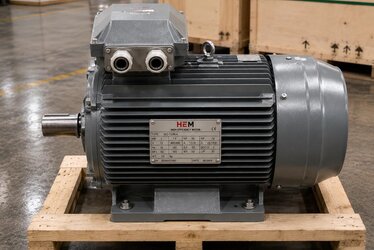
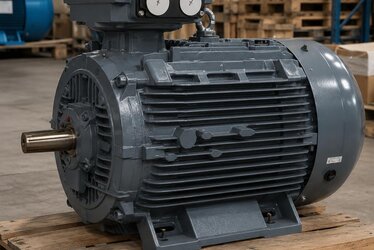
IE4 Super Premium efficient motors have lower rotor and stator resistances, and therefore lower impedance, compared with classic IE1-IE2 motors. This is a desirable property in terms of efficiency, but it also changes starting behaviour. When started direct-on-line, a low-impedance motor draws a high inrush current that reaches many times its rated current. Businesses using a soft starter may encounter the question "the soft starter worked fine on the old motor, why am I now seeing incompatibility?" when they switch to an IE4 motor. In this article we examine, from the standpoint of a motor manufacturer, the compatibility of the IE4 motor with a soft starter, inrush current, the by-pass contactor and the correct supply criteria.
At HEM Motor we believe high-efficiency motors must be correctly sized not only for energy savings but also for compatibility with the starting equipment. The correct pairing of a soft starter and an IE4 motor directly affects both starting comfort and equipment life. Below we explain the topic step by step, starting from the basics, from why the inrush current changes to the use of by-pass.
Why Is the Inrush Current Higher in an IE4 Motor?
The inrush current of an asynchronous motor at the moment of direct-on-line starting is determined mainly by the motor's starting impedance. In IE4 motors, conductor cross-sections are enlarged, rotor bars are optimised and losses are reduced to increase efficiency. A side effect of this is that the resistance the motor sees at the moment of starting is lower, and therefore a higher inrush current is drawn.
In practical terms this means:
- Higher peak current: Compared with an IE2 motor of the same power, the direct-start inrush current peak of an IE4 motor can be higher. This is a short but sharp current pulse.
- Shorter starting time: Thanks to higher torque, the motor reaches rated speed faster; however, this can conflict with the soft starter's ramp time.
- Changed protection settings: Soft starter and thermal protection values set for the old motor should be reviewed for the IE4 motor.
For this reason inrush current requires the starting strategy to be re-evaluated when switching to an IE4 motor. A soft starter setting that worked well on the old motor may not give the same result on the new one.
How Does a Soft Starter Work and How Does It Match the IE4?
A soft starter is a thyristor-based device that limits both the inrush current and mechanical stress by gradually increasing the voltage applied to the motor during starting. The voltage is raised along a ramp; the motor accelerates slowly and the current pulse delivered to the grid is smoothed.
Points to watch for correct matching with an IE4 motor:
- Correct sizing: The soft starter should be selected according to the motor's starting characteristic and duty type (frequent starts, heavy load), not just its rated current. The high inrush current of an IE4 motor may require selecting one frame size larger.
- Ramp time setting: Too short a ramp removes the advantage of limiting inrush current; too long a ramp causes the motor to run for a long time at low voltage through the thyristors and heat up. The ramp should be optimised considering the IE4 motor's tendency to start quickly.
- Initial voltage (pedestal): An initial voltage should be chosen that is sufficient to overcome the load torque but does not raise the current unnecessarily.
- Torque control: In applications such as pumps and fans, torque-controlled starting reduces water hammer and mechanical shock.
The choice between a soft starter and star-delta should also be re-evaluated for IE4 motors. Our article comparing starting methods, starting AC asynchronous motors: star-delta or soft starter, addresses this decision on an application basis.
Why Is a By-Pass Contactor Necessary?
The soft starter feeds the motor through thyristors during starting. Continuous current flow through the thyristors both produces heat loss and causes the soft starter to heat up unnecessarily. Using a by-pass contactor that engages after the motor reaches rated speed is therefore a strong method.
Advantages provided by the by-pass contactor:
- Elimination of thyristor heating: When the motor reaches rated speed, current flows through the by-pass contactor; the thyristors are taken out of circuit and do not heat up. This extends the soft starter's life.
- Smaller panel and cooling: Since thyristor heat is not generated during continuous operation, the heat load inside the panel is lower and the cooling requirement decreases.
- Reduced energy loss: Since the voltage drop across the thyristors is eliminated, a small but real efficiency gain is achieved in continuous operation; this aligns with the efficiency philosophy of the IE4 motor.
- Reliability in frequent starts: In heavy duty type, a by-pass system increases reliability by protecting the soft starter.
Many modern soft starters come with an internal by-pass contact; an external by-pass contactor is preferred especially in high-power IE4 motors. The correct by-pass strategy should be planned together with the soft starter selection.
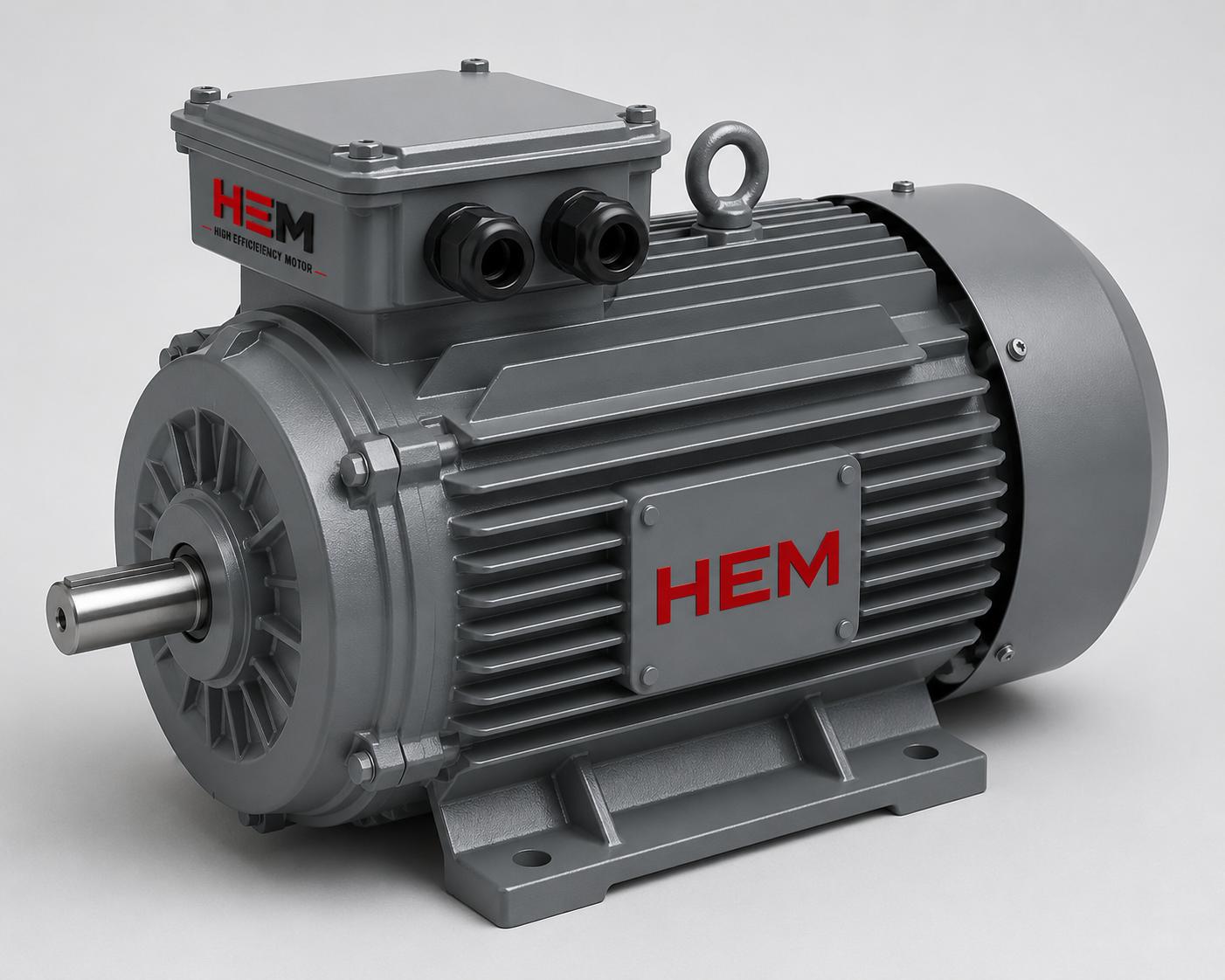
What to Consider for Soft Starter Compatibility When Supplying an IE4 Motor
A supply process that plans the IE4 motor and the starting system together ensures a trouble-free start in the field. The following criteria help the motor and soft starter form a compatible whole:
- Clarifying the duty type: How many starts per hour will occur, and whether the load inertia is high, should be determined from the outset. Frequent starting affects both motor and soft starter selection.
- Load characteristic: Low-starting-torque loads such as pumps and fans, and high-starting-torque loads such as conveyors and crushers, require different ramp and torque settings.
- Correct reading of nameplate values: Soft starter settings are made according to the motor's rated current and starting characteristic, so the nameplate must be read correctly.
- By-pass planning: If there is continuous operation and frequent starting, a by-pass contactor should be foreseen from the start.
- Manufacturer support: Obtaining information from the motor manufacturer on the starting characteristic and the suitable starting method prevents surprises in the field.
At HEM Motor we treat compatibility with starting equipment as part of the supply process for the IE4 Super Premium motors we manufacture. For buyers wondering in which applications the IE4 threshold is mandatory, our article on the IE4 threshold in pumps, fans and compressors clarifies the regulatory and application side. For those who wish to evaluate the use of high-efficiency motors together with a variable frequency drive, our guide on energy savings with high-efficiency motors and VFD is complementary.
Soft Starter or Variable Frequency Drive?
A soft starter only smooths the start; it does not change the operating speed. If the application requires variable speed (for example, flow control in a pump or fan), a variable frequency drive is a more suitable solution and provides both starting and efficiency gains together. A soft starter, on the other hand, is an economical and effective choice for applications that run at fixed speed and only want to limit inrush current and mechanical shock.
Businesses that wish to plan the correct starting and motor selection together can contact us for up-to-date electric motor prices and stock availability. Fully benefiting from the efficiency advantage of an IE4 motor begins with the correct starting strategy.
Reviewing Protection Settings on an IE4 Motor
When switching to an IE4 motor, not only the soft starter but also the motor's protection settings should be re-evaluated. Thermal and electronic protection values set for the old motor may remain incompatible with the IE4 motor's different starting and operating characteristic. This can lead to thermal trips that appear "for no reason" in the field, or to the motor being left unprotected. Points to watch:
- Thermal protection value: The thermal relay or electronic protection should be reset according to the IE4 motor's rated current; otherwise unnecessary trips or insufficient protection occur.
- Starting-time window: The IE4 motor's tendency to start quickly should be set so the protection device does not mistake the inrush current for a fault.
- Frequent-start scenario: In applications with many starts per hour, it is important that the thermal protection correctly tracks cumulative heating.
- Soft starter protection functions: The built-in protection functions of modern soft starters should be configured according to the IE4 motor's characteristic.
Setting the protection correctly ensures both the motor's safe operation and the protection of the investment. For those wondering about the effect of the IE4 motor's cooling and fan design on operating temperature, our article on the effect of cooling and fan design on efficiency in IE4 motors completes the topic.
The Benefit of Soft Starting in Pump and Fan Applications
A soft starter does not only limit inrush current; in applications such as pumps and fans it also provides important benefits to the mechanical system. Especially when combined with the IE4 motor's high starting torque, an uncontrolled start can cause mechanical shock. This is where the soft starter comes into play:
- Prevention of water hammer: In pump applications, a sudden start causes water hammer in the pipeline; soft starting smooths this shock, extending pipe and valve life.
- Protection of belts and couplings: In fan applications, sudden torque can damage the belt-pulley and coupling system; gradual starting protects the mechanical transmission.
- Soft stop: Many soft starters also offer a soft-stop feature; this reduces the water hammer at the moment of stopping in pump applications too.
- Reduced grid fluctuation: Soft starting reduces the voltage dip on the grid, protecting other equipment connected to the same line.
These benefits turn the soft starter from merely a starting device into a protector of the mechanical system. When the IE4 motor's efficiency advantage is combined with the soft starter's mechanical-protection advantage, both energy and maintenance costs decrease.
Frequently Asked Questions
Will the soft starter that worked on my old motor also work on an IE4 motor?
In most cases it works physically, but the settings and sometimes the size need to be reviewed. The higher inrush current of an IE4 motor may require selecting one frame size larger for the soft starter, or re-doing the ramp and initial voltage settings. Complaints such as "it works but the thermal trips" usually stem from this mismatch. If you share the motor nameplate and duty type, we can jointly determine the suitable starting configuration.
Is it a problem to use a soft starter without a by-pass contactor?
For short and infrequent starts it can be used without a by-pass; however, if there is continuous operation or frequent starting, the current flowing through the thyristors produces heat, leading to both efficiency loss and soft starter heating. The by-pass contactor eliminates this heat by taking the thyristors out of circuit after the motor reaches rated speed. We recommend using a by-pass in high-power IE4 motors.
Is there another way to limit inrush current in an IE4 motor?
Yes. Besides a soft starter, star-delta starting and a variable frequency drive also limit inrush current. Star-delta is more economical but reduces starting torque and can produce a current pulse at the transition moment. A VFD both smooths the start and provides variable speed; it is the most suitable solution if variable speed is needed. Which method is appropriate depends on the load characteristic and speed requirement.