English
 Türkçe


As energy costs rise, plants chase every kilowatt-hour that can be obtained from their motors. One of the least known but most concrete methods is regenerative energy recovery: instead of dissipating the energy a motor produces during braking as heat, feeding it back to the grid. When a high-efficiency IE4 motor is combined with the right drive and feedback system, this method delivers real and measurable savings. In this article we examine how regenerative recovery works, in which applications it makes sense, and how to plan the right supply, from both an engineering and a purchasing perspective.
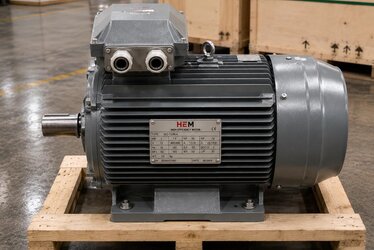
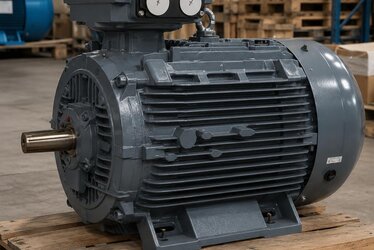
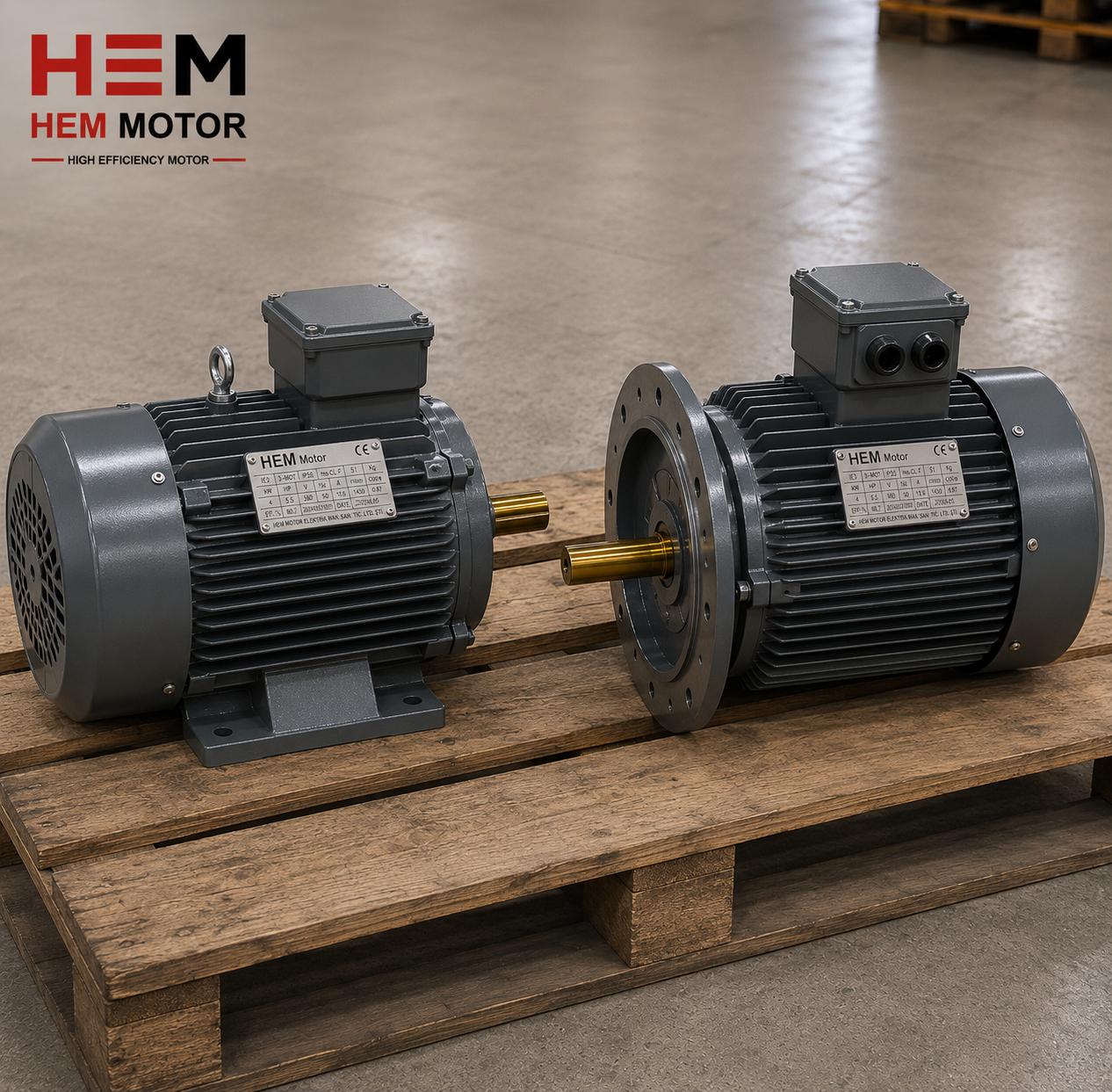
As HEM Motor, we supply 100% copper-wound, high-efficiency motors for frequently braking applications such as cranes, lifts, conveyors, centrifuges and test benches. What these sites have in common is that the motor occasionally behaves like a generator and produces energy. To avoid wasting that energy, the right system must be built.
What Is Regenerative Energy and How Does It Occur?
An induction motor enters generator mode when it decelerates a load or holds a downward-moving load. That is, the mechanical energy taken from the shaft is converted into electrical energy in the motor windings. When a crane lowers its load, when a centrifuge comes to a stop, or when a conveyor brakes a load on an incline, the motor produces energy. The issue is this: this energy has to go somewhere.
In classic systems this energy is converted into heat over a braking resistor and discarded. So useful energy literally goes into the air; it also heats the panel and creates a cooling load. In a regenerative system, however, this energy is fed cleanly back to the grid through the regenerative unit of the drive and is used by other consumers in the plant.
Types of Braking and the Fate of the Energy
- Dynamic braking: Energy is turned into heat in the braking resistor. Simple and cheap, but the energy is completely lost.
- Regenerative braking: Energy is fed back to the grid through the drive. It has an investment cost but pays for itself in systems that brake continuously and frequently.
- DC bus sharing: The braking energy produced by one motor is used to power another motor on the same panel; very effective on multi-motor lines.
The Role of the IE4 Motor in a Regenerative System
In regenerative recovery the efficiency class of the motor directly affects the gain. IE4 Super Premium motors operate with lower losses in both motor mode and generator mode. That is, the same mechanical energy returns to the grid as electricity at a higher rate in an IE4 motor; in an IE2 or IE3 motor the losses are greater.
The reason is that IE4 motors have low iron, copper and friction losses. 100% copper winding reduces losses with low resistance in both motor and generator mode. Therefore it makes sense for a plant considering regenerative investment to also choose the highest efficiency class on the motor side. We covered the impact of efficiency class on the investment decision in detail in our article on the payback of replacing an old motor with an IE4.
In Which Applications Does Regenerative Recovery Make Sense?
Not every motor application benefits from a regenerative system. The decisive question is: how often and with how much energy does the motor brake? The larger and more frequent the braking energy, the more valuable the recovery. Typical applications where it makes sense:
- Cranes and hoisting systems: Energy is produced continuously while lowering loads; recovery is very high.
- Lifts and moving systems: Provide meaningful savings due to frequent braking under balanced loads.
- Centrifuges and test benches: Stopping high-inertia masses releases large amounts of energy.
- Inclined conveyors and lowering lines: Gravity loads require continuous braking.
- Frequently start-stop production lines: Small but cumulatively large energy is recovered at each stop.
By contrast, a pump or fan rotating continuously at a fixed speed rarely brakes; here, correct speed control rather than regeneration is more profitable. In pumps and fans the real saving comes from reducing speed; we examined this topic in our article on affinity-law savings in pumps and fans with a VFD.
System Components and the Right Supply
A regenerative installation is not just about the motor. For a properly working system the following components must be selected to be compatible:
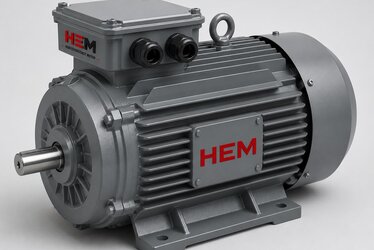
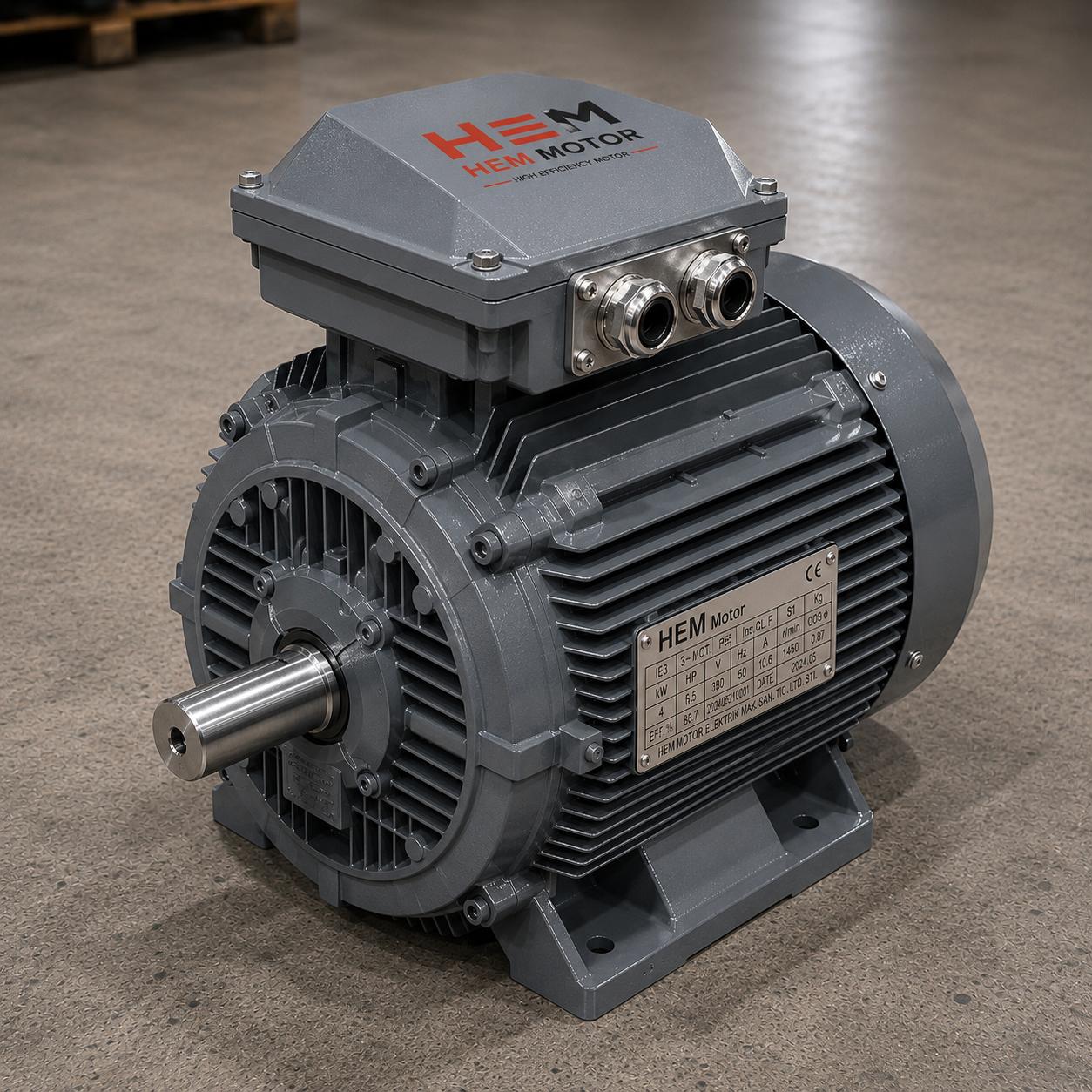
- High-efficiency motor (IE4): A robust, 100% copper-wound, cast iron body motor that operates with low loss in both motor and generator mode.
- Regenerative (active front end) drive: A drive unit that can feed braking energy back in a way compatible with the grid phase and frequency.
- Grid compatibility and filters: Filter and protection equipment that preserves harmonic quality during feedback.
- Mechanical compatibility: An exact match of the motor with the existing gearbox, brake and shaft.
These components should be evaluated as a package, not individually. We covered selecting the drive and motor together in our article on asynchronous motor selection with a frequency drive. As HEM Motor, by supplying the IE4 motor suited to your application with the correct mounting type and body, we lay the foundation of this package solidly.
Regenerative vs. Dynamic Braking Comparison
The choice between the two methods depends on both cost and operating conditions. Dynamic braking is simple: a braking resistor and a chopper circuit controlling it are sufficient. The investment cost is low, installation is easy, and it is the most sensible solution in applications that rarely brake. However, the braking energy is fully converted into heat; this energy is both lost and heats the environment, creating an additional cooling need.
Regenerative braking requires a higher initial investment because it needs an active front end drive and suitable grid filters. In return, in applications that brake frequently and with high energy, the energy recovered at each braking accumulates and pays back this investment. When deciding, the plant's daily braking count, the energy released per braking and the electricity tariff should be evaluated together. While regenerative investment amortizes slowly for a line that brakes little, it quickly turns to profit in continuously energy-producing applications such as cranes or centrifuges.
On lines where multiple motors operate on the same panel, there is a third path: DC bus sharing. Here the braking energy of one motor is used directly as the driving energy of a neighboring motor. This method consumes the energy within the plant without feeding it back to the grid and is very efficient especially on synchronized production lines.
The Importance of Copper Winding and Body Quality
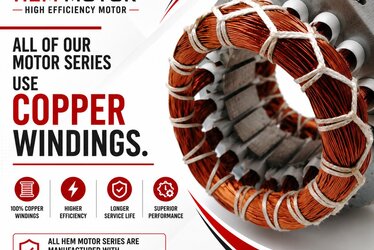
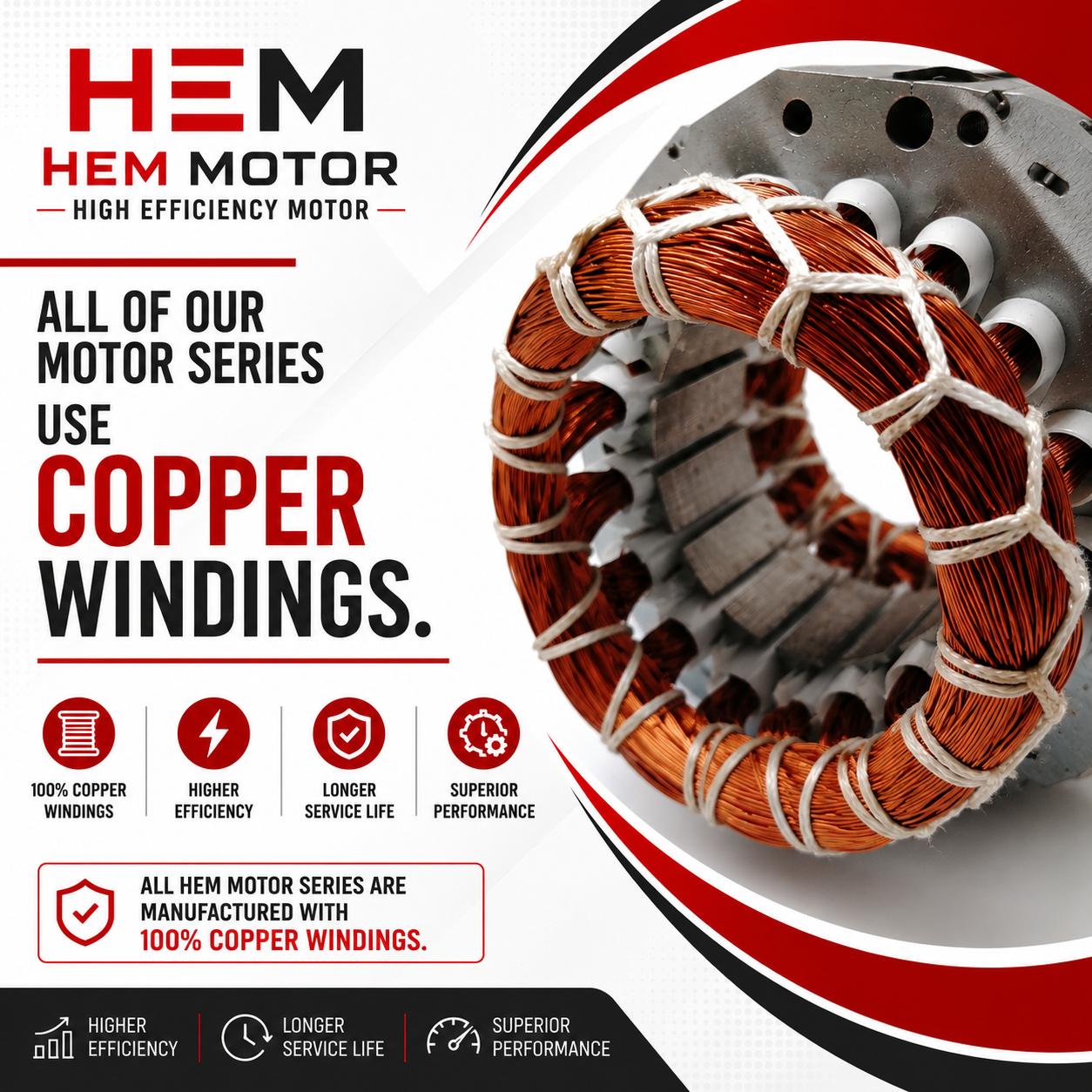
In regenerative applications the motor operates over a wider operating range and with more frequent direction/load changes than a normal motor. This brings winding and body quality to the fore. 100% copper winding has lower resistance than aluminum; this reduces copper loss and increases efficiency in both motor and generator mode. Low resistance also means the winding heats less, which extends insulation life.
The cast iron body, on the other hand, dampens the vibration caused by frequent braking and load change, and protects the bearing housings with its mechanical strength. The stresses occurring while stopping high-inertia loads can over time cause misalignment and bearing failure in a weak body. Therefore in a regenerative system the motor choice should be evaluated together with winding and body quality, not just efficiency class. A quality motor is the basis for the recovery system to run trouble-free for many years.
How Is Real Saving Calculated?
The payback of regenerative investment depends on the annual value of the recovered energy. The calculation logic is as follows: energy released per braking × daily braking count × working days = annual recoverable energy. Multiplying this energy by the drive efficiency and grid feedback rate gives the amount actually recovered. The high efficiency of the IE4 motor reduces loss at every step of this equation and shortens the payback period.
An important point: a regenerative system also eliminates the braking resistor and the heat it creates. So the panel cooling load decreases, ambient heating drops and component life extends. These indirect gains should also be added to the total picture. You can also find where motor-related losses occur and how they can be evaluated in our article on waste heat recovery in high-efficiency motors.
Sectoral Examples and Supply Approach
Cranes in port and logistics facilities are where regenerative recovery delivers the most visible gain. Because the energy released while lowering a container is large, returning this energy to the grid makes a noticeable difference in the annual electricity bill. The same logic applies to inclined belt conveyors in mining and aggregate plants; the motor braking a gravity load turns into a continuous energy source. In high-speed winders and centrifuges in textile and paper sectors, braking is both frequent and high-energy. In all these applications, our approach as HEM Motor is the same: we first clarify the load and braking profile of the application, then determine the most suitable efficiency class, power, speed and mounting type for that profile.
Commissioning and Points to Watch
In a regenerative system, commissioning is planned more carefully than for a classic motor. The energy fed to the grid during feedback must be compatible in terms of phase, frequency and harmonics; protection settings must be set correctly and braking scenarios must be tested. Autotuning the motor together with the drive is important for correctly recognizing the behavior in generator mode. Once these steps are completed, the system runs both safely and with the highest recovery rate.
HEM Motor for the Right Start
The gain of a regenerative system is only as good as its weakest component, and this component is often the motor's efficiency. As HEM Motor, we supply high-efficiency IE4 motors for your frequently braking applications with the correct power, speed and mounting type. To determine the motor suited to your needs and for current electric motor prices you can contact us. When you share your application load and braking profile, we clarify the most suitable motor together.
Frequently Asked Questions
Is regenerative recovery suitable for every motor?
No. The system is meaningful in applications that brake frequently and with large energy: cranes, lifts, centrifuges, inclined conveyors and the like. In pumps and fans that run continuously at fixed speed and rarely brake, the real saving comes from speed control. The braking profile of your application is decisive; if you share it we evaluate the right solution together.
Why the IE4 motor recommendation, isn't IE3 enough?
IE3 can also be used, but an IE4 motor operates with lower losses in both motor and generator mode. This means braking energy returns to the grid at a higher rate. In a plant that brakes frequently and targets energy recovery, choosing the highest efficiency class on the motor side shortens the payback period.
Is a braking resistor still needed in a regenerative system?
In most regenerative installations the braking resistor remains only as a safety backup for exceptional situations such as a grid outage; in normal operation energy is fed back to the grid. This largely eliminates the heat produced by the resistor and the associated cooling load, making the panel environment cooler and component life longer.