English
 Türkçe

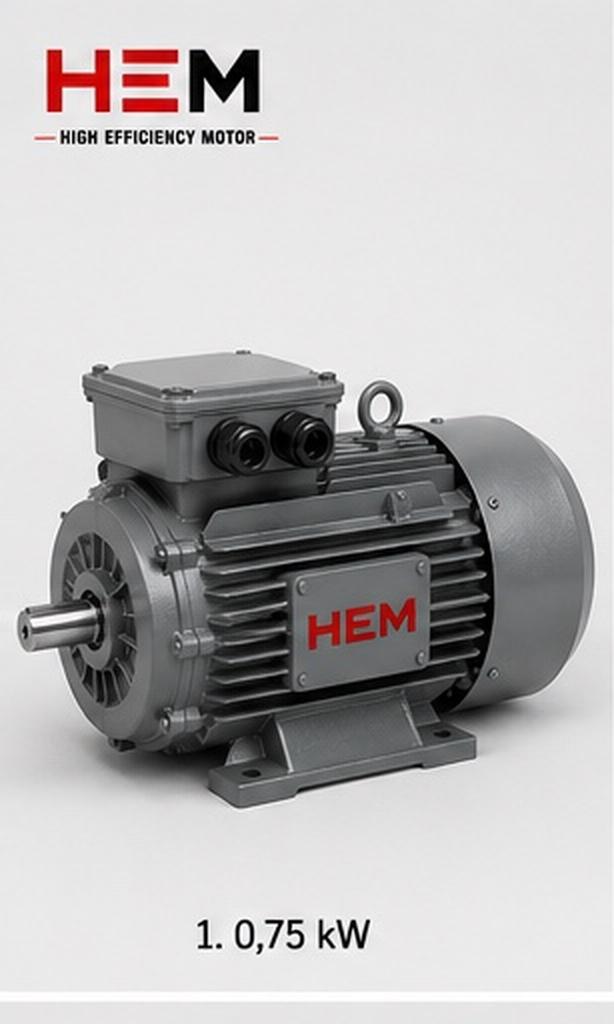

In industrial facilities, the majority of unplanned downtime actually comes from motor faults that give early warning signs but are not noticed in time. When an IE4 Super Premium electric motor is purchased, the goal should not only be energy efficiency but also turning the motor into a continuously monitorable, measurable and predictable asset. This is where IoT-based predictive maintenance sensors come in. Vibration and temperature sensors mounted on the motor collect real-time data through a gateway; this data makes it possible to predict many faults — from bearing wear to imbalance, from misalignment to loose connections — weeks in advance. In this article we look at how IoT predictive maintenance is set up on IE4 motors, why each quantity is measured, and what to watch for when purchasing an instrumentation-ready motor, from both a technical and a buying perspective.
What Is Predictive Maintenance and Why Does It Suit IE4 Motors?
Predictive maintenance is an approach that continuously monitors the actual condition of equipment to intervene before a fault occurs. In classic periodic maintenance, the motor is stopped and inspected at fixed calendar-based intervals; this method is exposed to both unnecessary downtime and sudden faults that occur outside the interval. In predictive maintenance, the decision is based not on the calendar but on measured vibration, temperature and current signature. As a result, the motor is taken in for maintenance only when it genuinely needs it, in a planned window rather than through unplanned stoppage.
IE4 motors are especially compatible with this approach. Because Super Premium efficiency motors run with low loss and low thermal load, their temperature data provides a more stable baseline. Likewise, a well-balanced, low-vibration IE4 motor has a clean vibration spectrum, which allows fault signatures to be clearly distinguished without getting lost in noise. Quiet and low-vibration operation in IE4 motors is an ideal starting point for predictive maintenance sensors to work correctly. Low baseline vibration means that even a small bearing degradation becomes visible in the spectrum early.
Concrete Gains from Predictive Maintenance
- Reducing unplanned downtime: An unexpected stop of a critical motor can halt the entire production line; sensor data turns this risk into a warning weeks ahead.
- Spare-parts and labor planning: When a fault is predicted, the bearing, coupling or spare motor is prepared in advance, avoiding emergency procurement costs.
- Preventing secondary damage: A bearing fault caught early, if replaced before it progresses, prevents damage to the shaft, bearing seat and winding.
- Preserving energy efficiency: Imbalance and misalignment produce extra loss; early intervention keeps the IE4 motor running close to its nameplate efficiency.
Vibration Monitoring: Spectrum, Bands and Fault Frequencies
The most powerful indicator of predictive maintenance is vibration measurement. A three-axis accelerometer mounted on the motor continuously measures the radial and axial vibration of the frame. The raw data is transformed into a frequency spectrum using the Fast Fourier Transform (FFT); this shows not only the overall vibration level but also at which frequency the energy accumulates. This allows the answer to be not just "fault yes/no" but also "what kind of fault."
For overall vibration severity assessment, the ISO 10816 / ISO 20816 standards are used as a reference. These standards divide vibration velocity (mm/s RMS) into zones based on motor frame size and mounting rigidity: new/good condition, acceptable, requires monitoring, and requires immediate intervention. Evaluating a newly purchased motor against these classes is also a way to verify quality at stock intake. Knowing which zone your motor runs in via ISO 10816/20816 vibration and balance acceptance values is the basis for setting predictive thresholds correctly.
How Each Fault Appears in the Vibration Spectrum
- Unbalance: A dominant peak exactly at the rotation frequency (1X); high amplitude in the radial direction. Usually rotor balance loss or blade/pulley fouling.
- Misalignment: An increase in the 1X and especially the 2X component, with notable axial vibration. Indicates that coupling alignment has degraded.
- Bearing fault: Characteristic fault frequencies depending on bearing geometry (BPFO, BPFI, BSF, FTF) and high-frequency envelope signals. In the early stage it appears only at high frequency.
- Mechanical looseness: Many harmonics of the rotation frequency (1X, 2X, 3X...) and an irregular peak structure. Loose feet, bolts or bearing seat.
- Electrical fault: Sidebands around the supply frequency and pole-pass frequency; a sign of rotor bar or air-gap irregularity.
Temperature Monitoring: Winding, Bearing and Frame
While vibration catches mechanical faults early, temperature monitoring reveals both electrical stress and lubrication/bearing problems. Winding temperature is usually measured with embedded PT100 resistance thermometers or PTC thermistors; bearing housing temperature with a separate sensor, and frame surface temperature with the IoT sensor's own internal temperature probe. A permanent rise in winding temperature indicates overload, low voltage, insufficient cooling or insulation aging.
The power of temperature data lies in trend analysis rather than the absolute value. A slow rise in bearing temperature under the same load and ambient conditions indicates that the oil film is breaking down or the bearing is beginning to wear. Methods for monitoring motor winding temperature with PT100 and PTC thermistors, when combined with an IoT gateway, can be configured to generate an automatic alert when a threshold is exceeded. In IE4 motors with Class F insulation, continuous temperature monitoring preserves insulation life, because it is a known rule that every permanent rise of 8-10 °C roughly halves insulation life.
Motor Current Signature Analysis (MCSA): Reading Inside the Motor from Outside
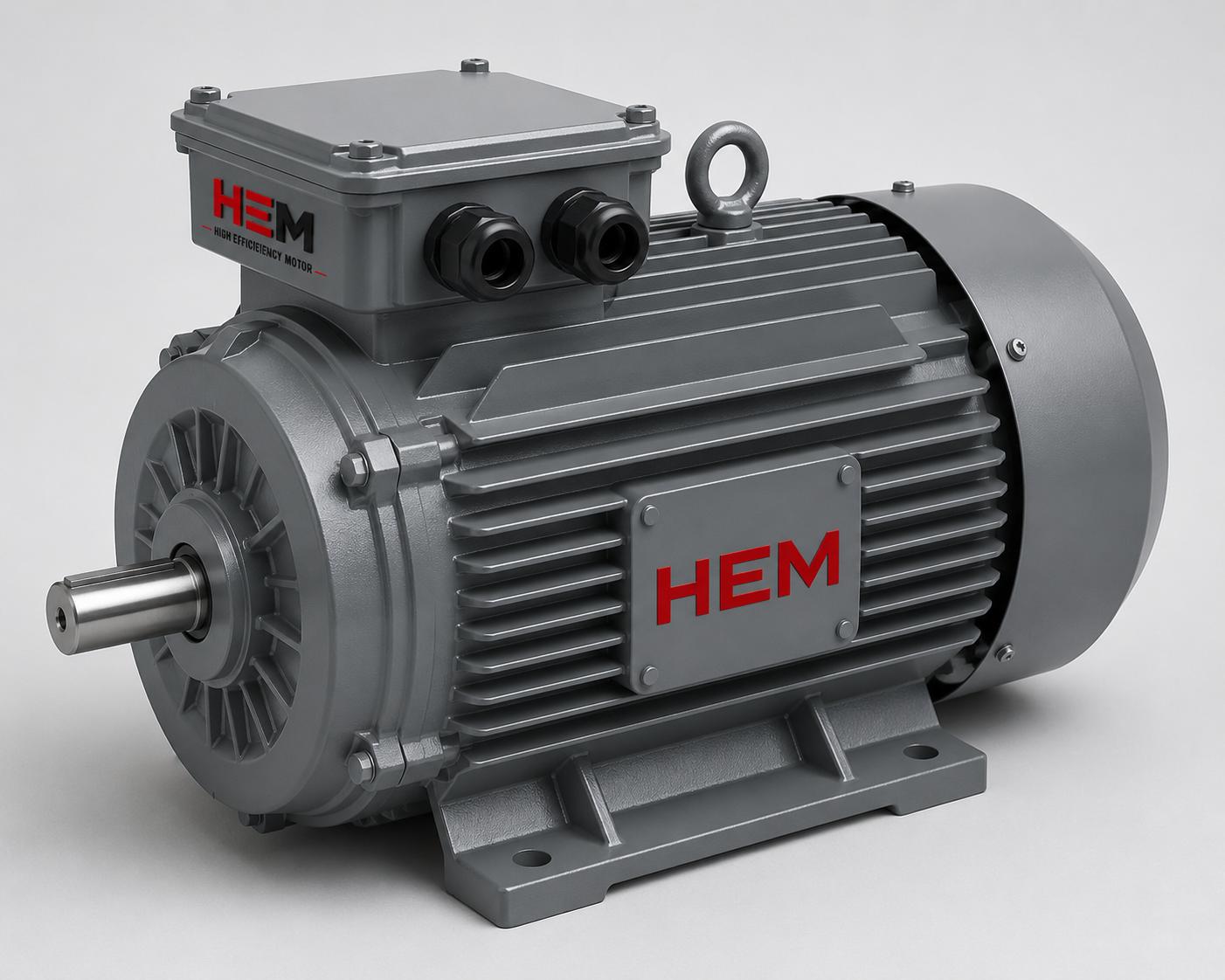
Some faults are hard to see from outside the motor with vibration but leave a clear trace in the supply current spectrum. Motor current signature analysis (MCSA) measures the current the motor draws at high resolution to detect broken rotor bars, air-gap eccentricity and some load-driven problems. The advantage of MCSA is that it does not require an additional sensor in physical contact with the motor; it can be read via current transformers inside the panel. When vibration, temperature and current data are combined in IoT systems, the reliability of fault diagnosis increases markedly.
IoT Architecture: Sensor, Gateway, Edge and Cloud
The backbone of a predictive maintenance system is the IoT architecture. In a typical setup, one or more wireless sensors are mounted on each motor; these sensors transmit vibration and temperature data over low-power wireless protocols (for example industrial wireless networks) to a gateway. Data processing can take place in two locations:
- Edge processing: The gateway or sensor performs FFT and threshold evaluation locally, sending only summaries and alarms. Provides low bandwidth and fast response.
- Cloud processing: Raw/summary data is stored on a central platform; long-term trend analysis, machine-learning-based fault prediction and fleet comparison are performed.
Because wireless sensors can also be retrofitted onto existing motors, predictive maintenance is not limited to new investment. However, the cleanest result is obtained with a motor that comes with low vibration and terminal/sensor hardware suitable for temperature monitoring. For instrumentation-ready options in our IE4 motor range, you can evaluate the power and mounting type suited to your application via current electric motor prices.
Fault Prediction: From Data to Decision
Collected data alone produces no value; value comes from data that is correctly interpreted and turned into action. Fault prediction evaluates deviation from the baseline, trend slope and the growth of characteristic frequencies together. A typical prediction chain looks like this:
- Baseline establishment: The normal vibration/temperature signature is recorded while the motor runs healthy.
- Deviation detection: New measurements are compared with the baseline; statistical deviation generates an early warning.
- Fault classification: The frequency of the peaks in the spectrum determines the type of fault (bearing, imbalance, looseness).
- Remaining life estimation: The trend slope estimates the safe operating time until intervention, so a planned downtime window can be set.
Problems such as lack of lubrication, bearing wear and mechanical looseness can be caught weeks in advance with this chain. To understand how to interpret an early-caught sign, the guide on electric motor failures, symptoms and causes helps you combine sensor data with field knowledge. Predictive maintenance does not replace the classic calendar-based approach; it reinforces and prioritizes it. Therefore it provides the highest return when applied together with an electric motor periodic maintenance and inspection schedule.
What to Ask When Buying an Instrumentation-Ready IE4 Motor
For the predictive maintenance investment to be efficient, it starts with the motor being suitable for this monitoring. Clarifying the following points at the purchasing stage protects against later extra cost and incompatibility:
- Temperature sensor readiness: Can the motor be delivered with PT100 or PTC thermistors, and are there signal terminals in the terminal box?
- Low vibration baseline: Can the manufacturer document the vibration/balance value according to the ISO class? A clean baseline is critical for early diagnosis.
- Sensor mounting point: A flat, rigid surface on the frame or a ready sensor seat allows the accelerometer to receive a correct signal.
- Bearing access and lubrication: Re-greasable bearings and grease nipples increase the applicability of predictive maintenance decisions.
- Drive compatibility: If it will run on a frequency converter, suitable measurement points for current signature analysis should be planned.
An IE4 motor that meets these criteria both runs at high efficiency and contributes to plant reliability as a monitorable asset throughout its life. Together with the right power, speed and mounting type, instrumentation-ready selections minimize the risk of unplanned downtime.
Frequently Asked Questions
Can I retrofit IoT sensors to my existing motors?
Yes. Wireless vibration and temperature sensors can be retrofitted to running motors; they are glued or screwed to a rigid point on the frame and send data to the gateway. However, the most reliable result is obtained with a motor that has low vibration and is ready for temperature monitoring (with PT100/PTC terminals). If the baseline on an existing motor is noisy, small fault signs may be noticed late in the spectrum; therefore, choosing an instrumentation-ready IE4 motor in renewal investments increases the return on predictive maintenance.
Which gives an earlier warning, vibration or temperature?
The two stand out for different fault types, so they are recommended to be used together. Vibration catches mechanical problems such as bearing wear, imbalance, misalignment and mechanical looseness very early; high-frequency envelope analysis in particular shows a bearing fault at the first stage. Temperature is decisive in problems such as overload, insufficient cooling, lubrication breakdown and insulation stress. When combined with current signature analysis, diagnostic reliability reaches its highest level.
How does a predictive maintenance investment pay for itself?
Most of the return comes from prevented unplanned downtime. An unexpected fault of a critical motor can halt the production line for hours; alongside this loss, the cost of the sensor and gateway is recovered in a short time in most facilities. In addition, early-caught faults prevent secondary damage (shaft, bearing seat, winding), reduce emergency spare-parts procurement cost and put maintenance labor on a plan. The high efficiency of the IE4 motor is also preserved when imbalance/misalignment is corrected early, so energy savings are sustained.