English
 Türkçe

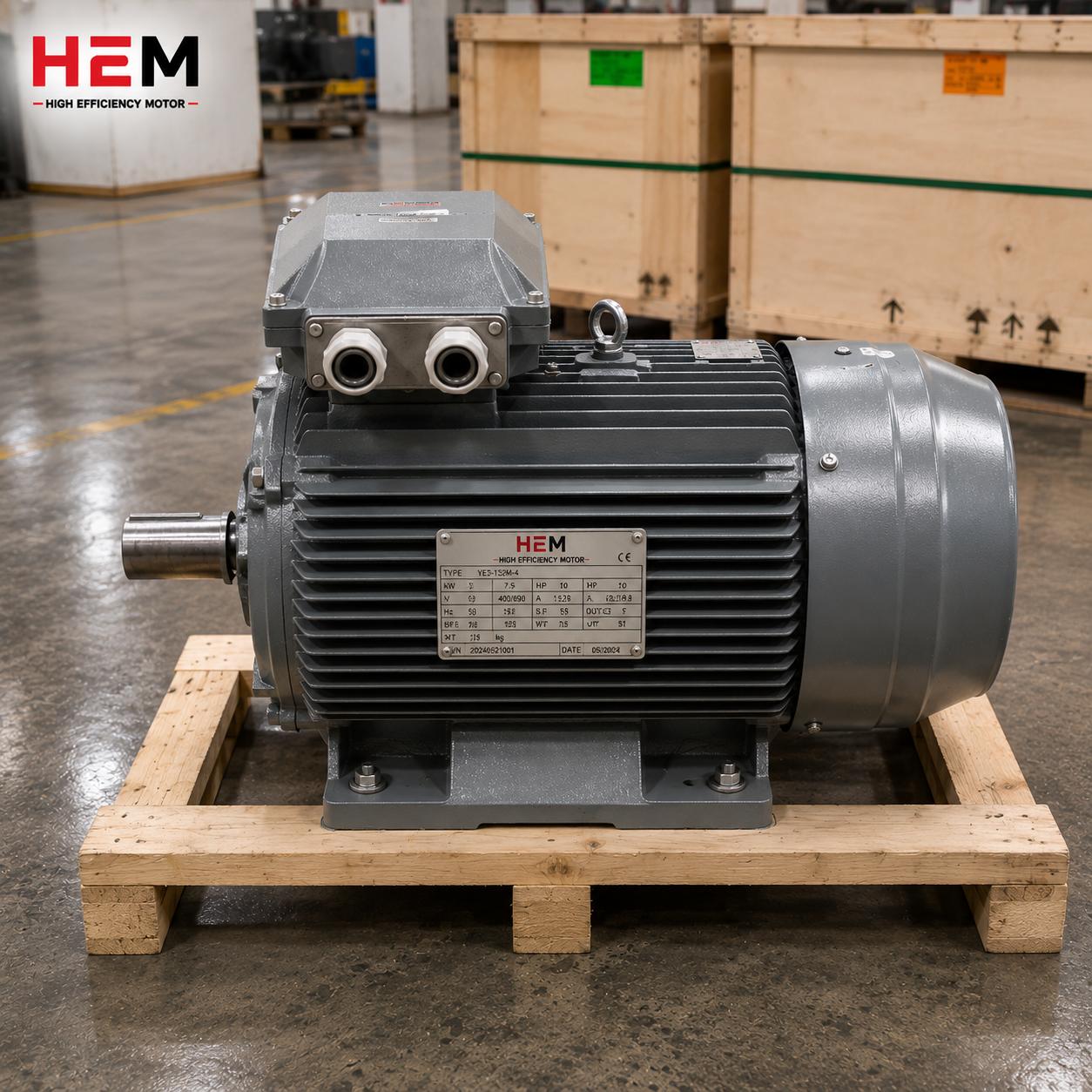

When buying a high power IE4 electric motor, most businesses look only at the kW value and the efficiency class; yet whether the supply is 400V or 690V determines many things, from the plant's cable cost to its protection equipment and even the stock supply decision. At high power, 690V supply noticeably reduces the current drawn at the same motor power; this means thinner cable, smaller contactors and lower losses. In this article we cover the engineering logic of 690V supply on IE4 motors, why reducing current saves cable, at which power ratings it makes sense, and what to watch for when supplying the correct motor from stock.
At HEM Motor we manufacture and sell IE4 super premium motors across a wide power range. In large power projects our customers frequently ask, "Should I switch to 690V?" The answer depends on your power, cable length and grid infrastructure; in this article we put the decision on a solid footing.
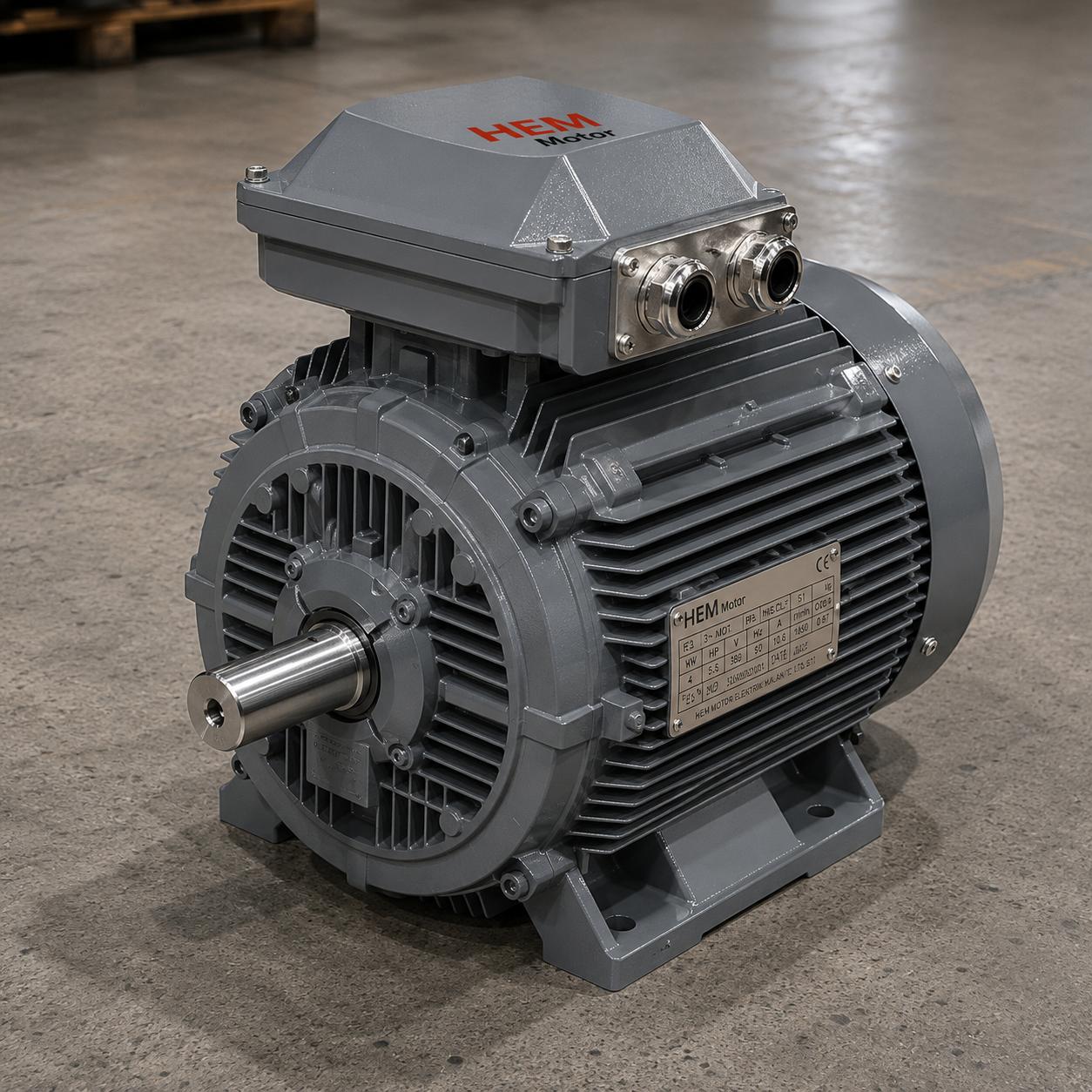
Why 690V? The Relationship Between Current, Loss and Cable
The current a motor draws depends on its power but is also inversely proportional to the supply voltage. A motor of the same kW draws lower current when the voltage rises. Supplying 690V instead of 400V roughly reduces the current by about 42 percent. This simple physical fact produces serious consequences at high power.
- Thinner cable: Cable cross section is selected according to current. When current drops a smaller cross section is sufficient; this means savings in copper cost and cable tray/conduit size.
- Lower line loss: The energy lost as heat in the cable increases with the square of the current. Reducing current significantly cuts line loss, especially on long runs.
- Smaller switchgear: Contactors, overloads and breakers are sized by current. Lower current means more compact and cost effective panel equipment.
- Reduced voltage drop: Voltage drop becomes a problem on long cable runs; lower current eases this drop and provides more stable voltage at the motor terminals.
At Which Power Ratings Does 690V Make Sense?
690V supply is not required for every motor. At small and medium power 400V is entirely sufficient and the infrastructure is already 400V. The advantage of 690V mainly appears at high power. It is typically preferred in plants dense with high kW motors, in large factories with long cable runs and in heavy industry sites such as mining. We cover the selection criteria in this high power class together with pole and supply planning in detail in our article on 2/4 pole selection and supply planning for 90-132 kW high power motors.
Motor Suitability for 690V: Nameplate and Connection
A motor's ability to run on 690V relates to its winding design and terminal connection. Most high power motors carry two voltage values on the nameplate; for example 400V delta / 690V star connection. This means the motor runs connected in delta on a 400V grid and in star on a 690V grid.
- Nameplate check: Before ordering, make sure the voltage/connection combination (Δ/Y) on the motor nameplate suits your grid.
- Star-delta starting limitation: Classic star-delta starting cannot be applied on a motor connected in 690V star, because operation is already in star. In this case a soft starter or direct on line starting is preferred. Our article on starting AC asynchronous motors: star-delta or soft starter helps you decide.
- Terminal bridging: The links in the terminal box must be placed according to the correct voltage; wrong bridging burns the motor instantly. We explain this with its basic logic in our article on electric motor terminal connection: 230/400V star and delta bridging; the same principle applies to 690V.
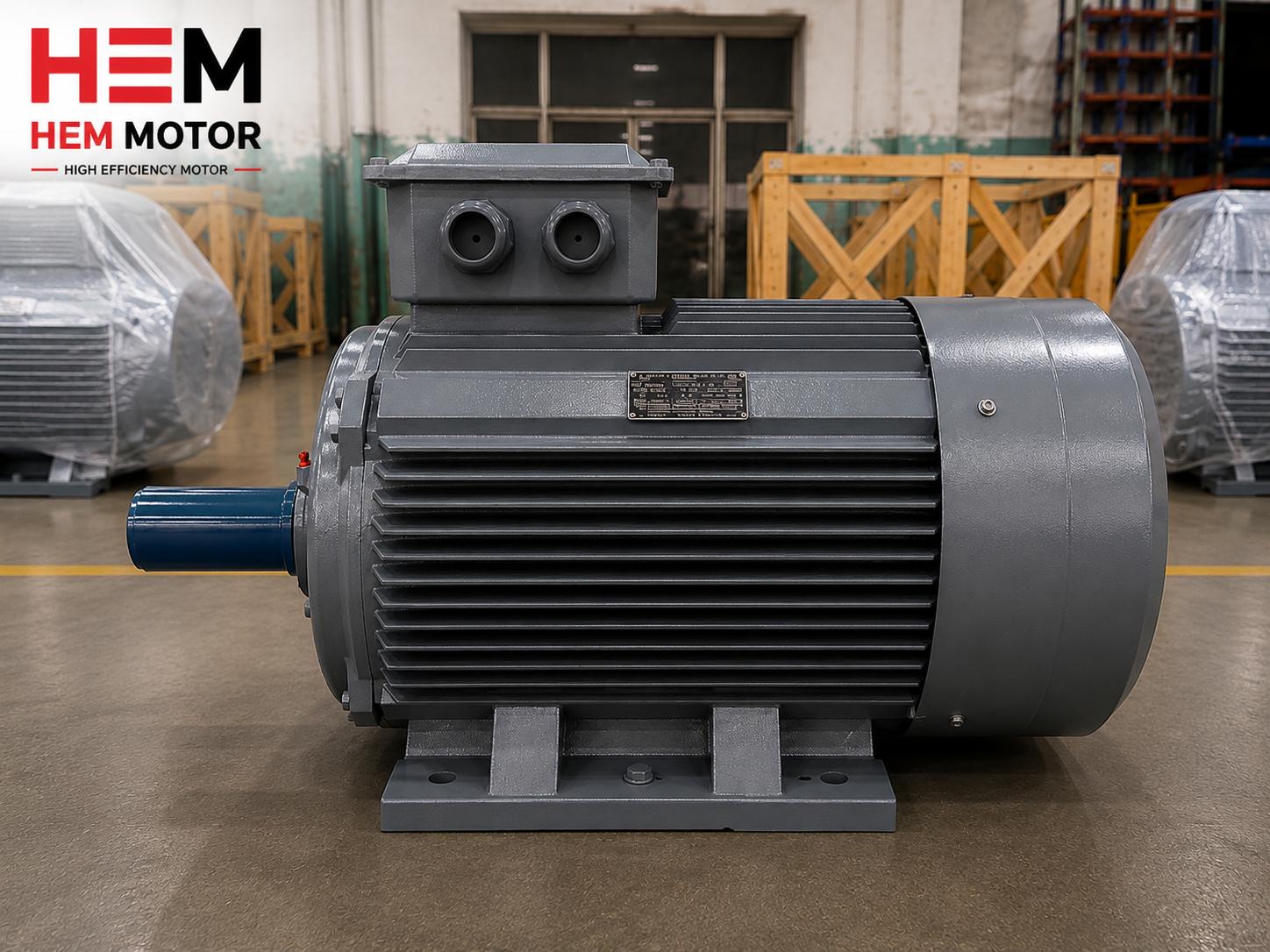
Combining IE4 Efficiency with the 690V Advantage
IE4 super premium motors lower the electricity bill by doing the same work with fewer losses. 690V supply, in turn, lowers losses on the distribution side and the investment cost. When the two are combined, both the motor and the supply line become efficient in a large power plant. If you wonder where the IE4 efficiency advantage comes from, our related technical content explaining how losses are reduced clarifies the energy dimension of motor selection.
Correct Sizing Is Essential at 690V Too
Switching to 690V is no excuse to choose a larger motor than needed. The motor must be sized according to the real load profile; an oversized motor is both expensive and suffers reduced efficiency and power factor at low load. At high power, correct sizing, pole selection and supply lead time must be planned together. We explain this planning step by step in our article on supplying high power electric motors above 90 kW: lead time, shipping and commissioning plan.
Stock and Supply: Does a 690V Motor Wait Ready?
High power and special voltage combinations are where stock management gets harder. Many large 400V/690V dual voltage motors are standard production and can be supplied from stock; however, motors wound exclusively for 690V or in very high power ratings may carry a lead time. Therefore:
- State the voltage and connection type clearly when ordering: Specify upfront whether you want 400Δ/690Y or a different combination.
- Ask the lead time: At high power, confirm the stock and production time in advance to protect your project schedule.
- Set up a backup plan: On critical lines, define a spare motor or fast replacement strategy to avoid commissioning delays.
At HEM Motor we supply high power IE4 motors with appropriate voltage and connection options and plan according to your project schedule. For current electric motor prices, stock status and 690V suitability you can contact us.
400V vs 690V Cost Comparison: Where to Look?
When deciding between 400V and 690V supply in a plant, you must look not only at the motor itself but at the entire distribution chain. Because the voltage choice affects a far broader cost item than the motor price. The following items form the framework for comparing the two options fairly:
- Cable copper cost: Lower current at 690V means thinner cable. On long runs and in large plants feeding many motors, this provides serious copper savings; cable is one of the invisible but large investment items of an industrial plant.
- Panel and switchgear: Because contactors, overload relays, breakers and fuses are selected by current, lower current means smaller and more cost effective panel equipment. The panel volume also shrinks.
- Line loss (operating cost): The energy lost as heat in the cable increases with the square of the current. Reducing current by about 42 percent theoretically cuts line loss by more than half; this is an operating saving that lasts for years.
- Transformer and grid compatibility: If a 690V distribution infrastructure already exists in the plant, 690V is the natural choice; if not, the cost of a separate 690V bus must be accounted for. Most large industrial plants keep both voltages available.
Commissioning and Testing: Points to Watch at 690V
690V supply requires extra care at the commissioning stage. High voltage demands diligence for both safety and correct connection. The commissioning steps we follow in the field are:
- Insulation resistance measurement: Before the motor is energized, the winding insulation resistance must be measured; a motor that has absorbed moisture during transport and storage can cause problems at high voltage.
- Bridging verification: It must be double checked that the terminal links are placed correctly for the 690V star configuration; if this step is skipped the motor can be damaged on first energization.
- Phase sequence and rotation direction: At high power, wrong rotation direction can damage the connected machine; a brief check is made on first run.
- Current measurement: The current drawn at first load is compared with the nameplate value; current higher than expected points to a bridging or load problem.
On high power motors, planning the whole of transport, lifting and commissioning is a discipline of its own; our related high power supply content, which addresses this process together with project lead time and logistics, guides you to avoid surprises in the field.
Common Mistakes
- Ordering without confirming voltage from the nameplate: The assumption that "a large motor is 690V anyway" is wrong; each motor's nameplate may carry a different voltage/connection combination.
- Wrong bridging: Connecting to 690V with 400V delta bridging, or vice versa, burns the motor instantly.
- Insisting on classic star-delta: Looking for star-delta starting on a motor running in 690V star is a waste of time; a soft starter or direct on line starting is the right path.
- Choosing cable cross section by old habit: Using a 400V cross section when thinner cable suffices at 690V is unnecessary cost; conversely, an inadequate cross section overheats.
In short, 690V supply is a real cost and efficiency advantage at high power; however, the motor must suit this voltage, with correct bridging and a suitable starting method. A well planned 690V project lowers both the installation investment and the operating cost. When deciding, evaluating the whole picture, including cable, panel, line loss and grid infrastructure, rather than the motor alone, gives the most correct and economical result.
690V Decision Checklist for a High Power Project
To put the 690V supply decision on a solid footing in a high power IE4 motor project, answering the following questions before going to the field makes your job easier. This checklist covers both the technical and the supply side and prevents surprise costs:
- What does your grid infrastructure offer? Does the plant already have a 690V distribution bus, or only 400V? If the infrastructure is absent, account for the installation cost of a 690V bus.
- How long are the cable runs? On long runs the thin cable and low line loss advantage of 690V becomes pronounced; in a short plant with a few motors the advantage may stay limited.
- Is the motor nameplate suitable? Confirm before ordering that your chosen motor carries 400Δ/690Y or the voltage/connection combination you want.
- Has the starting method been decided? On a 690V star connection plan a soft starter or direct on line starting; classic star-delta cannot be applied.
- Is the panel equipment selected for low current? By sizing contactors, overloads and breakers for the low current at 690V, you save both cost and space.
- Have lead time and stock been confirmed? At high power, delivery time affects the project schedule; clarify stock and production time in advance.
- Is there a spare/replacement plan? On critical lines, define a spare motor strategy to avoid commissioning delays.
Once you clarify these seven questions, you see soundly whether switching to 690V is truly advantageous for your plant. Basing the decision on data gives the most correct result on both the investment and the operating side.
Frequently Asked Questions
Can 690V supply be used on any motor?
No. The motor's winding and nameplate must suit 690V. Many high power motors are 400V delta / 690V star dual voltage; these run on 690V with the correct bridging. On small power motors 690V is usually not meaningful and the infrastructure is 400V.
How much cable saving does switching to 690V provide?
At the same power, 690V supply reduces current by about 42 percent. Since cable cross section is selected by current, you obtain thinner cable, smaller panel equipment and lower line loss, especially on long runs. The advantage is pronounced at high power and over long distances.
How do you start a motor connected in 690V star?
In a 690V star connection the motor already runs in star, so classic star-delta starting cannot be applied. For a soft start at high power, a soft starter or, where suitable, direct on line starting is preferred. The starting method should be chosen according to your load and grid capacity.