English
 Türkçe

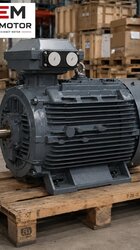
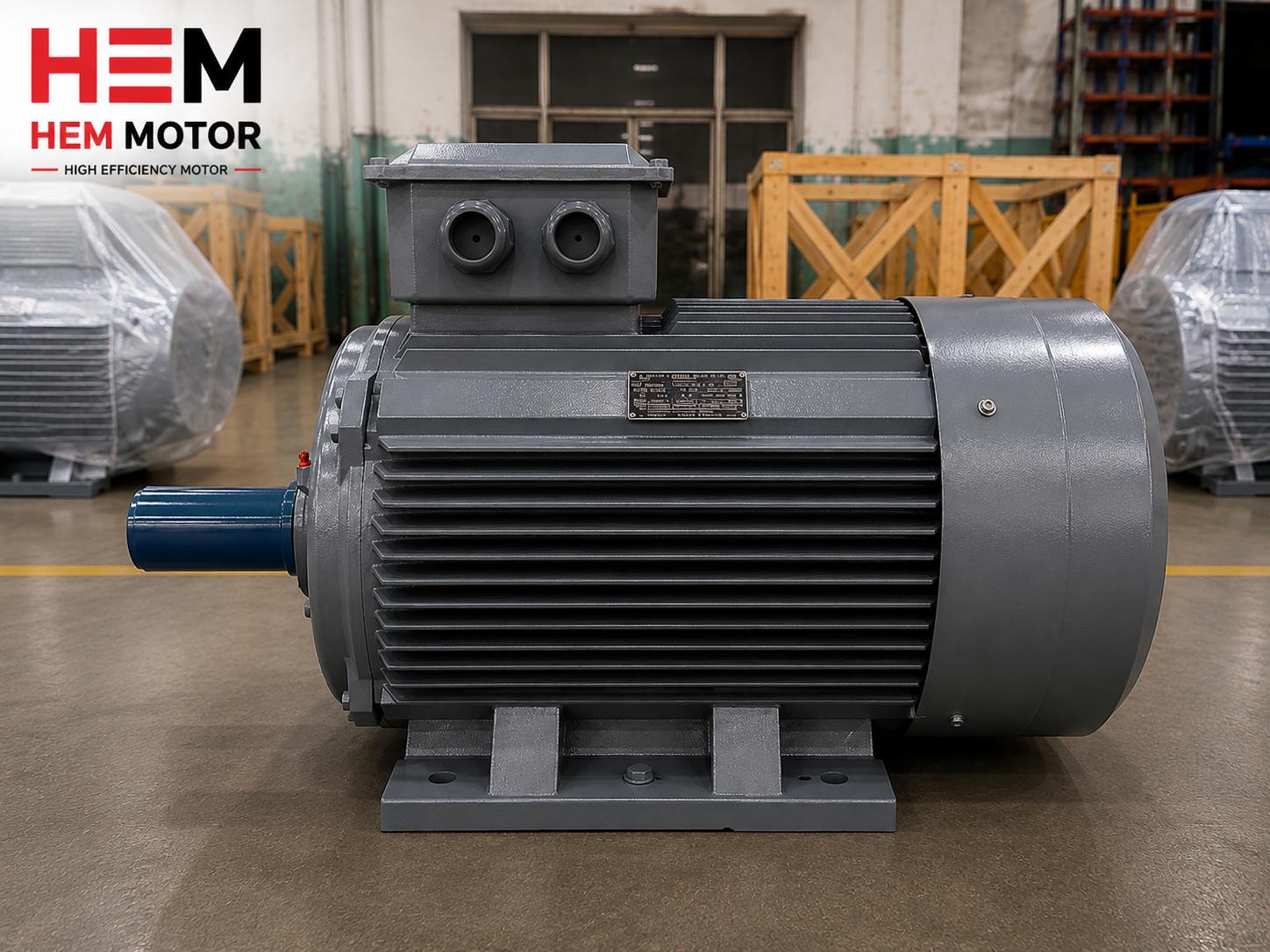

When buying an electric motor, most buyers focus their attention on power and efficiency class. Yet the real factor that determines an IE3 motor's true lifespan is often the two items that remain least visible on the nameplate: winding quality and insulation class. Two motors may have the same kilowatt value and the same efficiency class, yet one may burn out in five years while the other runs trouble-free for fifteen. The source of this difference is almost always the winding and insulation.
Insulation class defines the maximum temperature the motor's windings can withstand. The two most common classes in industry are Class F (about 155°C) and Class H (about 180°C). The winding material, in turn, directly affects the motor's electrical and thermal behavior; the difference between a 100% copper winding and an aluminum or copper-clad-aluminum winding, while invisible on the first invoice, reveals itself clearly at the first failure.
In this article we examine what insulation classes mean, the effect of winding quality on motor life, and how you can distinguish quality at the quotation stage. Our aim is to enable the buyer to understand why a motor that looks "cheap" is cheap, and to see the real value through the right questions.
What Is Insulation Class and Why Does It Matter?
In electric motors, the winding wires are coated with a thin layer of insulation. This layer prevents electrical leakage between turns and between the winding and the frame. When the motor runs, heat builds up in the windings; if this heat exceeds the durability limit of the insulation material, the insulation degrades over time and eventually a short circuit occurs.
Insulation classes are expressed by a letter code, and each letter corresponds to a specific maximum operating temperature:
- Class F: Withstands a maximum winding temperature of about 155°C. It is the most widely used class in industry.
- Class H: Withstands up to about 180°C. It is preferred for heavy-duty applications where higher temperatures are expected.
An important point is the relationship between insulation class and temperature rise. A motor can have Class F insulation but be designed with a Class B temperature rise (about 80 K). In this case, a thermal reserve is left between the insulation's durability limit and the actual operating temperature. This reserve directly extends the motor's life.
The Thermal Reserve and Life Relationship
There is a rough rule for insulation life: every increase of about 10°C in winding temperature halves the insulation life. For this reason, a motor with Class F insulation but operating at a Class B temperature rise is many times longer-lived than a motor running at the edge. The thermal reserve keeps the motor safe on hot summer days or during short-term overloads.
Winding Material: Why Does Copper Make a Difference?
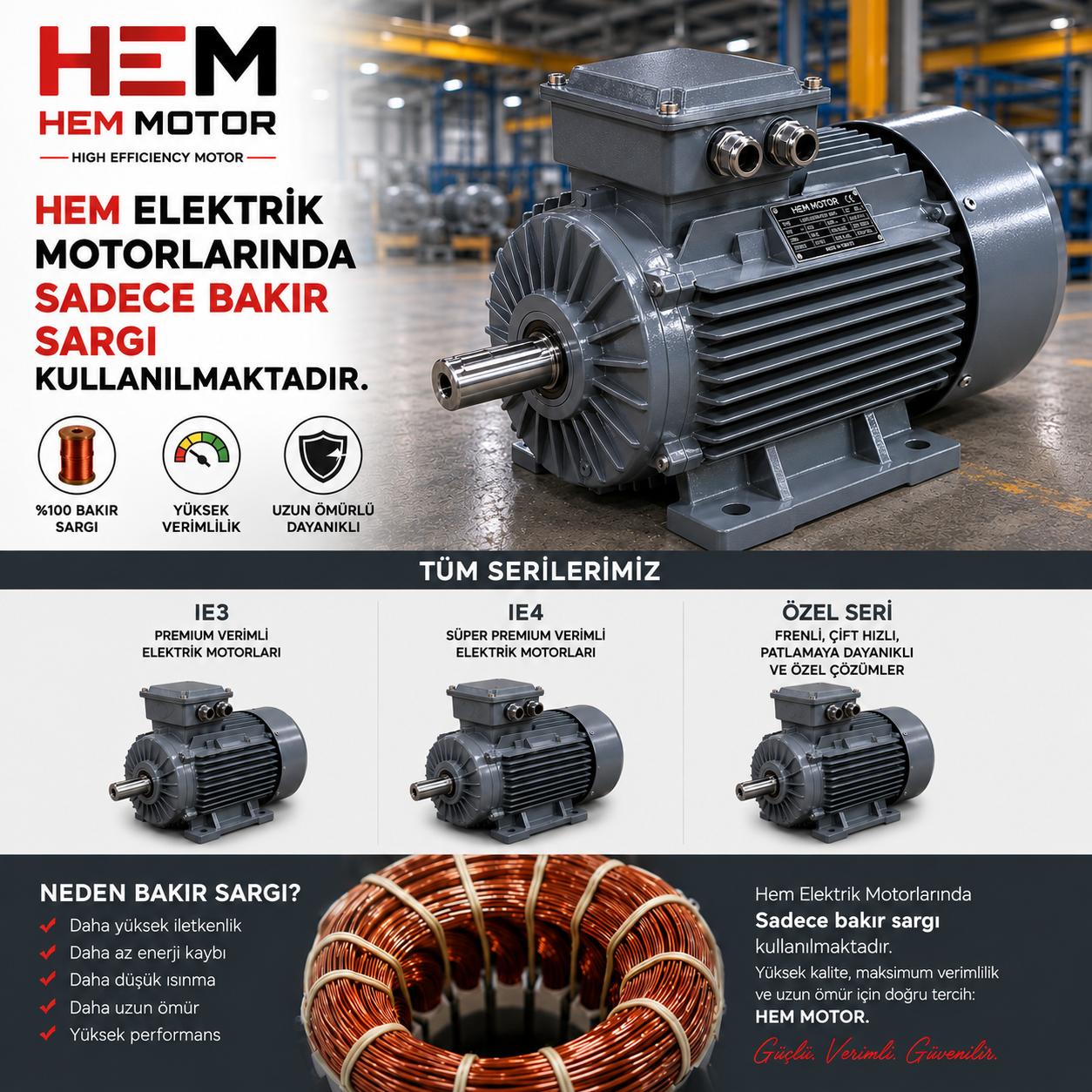
The choice of winding material affects both the motor's efficiency and its life. A 100% copper winding, having high electrical conductivity, runs with fewer losses and heats up less. A winding that heats up less applies less thermal stress to the insulation and, as a result, is longer-lived.
- Copper winding: High conductivity, low heating, long life. Its solderability and mechanical strength are high.
- Aluminum winding: Lower cost, but higher resistance and more heating. It requires a larger conductor cross-section for the same performance.
The saving made on winding copper lowers the motor's purchase price but comes back over the operating life as more energy loss and shorter life. This is the classic trap of "buying cheap and using it expensively."
How Do You Distinguish Quality at the Quotation Stage?
Two motors may look identical on the nameplate yet be very different in reality. So asking the right questions at the quotation stage is the most practical way to distinguish quality. Here are the critical questions you should ask:
- Is the winding 100% copper, or aluminum or copper-clad aluminum?
- Is the insulation class F or H? At which class is the temperature rise designed?
- Are the insulation class and thermal reserve sufficient for the motor's operating environment?
- Are the bearing type and protection class (IP) suitable for the application?
The answers to these questions reveal why a motor that looks "cheap" is cheap. Winding and insulation are items that cannot be seen but determine the motor's fate. To evaluate all the factors affecting price in a holistic way, our content on factors affecting electric motor prices offers a comprehensive comparison framework.
Choosing the Right Class by Application
Not every application requires Class H insulation; likewise, not every motor can settle for Class F. The correct choice depends on the operating environment's temperature, the load character and the continuity expectation.
Heavy-Duty and High-Temperature Environments
Mining, quarries, foundries and lines running under continuous high load demand higher thermal durability. In such environments, Class H insulation or Class F with a strong thermal reserve is preferred. In dusty and aggressive sites, the corrosion durability of the motor frame is also critical; we detailed the subject in our content on the corrosion and open-field durability of cast iron motors.
Standard Industrial Applications
In standard applications such as pumps, fans and conveyors, Class F insulation designed with a Class B temperature rise often offers the ideal balance. This combination provides long life at a reasonable cost. To examine the effect of the motor's efficiency class on its application areas, you can look at our content on IE3 motor application areas and sectors.
A motor with correctly chosen winding quality and insulation class may not start a few steps ahead on the first invoice, but it pulls clearly ahead over its lifetime. To determine the most suitable winding and insulation combination for your application, you can contact the HEM Motor expert team.
The Relationship Between Temperature Rise and Ambient Conditions
The real life of insulation depends not only on its class but also on the ambient conditions the motor is in. Standards assume that motors are designed for a 40°C ambient temperature and 1000 meters altitude. However, in the field, conditions are often beyond these assumptions. In a hotter environment or at a higher altitude, the motor's cooling capacity falls and the winding heats up more.
In this case there are two options: either the motor power is reassessed (derating) or a higher insulation class is selected. To correctly manage the effect of ambient conditions on insulation life, the following should be considered:
- High ambient temperature: Every degree above 40°C reduces the insulation's thermal reserve.
- High altitude: Thin air weakens cooling; winding temperature rises.
- Insufficient ventilation: In enclosed and cramped spaces, the motor can suffocate in its own heat.
In these conditions, choosing the correct insulation class is the key to preserving the motor's expected life. In hot and harsh environments, Class H insulation or Class F with a strong thermal reserve is a safe choice. A motor unsuited to the ambient conditions burns out prematurely in the field, even if it is at the correct power on paper.
Winding Impregnation and Varnish Quality
As important as insulation class and copper quantity, yet often overlooked, is the winding's impregnation. After the windings are completed, the winding is coated by dipping it in insulating varnish or by a trickle method. This process mechanically locks the turns together, keeps moisture out and improves heat conduction.
The advantages provided by quality impregnation are:
- Mechanical strength: Prevents the turns from rubbing against each other under vibration and wearing the insulation.
- Moisture resistance: Prevents moisture from penetrating the winding, extending life in high-humidity environments.
- Heat conduction: Allows the heat generated in the winding to conduct better to the frame, lowering temperature.
In a cheaply produced motor, impregnation may be single-coat or insufficient; this is a saving that is invisible but directly shortens life. In quality production, methods such as double dip or vacuum-pressure impregnation (VPI) are preferred.
Thermal Protection Elements and Insulation Life
No matter how high the insulation quality, if the motor is overloaded and heats up uncontrollably, its life shortens. For this reason, thermal protection elements placed in the motor protect the insulation in practice. These elements monitor winding temperature and stop the motor or give a warning before reaching a dangerous level.
- PTC thermistor: Its resistance rises sharply at a certain temperature; triggers the protection relay.
- PT100 sensor: Measures temperature continuously and precisely; can be connected to monitoring systems.
- Thermal klixon: Provides simple and economical over-temperature protection.
Especially in heavy-duty and continuously running applications, thermal protection elements preserve the motor's real life by preventing premature insulation degradation. To examine the relationship between efficiency class and cooling, our content on cooling and fan design in IE4 motors is a useful resource.
The Cost of Wrong Insulation Selection
The saving made on winding and insulation looks attractive on the first invoice but multiplies the cost at the first failure. A motor burning out is not limited to the cost of the motor alone; the real cost is the production loss experienced when the motor stops. On a continuously running line, an unexpected motor failure can mean a lost shift, a delayed delivery and even a contract penalty.
For this reason, insulation and winding quality are a motor's least visible but most critical features. The correct class and a 100% copper winding let a motor last fifteen years instead of five. This difference creates a very large advantage over the lifetime, both in direct cost and in continuity. To see the effect of insulation on total cost of ownership holistically, our content on total cost of ownership in high-efficiency motors offers a valuable framework.
Frequently Asked Questions
What is the basic difference between Class F and Class H insulation?
The basic difference is the maximum temperature the insulation can withstand. Class F withstands about 155°C and Class H about 180°C. Class H offers a wider thermal reserve for heavy-duty applications where higher temperatures are expected. In standard applications, Class F operating at a Class B temperature rise is usually sufficient.
How does the difference between copper and aluminum winding affect life?
A 100% copper winding has higher conductivity, which means less heating. A winding that heats up less applies less thermal stress to the insulation and extends the motor's life. Aluminum winding lowers the initial cost but carries the risk of more heating and shorter life.
How do I verify winding and insulation quality in a quote?
Ask the supplier clearly whether the winding is 100% copper, the insulation class, and at which temperature rise it is designed. These three pieces of information largely reveal the motor's real quality and expected life. Clear, documentable answers are a sign of a quality supply.