English
 Türkçe



To understand whether a water pumping system is truly efficient, looking at the kW value on the motor nameplate is often misleading. A single kW figure on its own does not tell you how much water that motor moves, or how much energy it spends moving that water. The same 15 kW motor might pump 80 m³ per hour in one system while pumping only 40 m³ with the same energy in another. This is where the only correct measure comes into play: the energy spent per cubic metre of water moved, that is, the specific energy (kWh/m³) metric. In this guide we cover, step by step, how specific energy is calculated, which components make it up, and how motor efficiency and drive control are used to lower the unit cost of water.
Our goal is not merely to give you a formula, but to reduce your pump station's real performance to a measurable number and show you how to lower that number through the correct motor and pump selection. A correctly calculated specific energy value places both your energy bill and your supply decisions on a solid technical foundation.
What Is Specific Energy (kWh/m³)?
Specific energy is the electrical energy a pumping system spends to move one cubic metre of water to the desired point, and its unit is kilowatt-hours per cubic metre (kWh/m³). This value is the most honest indicator of a system's energy efficiency because it reduces both the energy spent and the work done (the volume of water moved) to a single ratio. The basic definition is:
Specific Energy (kWh/m³) = Total Energy Spent (kWh) / Total Water Volume Moved (m³)
For example, if a pump station consumed 12,000 kWh of electricity in one month and pumped 30,000 m³ of water in that time, its specific energy is 12,000 / 30,000 = 0.40 kWh/m³. This number tells you that the energy cost of pumping each cubic metre of water in that system is 0.40 kWh. Multiplied by the unit electricity price it converts directly to the unit cost of water, allowing different pump stations, different pump models or different operating scenarios to be compared fairly.

Why Is a Single kW Figure Insufficient?
The power value on the motor nameplate shows only the instantaneous power the motor can draw; it does not show how efficiently that power converts into useful work. Comparing two systems by installed power alone is like comparing two cars by engine size while ignoring fuel consumption. The real cost is fuel per distance travelled; in pumping it is energy per water delivered.
- Instantaneous power misleads: A system pumping a lot of water at low pressure can draw high instantaneous power but still have low specific energy, meaning it is efficient.
- Workload is hidden: The kW value does not include the volume moved; the system pumping more water with the same power is more efficient.
- Comparison is unfair: Comparing two pumps operating at different flows by kW alone is meaningless in engineering terms.
- Cost link is broken: The unit cost of water can only be calculated through kWh/m³; kW cannot establish this link.
For this reason, in any serious water-supply or irrigation facility, efficiency tracking is always done through kWh/m³. This metric makes the real gain of equipment changes, speed control or pump replacement measurable.
The Four Components That Determine Specific Energy
A system's specific energy depends not on a single factor but on the combined result of four core components that interact with one another. Understanding these components separately shows where to make improvements.
1. Head (Total Manometric Head)
Head is the total resistance, expressed in metres of water column, that must be overcome to move water from source to point of use. It is the sum of geometric height, friction losses and the required outlet pressure. Specific energy is directly proportional to head: if the head doubles, the energy spent to deliver the same flow also roughly doubles. This is why enlarging the pipe diameter to reduce friction losses often yields faster gains than replacing the motor.
2. Pump Efficiency
Pump efficiency shows how much of the mechanical energy from the motor shaft is transferred to the water as hydraulic energy. A well-selected centrifugal pump can reach 75-85% efficiency at its best efficiency point (BEP), while a wrongly selected or worn pump can drop to 45-50%. If the pump runs far from the peak of its efficiency curve, specific energy stays high no matter how efficient the motor is. Therefore, correct pump selection is the precondition for low specific energy.
3. Motor Efficiency
Motor efficiency shows how much of the electrical energy drawn from the grid is transferred to the shaft as mechanical power. An IE3 class motor typically reaches 90-93%, while IE4 and IE5 motor classes reach 94-97% efficiency. Although the difference seems small, in a pump running thousands of hours per year these few points directly reflect into specific energy and create significant cumulative savings.
4. System Losses
Throttling losses at valves, resistance at check valves, badly sized pipes and unnecessary elbows quietly raise specific energy. Adjusting flow by throttling a valve is the most inefficient method, spending energy as heat, and markedly increases specific energy. These losses are usually overlooked but can account for a large share in total.
The Effect of a High-Efficiency Motor (IE4/IE5) on Specific Energy
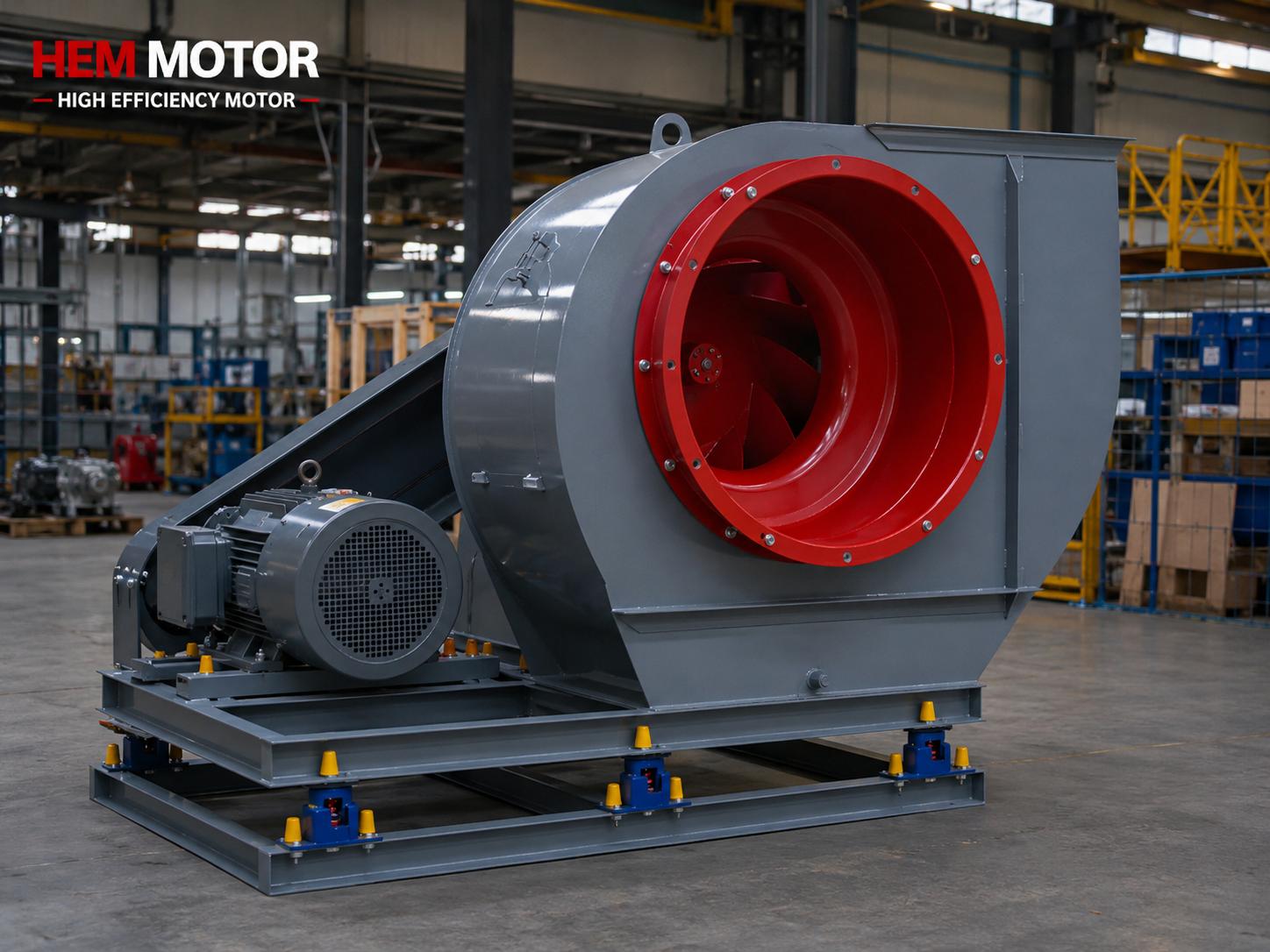
A high-efficiency motor lowers specific energy directly by reducing motor-related loss. As a motor's efficiency class rises, it draws less electricity from the grid to do the same mechanical work. In moving from IE3 to IE5, motor loss can roughly halve. This gain is decisive in terms of lifetime cost, especially in continuously running water-supply pumps.
Consider this example: suppose a system running with a 91% efficient IE3 motor has a specific energy of 0.42 kWh/m³. Keeping the pump and system the same and replacing only the motor with a 96% efficient IE5 motor, the motor loss decreases and specific energy falls to about 0.42 × (0.91 / 0.96) ≈ 0.398 kWh/m³. This seemingly small difference, in a pump running 6000 hours a year and pumping 50 m³ per hour, means 300,000 m³ of water; the 0.022 kWh/m³ drop in specific energy corresponds to about 6,600 kWh of savings per year. The motor cost pays for itself within a few seasons.
Lowering Specific Energy with a VFD and the Affinity Law
In systems with variable demand, the most powerful way to lower specific energy is to adjust motor speed to demand with a frequency converter (VFD). This is where the affinity law comes into play. According to the affinity law, flow is directly proportional to speed, head changes with the square of speed, and power changes with the cube of speed. So when you drop the speed by 20%, flow decreases by 20% but power decreases by about 49%. This cubic relationship means enormous energy savings under partial-load conditions.
- Flow ∝ speed: When speed drops to 80%, flow also drops to 80%.
- Head ∝ speed²: When speed drops to 80%, head drops to about 64%.
- Power ∝ speed³: When speed drops to 80%, power drops to about 51%.
While throttling a valve to reduce flow wastes energy, dropping the speed with a VFD genuinely reduces the energy spent, thereby markedly pulling down specific energy at partial load. In constant-pressure network applications a PID controller continuously adjusts the speed to keep pressure constant, ensuring the system runs at the lowest possible specific energy at all times.
An Important Caveat: Static Head
The full cubic gain of the affinity law applies only in friction-dominated systems. If the system has a large static height (for example, pumping water to an elevated tank), dropping the speed too far moves the pump away from its efficiency curve and the gain decreases. For this reason, in VFD systems the minimum speed should be limited so as to overcome the static head. Correct pump selection plays a critical role here too.
Correct Pump Selection: The Precondition for the Gain
No matter how efficient a motor you fit, no matter how advanced a VFD you use, if the pump is wrongly selected, specific energy stays high. Correct pump selection means the system's real flow-head point coincides with the pump's best efficiency point (BEP). An oversized pump runs constantly throttled and converts energy to heat in the valve; an undersized pump cannot deliver the required flow and is overstressed.
Therefore, when designing a pumping system, the real operating point is determined first, then the pump giving the highest efficiency at that point is selected, and finally it is matched with a motor of the correct efficiency class to drive it. When this order is broken, even the most expensive motor does not guarantee low specific energy.
Worked Example: Comparing Two Scenarios
Suppose an irrigation facility needs to pump 60 m³ of water per hour and the total head is 45 m. The hydraulic power requirement is approximately P = (60 × 45 × 1000 × 9.81) / 3,600,000 ≈ 7.36 kW. This is the net power that must be transferred to the water.
In Scenario A, let pump efficiency be 65% and motor efficiency 91% (IE3). The power drawn from the grid is 7.36 / (0.65 × 0.91) ≈ 12.44 kW. Specific energy comes out as 12.44 kW / 60 m³/h ≈ 0.207 kWh/m³. In Scenario B, with correct pump selection raising pump efficiency to 78% and making the motor 96% efficient (IE5), the drawn power is 7.36 / (0.78 × 0.96) ≈ 9.83 kW, and specific energy is 9.83 / 60 ≈ 0.164 kWh/m³. The difference is 0.043 kWh per cubic metre, that is, a unit water cost about 21% lower. In a facility pumping 250,000 m³ per year, this means tens of thousands of kilowatt-hours of savings.
Stock, Supply and the Quote Process
After determining the correct components that lower specific energy, it is critical to communicate these targets at the supply stage with a clear technical specification. Planning a high-efficiency-class motor and a correctly sized pump before the project eliminates waiting time during seasonal peaks. A standard IE4 or IE5 motor held in stock is supplied much faster than a model requiring custom manufacturing. For up-to-date electric motor prices and stock availability, the healthiest approach is to clarify your flow, head and efficiency-class information and request a quote.
For a broader evaluation, you may also review high efficiency electric motor options and three-phase electric motor models suited to different applications. A correctly calculated specific energy target both speeds up the quotation process and prevents the high operating costs caused by wrong equipment selection from the start.
Frequently Asked Questions
What is the difference between specific energy and motor power?
Motor power (kW) shows only the instantaneous power the motor can draw; it does not tell you how much water is moved. Specific energy (kWh/m³) divides the energy spent by the volume of water moved and gives the unit cost of water directly. An efficiency comparison can only be made fairly through specific energy.
Does fitting a VFD lower specific energy in every pump system?
No. A VFD provides the greatest gain in variable-demand and friction-dominated systems, because by the affinity law power decreases with the cube of speed. However, in systems with a large static height or running continuously at fixed flow, the gain is limited and the minimum speed must be set carefully.
Is a high-efficiency motor sufficient on its own?
No. Motor efficiency is only one of the four components that lower specific energy. If there is a wrongly selected pump, high friction losses or valve throttling losses, even the most efficient motor does not guarantee low specific energy. The best result is achieved by using a correct pump, a high-efficiency motor and, where needed, a VFD together.