English
 Türkçe

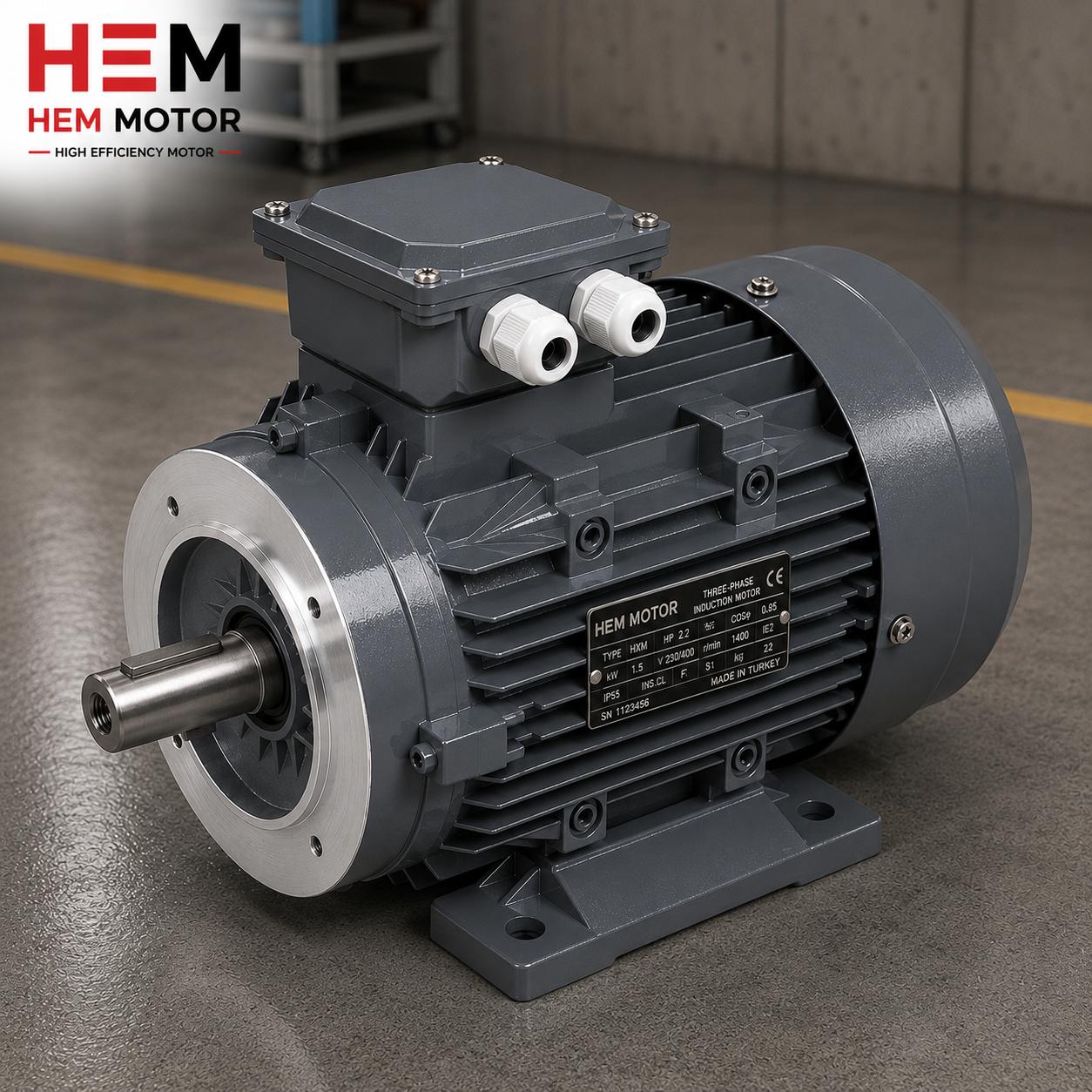

A facility runs dozens, sometimes hundreds, of electric motors at the same time, and a large share of them were bought when the plant was first built — old motors that fall well below today's efficiency classes. Replacing all of them at once is unrealistic for most operations, both in terms of budget and production continuity. This is exactly where the right approach is to build a phased fleet renewal plan: prioritize which motor is replaced first based on data, create a budget split into annual tranches, and calculate the payback period of each step in advance. In this guide we present a practical, engineering-based roadmap for gradually replacing old IE1/IE2 motors with efficient IE3 and IE4 motors (and IE5 where it fits). The goal is to capture the highest savings in the shortest time without stopping production and while keeping cash flow sustainable.
Why Phased Renewal? The Risks of One-Time Replacement
Replacing the entire motor fleet at once may look attractive at first, but this approach creates three serious problems. First, it compresses a large capital expenditure into a single budget period and strains cash flow. Second, replacing many motors simultaneously overloads planned downtime and installation labor, increasing the risk of production loss. Third, early replacement of motors that are still young, run few hours or have a small efficiency gap ties up capital in items that pay back slowly.
Phased fleet renewal solves all three problems. You start with the motors that pay back fastest, so the energy savings from the first tranche contribute to financing later tranches. By aligning renewal steps with maintenance shutdowns, you avoid extra production loss. And by ordering each motor according to its own payback profile, you raise the internal rate of return of the investment. In short, a phased plan is a lower-risk and more profitable strategy, both technically and financially.
Step 1: Motor Inventory and Efficiency Audit
The foundation of a sound renewal plan is a complete motor inventory. Before deciding to renew, you need to record every motor in the field one by one. This work reveals facts most operations see clearly for the first time: usually it is not known how many motors are in the plant, which ones run for how long and what their real loads are.
Data to Collect for Each Motor
- Nameplate data: Power (kW), speed (rpm), voltage, rated current, efficiency class (IE1/IE2/IE3/IE4), number of poles and frame size (IEC frame).
- Annual running hours: Separating continuously running motors (S1, 8000+ hours/year) from those running a few hours a day is the heart of prioritization.
- Load factor: What percentage of rated power the motor actually runs at. Oversized motors (running continuously at low load) both lose efficiency and offer an opportunity to downsize during renewal.
- Criticality: Does the motor stopping halt production entirely, or is there a spare? Critical motors are handled specially in the renewal plan.
- Age and maintenance history: How many times it has been rewound, failure frequency and bearing changes. An old motor rewound several times has both lost efficiency and approached failure risk.
This inventory is also the basis of an energy efficiency audit. With preparation for an energy efficiency audit and facility motor inventory, you can systematize your inventory and document each motor's efficiency class and estimated annual consumption. The more accurate the data, the more precise the prioritization.
Step 2: Prioritization — Which Motor Should Be Replaced First?
Once the inventory is complete, the motors must be ranked by payback speed. The core principle here is clear: energy savings are directly proportional to the motor's running hours and power. A motor with high annual consumption saves more kWh for the same efficiency gain and pays back the investment faster. A practical method for prioritization is to split motors into the following groups.
Replace First (Fast Payback)
- High-power (medium and large kW) motors.
- Continuous (S1) and multi-shift motors with high annual running hours.
- Old, low-efficiency motors (IE1 or below, rewound) — those with the largest efficiency gap.
- Drives running continuously under load such as pumps, fans and compressors; in these loads the efficient motor + frequency converter combination delivers extra gains.
Spare-as-you-go
For medium-priority motors, the sensible approach is to replace old warehouse spares with efficient new motors as they are used up. This turns a purchase you would make anyway into an opportunity to raise the efficiency class, with minimal extra budget burden.
Replace-on-failure
For low-hour, low-power, non-critical motors, early renewal is usually not worthwhile, because savings accumulate slowly given the low running hours. These motors are replaced directly with an efficient equivalent when they fail. This strategy protects cash flow by spending capital only when needed. You can find the logic of savings that start from a single motor and gradually spread across the whole fleet in scalable savings from a single motor to the fleet.
Step 3: Budget Phasing and Bulk Procurement
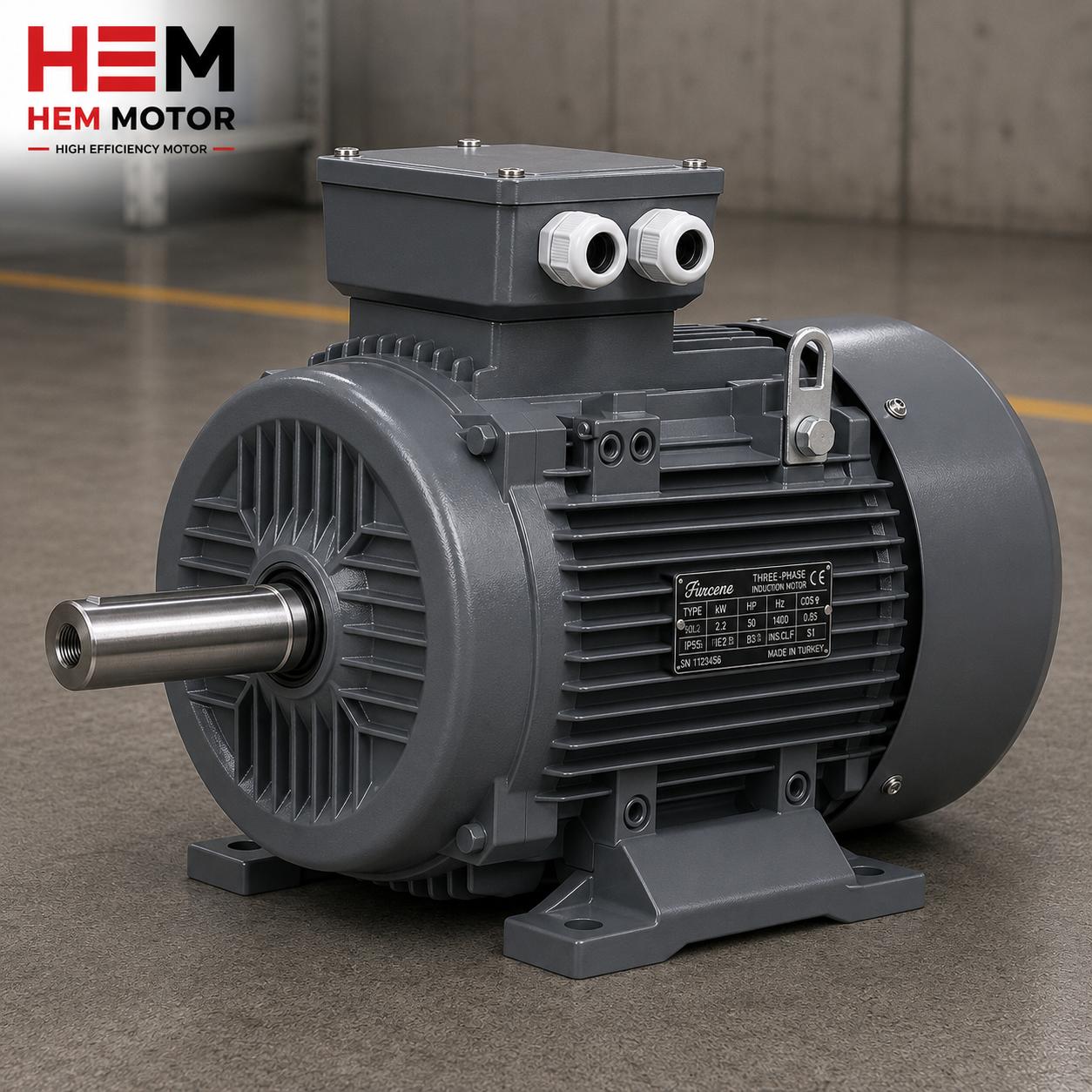
Once the priority list is ready, the renewal must be split into annual tranches. A well-structured budget plan targets the motor group that delivers the highest return each year and channels the savings captured in the early years into later tranches. This way the program largely becomes self-financing.
What to Watch in Budget Phasing
- Annual tranches: Spreading the program over 3-5 years eases cash flow and balances installation labor.
- Grouping by power and frame size: Buying motors of the same kW and frame size in bulk within the same tranche provides both procurement advantage and stock uniformity.
- Aligning with maintenance shutdowns: Match renewal dates to planned maintenance or annual general shutdowns to avoid extra production loss.
- Mechanical compatibility check: Make sure the new efficient motor's frame, foot, shaft and flange dimensions match the old one exactly; a compatible choice shortens installation time.
Bulk and planned procurement makes lead times predictable and simplifies stock management. For your renewal program you can plan around current electric motor prices with power, speed and frame options. You can find how to set up the replacement schedule and stock plan in multi-shift facilities in motor fleet management in three-shift facilities.
Step 4: Payback Analysis and Total Cost of Ownership
The business case for each renewal step rests on the payback period. The extra investment cost of the efficient motor is recovered within a certain time through the annual energy savings it provides. The shortness of this period depends on four variables: the motor's power, its annual running hours, the efficiency difference between the old and new motor, and the unit cost of electricity. For high-power motors running continuously, payback shortens dramatically; this is why these motors sit at the top of the list.
However, payback analysis should not be limited to energy savings alone. For the right decision, you need a total cost of ownership (TCO) view that covers all costs the motor will create over its life. When the purchase price, lifetime energy consumption, maintenance and failure-related downtime costs are evaluated together, the real superiority of the efficient motor emerges, because the largest part of a motor's life cost is energy, not purchase. You can review step by step how the TCO calculation is done in total cost of ownership calculation for high-efficiency motors. To see the real return of replacing an old motor with an efficient equivalent, you can also look at the examples in the payback period of replacing an old motor with IE4.
Risk Management: Critical Spares and Lead Time
The success of a phased renewal program depends on running it without disrupting production at all. For this, spares of critical motors must be kept in stock independently of the program. If a critical motor fails unexpectedly, waiting for the lead time can stop production; an efficient equivalent waiting in stock both closes the failure and renews that motor as a step of the program anyway.
- Keep at least one compatible spare for motors that completely stop production.
- Plan lead times in advance; bulk and pre-notified procurement reduces the risk of waiting at critical moments.
- Store spare motors under proper conditions (dry, moisture-free) and perform an insulation check before commissioning.
Measuring and Documenting Savings
The only way to prove the value of a renewal program is to measure the savings realized. Recording the energy consumption of the relevant line before and after replacement concretely shows that the plan worked and makes budget approval for later tranches easier. Measurement strengthens the business case to be presented to senior management and provides evidence in energy efficiency incentive and certification processes. Therefore do not just implement each renewal step; measure it before and after, record it and report it. A program with data is approved more easily the following year, and the fleet renewal cycle becomes self-sustaining.
Frequently Asked Questions
Is it more sensible to replace all motors in the fleet at once or to renew them in phases?
For most operations, phased renewal is more sensible. A one-time replacement compresses a large capital expenditure into a single period, overloads planned downtime and installation labor, and ties up capital in low-return motors renewed too early. In a phased plan you start with the motors that pay back fastest; the savings of the first tranche finance the later ones and the program largely pays for itself. A one-time replacement may only be considered in a small fleet that is old, has few motors and all run continuously.
Which motor should I renew first?
Priority is set by payback speed. Replace first the high-power motors with high annual running hours (continuous or multi-shift) and old/low-efficiency motors, because their efficiency gap is the largest and savings are the fastest. Drives running continuously under load such as pumps, fans and compressors should also be at the top of the list. Low-hour, low-power and non-critical motors are better replaced with an efficient equivalent when they fail.
What determines the payback period in a renewal program?
Four factors determine the payback period: the motor's power, its annual running hours, the efficiency difference between the old and new motor, and the unit cost of electricity. The higher these variables, the shorter the payback; this is why high-power motors running continuously pay back fastest. Still, the best practice is to base the decision not only on energy savings but on the total cost of ownership (TCO) covering purchase, energy, maintenance and downtime costs.