English
 Türkçe


A data center is essentially a massive heat generator, packed with servers, network equipment and storage systems that run around the clock. Keeping this equipment within its safe temperature range is one of the most critical engineering challenges any facility faces. Because almost all of the electricity consumed by servers is converted into heat, the cooling infrastructure that removes this heat also draws a significant amount of energy. This is precisely where the efficiency of the electric motors driving the cooling system directly shapes the facility's total energy bill and its sustainability goals.
Data center operators rely on a ratio called PUE (Power Usage Effectiveness) to measure how efficiently a facility uses energy. PUE is calculated by dividing the total energy entering the facility by the energy that actually reaches the IT equipment. The closer this ratio is to 1.0, the more efficient the facility, because nearly every watt of energy consumed is going to the servers doing real work. Since cooling systems represent the largest share of non-IT energy consumption, improving the efficiency of the motors used in cooling is one of the most effective ways to lower PUE.
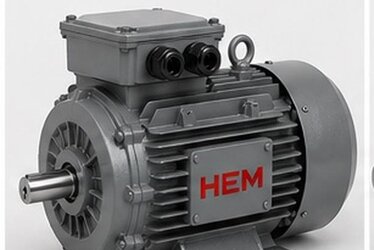
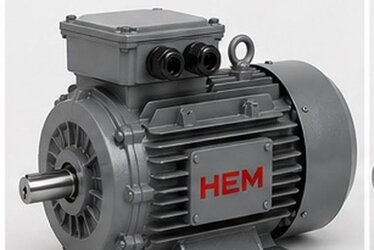
At HEM Motor, we manufacture the high-efficiency, durable electric motors that data centers need for their CRAC, CRAH, chiller, pump and cooling tower applications, all suitable for non-stop duty. Our product range, spanning IE3 Premium, IE4 Super Premium and up to IE5 high-efficiency classes, delivers meaningful energy savings in cooling when paired with variable frequency drives. In this article we will examine the building blocks of data center cooling, the impact of motor efficiency on PUE, and the advantages of selecting the right motor from a technical perspective.
Core Components of Data Center Cooling
The cooling architecture of a modern data center is an interconnected chain that picks up heat at its source and carries it to the outside environment. An electric motor works at every link of this chain, and the efficiency of each one is part of the overall picture.
CRAC and CRAH Units
CRAC (Computer Room Air Conditioner) units provide direct-expansion cooling with a built-in compressor, while CRAH (Computer Room Air Handler) units use chilled water from a central chiller to cool the air. Both units feature fans that circulate large volumes of air. These fans direct airflow from cold aisles to hot aisles and balance the temperature in front of the servers. Considering that these fan motors run 24 hours a day, 7 days a week, even a small improvement in their efficiency class translates into considerable energy savings on an annual basis.
Chillers and Chilled Water Pumps
Chiller systems are the heart of the cooling cycle. High-flow circulation pumps are used to deliver chilled water to the CRAH units. The motors driving these pumps continuously expend power to overcome the hydraulic resistance of the system. The efficiency of pump motors and their ability to run at variable speed via a variable frequency drive carry significant savings potential under partial-load conditions. HEM Motor offers IE3 and IE4 motors optimized for pump applications across a broad power range from 0.55 kW to 355 kW.
Cooling Towers
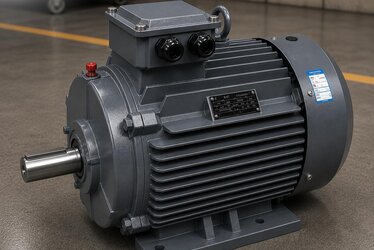
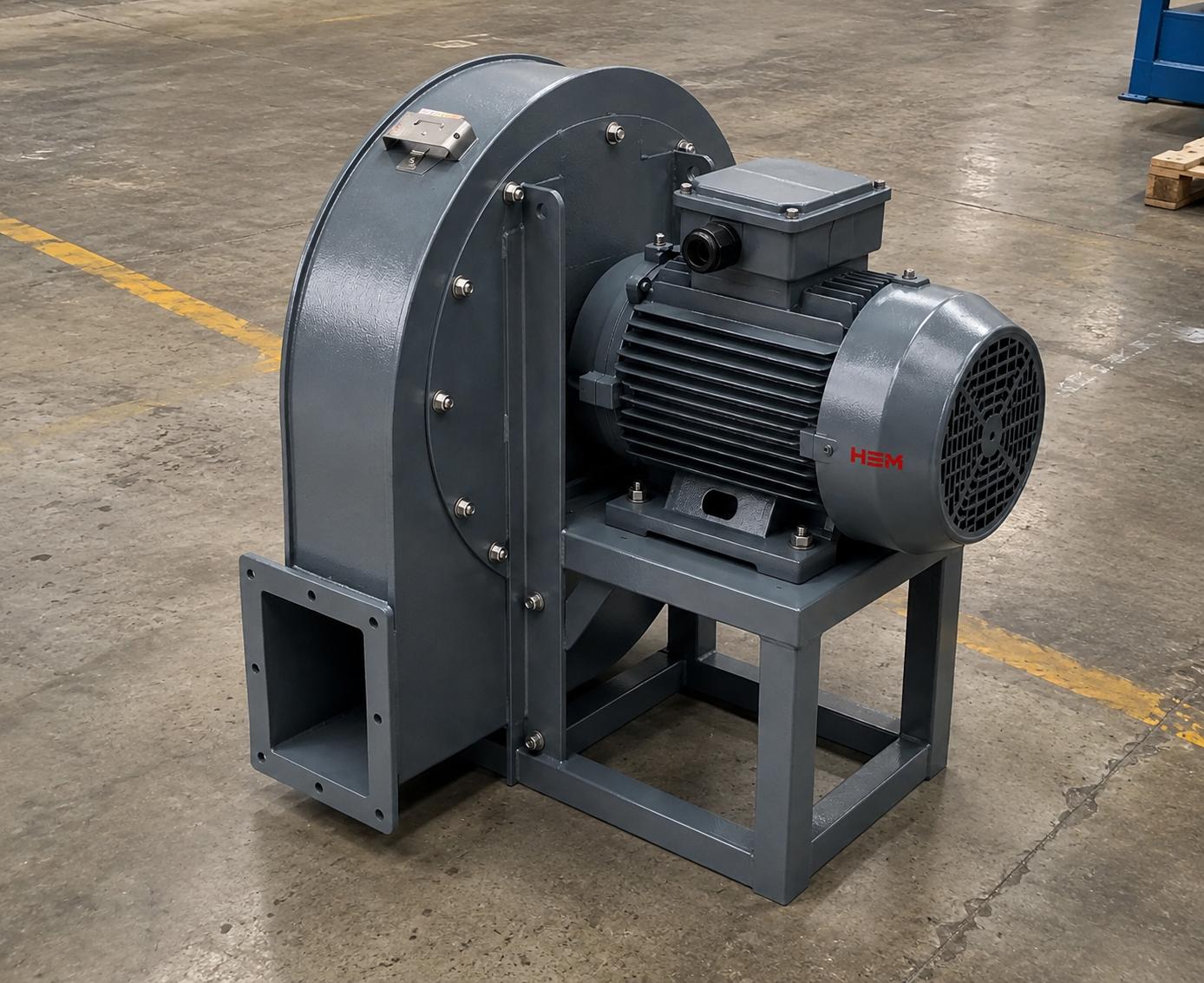
In water-cooled chiller systems, the heat from the condenser is rejected to the atmosphere through a cooling tower. Cooling tower fans draw a large volume of air through the tower, allowing the water to cool through evaporation. Because these fans typically operate in an open, humid and corrosive environment, the motors' IP55 protection class and rugged body construction are critically important. For cooling tower fan motors, our cast iron body motors with Class F insulation and S1 continuous duty rating offer long-lasting and reliable operation.
For detailed information on selecting cooling tower and chiller fan motors and their IP protection classes, you can review our article on cooling tower and chiller fan motors.
What Is PUE and Why Does Motor Efficiency Matter?
PUE is the most common indicator that summarizes the energy efficiency of a data center. Its calculation is simple: it is the ratio of the total electrical energy entering the facility to the energy that reaches only the IT load — servers, storage and network equipment. The theoretical perfect value is 1.0, meaning all energy goes to the IT equipment. In reality, however, PUE is above 1.0 because of cooling, lighting, uninterruptible power supplies and distribution losses.
Cooling systems make up the largest slice of non-IT consumption. For this reason, improving the efficiency of the fan, pump and tower motors used in cooling directly improves PUE. Replacing an old IE1 or IE2 class motor with an IE4 Super Premium motor means doing the same job with less electricity. When this difference is multiplied by the thousands of operating hours per year in a 24/7 data center, it produces a noticeable reduction in both the energy bill and the carbon footprint.
- Lower operating cost: High-efficiency motors deliver the same cooling capacity with less electricity.
- Better PUE: As cooling energy decreases, the ratio of total energy to IT load moves closer to 1.0.
- Less heat loss: Efficient motors reduce the share of losses turning into heat, which indirectly eases the cooling load.
- Sustainability: A lower PUE supports corporate carbon-neutral and green data center goals.
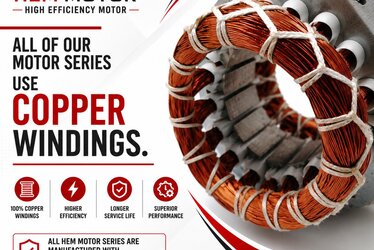
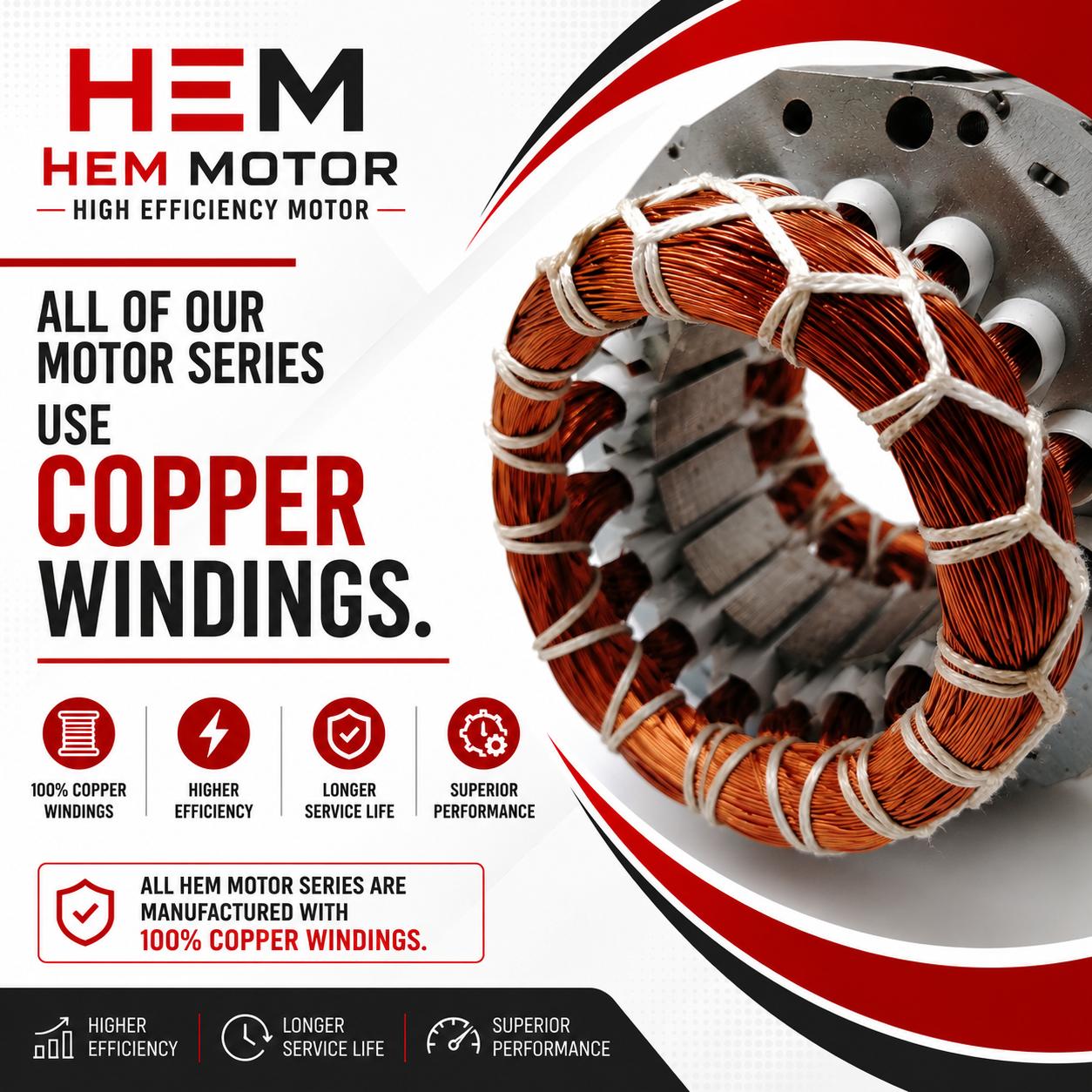
- Long service life: Quality 100% copper-wound motors run with low vibration and reduce maintenance needs.
To explore the relationship between motor efficiency and PUE and the savings from variable frequency drive pump-fan operation in more depth, we recommend reading our article on high-efficiency motors and VFD savings.
Variable Speed Control with a Frequency Drive
Data centers rarely operate at full capacity. The server load changes throughout the day, across the days of the week and with the seasons. Cooling demand follows this fluctuation. While a fixed-speed motor always spins at full speed and wastes more energy than necessary, a motor driven by a variable frequency drive (VFD/inverter) reduces its speed according to the cooling need and draws only the power required.
In fan and pump applications, this saving is very pronounced because of the affinity laws: when a fan's speed is halved, its power consumption can theoretically drop to as little as one eighth. For this reason, when CRAH fan motors and chilled water pumps are paired with frequency drives, dramatic energy savings are achieved during partial-load hours. HEM Motor's IE3 and IE4 motors are designed to operate in harmony with frequency drives and deliver stable performance in variable-speed applications.
The Practical Result of the Affinity Laws
In modern data centers operating on variable air volume (VAV) and variable water flow logic, cooling systems scale with the load. This way, the cold-aisle temperature is held constant while the motors do not spin unnecessarily at full speed. The frequency drive also provides a soft start, reducing sudden current surges on the grid and extending the life of mechanical components.
Continuous Duty and Reliability: N+1 Redundancy
For data centers, downtime is the most expensive scenario. A halt in the cooling system can drive servers to critical temperatures within minutes and cause hardware damage. For this reason, the principle of N+1 redundancy is applied in the cooling infrastructure: one more unit and motor than required is kept on hand, so that cooling continues uninterrupted even if one piece of equipment fails.
This redundancy philosophy creates two requirements for motor selection. First, the motors used must be suitable for continuous duty (S1), with Class F insulation and IP55 protection — in other words, capable of running non-stop for years. Second, a stock of spare motors must be kept ready; in the event of a failure, having identical motors of the same type and power available for rapid replacement is vital for operational continuity.
- S1 continuous duty: Designed for non-stop 24/7 operation.
- IP55 protection: Resistance to dust and water jets, especially in tower applications.
- Class F insulation: High temperature endurance and long insulation life.
- Low vibration: Reduces the transmission of vibration to servers in a sensitive IT environment.
- 100% copper winding: Lower losses, better heat dissipation and a long service life.
- Spare motor supply: Rapid availability of the same type and power for the N+1 strategy.
To assess the efficiency status of the existing motors in your facility and see where improvements can be made, an inventory study is helpful; our article on energy efficiency audits and motor inventory can guide you on this subject.
HEM Motor's Contribution to Data Center Cooling
HEM Motor manufactures the motors needed at every link of the data center cooling chain under one roof. Our product range, suitable for ventilation, fan, blower, pump and cooling tower applications, stands out with the following features:
- Efficiency classes: IE3 Premium, IE4 Super Premium and up to IE5 high efficiency.
- Power range: A wide scale from 0.55 kW to 355 kW.
- Speed options: 1000, 1500 and 3000 rpm.
- Mounting types: Flexible integration with B3, B5, B14 and B35.
- Body: Cast iron and aluminium body options.
- Protection and insulation: IP55 protection, Class F insulation, S1 continuous duty.
- Drive compatibility: Optimized for energy savings together with frequency drives.
For your data center ventilation and cooling projects, you can review the right motor selection from our ventilation electric motors product category, and contact us for current electric motor prices and technical support. Selecting a motor in the right efficiency class lowers operating costs well beyond the initial investment and makes it easier for your facility to reach its PUE targets.
Key Considerations in Selecting the Right Motor
When selecting a motor for data center cooling, not only the power rating but also the operating profile of the application must be taken into account. For a continuously running CRAH fan, efficiency class is the highest priority, while in a corrosive cooling tower environment, protection class and body durability come to the fore. For a motor that will operate at variable speed with a frequency drive, drive compatibility and cooling capability at low speeds become important.
The HEM Motor engineering team helps you determine the most suitable motor based on your application's load profile, environmental conditions and efficiency targets. This ensures both that the initial selection is correct and that a consistent fleet of motors is established for the N+1 redundancy strategy.
Frequently Asked Questions
Is replacing motors alone enough to improve the PUE value?
Replacing motors is a powerful step toward improving PUE, but it may not be enough on its own. Using high-efficiency IE4 motors and a variable frequency drive lowers PUE by reducing cooling energy; however, the best results come when this is combined with measures such as hot/cold aisle containment, optimizing set temperatures and free cooling. Motor efficiency is the fundamental and most tangible pillar of this holistic strategy.
Why should IP55 and a cast iron body be preferred for cooling tower fan motors?
Cooling tower fans operate in an environment that is humid, contains water vapor and can be corrosive at times. The IP55 protection class protects the motor against dust and water jets from any direction, while the cast iron body provides mechanical durability and long service life. Combined with Class F insulation and the S1 continuous duty rating, these motors run reliably and durably in the demanding tower environment.
What power range does HEM Motor offer for data center cooling?
HEM Motor produces motors from 0.55 kW to 355 kW to cover a broad range, from small CRAH fans to large chiller pumps and cooling tower fans. With 1000, 1500 and 3000 rpm speed options, B3/B5/B14/B35 mounting types and IE3/IE4 efficiency classes, a suitable solution can be provided for every cooling point in your data center. For a detailed selection, you can contact our engineering team.