English
 Türkçe


The European Union's new regulatory framework for sustainability reporting is forcing every manufacturing business to collect energy and emissions data in a disciplined, auditable way. At the center of this transformation sit the CSRD (Corporate Sustainability Reporting Directive) and the standards that implement it, the ESRS (European Sustainability Reporting Standards). These obligations are no longer the concern of large holding companies alone; mid-sized manufacturers across the value chain are now drawn in. Because electric motors are one of the single largest line items in a factory's electricity bill, the efficiency of a plant's motor fleet directly shapes the reported energy consumption and Scope 2 emissions figures.
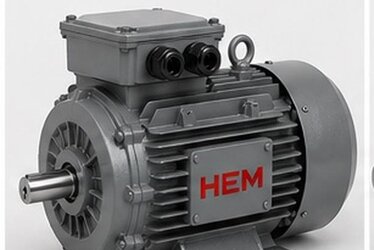
At HEM Motor, the IE3 Premium, IE4 Super Premium and IE5 Ultra Premium efficient motors we manufacture combine 100% copper windings with a cast-iron body to deliver low losses, high efficiency and therefore low energy consumption. This technical advantage strengthens the numerical backbone of your sustainability report: when you perform the same mechanical work with fewer kilowatt-hours, your carbon footprint shrinks and your reported climate data improves. In this article we explain in detail how an efficient-motor investment is documented under the ESRS E1 Climate Change standard, which data must be collected, and which technical documents the procurement team should request from suppliers.
Our goal is to give the procurement manager, the sustainability specialist and the maintenance engineer a single table to look at and a common language to speak. Without linking the motor inventory to the energy data, building a sound GHG Protocol calculation is simply not possible.
CSRD and ESRS: What Do They Mean for Manufacturers?
The CSRD significantly expands and standardizes the European Union's earlier non-financial reporting obligations. The directive requires companies within its scope to disclose their environmental, social and governance (ESG) performance in an auditable format. The technical substance of the directive is filled in by the ESRS standard set. ESRS defines dozens of data points across environmental, social and governance topics, and the most critical of these for production facilities is the climate-related ESRS E1 standard.
For companies that manufacture in Turkey or export to Europe, this regulation matters in two ways. First, there is the direct reporting obligation for large in-scope companies. Second, those large companies in turn request data from the SMEs that supply them. When a European buyer calculates its own Scope 3 emissions, it asks suppliers for product and process data. Reporting obligations therefore cascade downward along the value chain. A facility running efficient motors can answer these data requests with strong numerical evidence.
The Double Materiality Principle
The most distinctive concept of the ESRS framework is the double materiality principle. It requires a topic to be assessed from two separate angles: first, the impact of the business on the environment and society (impact materiality); second, the effect of environmental and social factors on the financial position of the business (financial materiality). Energy consumption sits exactly at the intersection of these two axes. High energy use means both more emissions (impact) and higher operating cost plus carbon-pricing risk (financial).
Motor renewal projects stand out clearly in a double materiality analysis. Switching to an IE4 class motor reduces annual kilowatt-hour consumption, lowering the emissions impact, while the savings on the energy bill improve the financial position. For this reason an efficient-motor investment is a two-sided story that can be told both in the "E1 Climate" section and in the financial resilience section of your report.
ESRS E1 Climate Change: Which Data Is Reported?
ESRS E1 governs climate-related disclosures and is one of the most numerically intensive sections of a sustainability report. Under this standard, businesses must disclose their transition plans, greenhouse gas emission targets and, most importantly, their actual emissions and energy figures. For production facilities, the heart of this section is accurately measured and traceable energy consumption data.
Emissions reported under E1 are split into three scopes in line with the GHG Protocol:
- Scope 1: Direct emissions from sources the business controls, such as on-site natural-gas boilers or the fuel of a company vehicle fleet.
- Scope 2: Indirect emissions from the generation of purchased electricity, steam or heating. The energy consumed by electric motors falls directly into this category, and this is where the reporting impact of an efficient-motor investment is most visible.
- Scope 3: All other indirect emissions in the value chain, including purchased goods and services, logistics, the use phase and end-of-life of products.
Electric motors in a factory often account for more than half of total electricity consumption. That makes the motor fleet one of the strongest levers for managing Scope 2 emissions. Moving from IE3 to IE4 or IE5 directly lowers annual MWh consumption, and that reduction flows gram by gram into reported Scope 2 emissions.
Measuring Energy Consumption Motor by Motor
A sound E1 report rests on measurement, not estimation. If you know the rated power, operating hours, load factor and efficiency class of every motor in your plant, annual energy consumption can be calculated with reasonable accuracy. At a more advanced level, energy meters fitted to main panels or critical motors reveal the real consumption profile. This data set is used as evidence during the audit phase of the report.
Combining the motor inventory with energy data requires a systematic approach. Our article on the energy efficiency audit and motor inventory process shows step by step how to list the motors in the field and which parameters to record. A well-built inventory becomes a single source of truth for both CSRD reporting and maintenance planning.
The Effect of the IE Efficiency Class on Reporting
The efficiency of electric motors is classified from IE1 to IE5 under the IEC 60034-30-1 standard. As the class rises, the energy lost while performing the same work falls. The IE4 Super Premium and IE5 Ultra Premium motors in the HEM Motor range deliver top-of-class efficiency thanks to 100% copper windings and low-loss lamination stacks. This efficiency difference turns into a tangible reporting advantage.
For example, in a continuously running pump or fan application, switching from an IE3 motor to an IE5 motor yields an annual energy saving of a few percent. Small for a single motor, this rate adds up to thousands of kilowatt-hours per year across a plant with hundreds of motors, along with tonnes of associated CO2 reduction. To show this gain in the report, consumption data before and after the motor change must be documented.
- Before-and-after comparison: Record the old efficiency class of the replaced motor, the efficiency class of the new motor and the annual operating hours of both.
- Savings calculation: Multiply the kilowatt-hour gain from the efficiency difference by the national grid emission factor to convert it into a Scope 2 reduction in tonnes of CO2.
- Document chain: Archive the invoice, the motor nameplate, the EU declaration of conformity and the efficiency curve together.
- Repeatability: Apply the same method every year so year-on-year comparisons remain consistent.
Measuring and documenting annual savings is a discipline in its own right. Our article on annual savings measurement and documentation for high-efficiency motors explains which measurement methods are considered valid by an auditor and how to make your savings claims verifiable. This approach increases the credibility of your report.
Carbon Footprint and the Carbon Border Mechanism
Sustainability reporting is not only a compliance task; it is also strategically important for export competitiveness. The European Union's Carbon Border Adjustment Mechanism (CBAM) puts a price on the embedded carbon of products exported to Europe in certain sectors. Lowering Scope 2 emissions by using efficient motors in production reduces the embedded carbon per product under this mechanism and eases the border-levy burden.
The carbon footprint calculation of a product rests on a life-cycle logic that tracks material and energy inputs one by one. When the electricity consumed by motors is allocated to each unit produced, it forms a significant component of the total footprint. Motor efficiency is therefore decisive not only for bill savings but also for product carbon intensity.
For those who want a deeper look, our articles on the carbon footprint and CO2 impact of efficient motors and on high-efficiency motors and the CBAM carbon border for exports explain the calculation logic and the actions we recommend exporters take, with concrete examples.
Technical Documents to Request in Procurement
For reporting to pass an audit, claims must be backed by documents. That is why there are specific technical documents the procurement team should request from suppliers during motor sourcing. These documents form the evidence file of the report and make future audits easier.
- Efficiency curve: A chart showing the motor's efficiency at different load points, needed to calculate energy consumption accurately against the real load profile.
- EU declaration of conformity: The official document showing the motor's compliance with the relevant EU Ecodesign regulation.
- Motor nameplate and efficiency class: Plate information that clearly states the IE class, rated power and efficiency.
- Technical data sheet: Parameters such as rated current, power factor, speed and temperature class.
- Test reports: Where possible, independent laboratory efficiency measurement results.
At HEM Motor we provide the complete technical documentation for our efficient-motor range, so your sustainability team works with verified values from the manufacturer instead of estimates. You can review our full range and technical specifications on our High-Efficiency Electric Motors page and select the efficiency class that fits your project. For current electric motor prices and the quotation process, you can contact our sales team.
Value Chain and EU Taxonomy
CSRD reporting is also linked to the EU Taxonomy, a classification system that determines whether an economic activity counts as environmentally sustainable. Investments that improve energy efficiency are generally positioned favorably in this classification. Motor renewal, a typical efficiency investment that lowers energy intensity, strengthens your sustainability narrative along the value chain.
The value-chain perspective means your supplier choice is reflected in your report too. Working with a manufacturer that supplies high-efficiency, documented and traceable motors makes both your own report and your customers' Scope 3 calculation easier.
Documentation, Audit and Continuous Improvement
The final and perhaps most critical link in sustainability reporting is documentation and audit. Under CSRD, reports are subject to independent assurance at a limited or reasonable level. This means every figure in the report must rest on a traceable source. The motor inventory, energy measurement records, invoices, supplier documents and calculation methodology should be kept together in an organized file.
Good documentation practice shortens the audit process and ensures the year-on-year consistency of the report. Using the same emission factors, the same boundary definitions and the same calculation method allows real improvement to be seen from year to year. The gains brought by efficient-motor investments are thereby documented clearly.
Sustainability is not a one-off report but a continuous improvement cycle. An annually updated motor inventory, measured energy consumption and reduced emissions deliver a double benefit: regulatory compliance and lower operating costs. HEM Motor's IE3, IE4 and IE5 efficient motors strengthen the numerical foundation of this cycle.
Frequently Asked Questions
Why should an SME outside the CSRD scope still collect sustainability data?
Because even if you are not directly in scope, if you supply a European buyer or a large original equipment manufacturer, they are very likely to request product and energy data from you for their Scope 3 calculation. Suppliers who can meet these requests and document their motor inventory and energy consumption gain a competitive edge. Moreover, the energy savings from an efficient-motor investment deliver a direct cost advantage regardless of reporting.
How is the emission reduction from switching to efficient motors shown in ESRS E1?
First, record the efficiency class, power and annual operating hours of the old and new motors. Calculate the annual kilowatt-hour saving from the efficiency difference and multiply it by the grid emission factor to convert it into a Scope 2 reduction in tonnes of CO2. This result is reported in the emission-reduction actions section under ESRS E1, together with the supporting documents.
When sourcing motors, which document should I request first for sustainability reporting?
First request the technical data sheet showing the motor's efficiency class and efficiency curve, then the EU declaration of conformity. These two documents ensure that the energy and emissions calculation in your report rests on an auditable source. At HEM Motor we provide these documents in full for our efficient-motor range, easing your sustainability reporting process.