English
 Türkçe


Summary (TL;DR)
- A soft starter does not save energy during continuous running; it only controls the starting phase by ramping voltage up via thyristors (SCRs) to limit inrush current and mechanical/electrical shock.
- Once the motor reaches speed, the soft starter either drops out of circuit through a bypass contactor or its SCRs go to full conduction; from that point the motor runs essentially as if started direct-on-line (DOL), with no speed change and no saving.
- A starter without bypass actually increases losses slightly in run because conducting thyristors drop ~1-1.5 V per phase; that is exactly why bypass contactors exist.
- Real energy saving comes from choosing a correctly sized IE3/IE4/IE5 high-efficiency motor and, on variable-torque loads (pumps, fans), from a variable frequency drive (VFD); a starter is a starting device, not a speed controller.
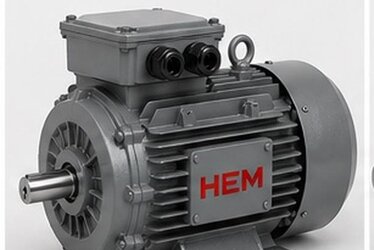
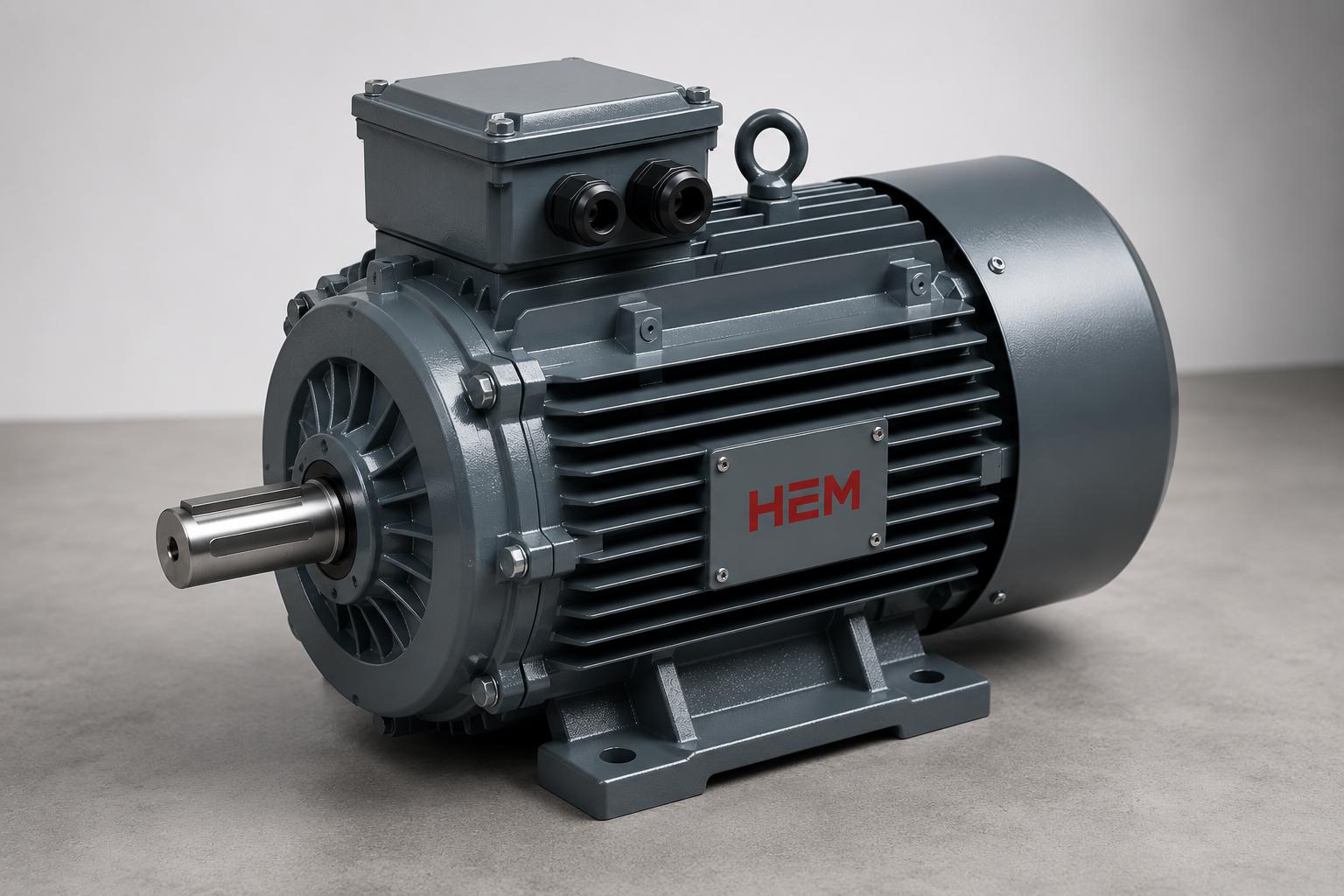
- HEM Motor supplies IE3/IE4 cast iron motors from 0.55 to 355 kW from stock and advises whether your application needs DOL, a soft starter, or a VFD, then quotes the correctly rated motor.
One of the most repeated myths in industry is that fitting a soft starter to a motor will lower your electricity bill. Field engineers, plant managers, and even some salespeople say "put in a soft starter and you will save energy." The claim sounds plausible because the device has the word "soft" in its name and is known to control voltage. But the reality, grounded in physics and electrical machine theory, is clear: a soft starter does not deliver meaningful energy savings in steady-state running. In this article we explain where the myth comes from, what a soft starter actually does, which device truly saves energy, and how to select and buy the right efficient motor with the correct starting method. Knowing this distinction protects your budget when you compare electric motor prices and choose a solution.
What a Soft Starter Actually Does
A soft starter is a power electronics device that gradually raises the voltage applied to an induction motor at start-up, from zero up to full line voltage. This ramp is produced by anti-parallel thyristors (SCRs) in each phase using phase-angle firing. As the firing angle opens slowly, the effective voltage reaching the motor rises, and motor torque and current come on stream in a controlled way. The purpose is a single thing: to limit the inrush current and the sudden torque at start.
With direct-on-line (DOL) starting, the motor is connected to the supply abruptly by a contactor and draws an inrush current of 6-8 times rated current. This high current causes voltage dips on the network, stresses fuses and protection, and delivers a sudden torsional shock to mechanical transmission elements (belts, couplings, gearboxes, shafts). Because the soft starter ramps voltage, it smooths this current and torque impulse. That is the device's primary and only essential job: to control the starting and stopping phase.
What Happens After Run-Up?
Once the motor reaches full speed, the soft starter's work is done. At this point there are two scenarios. First, the device has an internal or external bypass contactor; when the motor is up to speed this contactor closes, bridging the thyristors and taking them out of circuit. The motor is now connected directly to the supply, exactly as if running DOL. In the second scenario there is no bypass and the thyristors go to full conduction, that is, at a 100% firing angle they pass the line voltage and frequency to the motor almost unchanged.
In both cases the fundamental result is the same: the voltage and frequency applied to the motor are identical to the supply. The soft starter does not change speed, does not change frequency, and (when bypassed) does not change voltage at all. Therefore the motor's operating point, and the power it draws, are no different from how it would run without the soft starter. There is no mechanism for energy saving.
Where Does the Myth Come From? The "Energy Optimization" Feature
One source of the misunderstanding is an "energy saving" or "energy optimization" feature found on some soft starters. This function works on the following logic: if the motor runs very lightly loaded or at no load, more magnetizing current than necessary circulates and magnetic losses stay high. When the soft starter detects very low load, it lowers the applied voltage somewhat to reduce the magnetic flux and therefore the magnetizing losses.
The critical point to note is this: this gain is only meaningful on grossly oversized motors that run continuously at very light load, and even then it is marginal. On a correctly sized motor running near rated load, the feature delivers essentially nothing; it can even hurt power factor and cause torque pulsation and instability. In other words, "energy optimization" is a feature that partly patches a problem created by poor engineering (wrong motor selection); it is not a saving strategy. Be cautious of sales pitches that oversell this feature.
A Soft Starter Adds a Small Loss in Run Rather Than Saving
The irony is this: a soft starter without bypass actually increases energy use in continuous running rather than reducing it. Conducting thyristors are not ideal switches; each drops roughly 1-1.5 V. Across three phases and at high currents, this drop turns into a measurable power loss dissipated as heat. On a motor drawing hundreds of amperes, this loss can be in the order of watts and requires cooling in the device.
This is precisely why serious soft starters come with an internal or external bypass contactor: when the motor is up to speed the thyristors are bridged, and the conduction loss and heating disappear. This is the clearest proof that a soft starter is a source of extra loss in run, not a saving. If a device saved energy while running, manufacturers would not add a bypass to take it out of circuit.
So What Actually Saves Energy?
Energy saving comes not from myths but from correct component selection. In a continuously running motor system, savings come from three main sources:
- A correctly sized high-efficiency motor: The IE3, IE4, and IE5 efficiency classes structurally reduce a motor's copper, iron, friction, and windage losses. A motor that does the same work with fewer losses produces savings every hour it runs. This is the most reliable, continuous source of saving.
- A variable frequency drive (VFD / inverter): On variable-torque loads such as pumps and fans, reducing speed cuts power by the cube law (affinity laws). Dropping speed by 20% can roughly halve power. This is where the big savings are.
- Avoiding throttling and damper losses: Reducing flow by closing a valve or a damper wastes energy; setting speed with a VFD instead delivers fundamental savings.
- Avoiding partial-load inefficiency: Sizing the motor to the load avoids the efficiency and power factor penalty of an oversized motor running continuously at low load.
For the depth of these topics, the IE4 motor partial and low load efficiency and correct sizing article helps you understand numerically how correct motor selection affects savings.
What Is a Soft Starter Actually Good For?
A soft starter is not useless; it is simply not an energy-saving device. Used correctly, it is a very valuable starting and stopping solution. Its real benefits are:
- Limiting inrush current: It reduces voltage dips on the network, allows smaller cable and generator selection, and lowers sudden peak demand under your supply contract.
- Reducing mechanical stress: It softens the sudden torque impulse on belts and pulleys, couplings, gearboxes, and reducers, and prevents water hammer in pumps. This lowers maintenance cost and failures.
- Smooth stopping: Especially on pumps, controlled deceleration prevents water hammer.
- Reducing demand peaks: On plants with frequent starts, limiting sudden current peaks improves supply quality and contract terms.
In short, a soft starter is a starting/stopping device, not a speed controller. For an application that needs to set running speed and save energy on a variable load, the correct device is a VFD.
Comparison: DOL, Star-Delta, Soft Starter, and VFD
To choose the right starting method, you must compare the four basic options:
- Direct-on-line (DOL): The simplest and cheapest. But it draws the highest inrush current (6-8 times) and delivers the harshest mechanical shock. Suitable for small motors and strong supplies.
- Star-delta: Cheap and common; reduces current to about one third. But the transition from star to delta produces a stepped torque and current surge that can be problematic on high-inertia loads.
- Soft starter: Offers a smooth voltage ramp, adjustable current limit, and soft stopping. It minimizes mechanical and electrical shock. With bypass it is lossless in run. It does not control speed and does not save energy.
- VFD (frequency inverter): Provides full speed control, soft start, and real energy saving on variable loads. It is the most expensive option and produces harmonics; it requires suitable filtering and inverter-duty winding insulation.
The IE3 motor soft starter compatibility article, which covers soft starter compatibility and proper selection criteria for IE3 motors, illustrates this decision on a concrete motor class.
Efficient Motor and Starter Compatibility: Sizing Is Critical
A soft starter must be sized to the motor's full load amps (FLA) and start duty (S duty class, starts per hour). On high-inertia or high-breakaway-torque loads, the torque curve must always be checked. An important point: IE3 and IE4 motors often have higher locked rotor amps (LRA) because of better materials and lower-resistance windings. This higher starting current requires the starter to be selected at the correct, adequate capacity. An under-selected soft starter overstresses its thyristors and fails.
For motors that will run on a VFD, inverter-duty winding insulation should be chosen; otherwise the switching voltage pulses (dV/dt) wear out the insulation. Through the IE4 high efficiency electric motors product page, you can review motors with technical specifications suited to your starting method.
The Right Decision and Purchase: Which Motor, Which Starter?
Real and continuous energy saving starts with selecting the motor in the right efficiency class and the right power for your application. The soft starter or VFD is a secondary decision and depends on the nature of the load. The decision practice is:
- Fixed-speed, continuously running load + strong supply and small power: DOL is sufficient; saving comes from the right IE4 motor.
- Fixed-speed but mechanically stressful load (large fan, conveyor, compressor): a soft starter protects the mechanics; saving again comes from the efficient motor.
- Variable-flow pump/fan: a VFD both starts softly and delivers large energy savings via the affinity law.
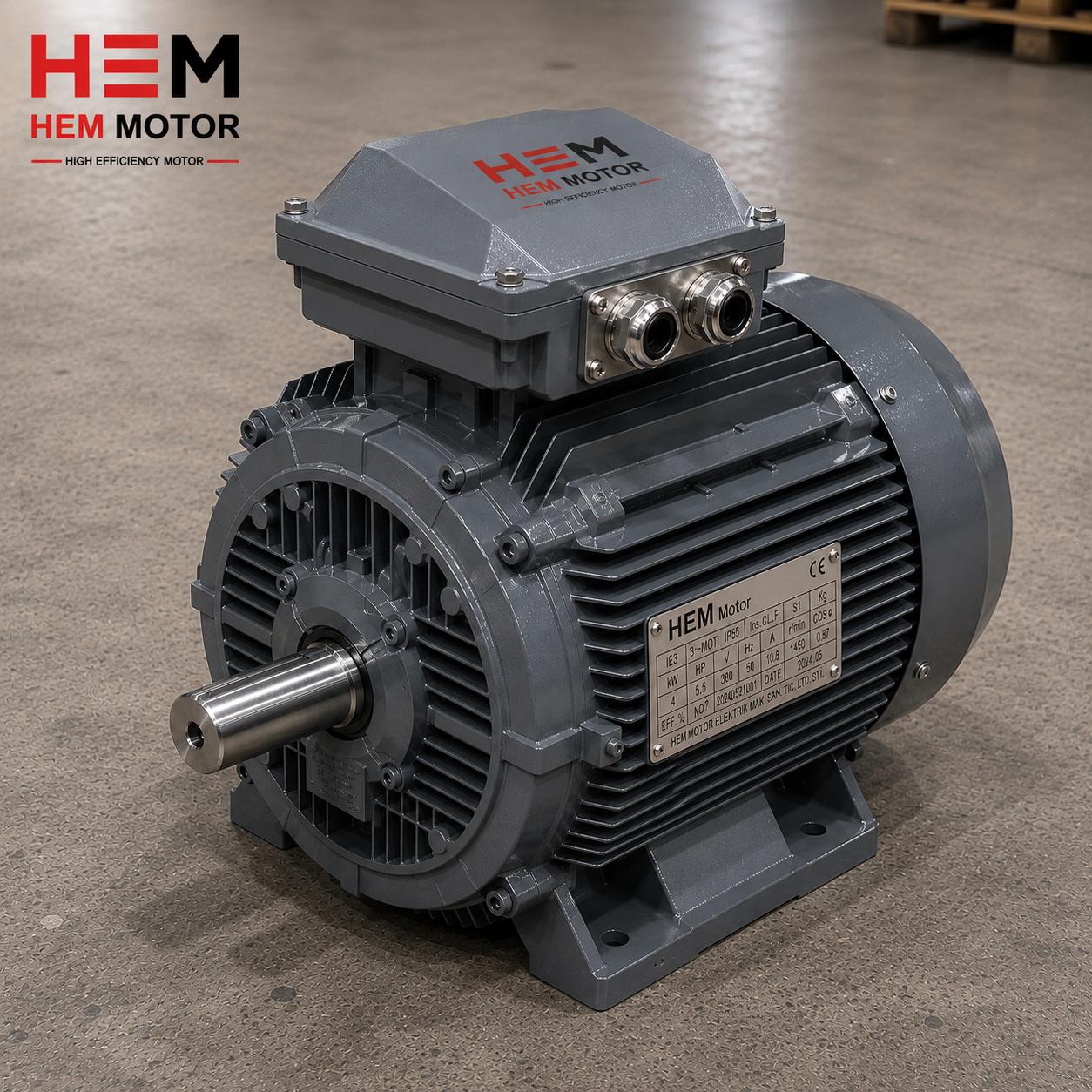
With manufacturer assurance, HEM Motor supplies IE3 and IE4 cast iron electric motors from 0.55 to 355 kW from stock. We evaluate with you whether DOL, a soft starter, or a VFD suits your application, then select and quote a motor with the correct rated current, the correct start duty, and inverter-duty winding insulation where needed. Our wide stock and supply network ensures fast delivery so your project proceeds without delay. Matching the right product to the right starting method optimizes both the initial investment and the operating energy cost.
Frequently Asked Questions
Will installing a soft starter lower my electricity bill?
No. A soft starter only controls the starting and stopping phase; once the motor reaches speed it is bypassed or goes to full conduction and the motor runs at supply voltage/frequency exactly as before. It does not save energy in continuous running; on models without bypass there can even be a very small extra loss due to thyristor conduction. Real saving comes from a correctly sized IE3/IE4 motor and, on variable loads, a VFD.
If I want savings, what should I use instead of a soft starter?
For continuous fixed-speed running, the most reliable saving is a correctly sized high-efficiency (IE4/IE5) motor. On variable-flow loads such as pumps and fans, you should use a variable frequency drive (VFD) to save energy by reducing speed. A soft starter does not control speed; you use it to reduce mechanical stress and inrush current.
Which starting method should I choose for my IE4 motor?
It depends on the nature of your load. If the power is small and mechanical stress is low, DOL may be enough. If there is mechanical sensitivity such as belts, couplings, or pump water hammer, a soft starter is ideal. If you have variable flow and an energy-saving goal, a VFD should be chosen. Because IE4 motors have high locked rotor current, the starter or inverter capacity must be selected accordingly; getting technical support when you source the motor is recommended for correct matching.