English
 Türkçe

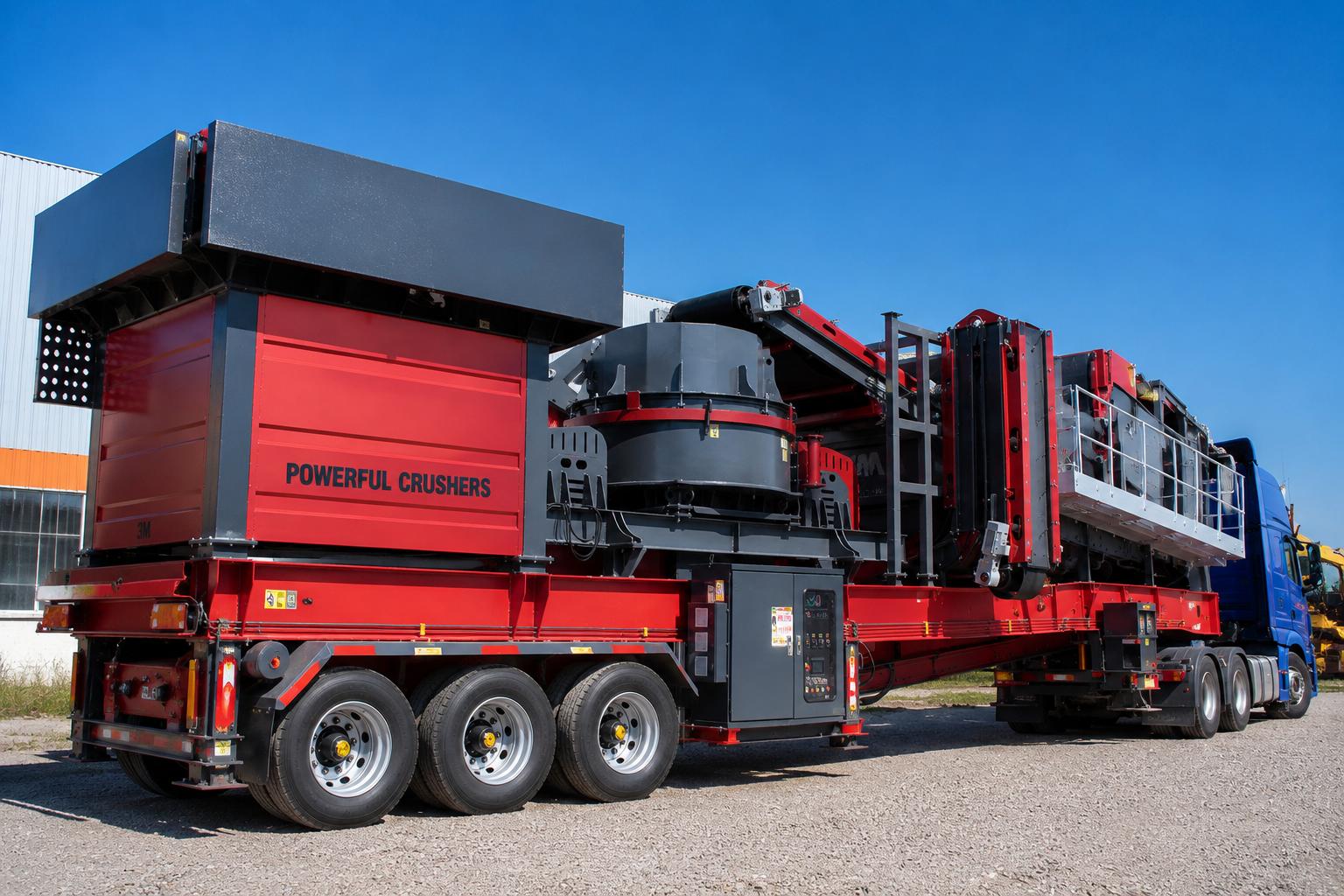

In a crushing-screening plant, material continues to be reduced in size at the secondary and tertiary stages after passing through the primary jaw crusher. The most widely used equipment at these stages is the cone crusher. Secondary and tertiary cone crushers directly determine aggregate quality, particle shape and final product grading. At the heart of these machines is a drive motor that operates under continuous heavy duty, produces high starting torque and withstands impact loads. A wrongly selected motor leads to frequent stoppages, overheating, belt-pulley failures and ultimately a loss of efficiency across the whole plant. This guide explains how to select the right drive motor for secondary and tertiary cone crushers in terms of power, speed, protection class, frame material and starting method, and addresses stock, equivalent replacement and fast supply with a manufacturer's assurance.
How a Cone Crusher Works and What It Demands From the Motor
A cone crusher reduces material by compression, with a mantle (moving cone) moving eccentrically inside a concave (fixed outer liner). Unlike a jaw crusher, this compressive crushing principle produces a more cubic and standard particle shape, which is why it is preferred at the tertiary stage in aggregate and concrete production. However, because the amount of material in the crushing chamber constantly changes, the load on the motor also fluctuates. The crusher load shows sudden jumps from idle running to the moment of full crushing.
This load character demands three key properties from the motor. First, high starting torque: a cone crusher may have stopped with material left inside, and the motor may have to start under this load. Second, resistance to impact and fluctuating load: during sudden load increases the motor must have a high pull-out (breakdown) torque and continue to draw without stalling. Third, continuous heavy duty (S1) endurance: the plant runs without stopping for entire shifts. In secondary crusher and tertiary crusher motors, these three properties require a stronger design than a standard industrial motor.
The Difference Between the Secondary and Tertiary Stage
Although secondary and tertiary cone crushers share the same operating principle, there are important differences in motor selection. Correctly distinguishing the two stages prevents choosing an over- or under-sized motor.
- Secondary cone crusher: Takes medium-sized material from the primary crusher and reduces it to smaller pieces. The feed size is large and the reduction ratio is high; therefore the motor power is generally selected higher. Load fluctuation is pronounced.
- Tertiary cone crusher: Converts material from the secondary into a fine, cubic final product. The feed size is small, but as long as the crushing chamber stays full the motor runs under a steady, high load. Because particle shape quality is critical, speed stability becomes important.
- At both stages, 4 pole (about 1500 rpm) motors are common; this speed is reduced to the shaft speed required by the crusher via belt and pulley.
- When the product fineness is changed (the closed side setting / CSS is narrowed), the motor load on the tertiary increases; therefore a margin must be left in sizing.
For the correct power selection by stage, our guide on motor power by jaw, impact and cone crusher is a complementary resource.
Power and Speed Sizing
Power selection for a cone crusher motor starts with the rated power stated by the crusher manufacturer; however, field conditions affect this value. Hard and abrasive material (such as basalt or granite), high feed moisture and a narrow product setting all increase the motor load. For this reason the motor power in the crusher maker's catalogue should be treated as a lower limit, and the service factor must be considered. A motor running continuously at full load heats up faster; a slight power margin both extends life and prevents stalling during sudden load increases.
On the speed side, cone crushers require a specific mantle speed. Because the motor drives not directly but through belts and pulleys (V-belts), the motor's 1500 rpm speed is reduced to the speed the crusher requires by the pulley ratio. Here the pulley diameters and the number of belts are selected according to the power to be transmitted; an insufficient belt cross-section leads to slippage and heating.
- The power recommended by the crusher manufacturer is taken as a base value; a margin is left for hard material.
- A 4 pole 1500 rpm motor is reduced to the crusher shaft speed via belts and pulleys.
- The service factor (usually 1.15) provides safety during sudden load increases.
- Motors with high pull-out torque continue to draw without stalling under fluctuating load.
Impact Load, Flywheel and Inertia
Because the cone crusher load surges within seconds, the inertia of the motor and the transmission system determines the stability of operation. The pulley and flywheel meet the sudden load at the moment of crushing with stored kinetic energy, reducing the shock load on the motor. This means less stress on both the motor and the grid. Our article on motor selection under impact load, flywheel and inertia offers in-depth information on this subject. The right inertia balance allows the motor winding to relax thermally and extends bearing life.
Dust, Moisture and Protection Class
A stone crushing site is one of the harshest environments for a motor: heavy mineral dust, moisture, vibration and temperature. For this reason the protection class selection is critically important. In our standard production, stone crushing plant motors are offered in IP55 protection class; this provides protection against dust and resistance to water jets. In plants operating under continuous heavy dust or doing wet screening, higher protection classes such as IP65/IP66 can be supplied on request. Our article on dust sealing and IP65/IP66 protection in crusher motors contains field-specific tips.
On the insulation side, our motors are produced with Class F insulation; resistance to high winding temperatures enables safe operation at continuous full load. The sealing design that prevents dust from reaching the bearings and winding is one of the most important factors in reducing unplanned downtime.
Frame Material and Bearing Structure
In an impact and vibration environment, the frame material must be cast iron. Cast iron damps impacts and vibration far better than aluminium, carries the dynamic loads created by the crusher drive and extends bearing life. A reinforced bearing structure provides resistance to the side forces created by eccentric load and belt tension. Our guide examining bearing life in terms of impact, dust and lubrication in crusher and mill motors, bearing life, shock and dust, is useful for maintenance planning.
Starting Method: Star-Delta and Soft Starter
Cone crusher motors draw a high starting current. Although direct-on-line (DOL) starting is possible at small powers, in high-power crushers it stresses the grid and can cause a voltage dip. For this reason star-delta or a soft starter is preferred. A soft starter limits the starting current, protecting both the grid and the belt-pulley system and reducing mechanical shock. On sites fed by a generator, soft starting is even more important. Our article comparing crusher motor starting methods, soft starter, star-delta and direct starting, guides the right choice.
- At small powers, direct starting may be sufficient.
- At medium power, star-delta reduces the starting current.
- At high power and on generator-fed sites, a soft starter provides grid and mechanical protection.
- Soft starting reduces belt slip and sudden shock load.
Plant-Wide Motor Supply and Stock Advantage
A crushing-screening plant requires motors not only for the cone crusher but also for the primary jaw crusher, screens, feeders and belt conveyors. Our article on the correct selection for these motors beyond the main crusher, screen, feeder and belt drive motors, covers the whole plant. The failure of a single crusher motor causes the entire line to stop and a large loss of production. Therefore keeping spare motors in critical power ratings and being able to quickly source a direct-equivalent motor minimises downtime cost.
The advantage of working with a manufacturer's assurance becomes clear here: stone crushing plant motors available from stock, with a wide power range (0.25 kW to 355 kW) and B3/B5/B35 mounting options, quickly provide a motor that matches the existing crusher exactly. You can review the product family for cone crusher drive motors on our stone crushing plant motors page, and contact us directly for current electric motor prices and stock status.
Selection Checklist
- Clarify the stage (secondary/tertiary) and the power recommended by the crusher maker.
- Leave a power margin for hard material and a narrow product setting.
- Prefer a cast iron frame and reinforced bearings.
- At least IP55 protection; consider IP65/IP66 in heavy dust.
- Determine the starting method (star-delta/soft starter) by power.
- Plan a spare motor in critical power ratings; keep nameplate data ready for replacement.
Frequently Asked Questions
Can I use the same motor for the secondary and tertiary cone crusher?
Most of the time no. Although the two stages share the same operating principle, their power and load character differ. The secondary crusher generally requires a more powerful motor due to its larger feed and high reduction ratio; the tertiary crusher runs under a steady, high load when the crushing chamber stays full for fine product. The correct choice should be made according to the power recommended by the crusher manufacturer and the field conditions.
Which protection class does a cone crusher motor need?
For a standard stone crushing site, at least IP55 protection class is recommended; this provides protection against dust and resistance to water jets. In plants under continuous heavy dust or doing wet screening, higher protection classes such as IP65/IP66 are offered on request. A cast iron frame and Class F insulated winding are decisive for long life on a demanding site.
How should I start a crusher motor?
It depends on the power and the supply source. At small powers, direct starting may be sufficient; at medium power, star-delta reduces the starting current; in high-power crushers and on generator-fed sites, a soft starter protects both the grid and the belt-pulley system and reduces mechanical shock. The starting method gives the best result when planned together with the motor.