English
 Türkçe

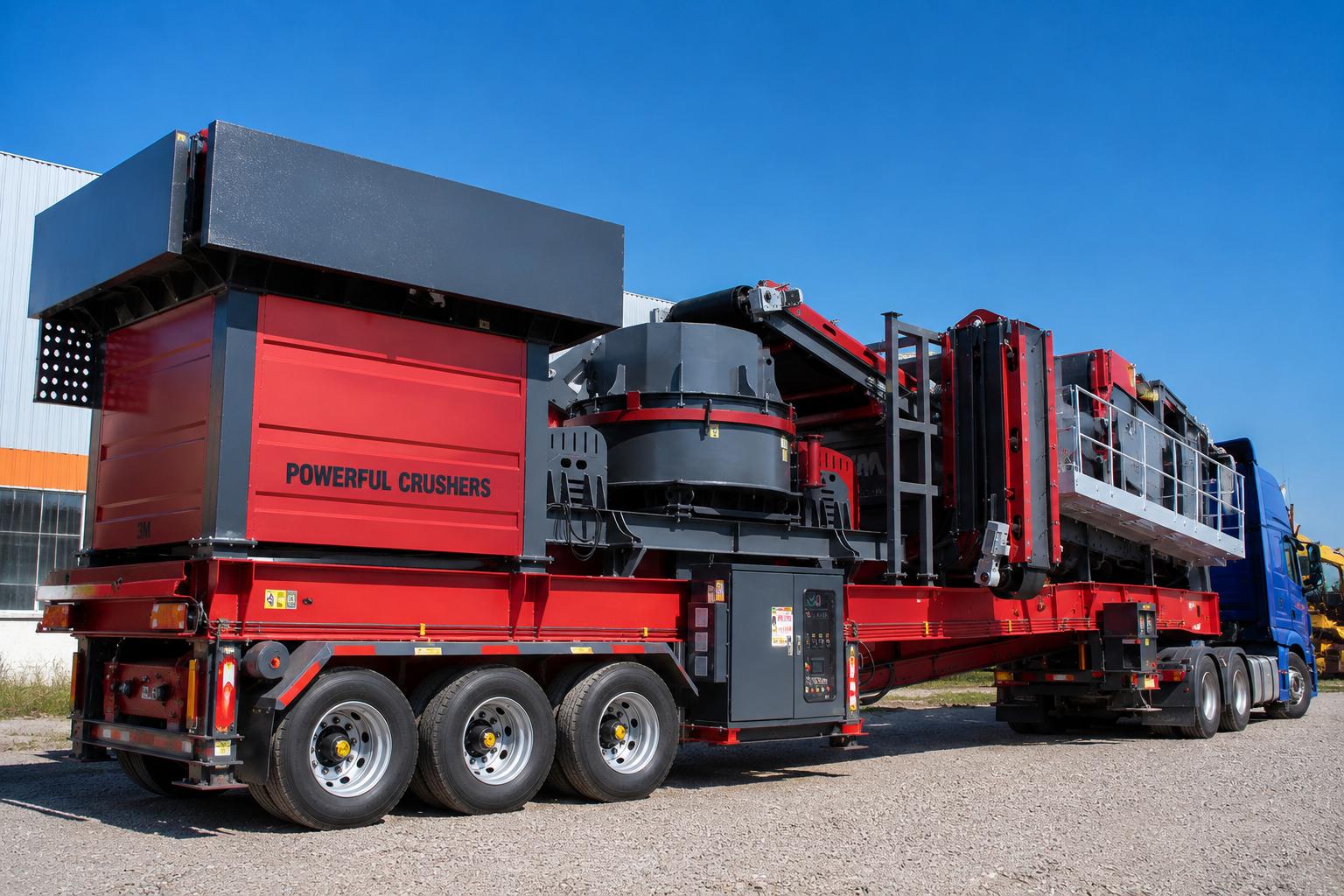

In any crusher or mining plant, the efficiency of the entire production line depends on how correctly the raw material is prepared before it reaches the primary crusher feed stage. This is precisely where the scalper (pre-screen) feeder comes into play: it transforms the bulk material coming from the quarry into a homogeneous flow while separating fines (soil, clay, silt) and oversize lumps before they reach the crusher. The heart of this system is the electric motor that drives the feeder pan or screen grizzly. Because of heavy eccentric masses, high inertia moment and constant operation under dust, this motor faces a far more demanding job description than an ordinary industrial motor. In this article, as HEM Motor experts, we examine scalper feeder motor selection from every angle: starting torque, dust sealing, correct power calculation and spare-part supply.
What Is a Scalper (Pre-Screen) Feeder and What Does It Do?
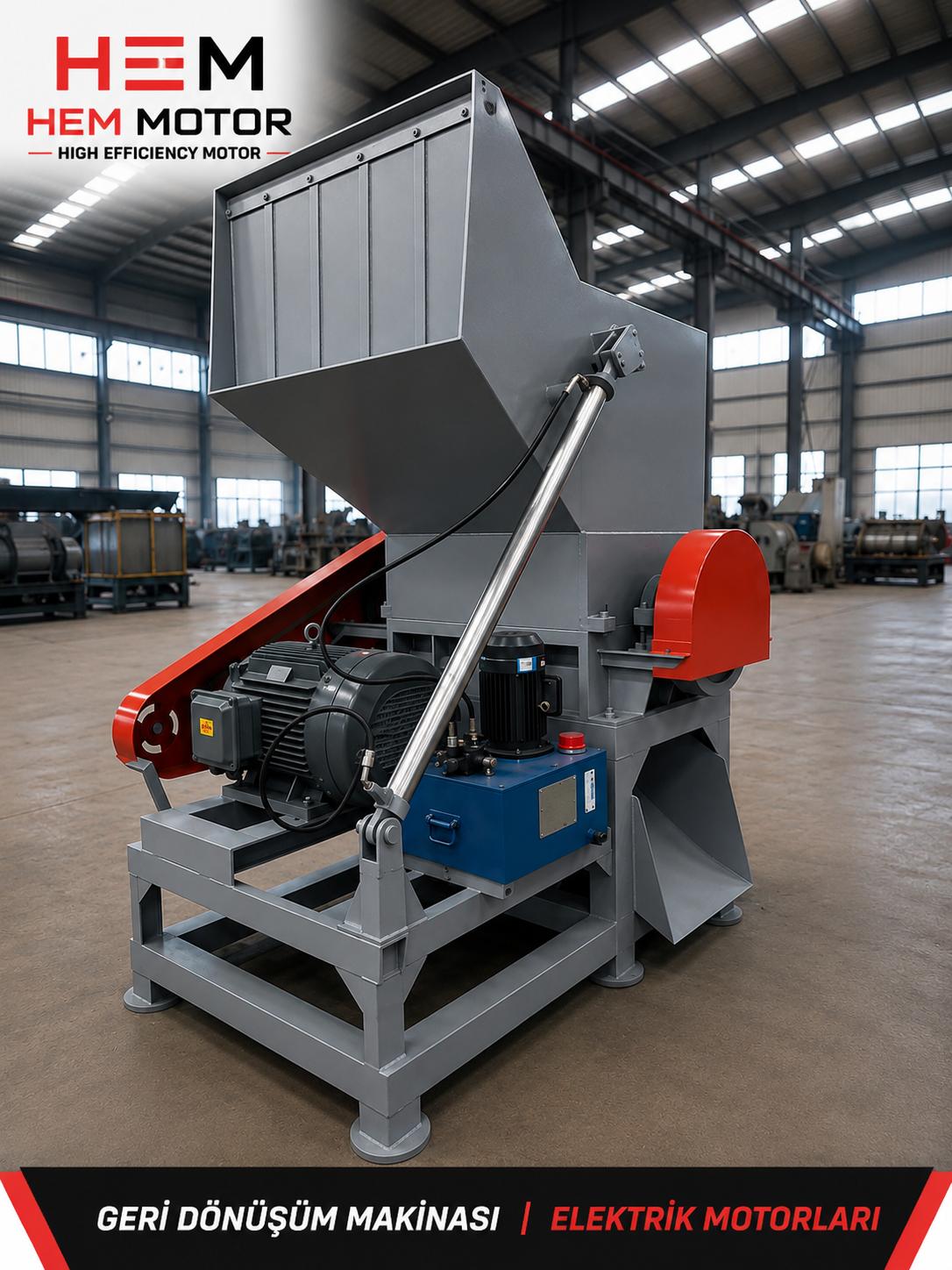
A scalper, also called a grizzly feeder or pre-screen, is an equipment located at the very front of a crushing and screening plant. Run-of-mine (unprocessed) material delivered from the quarry by excavator or truck is first dumped into the hopper, then transferred at a controlled rate to the primary crusher via the scalper feeder. During this transfer, the equipment performs two critical tasks at once:
- Feed regulation: By preventing sudden overloading (choke feeding) of the crusher, it delivers material in a regular and continuous flow, which increases crusher efficiency and service life.
- Pre-screening (scalping): Fine material passing between the grizzly bars bypasses the crusher. This way crusher capacity is not wasted, jaws or impact bars do not wear unnecessarily, and clogging caused by clay and soil is avoided.
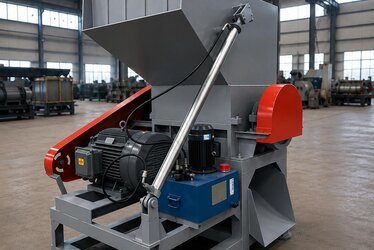
The drive principle of the pre-screen is usually vibratory: eccentric shafts or an exciter unit connected to the motor impart a controlled vibration motion to the screen body. This vibration conveys the material forward while separating the fine grains. Rotating these eccentric masses links the motor to a high-inertia load that behaves very differently from a classic fan or pump load.
Why a High-Inertia Load? Starting Torque and Run-Up Time
The most fundamental challenge a scalper feeder motor faces is not the load it sustains, but the load it starts. The eccentric weights and exciter masses have a high inertia moment (GD² / J). When the motor is energized, a long acceleration (run-up) period elapses while these heavy masses are brought from standstill to rated speed. This physical reality produces several important consequences:
Long Acceleration Time and Heat Load
While a low-inertia load reaches speed in 1-2 seconds, a heavy-eccentric feeder may take 8-15 seconds or even longer. During this long start the motor continuously draws high current. The heat accumulating in the windings and rotor approaches the motor's thermal limit. For this reason, F or H class insulation and reinforced cooling capability are preferred in scalper motors.
High Starting Torque Requirement
To accelerate the inertial mass, the motor must produce a starting torque well above its rated torque. With direct-on-line starting, the inrush current can reach 6-7 times the rated current. This means both a risk of voltage dip for the grid and thermal stress for the motor.
The Right Torque Class: Design N or Design H?
According to IEC standards, asynchronous motors are classified by their starting and breakdown torque characteristics. In applications requiring high inertia and high starting torque, such as a scalper feeder, choosing the correct torque class is critical. While standard Design N motors are sufficient for many feeders, in very heavy eccentric loads or demanding start scenarios, Design H torque class motors are preferred because they offer higher starting and locked-rotor torque. For a detailed comparison of torque classes, our article on Design N and H torque classes is a sound starting point.
- Design N: Standard starting torque, suitable for general-purpose loads and low-to-medium inertia feeders.
- Design H: High starting torque, for high inertia and difficult starting conditions; the safe choice for heavy scalpers and vibrating screens.
Starting Strategy: Soft Starter, Star-Delta and Coupling
High inertia determines not only motor selection but also the starting method. A wrong start strategy leads to the motor burning out within the first few months or to rapid wear of mechanical transmission elements (belt, pulley, reducer).
Soft Starter
This is the most common and recommended solution. The soft starter limits the starting current and mechanical shock by ramping up the voltage gradually. In heavy-eccentric feeders, it protects both the motor and the mechanics by keeping the long run-up period under control. For details of starting methods, you can review our crusher motor starting guide.
Star-Delta Starting
Although a more economical solution, the torque produced in the star position is only about one third of rated. On a very high-inertia scalper feeder, the motor may fail to break the load in star, and a heavy current surge may occur during the switch to delta. Therefore it should be preferred in medium-to-low inertia applications.
Slip Coupling
For very heavy start loads, a hydraulic or dry-type slip coupling is added between the motor and the feeder. This element allows the motor to reach speed unloaded, then take over the load smoothly. To understand the effect of flywheel and inertia in impact and inertial loads, our article on the impact load motor flywheel and inertia provides complementary information.
Dust, Sealing and Protection Class (IP55 / IP65 / IP66)
A crusher site is one of the dustiest environments in industry. Mineral dust is extremely abrasive; when it penetrates the fan cover, cooling fins and especially the bearing cavities of the motor, it both disrupts cooling and destroys the bearings in a short time. Therefore the protection class of the scalper motor must be chosen according to the real conditions of the site.
- IP55: Standard protection; durable against dust accumulation, resistant to water splashes. A basic level for enclosed or relatively clean sites.
- IP65: Fully dust-tight; for heavy dust environments and low-pressure water jets. A common choice on open quarry sites.
- IP66: The highest protection; for powerful water jets and extremely dusty, wash-down sites. Ideal in plants subject to rain and washing.
HEM Motor manufactured motors are supplied as standard in IP55 and, on request, in IP65/IP66 protection class. Our article on dust sealing IP65/IP66 in the field, where we examine the field effects of dust tightness in greater depth, is a guide on this subject.
Cast Iron Body and Reinforced Bearings
On a vibrating feeder the motor is under constant vibration. Although aluminum-body motors offer the advantage of light weight, in heavy and vibrating scalper applications the cast iron body is superior in terms of mechanical durability and vibration damping. In addition, reinforced, sealed bearings provide long life against dust and vibration. A 100% copper winding means low resistance and long thermal life under high inrush currents.
Duty Cycle: Continuous Heavy Duty (S1)
The scalper feeder works continuously as long as the plant runs; therefore the motor must be dimensioned according to the S1 continuous duty cycle. A motor selected for an intermittent (S3, S4) regime overheats under continuous load and fails prematurely. Moreover, since cooling efficiency drops in a dusty environment, in most applications the motor is selected one frame larger with a power safety margin (service factor).
Connecting the Motor to the Feeder: Belt-Pulley and Reducer
In a scalper feeder, the motor transmits drive power to the screen body usually in one of two ways:
- Belt-pulley drive: The most common method on vibrating screens. The motor rotates the exciter shaft via V-belts. The belts also dampen some of the vibration, protecting the motor. The correct pulley diameter ratio determines the desired vibration frequency and speed.
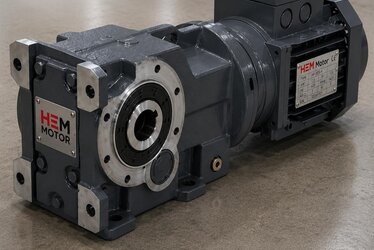
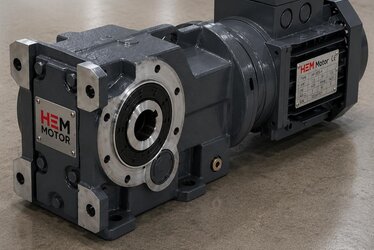
- Reducer drive: On low-speed, high-torque feeder pans (apron feeder, chain feeder) the motor is connected to a helical or bevel-helical reducer. The reducer lowers the motor's high speed and raises the torque to move the heavy material pan.
In both cases, the motor's mounting type (B3 foot, B5/B35 flange) and shaft-pulley compatibility must be selected correctly to avoid vibration and alignment problems.
Common Power Range and Selection Checklist
Scalper feeder motors generally fall within a wide range according to the plant capacity and screen size. Small pre-screens use 5.5–15 kW, medium plants 18.5–45 kW, and large primary scalpers 55 kW and above. The HEM Motor production range from 0.55 kW to 355 kW covers all of these needs. For the methodology of correct kW selection, our article on crusher motor kW selection is a fundamental reference.
We recommend using the following checklist when making your selection:
- Inertia moment (J / GD²): The total inertia of the eccentric and exciter masses must be calculated correctly; the motor thermal capacity must suffice for the run-up time.
- Torque class: Design H should be preferred on a high-inertia scalper.
- Starting method: Soft starter is our standard recommendation; a coupling should be added for very heavy starts.
- Protection class: Minimum IP65 on an open quarry, IP66 on a wash-down plant.
- Body and bearings: Cast iron body, reinforced sealed bearings.
- Duty cycle: S1 continuous; a service factor margin should be left.
- Mounting and transmission: B3/B5/B35 and pulley/reducer compatibility must be verified.
For evaluating screen, feeder and conveyor motors together within a broader plant scope, our article on screen and feeder motors in a crushing-screening plant offers a holistic view. For application-specific product options you can review our stone crushing plant motors and mining sector motors categories, and contact us for current electric motor prices.
Stock, Spare and Downtime Cost: Why Supply Is Critical
If the scalper feeder stops in a crusher plant, the entire production line stops. Since material cannot be fed to the primary crusher, the plant is completely out of service. Therefore a failure of the feeder motor means the loss of not just that motor but of the whole day's production. Considering hourly downtime costs, keeping a spare of critical motors on site or in quickly accessible stock is an economic necessity.
As HEM Motor, thanks to our manufacturer identity, we stand by operations with fast supply in standard powers, flexible production for special requests (IP65/IP66, special shaft, special flange) and spare motor stock. As important as selecting the right motor once is being able to procure it quickly in case of failure, a critical factor that determines the total cost of ownership.
Frequently Asked Questions
Why is a scalper feeder motor considered a high-inertia load?
Because the eccentric weights and exciter masses that generate the vibration have a high inertia moment. While bringing these heavy masses from standstill to rated speed, the motor draws high current throughout a long acceleration period. This means high starting torque, a long run-up time and severe thermal load; it is therefore far more demanding than an ordinary fan or pump load.
Which protection class is required for a scalper feeder motor?
It depends on the site conditions. IP55 may be sufficient in enclosed or relatively clean environments; however, IP65 is recommended against heavy mineral dust on open quarry sites, and IP66 in plants washed with water jets or that are very dusty. HEM Motor produces IP55 as standard and offers IP65/IP66 on request.
Should I prefer a soft starter or star-delta?
On high-inertia scalper feeders, a soft starter is generally the safer choice; by ramping up the voltage gradually it limits both the current and the mechanical shock. Although star-delta is more economical, because it produces low torque in the star position the motor may fail to break the load on very high-inertia loads. For very heavy starts, the additional use of a slip coupling is recommended.