English
 Türkçe

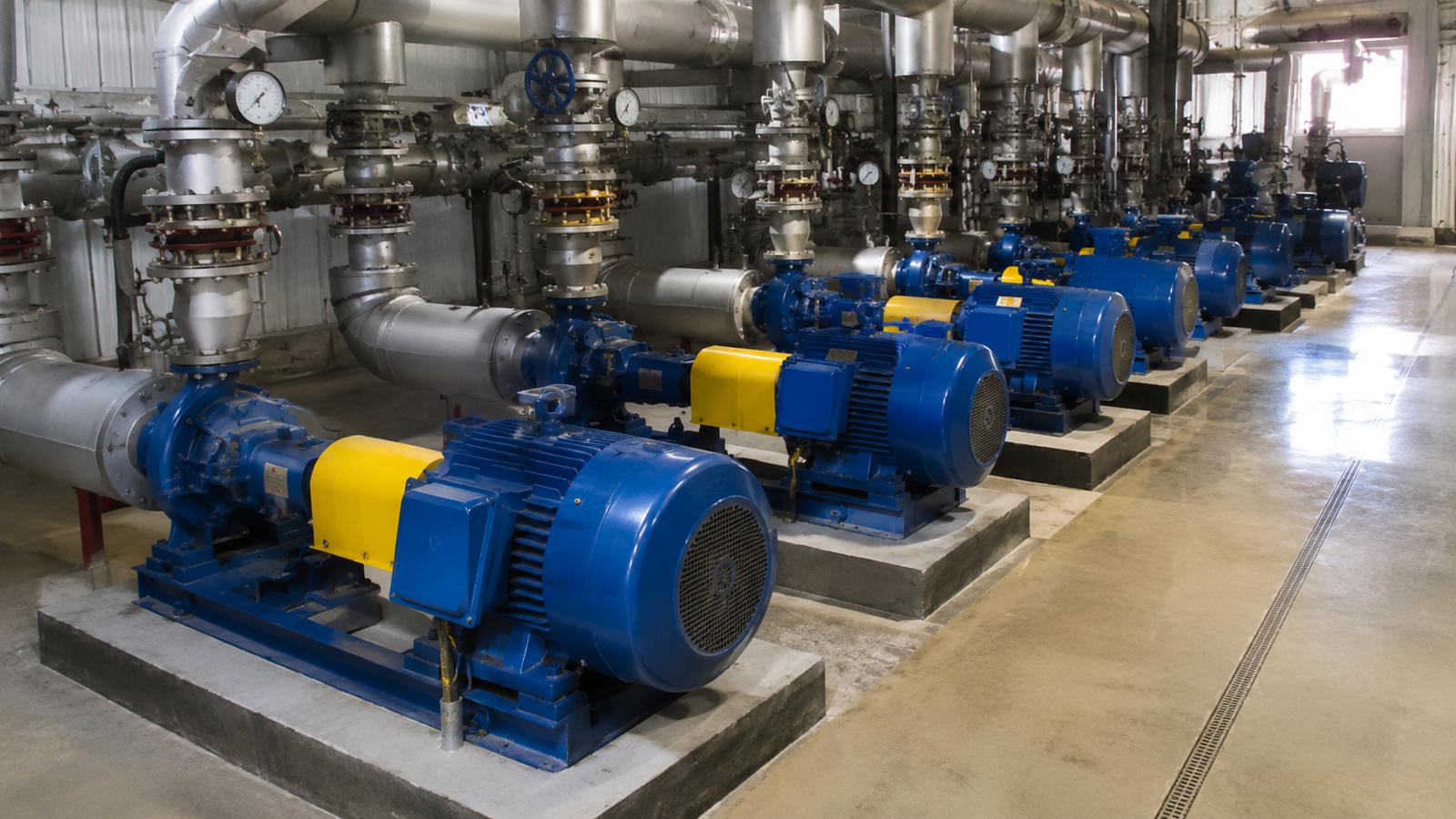

In crusher and aggregate washing plants, process water is the lifeblood of the system. The water used to wash the material leaving the crusher, to spray the screens, and to recover fine material from settling ponds is kept in a continuous loop. The process water recirculation pump motor that drives this loop is one of the hardest-working elements of the plant, because it operates — often without interruption — in an environment that is at once dusty, wet and abrasive.
In this article we cover how to correctly select the motor driving the process water recirculation pump in crusher and washing plants. The abrasiveness of slurry, continuous S1 duty, frequent starting and stopping, and outdoor conditions determine every detail: from frame material to protection class, from speed selection to bearing and sealing solutions. With the right motor, plant stoppages are minimised; with the wrong one, the pump room becomes a constant maintenance burden. You can review all industrial motor families through the homepage.
When the recirculation pump stops, it is not just one pump but the entire washing line — and therefore the crusher feed — that is interrupted. For this reason, motor selection requires not a "just keep it turning" approach, but an engineering approach that withstands continuous operation and abrasion.

The Operating Environment of the Recirculation Pump Motor
The environment in a crusher plant is completely different from clean in-factory conditions. There is constant stone dust in the air, the floor is wet, and splashing slurry reaches every surface. A cast-iron electric motor is far more durable than an aluminium-bodied motor in these conditions, providing superior protection against both mechanical impact and corrosion.
Dust, Moisture and Corrosion
The motor's most critical enemies are dust and moisture. Stone dust gradually coats the cooling fan and fins, reducing heat dissipation; if moisture reaches the winding and bearing, it causes failure in the short and long term. For this reason an IP55 protection class is the minimum for a recirculation pump motor, with IP65/66 preferred on request. Cataphoresis (KTL) coating and additional corrosion protection reduce the damage that salty, mineral-laden process water inflicts on the frame.
Continuous Operation and Frequent Starting
Recirculation pumps usually run in S1 continuous duty, close to 24 hours a day. They may also start and stop frequently under automation tied to pond level. Frequent starting increases the motor's heating and mechanical stress. Therefore F insulation class (H where needed), thermal protection (PTC or PT100) and a robust frame design preserve the motor's life under this regime. Our power and speed selection guide is useful for the duty-speed relationship.
- At least IP55 protection class (IP65/66 on request)
- F insulation (H in harsh regimes), S1 continuous duty
- Robust cast-iron frame and KTL corrosion protection
- Thermal protection: PTC thermistor or PT100
- Reinforced bearings and quality shaft seal
- Effective grounding and terminal box sealing
- 4-pole 1500 rpm standard; 2-pole for high head
Speed and Power Selection
The most common choice for recirculation pumps is a 4-pole 1500 rpm motor. This speed strikes a good balance between flow and head for most centrifugal pumps and provides lower vibration and longer bearing life. For applications requiring high head — pumping fine slurry to distant settling ponds — a 2-pole 3000 rpm motor may be preferred. However, high speed also increases seal and impeller wear in abrasive water, so speed selection must be made together with the pump curve.
Pump Curve and Operating Point
Motor power is selected by adding a safety margin to the shaft power at the pump's operating point. Since the density of slurry is higher than that of clean water, the power the pump draws is also greater. Therefore slurry density must be considered in the power calculation; a motor selected for clean water may be continuously overloaded in slurry and trip the thermal protection. Correct sizing protects both the motor and the pump.
Frame Material: Why Cast Iron?
In heavy-industry environments like a crusher plant, frame material selection is the first decision that determines motor life. Aluminium-bodied motors are light and economical, but cannot match the durability of cast iron against impact, vibration and corrosion. In a pump room with constant stone dust, splashing slurry and mechanical impact, the cast-iron electric motor stands out clearly with both mechanical durability and heat-dissipation capability.
A cast-iron frame is also advantageous for vibration damping. Vibration from a worn pump causes less damage in a solid cast-iron body. This damping characteristic supports bearing life and keeps terminal connections sound for longer. This choice, which reduces maintenance frequency over the plant's life, more than repays the small price difference in the initial investment.
Mechanical Durability Against Wear
Abrasive slurry gradually wears the pump's impeller and seal. This wear increases the load on the shaft and the vibration; vibration in turn reflects directly onto the motor's bearings. In recirculation pump motor selection, reinforced bearings, correct lubrication and, where needed, an additional grease nipple extend bearing life under this harsh regime. Shaft-to-pump alignment and a flexible coupling also reduce vibration, protecting both pump and motor.
Sealing and Cable Entry
The sealing of the terminal box and cable gland is a detail not to be overlooked in a motor working outdoors. A wrong size or loose cable gland lets slurry and moisture into the box, leading to short circuits and insulation breakdown. The correct gland size, appropriate IP class and proper tightening ensure the motor's electrical safety.
Automation and Variable Speed Drive
In many modern plants, recirculation pumps are controlled by a variable speed drive according to pond level and line demand. The drive adjusts the pump's speed to demand, saving energy and reducing the mechanical shock of frequent starting. For motors running on a drive, inverter-duty insulation and, where needed, a dV/dt filter should be considered. In motors running long periods at low speed, forced cooling (an additional fan) may be required, since the motor's own fan may not provide enough cooling.
Plant Continuity and Spare Motors
Crusher plants are operations under high production pressure; a motor failure turns into hourly production losses. For this reason, keeping a spare of the critically positioned recirculation pump motor in stock — or working with a source that can supply quickly — is the cheapest insurance for plant continuity. When standard ratings of the cast-iron electric motor family can be supplied from stock, the line can be returned to service quickly during emergency replacements. You can review our efficient electric motor product group for industrial high-efficiency options.
Operating Cost with an Efficient Motor
A continuously running recirculation pump motor consumes significant energy by turning for most of the year. Therefore a high efficiency class is reflected directly in the electricity bill in the field. Although wear and durability are the priority, choosing an efficient motor where possible reduces lifetime cost. For pump and fan applications, our efficient motor options can be evaluated.
Commissioning and First Start
When installing a new recirculation pump motor, correct commissioning is as important as correct installation. The motor's direction of rotation must match the pump's working direction; a pump turning the wrong way gives no flow and is damaged over time. At first start, a current measurement should check whether the motor is running above its rated current. A continuous draw above rated current indicates either incorrect sizing or a problem in the pump. The thermal relay and protection settings should be set according to the motor's nameplate values, so that protection that is set too high does not fail to protect the motor under stress, and a setting that is too low does not cause unnecessary stoppages.
Maintenance Plan and Spare Parts
A periodic maintenance plan is essential for a motor working in a harsh environment. Bearing relubrication intervals, fan-cowl cleaning, terminal box sealing checks and insulation measurement are the basic items of this plan. In motors with grease nipples, the correct grease type and quantity must be used; over-greasing is as harmful as under-greasing. Keeping spares of critical bearings and the seal in stock enables fast intervention when a fault occurs. In a very dusty position, regular cleaning of dust build-up on the fan cowl is also necessary to keep cooling effective.
Settling Pond and Water Recovery
In aggregate washing plants, process water is separated from fine material in settling ponds and reused. The clarified water from these ponds is pumped back to the washing screen and spray nozzles by the recirculation pump. The better the system works, the lower the fresh-water consumption — which matters both for cost and for the environment. The uninterrupted, efficient operation of the pump motor directly affects the continuity of this water saving. When the pond level drops or the sludge layer rises, the pump draws a denser mixture, changing the motor's load. A process water recirculation pump motor selected with a safety margin keeps running without tripping even under sudden load increases.
Frequently Asked Questions
What protection class is needed for a recirculation pump motor?
Because of the dusty and wet environment of a crusher plant, at least IP55 protection class is needed; IP65/66 is preferred in positions exposed to splashing slurry and heavy dust. A cast-iron frame and cataphoresis coating also increase resistance to corrosion, and the terminal box and cable gland should share the same protection class.
Should I choose 4-pole or 2-pole?
The standard choice for recirculation pumps is a 4-pole 1500 rpm motor; it provides lower vibration and longer bearing life. A 2-pole 3000 rpm motor is preferred only in applications requiring high head, pumping water to distant or elevated ponds. The decision must be made together with the pump curve and operating point, bearing in mind that high speed increases seal and impeller wear in abrasive water.
Why should I select the motor more powerfully for slurry?
The density of slurry is higher than that of clean water, which increases the shaft power the pump draws. A motor selected for clean water may be continuously overloaded in slurry and trip the thermal protection. Therefore slurry density must be considered in the power calculation and an appropriate safety margin added, sizing for the harshest operating point.