English
 Türkçe




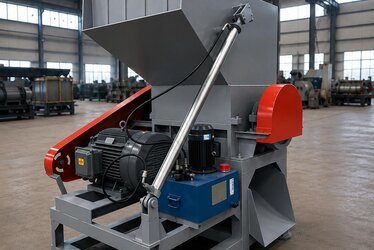
In heavy-duty drives like crushers (stone breakers) and mills, the biggest challenge is the enormous inertia of the load. From standstill to full speed, the motor must supply high torque and high current for a long time to bring a large crusher's flywheel and jaw or a mill's drum up to speed. At direct-on-line (DOL) starting, this means a starting current many times the motor's rated current and a long heating period; the motor overheats during starting, winding life shortens, and at high inertia the motor can even "lock" to the load and burn. This is where a fluid coupling comes in: an oil-filled hydrodynamic coupling placed between the motor and load lets the motor start almost unloaded and take over the load gradually. This article covers how a fluid coupling provides soft start, how it lowers starting current and motor heating, the delay-chamber coupling type, coupling and motor power selection, and a comparison with DOL.
How Does a Fluid Coupling Work?
A fluid coupling is a hydrodynamic element that transmits power with no mechanical connection, only through the motion of an oil fluid. Inside it has an impeller (pump wheel) connected to the motor shaft and a runner (turbine wheel) connected to the load shaft; there is no direct contact between them. When the motor turns, the impeller throws the oil outward, and the oil strikes the runner and turns it. Because the link between motor and load is not "hard" but "soft" through the fluid, the motor accelerates the load gradually rather than with a sudden shock.
At the start instant, since the runner (load) is not yet turning, there is large slip between motor and load; the motor quickly reaches its own free speed while the oil slowly accelerates the load. As the load comes up to speed, slip falls and in normal operation the coupling behaves almost like a rigid connection with only a few percent slip. So the motor brings the heavy load on gradually through the coupling rather than shouldering it directly. This protects the motor from starting stress especially in high-inertia crusher and mill drives.
Lowering Starting Current and Motor Heating
The biggest benefit of a fluid coupling is that the motor can start without feeling the load. A motor trying to lift a high-inertia load with DOL draws high starting current for a long time; this current heats the motor winding and rotor. The longer the start, the higher the motor's heat load; with high-inertia loads the motor runs into the allowed number of starts and the locked-rotor withstand time (tE). With a fluid coupling the motor reaches its own speed almost unloaded in a short time; because the coupling brings the load on gradually, the time the motor spends at high current is shortened. The result: lower effective starting current, less motor heating and longer motor life.
This benefit also reflects on the grid: a long, high starting current can cause voltage collapse on the grid; the fluid coupling softens this shock, relieving both the motor and the grid. The coupling also protects the motor and mechanical drivetrain by slipping during sudden overload or jamming; in impact events like rock jamming the coupling acts as a buffer.
Delay-Chamber (Delay Filling) Coupling
A standard fluid coupling provides soft start; but for very high-inertia loads, a delay-filling-chamber coupling type is used for even more controlled starting. In this design there is an extra oil chamber inside the coupling; at the start instant some of the oil in the working chamber is drawn into this reservoir, keeping the torque transmitted at start low. The motor first accelerates almost unloaded, then the oil gradually returns to the working chamber and torque rises slowly to bring the load on.
Delay filling keeps the motor at much lower current throughout the start and spreads the load's acceleration over a long ramp. This is critical especially when inertia is very high, as in large mills, long belt conveyors and large jaw crushers. So the motor stays within thermal limits even at the toughest moment of the start, and the motor runs safely in facilities with frequent starts.
Comparison of DOL and Fluid-Coupling Starting
The table below summarizes whether to lift the same high-inertia load with direct-on-line (DOL) or with a fluid coupling:
| Feature | DOL (Direct) | With Fluid Coupling |
|---|---|---|
| Starting current | ~6-8x rated, for a long time | Much lower effective current as motor starts unloaded |
| Motor heating | High; winding strained in long start | Low; motor reaches speed quickly |
| Starting shock | Hard; shock to shaft, coupling and gears | Soft; torque rises gradually |
| Jam/overload protection | None; motor can lock and burn | Coupling slips to protect |
| Grid effect | High; voltage-collapse risk | Low; soft current profile |
| Cost/complexity | Low | Extra coupling cost, oil maintenance |
The table shows that for low-inertia, easy-starting loads DOL is sufficient and economical; but in high-inertia heavy-duty drives like crushers and mills, a fluid coupling protects the motor both thermally and mechanically and lowers failure and downtime cost in the long run. A soft starter electrically limits current but cannot provide the mechanical shock absorption and jam protection of a fluid coupling as well; so at very high inertia a fluid coupling is preferred.
The Fluid Coupling's Contribution to System Life
The benefit of a fluid coupling is not limited to the start instant; it contributes to the life of the whole drivetrain. In a hard (rigid) connection, every shock from the load is transmitted directly to the motor and intermediate elements. When a rock jams in a crusher or a sudden load rise occurs in a mill, in a rigid system this shock reaches the motor shaft, coupling and gears at full force. A fluid coupling, by contrast, absorbs these shocks through the oil; the coupling slips to soak up the excess torque and protects the motor and mechanical drive. This noticeably reduces costly failures like shaft breakage, coupling damage and gear wear.
In addition, a fluid coupling eases load sharing in large systems where several motors drive the same load; each motor takes over the load gradually through its own coupling and small speed differences between them are balanced by coupling slip. All these features show that a fluid coupling is not just a starting device but also a protection and balancing element. When chosen correctly and maintained regularly, it more than repays its extra investment cost through reduced failures and downtime.
Coupling and Motor Power Selection
In a fluid-coupling system both the motor and the coupling must be sized correctly. Motor selection is based on the load's continuous power need and the slip loss in the coupling; the coupling creates a small slip loss (usually a few percent) in normal operation, and the motor is selected to cover this loss too. The coupling is selected by the power to be transmitted, the motor speed and the load's moment of inertia; very high-inertia loads need the delay-chamber model.
- Motor power: The load's continuous power need + coupling slip loss; a safety margin for heavy duty.
- Motor speed: Usually 4- or 6-pole in crusher drives; adapted to the load speed by the coupling and pulley ratio.
- Coupling size: Transmitted power and speed; the load's moment of inertia (J) and starting time.
- Coupling type: Standard or delay-chamber? Delay-chamber if inertia is very high.
- Motor frame: A robust cast-iron frame and suitable IP protection for heavy duty.
When all these choices are evaluated together, the motor is protected from starting stress, the coupling brings the load on safely and the system runs long. Wrong sizing leads either to motor overheating or to the coupling's oil heating and degrading from excessive slip.
The Relationship Between Moment of Inertia and Starting Time
At the heart of fluid-coupling selection lies the relationship between the load's moment of inertia (J) and the starting time. A motor produces continuous torque to accelerate the load during starting; the higher the load inertia, the longer acceleration takes at the same torque. As starting time lengthens, the motor's heat load rises and at some point the motor exceeds the allowed starting time. This is exactly the problem a fluid coupling solves: the motor reaches speed in its own short starting time independent of the load, while the load's long acceleration happens through the coupling without straining the motor.
The table below summarizes the typical inertia level and recommended starting solution by load type:
| Load Type | Inertia Level | Starting Difficulty | Recommended Solution |
|---|---|---|---|
| Centrifugal pump | Low | Easy | DOL or star-delta |
| Belt conveyor (short) | Medium | Medium | Soft starter or fluid coupling |
| Jaw/cone crusher | High (with flywheel) | Hard | Fluid coupling |
| Large mill / long belt | Very high | Very hard | Delay-chamber fluid coupling |
As the table shows, as inertia rises starting gets harder and the need for a mechanical soft-start solution grows. Because crusher and mill drives typically fall in the high and very high inertia class, a fluid coupling is almost a standard solution in these applications. The presence of a flywheel increases inertia further; the flywheel stores energy between crushing strokes to give the jaw smooth torque, but it also enlarges the inertial load the motor must overcome at start. So in flywheel crushers, a fluid coupling is the most effective method to protect the motor from this large inertia.
Operation and Maintenance Notes
In fluid-coupling systems the oil level and oil quality must be checked regularly; low oil or degraded oil increases slip and causes heating. The coupling's fusible plug protects the system by dumping oil on overheating; checking this plug must not be neglected. On the motor side, winding temperature protection (PTC/PT100) and correct overload setting further secure against starting stress. In facilities with frequent starts, the heat load of both the coupling and the motor must be evaluated together, and the starts-per-hour limit must be respected.
Frequently Asked Questions
Does a fluid coupling really lower starting current?
Yes, indirectly. Because a fluid coupling lets the motor start almost unloaded, the motor reaches speed quickly and spends less time at high current. Although the instantaneous peak current still depends on the motor's own characteristic, the effective starting current and duration drop noticeably; this reduces motor heating and the grid shock.
Soft starter or fluid coupling?
A soft starter electrically limits current and works well for low-to-medium inertia loads. A fluid coupling is a mechanical solution; at very high inertia it provides soft start, jam protection and shock absorption. For very high-inertia drives like crushers and large mills, a fluid coupling (delay-chamber if needed) is preferred.
Does a fluid coupling need maintenance?
Yes. The oil level and quality must be checked periodically, the fusible plug observed and any leakage monitored. With regular maintenance a fluid coupling runs safely for many years and protects the motor from starting stress.
Get Support for Your Crusher and Mill Motor
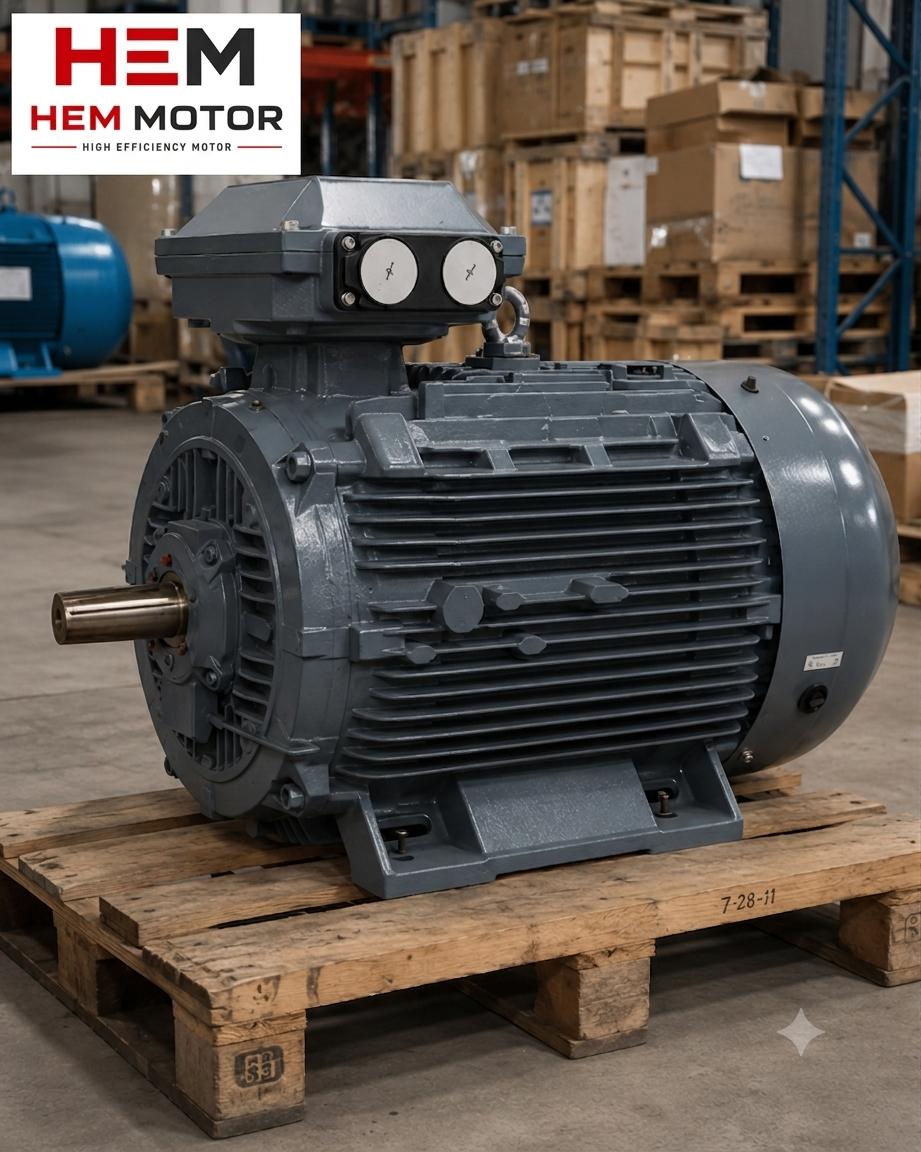
In high-inertia crusher and mill drives, the right motor and fluid coupling selection provide both soft start and long motor life. As HEM Motor we supply robust-frame motors for heavy-duty applications quickly from stock and guide you in selecting power and speed compatible with the coupling. Share your facility's load inertia, crusher/mill type and speed details; request a quote for the right motor and starting solution, and let us plan fast delivery with manufacturer stock.
Related guides: flywheel and inertia under impact load, starting the crusher motor, crusher motor kW selection, starting time and moment of inertia (J) and hammer mill motor selection.