English
 Türkçe

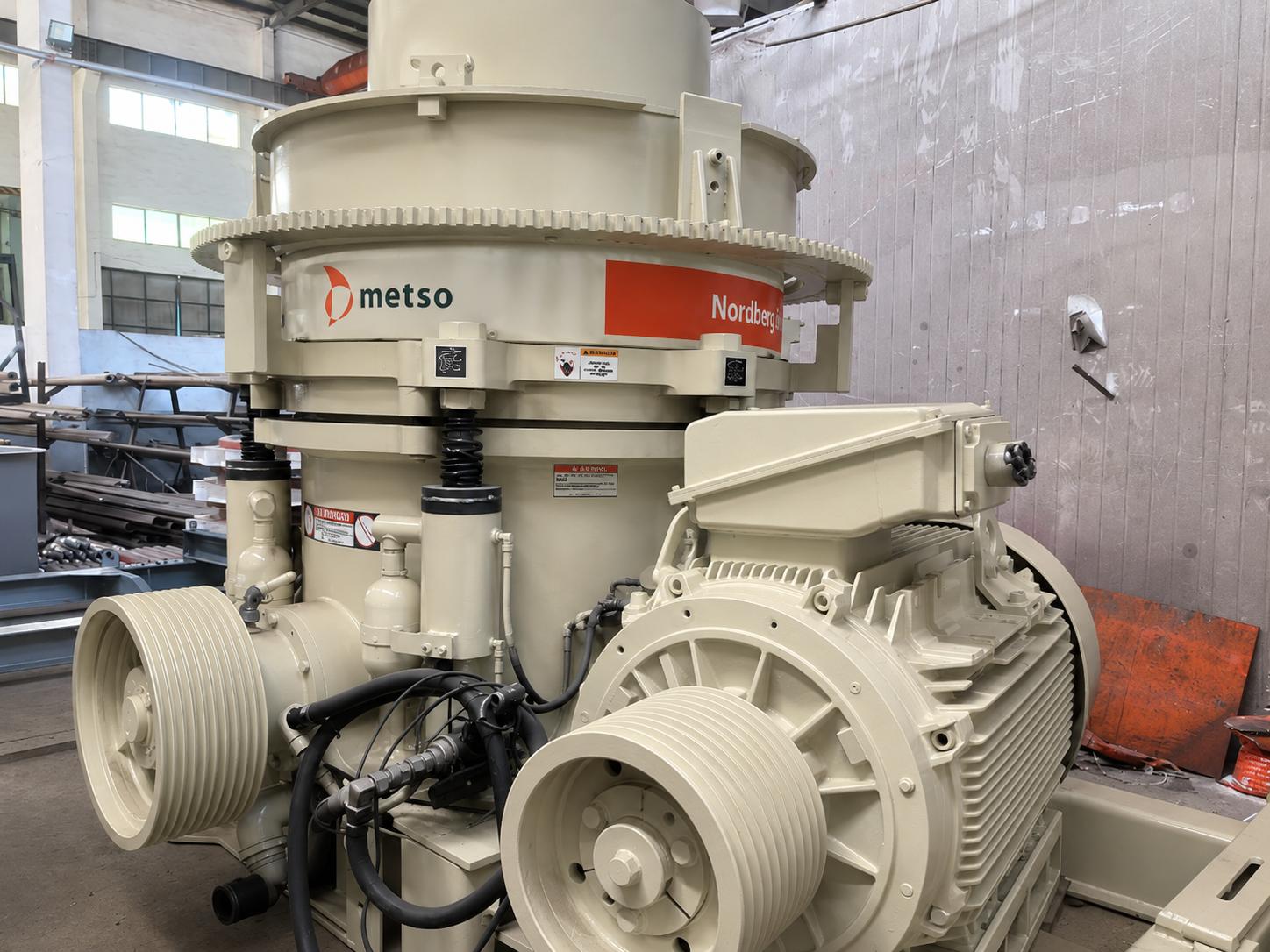

One of the most common methods of classifying ore by particle size in crusher and mining plants is using a hydrocyclone (cyclone). A hydrocyclone separates the slurry pumped into it into fine and coarse particles by centrifugal force. However, for this separation to work, the slurry must be fed to the cyclone at a specific and stable pressure; the hydrocyclone feed pump performs this task. The motor that drives this pump must operate under abrasive slurry, continuous heavy duty and a stable pressure requirement. A poorly selected feed pump motor disrupts both cyclone performance and the entire beneficiation line.
As HEM Motor, when we supply motors to mining and mineral processing plants, we focus on three main challenges: the dust and moisture that abrasive slurry spreads to the surroundings, a continuous full-load regime, and a stable drive that maintains cyclone pressure. In this article we explain how a hydrocyclone feed pump motor meets these conditions and the correct supply. You can review our mining and stone-crushing range and current electric motor prices on our product pages.

How a Hydrocyclone Works and What It Demands From the Motor
A hydrocyclone is a classification device with no moving parts; the only thing that achieves separation is the velocity of the slurry pumped into it and the centrifugal force it creates. Therefore the quality of separation depends directly on the stability of the feed pressure. If the pressure drops, the fine-coarse separation is disrupted; if the pressure fluctuates, the classification becomes inconsistent.
This creates a clear requirement for the motor: the pump must run at a stable speed, continuously and under abrasive slurry. We address power, protection and supply in abrasive slurry pumps over a similar environment in our mine dewatering and slurry pump motor selection article.
Stable Pressure and Speed
The cyclone's cut point is determined by the feed pressure. The motor must keep this pressure constant by rotating the pump at a stable speed. In plants requiring variable feed, the pressure can be adjusted with speed control (VFD); in this case the motor must be selected as drive-compatible.
Abrasive Slurry
The slurry fed to the hydrocyclone is abrasive because it contains solid mineral particles. Wear inside the pump is inevitable; while the motor does not contact the slurry directly, it runs in an environment full of dispersed dust and moisture. This means an aggressive environment for the motor.
Abrasive Slurry and Environmental Conditions
Splashing, moisture and mineral dust are constantly present around a slurry pump. Even though the motor does not contact the slurry directly, it must operate in this aggressive environment. This creates three separate threats for the motor: insufficient protection class, contamination of the cooling surface, and particles entering the bearing.
- Protection class: In a site with heavy splashing, dust and moisture, a minimum of IP55 is expected; in very aggressive environments IP65/IP66 is preferred. We cover dust sealing in a crusher motor in our dust sealing and IP65/IP66 protection in crusher motors article.
- Frame material: A cast-iron frame is preferred against impact, vibration and external factors; its rigid structure is an advantage under a heavy-duty regime.
- Oil seal and sealing: Seals at the shaft outlet prevent dust and splashed slurry from reaching the bearing. We explain sealing measures in our oil seal and sealing in cast-iron motors article.
Our motor protection in quarries and mines: dust, moisture and impact article summarizes whole-site protection.
Selecting the Correct Power and Speed
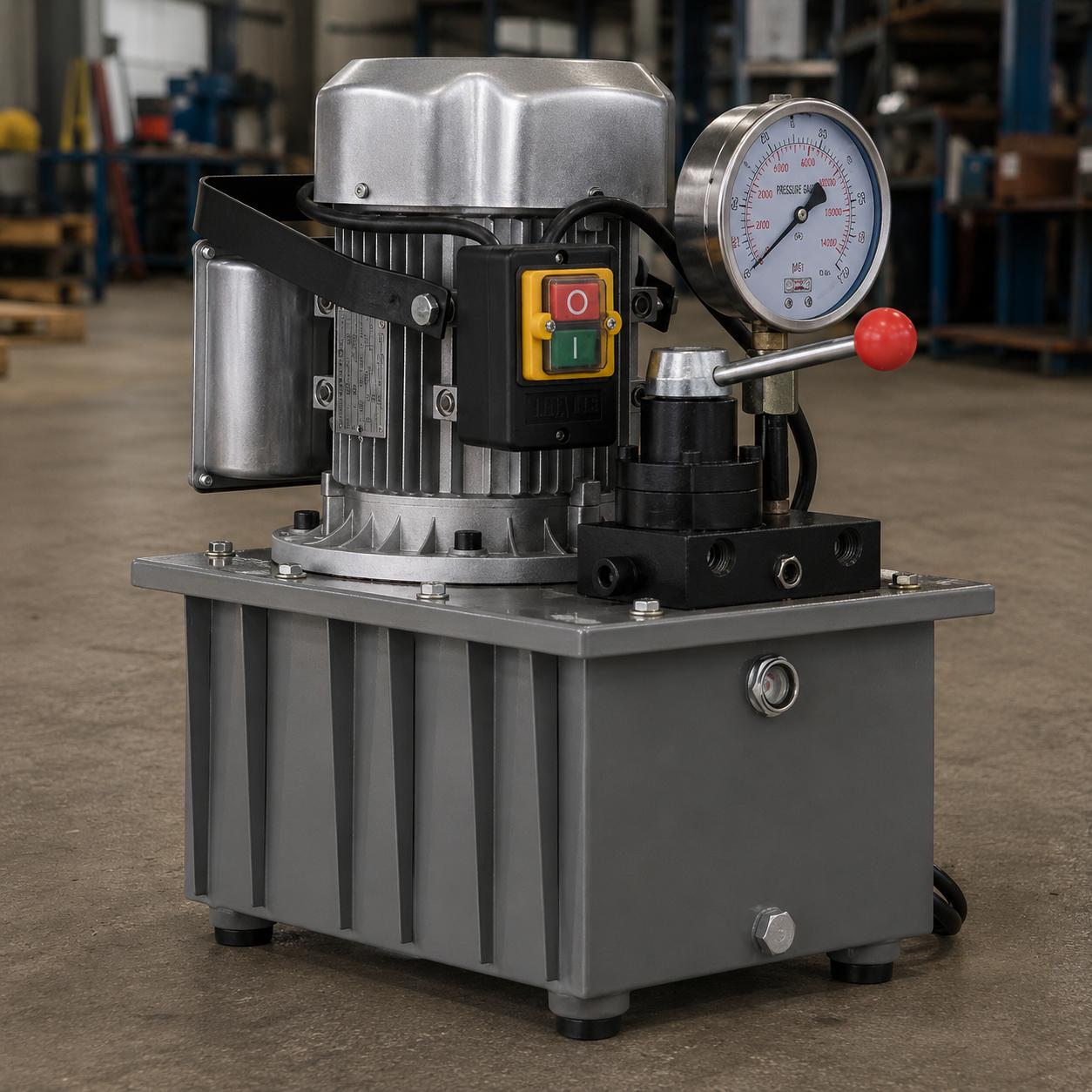
The power of a hydrocyclone feed pump motor is determined by the feed flow and pressure the cyclone requires. As the density of the slurry (solids ratio) increases, the power the pump draws also increases; therefore sizing must be done over the slurry, not water.
- Power margin: Because slurry is denser than water, the pump draws more power; the motor must be selected with a power margin according to this density.
- Speed and pole count: Feed pumps are mostly high-speed centrifugal pumps; 2/4 poles are selected according to the application speed.
- Duty type: Since the beneficiation line runs continuously, the motor must be selected for S1 (continuous) duty.
We address matching flow, head and power in a centrifugal pump motor in our centrifugal pump motor selection: flow, head and power matching article, and the effect of NPSH and cavitation in our NPSH and cavitation in centrifugal pump motor selection article.
Pressure Adjustment with Speed Control (VFD)
To maintain the cyclone's separation performance, the feed pressure may need to be kept constant or adjusted per process. The most efficient way to achieve this is to adjust the motor speed with a frequency drive (VFD) instead of throttling a valve. While throttling a valve wastes energy, speed control both saves energy and keeps the pressure precise.
- Speed control instead of valve throttling: Changing the pump speed is far more efficient than throttling a valve.
- Drive compatibility: A motor that will run with a VFD must be selected as drive-compatible (in terms of insulation and bearing current).
- Stable control: The motor speed can be adjusted automatically with feedback from a pressure sensor.
You can review the use of a speed-controlled motor in crusher feed in our speed-controlled (VFD) feeder motor in crusher feed article, and bearing current protection in a VFD system in our bearing current and shaft grounding ring in electric motors article.
Cooling and Continuous Full-Load Regime
Mineral processing plants run at high capacity, uninterrupted. This means the hydrocyclone feed pump motor runs continuously at full load (S1). Continuous full load requires the heat the motor produces to be dissipated continuously; if abrasive dust covers the cooling surfaces, the risk of overheating rises.
- Thermal capacity: The motor must be selected for continuous full load (S1); it should not be sized for intermittent duty.
- Cooling method: In surface-cooled (IC411) motors, keeping the fan cover and fins clean is critical; regular cleaning is needed on a dusty site.
- Insulation class: In a hot and dusty environment, Class H insulation instead of F provides a temperature margin and extends life.
We detail insulation class selection in hot and dusty environments in our motor in hot and dusty environments: insulation class (F/H) and cast-iron frame selection article, and cooling issues under continuous full load in our motor cooling and overheating in crusher plants article.
Other Motorized Equipment on the Hydrocyclone Line
A hydrocyclone classification circuit does not consist of the feed pump alone; it includes a chain of motorized equipment that prepares, transports and recovers the slurry. Every link of this chain must be supplied correctly for the cyclone to operate efficiently.
- Sump agitator: Drive motors that agitate the sump so the slurry does not settle.
- Overflow/underflow pumps: Pump motors that transport the fine and coarse fractions at the cyclone outlet.
- Thickener drive: Rake drive motors that dewater the fine fraction.
- Conveyor and screw motors: Drives that transport the dewatered material.
We address the paste thickener rake drive motor in our paste thickener (thickener) rake drive motor in mining and crusher plants article, and screw conveyor motors in our mine and ore screw conveyor motor article. Evaluating all this equipment as a single whole provides a consistent power band, a common spare strategy and faster fault response.
Supply and Critical Spare Plan
When the hydrocyclone feed pump stops, the cyclone's classification and therefore the entire beneficiation line stop. For this reason, feed pump motors must be on the plant's critical spare list. As HEM Motor, in mining supply we prepare an exact equivalent based on the existing motor's nameplate and offer stock and fast-supply options at critical power ratings. You can review our mining range on our mining sector electric motor page, and for stone-crushing applications on our stone crushing and screening plant motors page.
Replacing the Existing Motor Like-for-Like
When a feed pump motor fails, the only need is often to quickly source the exact same motor. For this, the existing motor's nameplate must be read correctly and conveyed completely. The basic information to read from the nameplate is:
- Power (kW) and speed (rpm) or pole count.
- Frame size (IEC frame), mounting type (B3/B5/B35) and shaft diameter.
- Voltage, frequency, current and connection (star/delta).
- Protection class (IP) and insulation class.
We explain like-for-like equivalent selection from the nameplate step by step in our avoid the wrong motor delivery: like-for-like matching by nameplate before ordering article.
Frequently Asked Questions
Why does a hydrocyclone feed pump motor require a stable speed?
A hydrocyclone separates using only feed pressure, with no moving parts; the cut point depends directly on pressure. If the motor does not rotate the pump at a stable speed, the pressure fluctuates and the classification becomes inconsistent. The motor must therefore be selected to run continuously at a stable speed; if variable feed is required, the pressure should be adjusted precisely with speed control (VFD).
What protection class is required in an abrasive slurry environment?
In a mineral processing site with heavy splashing, dust and moisture, a minimum of IP55 is expected; in very aggressive environments IP65 or IP66 protection is preferred. In addition, the oil seals at the shaft outlet must be capable of preventing abrasive particles from reaching the bearing, and the cooling surfaces must be cleaned regularly.
Should I keep a feed pump motor as a critical spare?
Yes. Because the cyclone's classification and the entire beneficiation line stop when the hydrocyclone feed pump stops, these motors should be on the critical spare list. When you convey the existing motor's nameplate, we prepare an exact equivalent and build a supply plan that minimizes downtime with stock and fast-supply options at critical power ratings.