English
 Türkçe

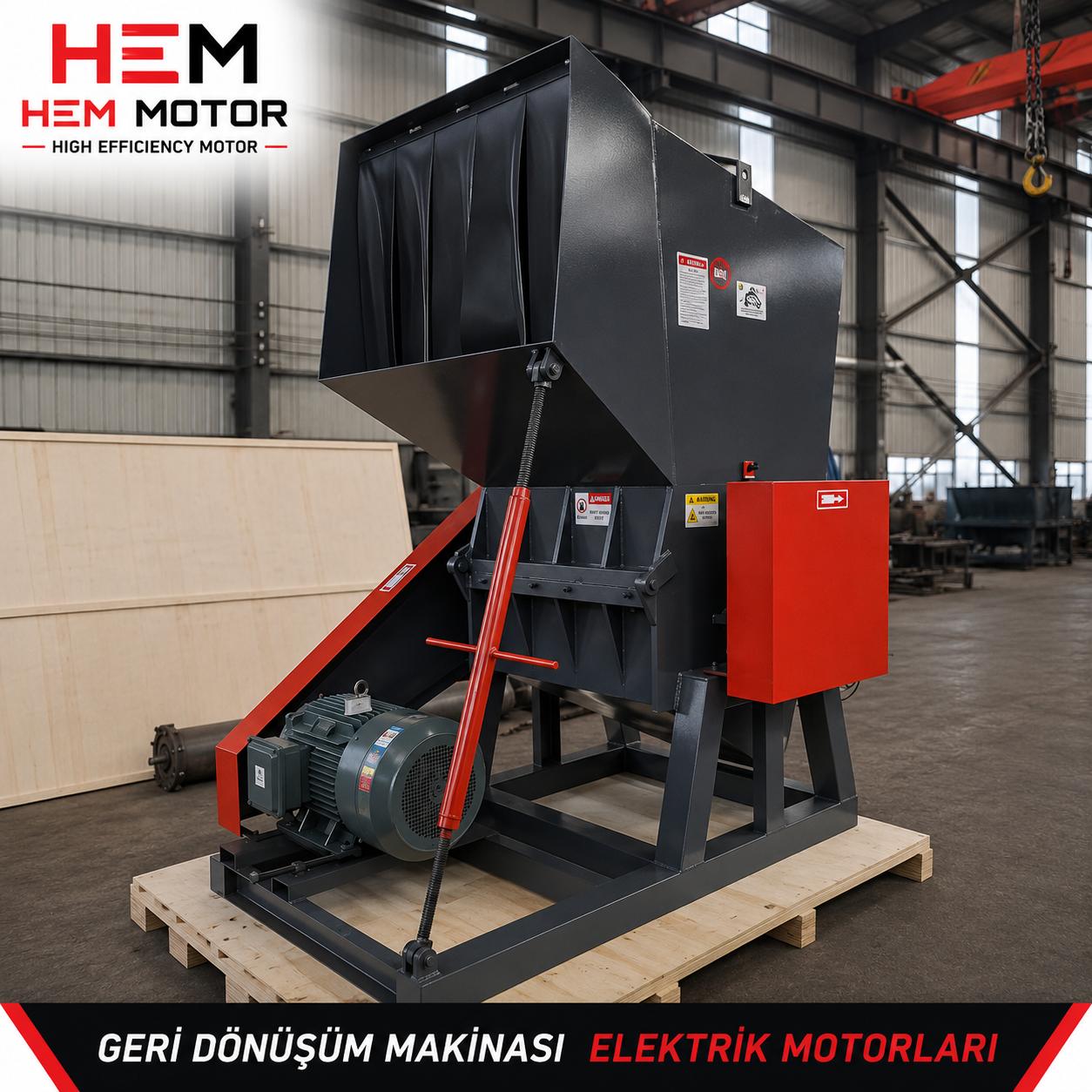

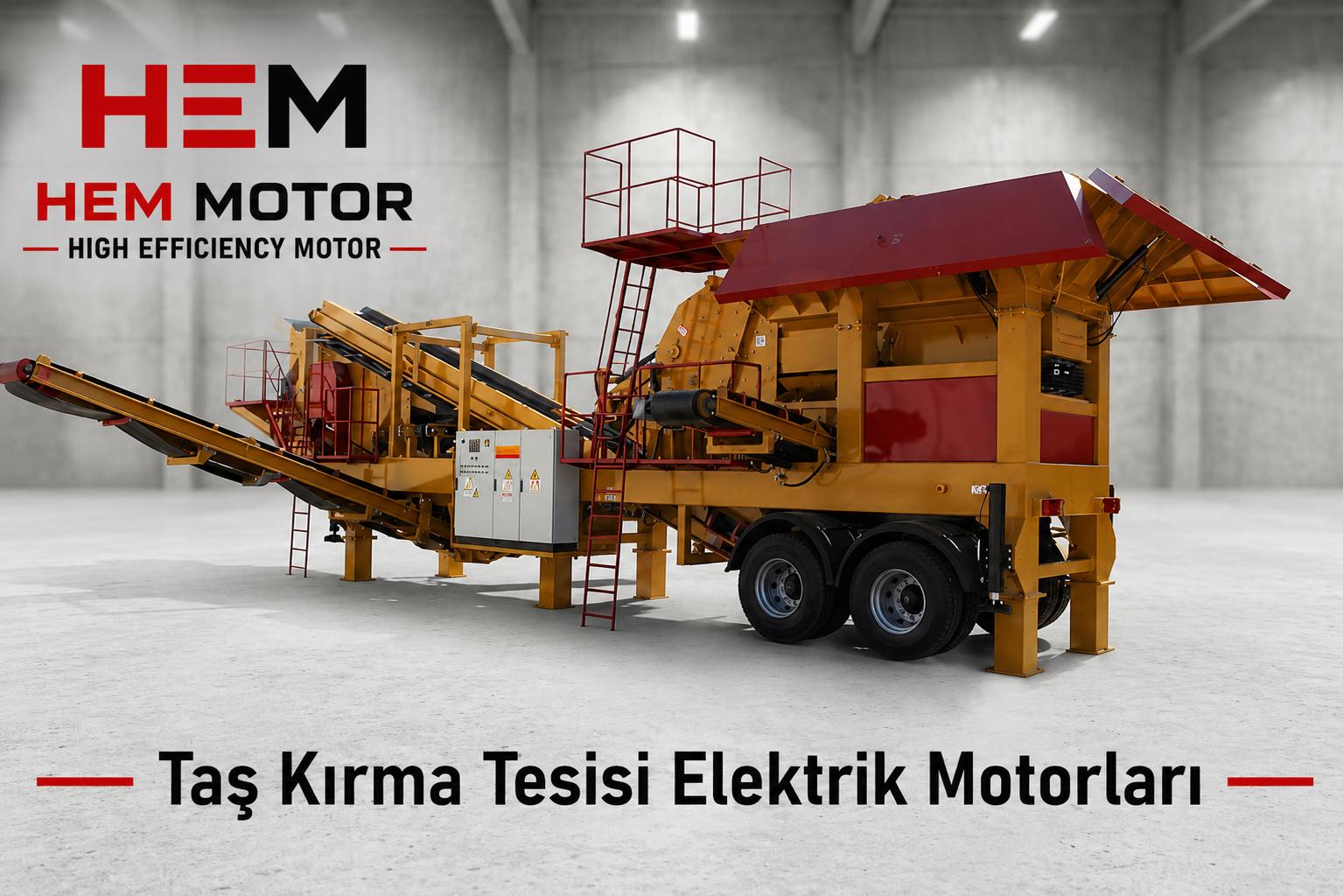
One of the most critical factors determining a crusher's performance in a stone crushing plant is the correct and balanced feeding of material to the main crusher. If the feeder runs too fast, the crusher chokes, production stops and the motor is strained; if it runs too slowly, the crusher runs empty, capacity drops and energy is wasted. The most effective way to strike this delicate balance is to run the feeder with a speed-controlled motor (a VFD, that is, a variable frequency drive). The frequency drive adjusts the feed rate in real time to keep the crusher's load constant, prevents choking and protects both production and motor life. In this guide we address the speed-controlled feeder motor in crusher feeding under the headings of choke-preventing feed rate, constant load and correct feeder motor supply.
Why Speed-Controlled Feeding? The Choking Problem
When crusher feeding is done at a fixed speed, fluctuations in the material flow are passed directly to the crusher. When material in the bunker becomes dense or large pieces arrive, the crusher goes above full load; when material decreases, it runs idle. This fluctuation both lowers production efficiency and imposes a constantly changing load on the crusher motor. Choking, that is, feeding above the crusher's capacity, is the worst-case scenario: the crusher stalls, the line clogs and a stoppage is required to intervene.
Speed-controlled feeding solves this problem at its source. The frequency drive instantly increases or decreases the feeder motor's speed according to the crusher's load state. Thus the optimum amount of material always reaches the crusher, the load is kept constant and choking is prevented. To plan the selection of the other motors besides the feeder in a crusher plant holistically, our content on motors besides the main crusher in a crushing-screening plant: screen, feeder and belt drive is a good start.
Feed Rate Adjustment with a Variable Frequency Drive (VFD)
A frequency drive adjusts the motor's speed by changing the frequency of the voltage supplied to the motor. When the feeder is a belt or a vibrating chute, the motor's speed directly determines the feed rate. The operator or automation system can adjust the feed speed in real time by looking at the crusher's load indicator (current or power). This is not possible with a fixed-speed motor.
Automatic Load Control
In advanced plants, the current drawn by the crusher motor is used as a feedback signal. When the current rises (the crusher is filling), the frequency drive lowers the feeder speed; when the current drops (the crusher is emptying), the feed speeds up. This closed-loop control keeps the crusher at the optimum load at all times. You can find how a frequency drive works with an asynchronous motor and when it is necessary in detail in our article on variable frequency drive (VFD) with asynchronous motor.
Soft Start and Mechanical Protection
Another important benefit of the frequency drive is that it brings the feeder up to speed with a gentle ramp. In direct-on-line starting the feeder engages suddenly and a shock is imposed on both the motor and the mechanical transmission. Because start-up with a VFD is gradual, transmission elements such as belts, couplings and reducers are strained less and their life is extended. This is especially important for feeders that have to start loaded with material.
Constant Load: Why Is It Important for the Crusher Motor?
When the crusher motor runs under a constantly changing load, it heats up more, its efficiency drops and its mechanical parts wear faster. Thanks to speed-controlled feeding, when the material reaching the crusher is balanced, the crusher motor runs at a more constant load. Constant load means less heating, less vibration and longer bearing life. In other words, speed-controlled feeding protects not only the feeder motor but, indirectly, the far more expensive crusher motor as well.
Impact Load and the Inertia Effect
In crusher drive, large pieces entering the crusher impose sudden impact loads on the motor. To soften these impacts, flywheels are used in crushers; the flywheel's inertia absorbs sudden load peaks before they reach the motor. When the frequency of impact load is reduced through speed-controlled feeding, both the flywheel and the motor work more comfortably. We examine the relationship of impact load, flywheel and inertia in our article on motor selection under impact load: flywheel, inertia and crusher drive.
Feeder Motor Selection: A Motor Compatible with the VFD
When selecting a feeder motor to run with a frequency drive, the motor must be compatible with the drive. This compatibility is evaluated under several headings:
- Efficiency class: IE3 or IE4 compliant with regulations; provides energy savings together with the drive.
- Insulation strength: F-class insulation resistant to the voltage pulses produced by the frequency drive.
- Cooling: If it will run for long periods at low speed, the motor's own fan may be insufficient; a cooling plan is important.
- Bearing protection: Insulated bearings should be considered at large powers against drive-induced shaft currents.
- Dusty environment protection: IP55 for the crushing site, IP65/IP66 if required.
Cooling of a feeder motor running continuously at low speed is a critical issue, because the motor's own fan also slows down. In this case the body design and external cooling where required must be evaluated. We explain motor protection in dusty and harsh field conditions in our article on dust sealing and IP65/IP66 protection in crusher motors.
Feeder Types and Motor Drive
The feeders used in crusher feeding can be of different types, and each creates different requirements in terms of motor drive. The most common types are vibrating feeders, belt feeders and apron (chain) feeders. Vibrating feeders generally run with unbalanced-mass vibration motors, while belt and apron feeders require a geared drive motor.
- Belt feeder: Driven by a geared motor; the belt speed, and therefore the feed rate, is adjusted with a frequency drive.
- Apron (chain) feeder: Used for heavy and large material; requires high torque and a robust drive.
- Vibrating feeder: Moves material forward with a vibration source; requires a different motor type and selection logic.
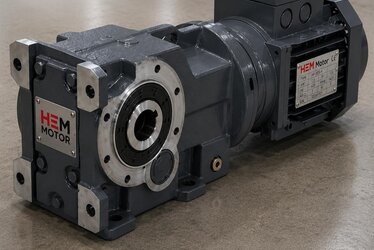
In belt and apron feeders the drive motor usually runs together with a reducer, because the feeder requires high torque at low speed. In this case, selecting the motor and the reducer compatibly provides both the correct output speed and the required torque. When a frequency drive is added, this system offers flexible operation over a wide feed-rate range.
Energy Efficiency and Operating Cost
Speed-controlled feeding offers an advantage not only for production continuity but also for energy efficiency. A fixed-speed feeder runs at full speed even when not needed, wasting unnecessary energy, while a feeder running with a frequency drive operates only at the required feed rate. When the motor's speed drops at low feed rate, the power it draws also decreases; this means a tangible saving in electricity consumption.
When an IE3 or IE4 efficiency-class motor is combined with a frequency drive, this saving becomes even more pronounced. The high-efficiency motor does the same mechanical work with lower losses, while the drive eliminates unnecessary operation. In a continuously running stone crushing plant, this saving accumulated over a shift can, over time, recover a significant part of the motor's initial investment cost. Therefore, when selecting a feeder motor, not only the purchase price but also the energy it will consume over its operating life should be taken into account.
Correct Supply: Preventing Plant Downtime
In a stone crushing plant, failure of the feeder motor can stop the entire line. Therefore, as important as selecting the feeder motor correctly is being able to supply it quickly when needed. Fast supply from stock of motors in the most commonly used power and speed combinations, in IE3 and IE4 efficiency class, with a cast iron body and robust bearing design, minimizes field downtime.
To Be Clarified Before Ordering
When supplying a feeder motor, the power (kW), speed (RPM), mounting type (B3/B5/B35), shaft diameter, frame size, protection class and efficiency class must be clarified. If it will run with a frequency drive, the motor's drive compatibility must also be confirmed. With this information a fully compatible motor is supplied and no incompatibility surprises occur after installation. For a feeder motor suited to your application and current electric motor prices, you can contact our product team.
Summary: The Gain from Speed-Controlled Feeding
Using a speed-controlled (VFD) feeder motor in crusher feeding prevents choking, keeps the crusher load constant, protects the mechanical transmission with a soft start and provides energy efficiency. A correctly selected feeder motor, compatible with the drive, resistant to dusty environments and quickly suppliable, secures both crushing capacity and plant continuity.
Frequently Asked Questions
Why should I use a frequency drive in crusher feeding?
A frequency drive lets you instantly adjust the feeder motor's speed according to the crusher's load state. Thus the optimum amount of material always reaches the crusher, choking is prevented and the crusher load is kept constant. Constant load makes the crusher motor heat up less, vibrate less and run with longer life; in addition, the soft start protects the transmission elements.
What should I watch for in a feeder motor that will run with a frequency drive?
The motor's efficiency class (IE3/IE4), F-class insulation resistant to the voltage pulses produced by the drive, cooling suitable for continuous operation at low speed, and an adequate IP protection class for the dusty environment are important. At large powers, insulated bearings against drive-induced shaft currents should also be evaluated. These features ensure the motor runs compatibly with the drive and with long life.
How long does a feeder motor failure stop the line?
The feeder is a critical component that supplies the material flow to the crusher; when it fails, feeding stops and therefore the entire crushing line can stop. For this reason, keeping a spare motor in the most commonly used power and speed combinations and working with a source that can supply quickly minimizes downtime. Accurately transferring the nameplate information before ordering is sufficient for a fully compatible replacement motor.