English
 Türkçe

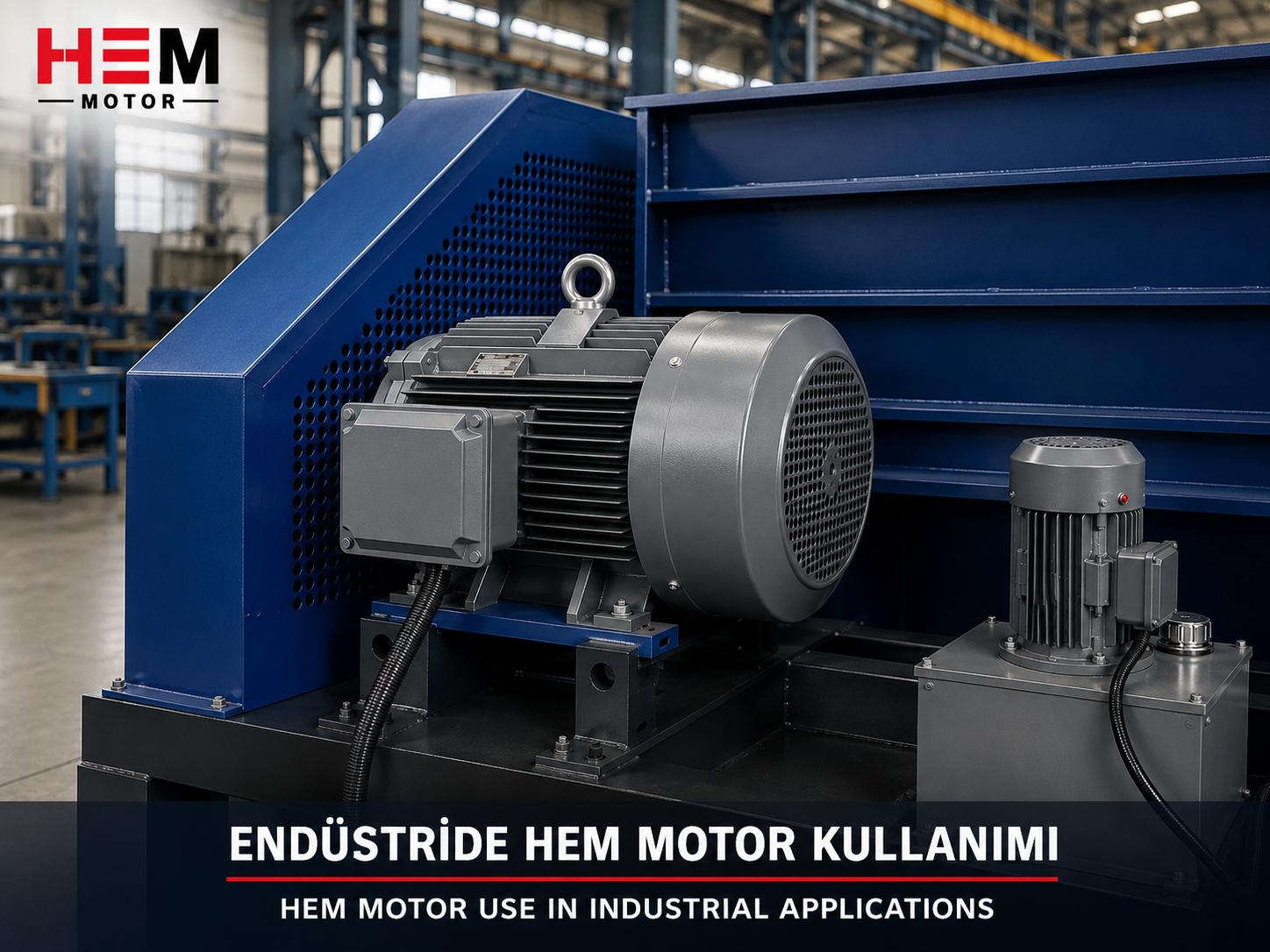

In crusher and mining plants, one of the final links in the material flow chain is the proper stacking of crushed aggregate or ore into the stockyard. The equipment that handles this task is the belt tripper, also known as a shuttle car, which moves back and forth on rails to discharge material at different points. Instead of a fixed discharge point, the tripper builds a homogeneous pile along the stockyard, directly affecting both space utilization and reclaim efficiency. At the heart of this travelling system there are two separate drive duties: the travel (traverse) drive motor that moves the car along the rails, and the main belt drive motor that the tripper rides on. As an electric motor manufacturer and seller, in this guide we explain step by step how to correctly select tripper drive motors operating in a dusty and abrasive environment, from duty type and protection class to the supply plan.
Tripper motor selection is different from selecting a classic continuous-duty belt motor. This is because the travel motion requires frequent start-stop, reversing and precise positioning. A motor selected with the wrong duty type or insufficient starting torque heats up quickly, struggles to brake, and disrupts continuity in the stockyard. Below you will find both the technical selection criteria and the supply and redundancy strategies that minimize downtime cost.
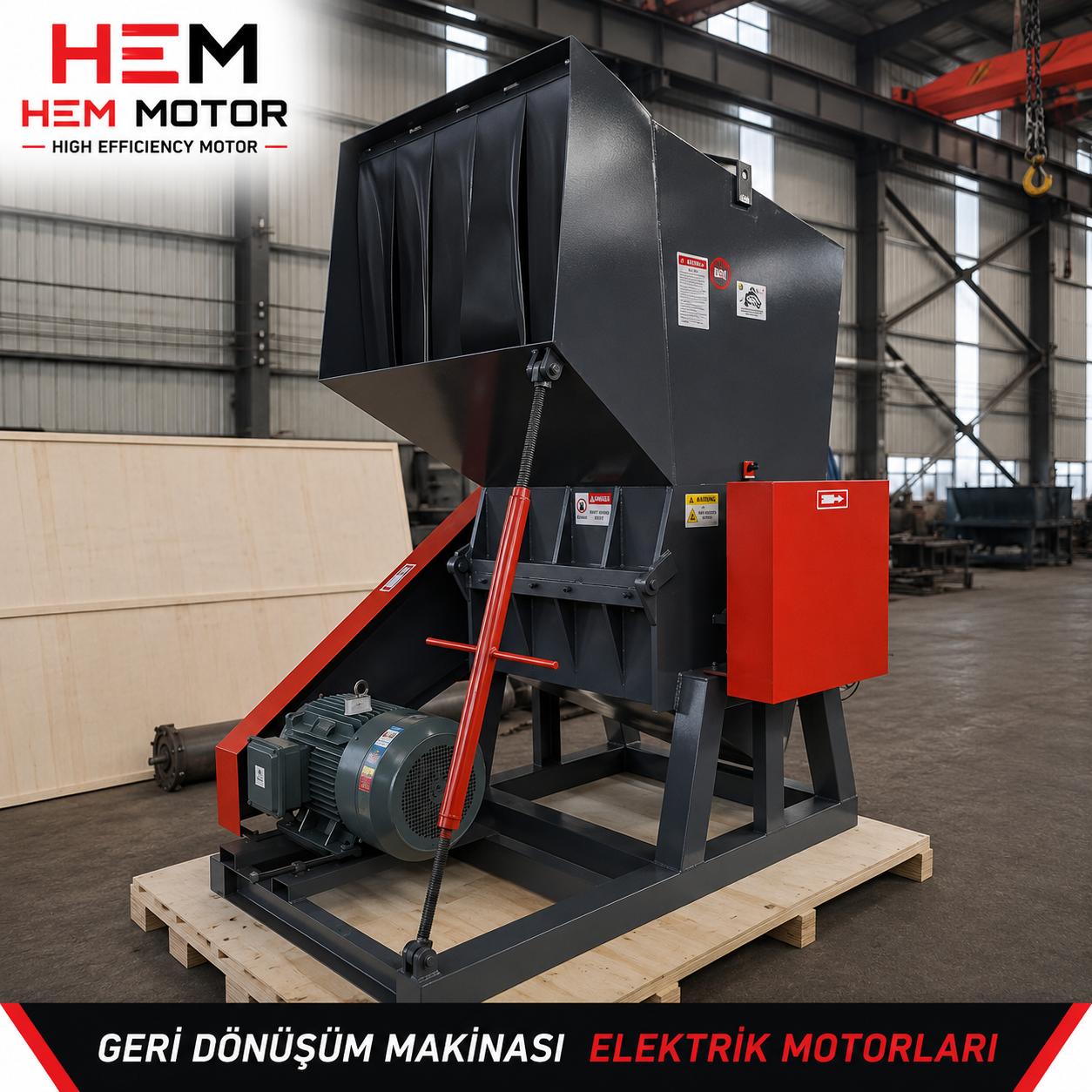
What Is a Belt Tripper (Shuttle Car) and Which Motor Duties Does It Contain?
A belt tripper is a travelling unit that sits on top of the main conveyor belt and moves along rails, discharging material downward at a selected point. It is widely used in stockyards, clinker storages, ore preparation plants and aggregate stacking areas. Although it looks like a single piece of equipment, it contains motor duties with very different load profiles.
- Travel (traverse) drive motor: Moves the car back and forth on the rails. It requires frequent start-stop, reversing and precise positioning. Therefore, good starting torque, braking capability and intermittent-duty endurance are essential.
- Main belt drive motor: Drives the main conveyor belt passing over the tripper. It demands high starting torque on a loaded belt and continuous-duty endurance.
- Auxiliary drives: In some designs, additional small-power motors are present for lifting, scraper or dust-suppression systems.
Each of these duties requires a different motor character. You can find the general logic of the main belt and feeder drives in the stockyard in our article on mine belt conveyor high torque and starting supply. To grasp the full picture of drives other than the main crusher, our content on screen and feeder belt drive motors in crushing-screening plants is also a good reference point.
Duty Type in the Travel Drive: Why Intermittent (S4/S5) Matters
The tripper car continuously moves back and forth to fill the stockyard homogeneously and frequently stops and changes direction. This motion profile corresponds not to continuous duty (S1) but to intermittent, frequent-start duty classes (S4/S5). At every start the motor draws high current and heats up; frequently repeated starts and braking increase the motor's thermal load. Therefore, the travel motor must be thermally sized according to the work cycle.
- Intermittent duty (S4/S5): Requires thermal sizing that accounts for frequent starting and braking. A motor selected for continuous duty may be inadequate in this cycle.
- High starting torque: The loaded car and rail friction demand high torque at start. A motor with low starting torque struggles to move the car.
- Braking and position holding: The car must stop at the desired point and not slide on an inclined rail. Here, a brake motor plays a critical role.
A brake motor is preferred in applications where positioning must be precise and the car must be held safely at its stopping point. You can review how a brake motor is selected in drives such as conveyors and cranes in our article on IE4 brake motor conveyor and crane supply.
Starting and Positioning: Soft Starter and Variable Frequency Drive
Direct-on-line (DOL) starting of the tripper travel motor produces sudden torque and high current at every start. This causes both mechanical shock and electrical stress. When soft starting and precise positioning are desired in the stockyard, the use of a variable frequency drive (VFD) or soft starter provides a great advantage.
- Variable frequency drive (VFD): Adjusts travel speed, accelerates and decelerates the car smoothly, and provides precise stopping at the target point. It reduces mechanical fatigue in the frequent start-stop cycle.
- Soft starter: Reduces starting current and mechanical shock; an economical solution if position precision is not very critical.
- Star-delta: Can be used to limit starting current in simpler systems, but positioning precision is limited.
We discussed the comparison of starting methods for heavily loaded drives in dusty site conditions in detail in our article on starting the crusher motor: soft starter and star-delta. Correct starting protects both motor life and mechanical components such as rails and gearboxes.
Dust, Wear and the Open Field: Protection Class and Body Selection
Stockyards are among the dustiest and harshest areas of the plant. Fine ore dust and aggregate fines remain suspended in the air and try to penetrate the motor's fan cowl, cooling fins and terminal box. Moreover, the tripper usually operates outdoors, exposed to rain, moisture and temperature changes. These conditions directly determine the choice of protection class and body material.
- Protection class: While standard IP55 is accepted as the minimum, IP65/IP66 sealing should be preferred in heavily dusty and humid stockyards.
- Cast iron body: Provides high resistance to impact, vibration and external factors; the standard choice for long life in the open field.
- Insulation class (F/H): F for high temperature endurance in a travel motor heated by frequent starting, and H class is evaluated in heavy cycles.
- Reinforced bearings and corrosion protection: Extend bearing life under vibration and moisture.
We explained in detail how to protect the motor and which IP class to choose in a dusty site in our article on dust sealing and IP65/IP66 protection in crusher motors. The correct protection class can double the field life of the tripper motor.
Selecting the Correct Power and Speed
The power of the travel drive motor is calculated from the loaded weight of the car, the rail incline, friction resistance and the desired travel speed. In the travel drive, the speed is usually significantly reduced through a gearbox; therefore the motor is selected as 4-pole (approximately 1500 rpm) and brought to the appropriate output speed with a gearbox. The main belt drive motor is sized according to belt speed and the tonnage carried.
- The travel motor must have a torque margin to overcome rail friction and load inertia at start.
- Sizing the power at the limit overloads the motor on an inclined rail or when pile resistance increases; an appropriate service factor margin should be left.
- Speed selection should be evaluated together with the gearbox ratio; the right combination provides both torque and position precision.
- In brake motor selection, ensure the braking torque is sufficient for stopping and holding.
Gearbox and Mechanical Matching
In the tripper travel drive, the motor almost always works with a gearbox. Because the car's motion on the rail is slow but high-torque, the motor's high speed is reduced through the gearbox and transmitted to the wheels. Therefore, motor selection must be considered together with the gearbox ratio, output shaft and connection type. A wrong match means either insufficient torque or excessive speed; both disrupt proper distribution in the stockyard.
- Mounting type: A B5 or B14 flanged motor is usually directly connected to the travel gearbox; B3 foot-mounted or B35 combined mounting is common in the main belt drive.
- Shaft diameter and key: The motor shaft must match the gearbox input exactly; mismatch causes time loss and vibration on site.
- Brake motor integration: In a brake motor, the brake is integrated into the rear cover; accessibility of the brake mechanism should be considered in the gearbox connection.
- Output speed: The gearbox ratio should be selected together with the motor speed to deliver the desired travel speed.
Continuity, Redundancy and Downtime Cost in the Stockyard
In a crusher plant, a stoppage in stockyard flow can lock the entire production line backward. If the tripper travel motor fails, material accumulates at a single point, the main belt stops, and crushing capacity drops. Therefore, redundancy in tripper drive motors is not a preference but an operational guarantee.
- At least one spare motor of the most critical travel and belt drive power should be kept on site.
- The spare motor should have exactly the same frame, shaft, mounting and brake features as the main motor so that no compatibility problem arises during replacement.
- The supplier's stock depth and fast shipping capacity allow the line to be put back into service within minutes in the event of a failure.
- For equivalent replacement, the nameplate information of the existing motor (kW, speed, frame, shaft diameter, mounting code, brake) should be recorded in advance.
Our article on motor failure and downtime cost in crusher plants, in which we quantify the downtime cost and show why redundancy is needed, supports your investment decision. You can contact us to quickly match the right tripper drive motor in the power, speed and protection class suitable for your needs and for current electric motor prices; as a manufacturer and supplier, we offer fast supply from stock and equivalent replacement solutions.
Common Mistakes in Tripper Drive Motor Selection
- Choosing a continuous-duty motor: Fitting an S1 motor to a frequently start-stopping travel drive causes early overheating and failure.
- Skipping the brake requirement: A motor with insufficient braking torque cannot hold the car on an inclined rail and creates a safety risk.
- Underestimating the protection class: Protection below IP55 in a dusty open field shortens motor life.
- Sizing the power at the limit: If rail incline and load inertia are not taken into account, the motor runs continuously overloaded.
- Not keeping a spare: A tripper dependent on a single motor locks the entire stockyard flow in the event of a failure.
- Not recording equivalent data: If the existing motor's nameplate and brake data are not recorded, incompatibility and delay occur during spare supply.
Frequently Asked Questions
Which duty type motor is needed for the tripper travel drive?
The tripper car continuously moves back and forth to fill the stockyard homogeneously and frequently stops and changes direction. This corresponds not to continuous duty (S1) but to a frequent-start intermittent-duty (S4/S5) profile. The motor must be thermally sized according to the work cycle, have high starting torque, and be selected as a brake motor when required.
Which IP protection class is suitable for a tripper motor in a dusty stockyard?
IP55 is accepted as the minimum standard; however, in open stockyards with heavy ore dust, aggregate fines and moisture, IP65/IP66 sealing should be preferred. A cast iron body, F/H insulation and a reinforced bearing structure are also important for field life. The correct protection class significantly extends the motor's life.
Why is production affected so much when the tripper motor fails?
The tripper is the final link in distributing material to the stockyard. If the travel motor stops, material accumulates at a single point, the main belt clogs, and crushing capacity can drop. This chain effect rapidly increases downtime cost. Therefore, keeping an exact equivalent spare motor on site and working with a manufacturer that can supply quickly is the guarantee of production continuity.