English
 Türkçe

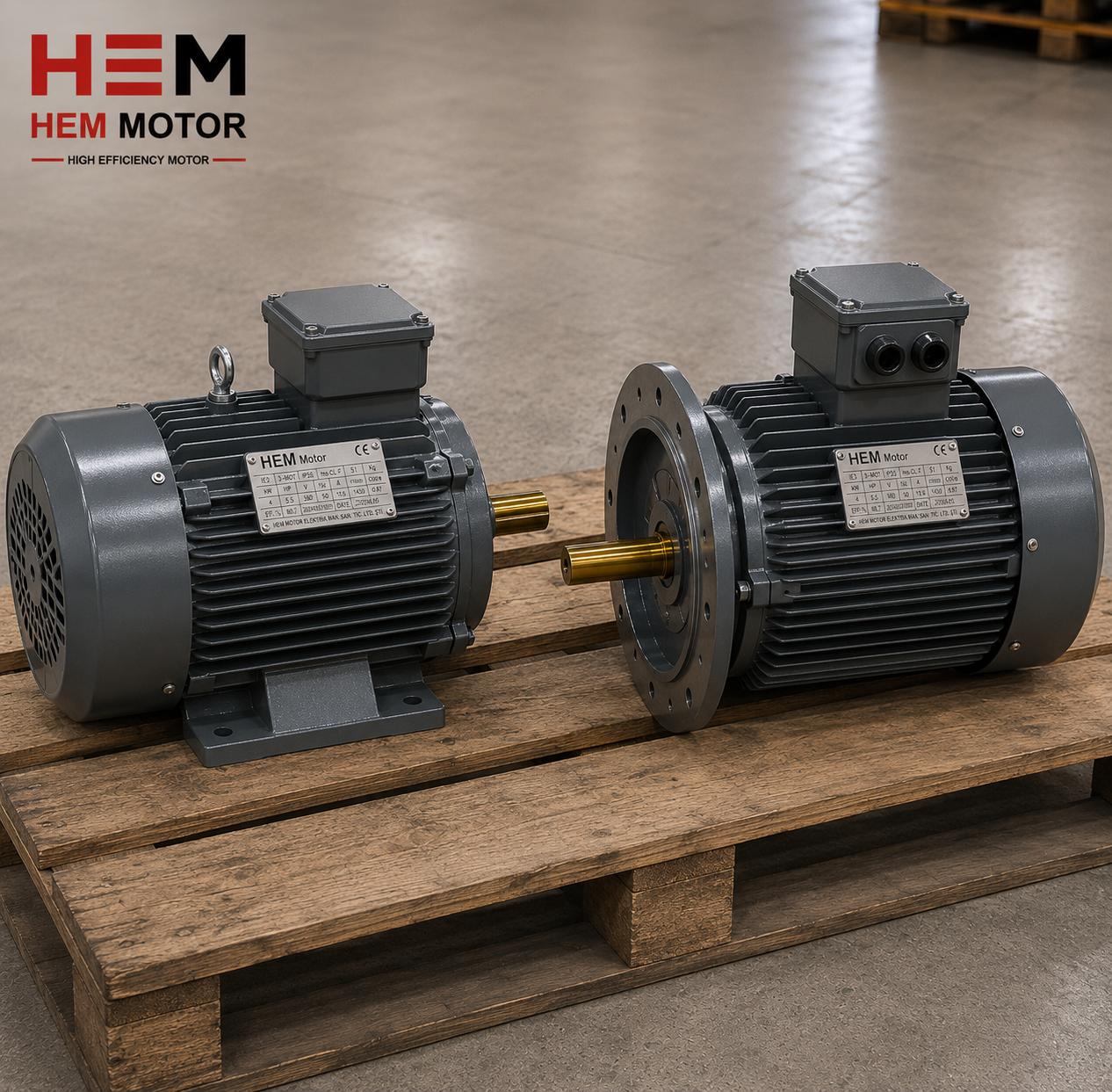

Cold storage facilities and refrigeration plants present far harsher conditions for an electric motor than an ordinary industrial environment. Sub-zero temperatures, constant humidity, freeze-and-thaw cycles, washdown water and non-stop operation are all factors that can cause a standard motor to fail in a short time. A correctly selected cold storage electric motor, on the other hand, runs trouble-free for years, protecting both product safety and energy efficiency. As an electric motor manufacturer and supplier, we know the specific needs of the refrigeration sector closely; with the right protection class, the right lubrication, the right efficiency class and fast stock assurance, we support facilities in running without interruption. In this article we examine motor selection in cold storage and refrigeration plants, distinguishing between the evaporator fan motor, the condenser fan motor and the compressor motor, under the headings of low temperature, condensation and continuous operation.
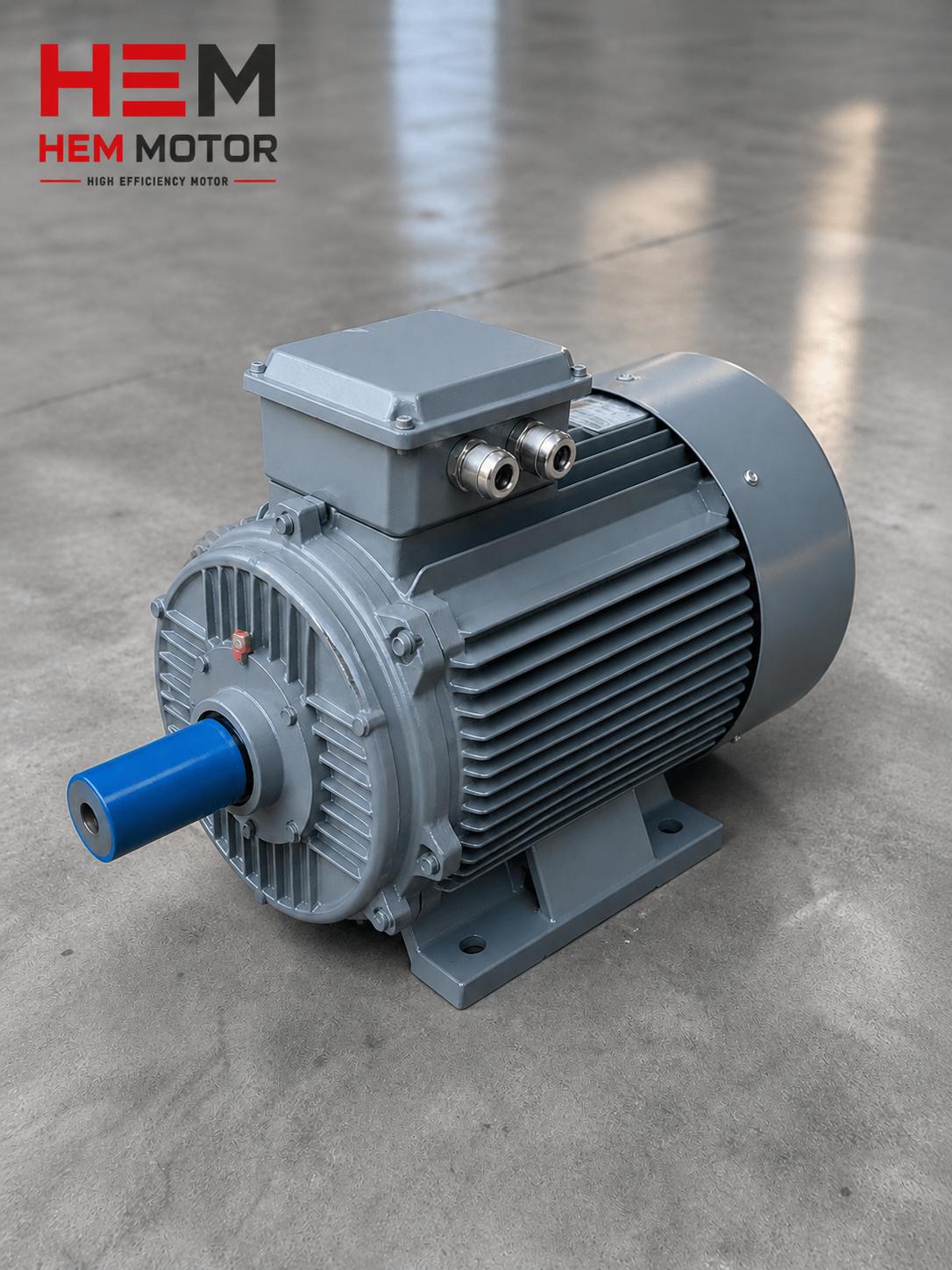
The Challenges Motors Face in Cold Storage
In a refrigeration plant, motors must cope with conditions they would never encounter in a normal factory environment. Understanding these conditions correctly directly affects motor selection.
- Low ambient temperature: In cold rooms the temperature can drop well below zero, and in deep freezers down to -25 °C, -30 °C and lower. In a standard motor, the grease solidifies at these temperatures, bearing resistance rises and starting becomes difficult.
- Condensation and moisture: When the motor stops it cools down, and when it runs it heats up. The temperature swing creates condensation inside the housing on every cycle. Accumulated water weakens the winding insulation and causes corrosion in the bearings.
- Freezing and ice formation: In humid cold air, ice can form on the motor surface and fan blades. An iced fan becomes unbalanced, produces vibration and overstresses the motor.
- Continuous operation: Refrigeration never stops. Compressors and fans run 24 hours a day, 7 days a week. This makes it mandatory for the motors to suit continuous (S1) duty.
- Washdown and hygiene: Especially in food facilities, motors are regularly washed with pressurized water and disinfectant. This requires a high protection class (IP55 and above).
Each of these challenges requires a separate design measure. Buying "any motor" for cold storage may look cheap in the short term, but in the long term it returns as failures, product loss and unplanned downtime costs. Correct motor selection is one of the most critical investments of a refrigeration plant.
The Evaporator Fan Motor: Working Inside the Cold Room
The most demanding motor in a cold storage facility is the evaporator fan motor inside the room. This motor circulates air in front of the cooling coil to maintain a balanced temperature in the store, and it is directly exposed to sub-zero temperatures. Therefore, special precautions are required:
- Low-temperature lubrication: The bearing grease must be a special low-temperature grease that keeps its fluidity at sub-zero temperatures. Standard grease can solidify at -30 °C and lock the bearing.
- Sealed (closed) bearings and seals: A sealed bearing structure is preferred to prevent moisture and ice from entering the bearing.
- Anti-condensation (space) heater: A low-power heater resistor can be used to prevent condensation inside the housing when the motor is stopped; this keeps the insulation dry.
- Ice management: During defrost cycles the motor is affected by heat; the design must withstand these cycles.
- IP protection: Against in-room washdown and moisture, an IP55 or higher protection class is recommended.
When an evaporator fan motor fails, air circulation in that zone stops, the temperature rises and the stored product is endangered. For this reason, both correct design and fast spare supply are vital in evaporator fan motors. The pump, fan and blower motor selection guides contain practical information that supports this selection.
The Condenser Fan Motor: The Effect of the Outdoor Environment
The condenser, where heat is rejected in the refrigeration cycle, is usually located outside the facility or in a machine room. Unlike the evaporator motor, the condenser fan motor runs on the warm side; but this time it is exposed to outdoor weather conditions:
- Weather resistance: Rain, snow, dust and sun require the motor to have a high IP protection class and a durable body.
- Temperature fluctuation: Day-night and seasonal temperature differences increase the risk of condensation inside the housing.
- Continuous operation: Condenser fans also run mostly without interruption; they must suit continuous duty.
- Capacity control: With a variable frequency drive (VFD), the fan speed is adjusted according to the outdoor temperature, providing both energy savings and balanced condensing pressure.
In condenser fan motors running outdoors, a durable cast iron body offers a significant advantage in terms of mechanical strength and long life. For motor options aimed at ventilation and fan applications, the ventilation electric motors range contains suitable solutions.
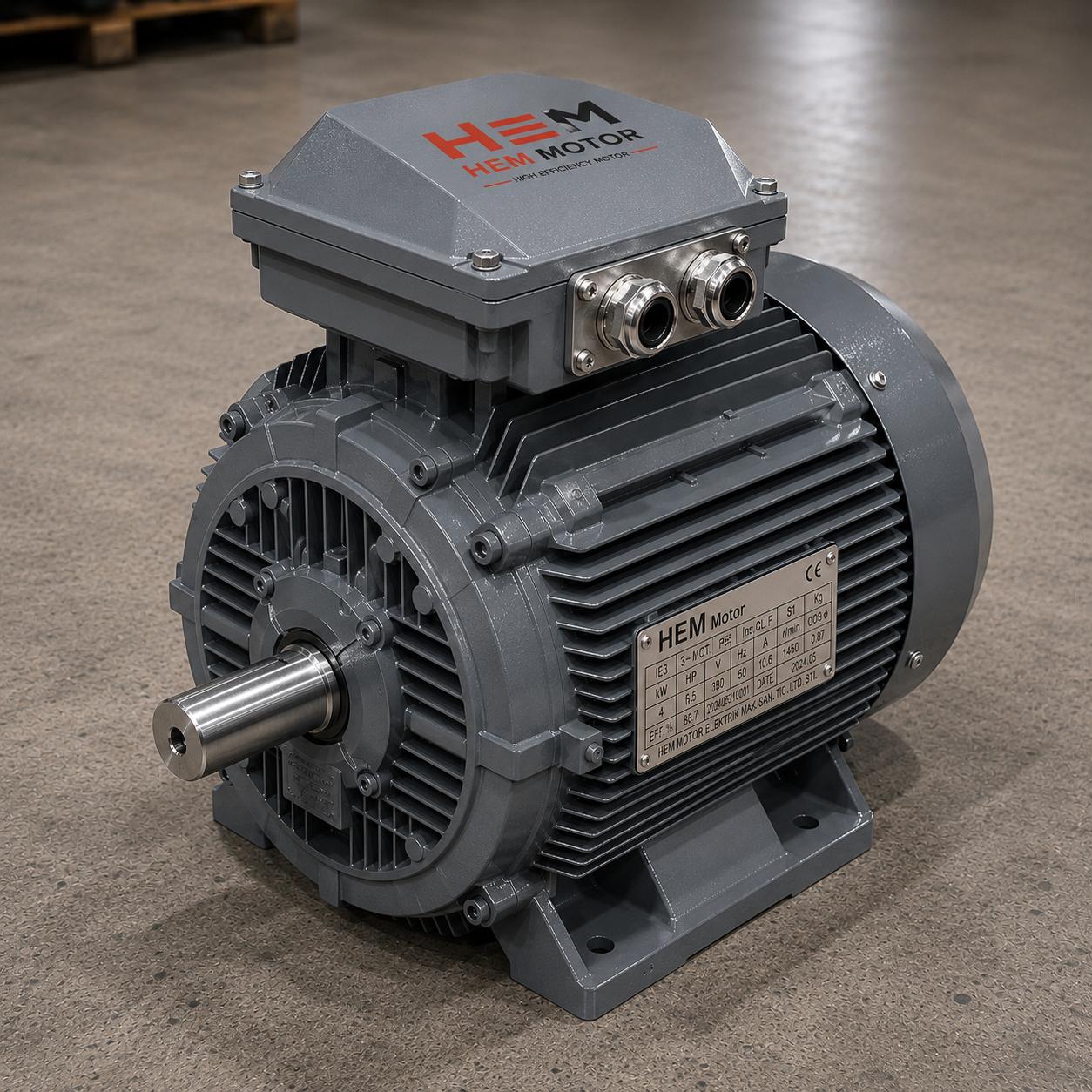
The Compressor Motor: The Facility's Biggest Energy Consumer
The heart of a refrigeration plant is the compressor, and the compressor motor that drives it is the biggest energy consumer in the facility. Compressors run under continuous load 24 hours a day; therefore, two things stand out in a compressor motor: durability and efficiency.
- Continuous (S1) duty: The motor must be designed to run at full load without stopping, and its heat management must be designed accordingly.
- Robust cast iron body: A cast iron body is preferred for mechanical strength under heavy duty and continuous vibration.
- Class F insulation: High temperature resistance extends insulation life in continuous operation.
- High efficiency (IE4): In a continuously running compressor motor, every efficiency point turns into tangible savings on the annual electricity bill.
To review the motor range designed specifically for compressor applications, the compressor electric motors options make it easier to determine the right power and connection type.
Why IE4? The Value of Efficiency in Always-On Refrigeration
In refrigeration plants, the energy cost rises far above the purchase price of the motor, because the motors run for almost the entire year. An IE4 super premium motor runs with lower losses than IE3 or lower classes; the few percentage points of efficiency difference more than pay back the cost of the motor itself over the years in a compressor or fan motor running 24/7.
- In continuously running motors, the annual operating hours exceed 8000 hours, which magnifies the efficiency difference.
- An IE4 motor produces less heat; this means both energy savings and less waste heat (an extra load that must be cooled).
- High efficiency also provides an advantage in terms of compliance with energy efficiency regulations and audits.
To understand the payback logic of switching to IE4, the energy saving articles on IE4 electric motors offer a detailed perspective. For current electric motor prices and IE4 options suitable for your application, you can contact us.
Protection, Insulation and Condensation Measures
The technical measures that keep a motor alive in a refrigeration environment must be evaluated as a whole:
- IP55 and above protection: Basic protection against washdown water, moisture and dust. A higher protection class may be requested in heavily washed food facilities.
- Anti-condensation heater: Keeps the housing dry when the motor is stopped, preventing condensation; recommended for motors that stand idle for long periods or are in humid environments.
- Low-temperature grease: Special grease that remains fluid at sub-zero temperatures prevents bearings from locking up.
- Class F insulation: Extends thermal life in continuous operation.
- Hygienic design: In food facilities, a smooth-surfaced, easy-to-clean body is preferred.
When these measures are applied together, the motor is protected against the challenges of the refrigeration environment and completes its expected service life. For general principles on motor selection in industrial facilities, the industrial motor supply guides provide a holistic framework.
Stock, Fast Supply and Spare Motor Planning
In refrigeration plants, a motor failure is not just a maintenance issue; it is a direct risk of product loss. A failed evaporator fan motor can cause the food in the store to spoil; a stopped compressor motor can cause the temperature of the entire facility to rise. Therefore, fast supply and spare planning are critical.
- Critical spare motor list: Keeping motors in the most used powers and speeds in stock makes emergency replacement possible.
- Delivery from stock assurance: As a manufacturer and supplier, we take care to deliver the most frequently needed motors quickly from stock.
- One-to-one matching: Sharing the nameplate information of the existing motor ensures the compatible motor is found quickly.
- Thermal protection: PTC/thermistor protection in continuously running motors prevents unexpected failures.
Planning the critical motors of your refrigeration plant in advance prevents unplanned downtime and product losses. Stock and fast supply with manufacturer assurance are the guarantee of the cold chain running without interruption.
Motor Needs by Type of Refrigeration Facility
Not every refrigeration facility requires the same motor profile. The type of facility, the stored product and the operating temperature directly determine motor selection. For correct supply, clarifying the facility type both speeds up the quotation process and prevents the wrong motor from arriving on site.
Food and cold chain stores
In cold storage where meat, fish, vegetables, fruit and dairy products are stored, hygiene is paramount. In these facilities, motors are regularly washed and disinfected; therefore, a high protection class, a smooth and easy-to-clean body, and a corrosion-resistant structure become important. Since evaporator fan motors run directly inside the room, low-temperature measures are the most critical issue here. As the value of the stored product is high, the loss caused by a motor failure is also large; for this reason, spare motor stock must be planned.
Deep freezer and blast freezing facilities
In blast freezing and deep freezing applications, the temperature drops to -30 °C and lower. In these most demanding conditions, equipping motors with low-temperature grease, sealed bearings and anti-condensation heaters is almost mandatory. Since air circulation is high, fan motors run continuously under heavy load.
Industrial process cooling
In the chemical, pharmaceutical, plastics and machinery sectors, chillers and cooling units that cool process water or product are used. In these systems, compressor and condenser fan motors are under continuous load; efficiency and durability are at the forefront. For correct motor selection under general industrial conditions, the industrial supply approach provides a holistic view.
Capacity Control with a VFD (Variable Frequency Drive)
In modern refrigeration plants, fan and compressor motors are increasingly driven by a variable frequency drive (VFD). A motor running at fixed speed wastes energy by running at full capacity even when the cooling load is low. A VFD, on the other hand, adjusts the motor speed according to the instantaneous demand, providing both energy savings and more precise temperature control.
- On evaporator fans: Speed control keeps the room temperature more stable and prevents unnecessary air circulation.
- On condenser fans: Speed adjustment according to outdoor temperature balances the condensing pressure and reduces compressor load.
- On compressor motors: Variable speed adjusts capacity according to cooling demand, reducing the wearing effect of on-off operation.
In motors that will run with a VFD, it is important that the winding insulation and bearing structure be selected as drive-compatible. Stating at the ordering stage whether the motor will run with a frequency drive ensures the correctly equipped motor is delivered. This both increases energy efficiency and protects motor life.
Pre-Order Information List for Correct Supply
The way to supply the right motor quickly for a refrigeration facility is through a clear definition of the need before ordering. An order placed with missing information leads to the wrong motor arriving and valuable time being lost. When requesting a quotation for refrigeration applications, sharing the following information ensures the process proceeds smoothly:
- Application type: Evaporator fan, condenser fan, or compressor drive?
- Operating temperature: The lowest ambient temperature the motor will be exposed to (inside the room or outdoors).
- Power and speed: The kW value and the number of poles / required speed.
- Frame size and mounting type: In retrofits, the nameplate information and frame dimensions of the existing motor.
- Protection class: IP55 or higher according to the intensity of washdown and moisture.
- Special equipment: Need for low-temperature grease, anti-condensation heater, thermal protection.
- Drive status: Will the motor run with a frequency drive?
Once this information is clarified, it becomes possible to supply the motor that exactly fits your application from stock or with the shortest lead time. A correctly defined need both prevents unnecessary cost and secures the uninterrupted operation of the refrigeration plant. Acting with manufacturer assurance also makes it easier to find an equivalent of the same motor in the future and ensures long-term supply continuity.
Frequently Asked Questions
Can a standard motor run inside a freezer room?
A standard motor may run in the short term, but it fails quickly due to the grease solidifying at sub-zero temperatures, condensation forming inside the housing and bearing corrosion. Motors that will run inside a freezer room need low-temperature grease, sealed bearings, suitable IP protection and, when necessary, an anti-condensation heater. A correctly designed motor runs with a long service life under these conditions.
Why do cold-room fan motors need special grease and heaters?
At sub-zero temperatures, standard bearing grease solidifies and makes the bearing harder to turn; low-temperature grease prevents this by keeping its fluidity. An anti-condensation heater, meanwhile, prevents condensation inside the housing when the motor is stopped, keeping the winding insulation dry and reducing corrosion. These two measures significantly extend motor life in a cold environment.
Why is it worth investing in an IE4 motor in refrigeration?
Refrigeration motors run for almost the entire year, often 24 hours a day. At such high operating hours, the lower losses of an IE4 super premium motor provide significant savings on the annual electricity bill and quickly pay back the additional cost of the motor. In addition, an IE4 motor produces less waste heat, also easing the cooling load.