English
 Türkçe

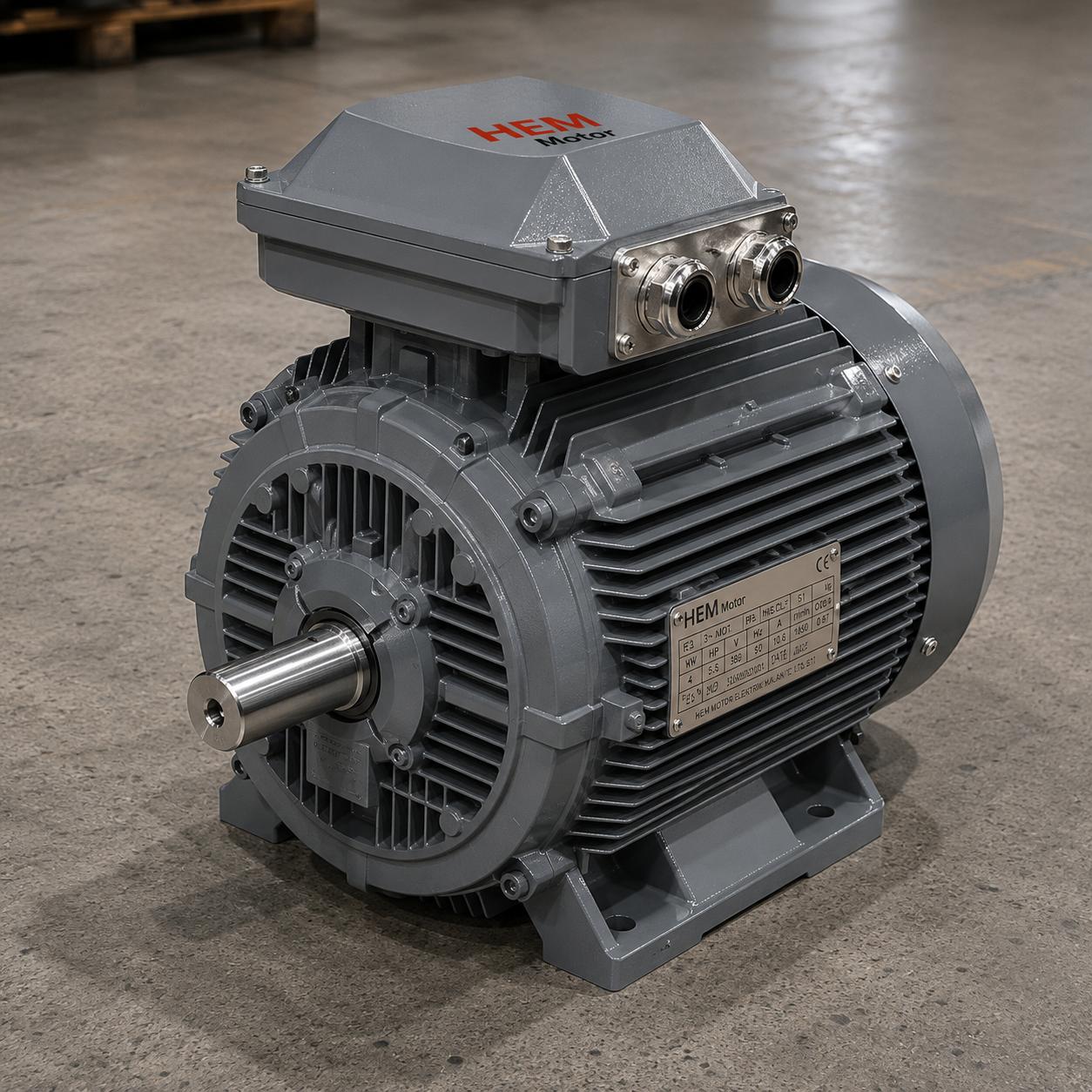

In large-frame cast iron electric motors, the quietest hero of performance is an invisible matter of balance: rotor dynamic balancing. A motor's nameplate may state an IE3 or IE4 efficiency class, and its body may be made of robust cast iron; yet if the rotor is not properly balanced, the motor produces vibration from the very first minute, shortens bearing life, and transmits that vibration to the connected pump, fan, or gearbox. Especially in medium-large and large frames such as 132, 160, 180, 200, 225, 250, 280, 315, and 355, as rotor mass grows, even the smallest imbalance turns into significant centrifugal forces at operating speed. In this article we examine the G2.5 quality grade, the half-key and full-key balancing methods, vibration measurement, and the quality marks to watch when purchasing large-frame motors from the perspective of a manufacturer and seller. Delivering a correctly balanced motor from stock is, for us, not merely a technical requirement; it is a commitment to fault-free operation in the field.
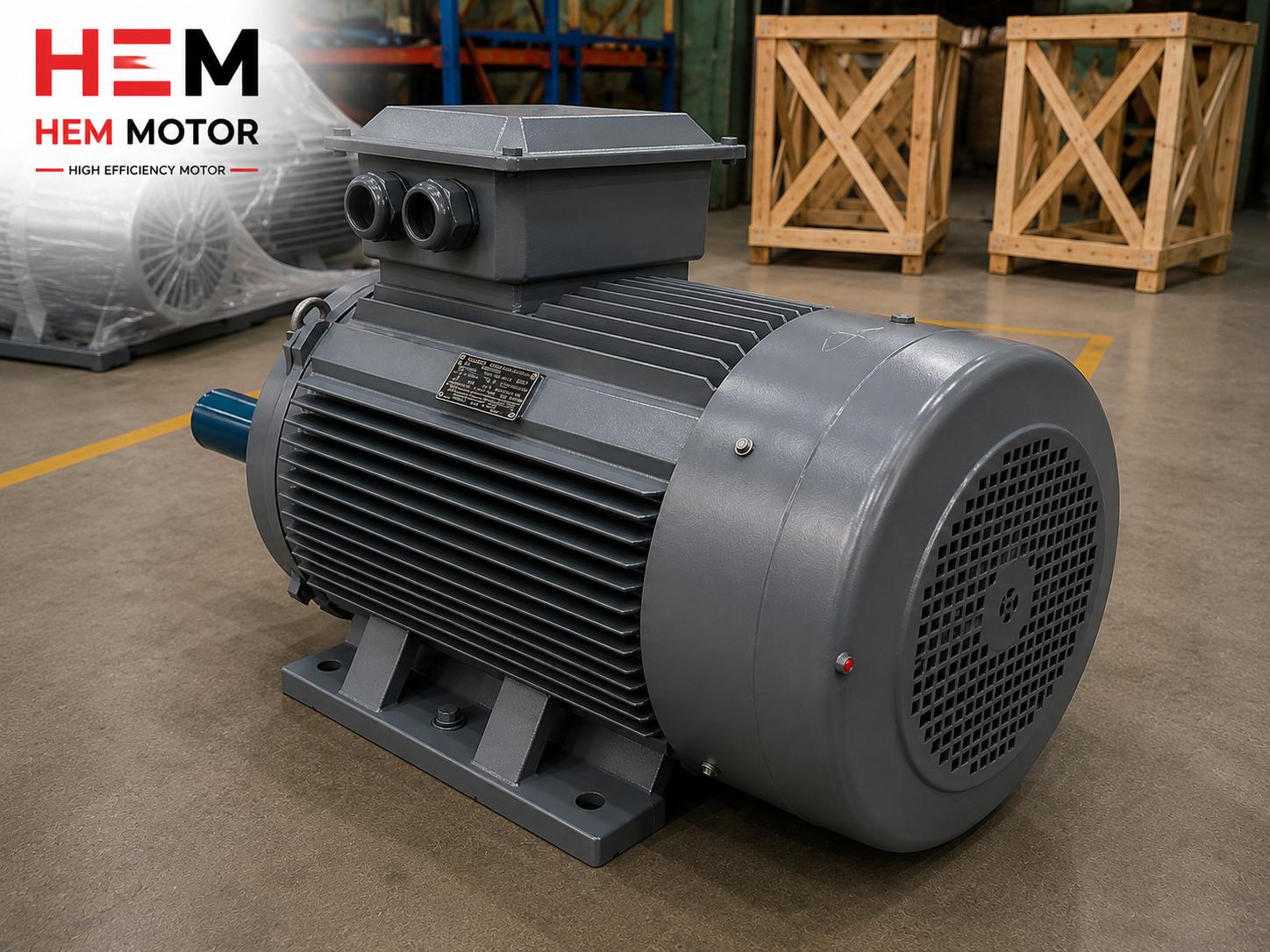
What Is Rotor Dynamic Balancing and Why Is It Critical?
An electric motor's rotor is a rotating mass made up of the lamination stack pressed onto the shaft, short-circuit bars (the squirrel cage), and attached parts. Ideally, the center of gravity of this mass lies exactly on the axis of rotation. In reality, due to manufacturing tolerances, non-homogeneity of the lamination stack, distribution of the aluminum die-casting, and shaft machining allowances, the center of gravity deviates slightly from the axis. This deviation produces a centrifugal force during rotation and causes the motor to vibrate. While static balancing only corrects imbalance in a single plane, dynamic balancing measures in two separate planes of the rotor and corrects both linear and angular (couple) imbalance. Dynamic balancing is essential for large-frame, long-rotor motors, because in a long rotor an imbalance at one end can create a force in the opposite direction at the other end, and this difference cannot be seen with static balancing alone.
The importance of dynamic balancing grows exponentially with speed. Centrifugal force is proportional to the square of the rotational speed; that is, in a 2-pole motor running at 3000 rpm, the same amount of imbalance produces roughly four times more force than in a 4-pole motor running at 1500 rpm. For this reason, balance quality is non-negotiable in high-speed, large-frame motors. Cast iron bodies, with their high mechanical strength and damping capacity, are more suitable for carrying these forces than aluminum; however, no matter how strong the body is, if the rotor inside is unbalanced, the vibration will travel out through the bearings and seats.
The G2.5 Quality Grade: Meaning of the ISO 21940 Standard
Rotor balance quality is expressed in "G" grades according to the international ISO 21940-11 (formerly ISO 1940-1) standard. The G value defines the orbital velocity of the rotor's permissible residual imbalance in millimeters per second. A lower G value means a better (more balanced) rotor. While the standard accepted quality grade for general-purpose industrial electric motors is G6.3, the G2.5 grade is preferred for vibration-sensitive applications and systems requiring higher comfort. G2.5 means a balance tolerance roughly two and a half times tighter than G6.3.
- G6.3: The grade commonly accepted as sufficient for general industrial motors and standard pump and fan applications.
- G2.5: The tighter grade preferred for high-speed motors, precision machines, machine tools, high-comfort HVAC plants, and lines where vibration directly affects product quality.
- G1.0 and below: For very specialized, extremely precise rotating systems (for example, high-speed spindles).
As a buyer sourcing a motor for a critical application, you should request that the balance quality grade be stated on the nameplate and certificate. If you require G2.5, this must be specified clearly at the ordering stage, because standard production is most often done at G6.3. From an organization that both manufactures and sells, you can clearly request the balance grade suitable for your application and see it on the delivery documents. When looking for the right efficiency class motor, reviewing IE4 high-efficiency electric motor options is part of a procurement decision that also considers balance quality.
The Half-Key and Full-Key Balancing Methods
One topic that many buyers overlook but that can cause serious problems during assembly is the key condition under which the balancing was performed. There is a keyway on the motor shaft to carry the pulley or coupling. The mass of the key fitted into this slot also affects the balance of the rotating system. There are three methods in international practice:
- Half-key method: The method accepted as standard in ISO 21940 and today's IEC motors. The rotor is balanced assuming the keyway is half-filled. The drive element fitted to the shaft (pulley/coupling) is expected to be balanced according to the same half-key logic.
- Full-key method: An older method in which the rotor is balanced with a full key fitted. The keyway of the connected element must be empty.
- No-key method: The shaft is balanced without a key.
If the motor was balanced using the half-key method and you fit a full-length key on the shaft and mount a heavy pulley on it, the system may become unbalanced again. Therefore, in large-frame motors it is important that the balancing method be indicated on the shaft end or the nameplate. The overwhelming majority of today's IEC motors are balanced with the half-key method; however, this detail should be confirmed in special orders and in retrofits requiring compatibility with old machines. motor nameplate reading and technical guides help you clarify such critical details before ordering.
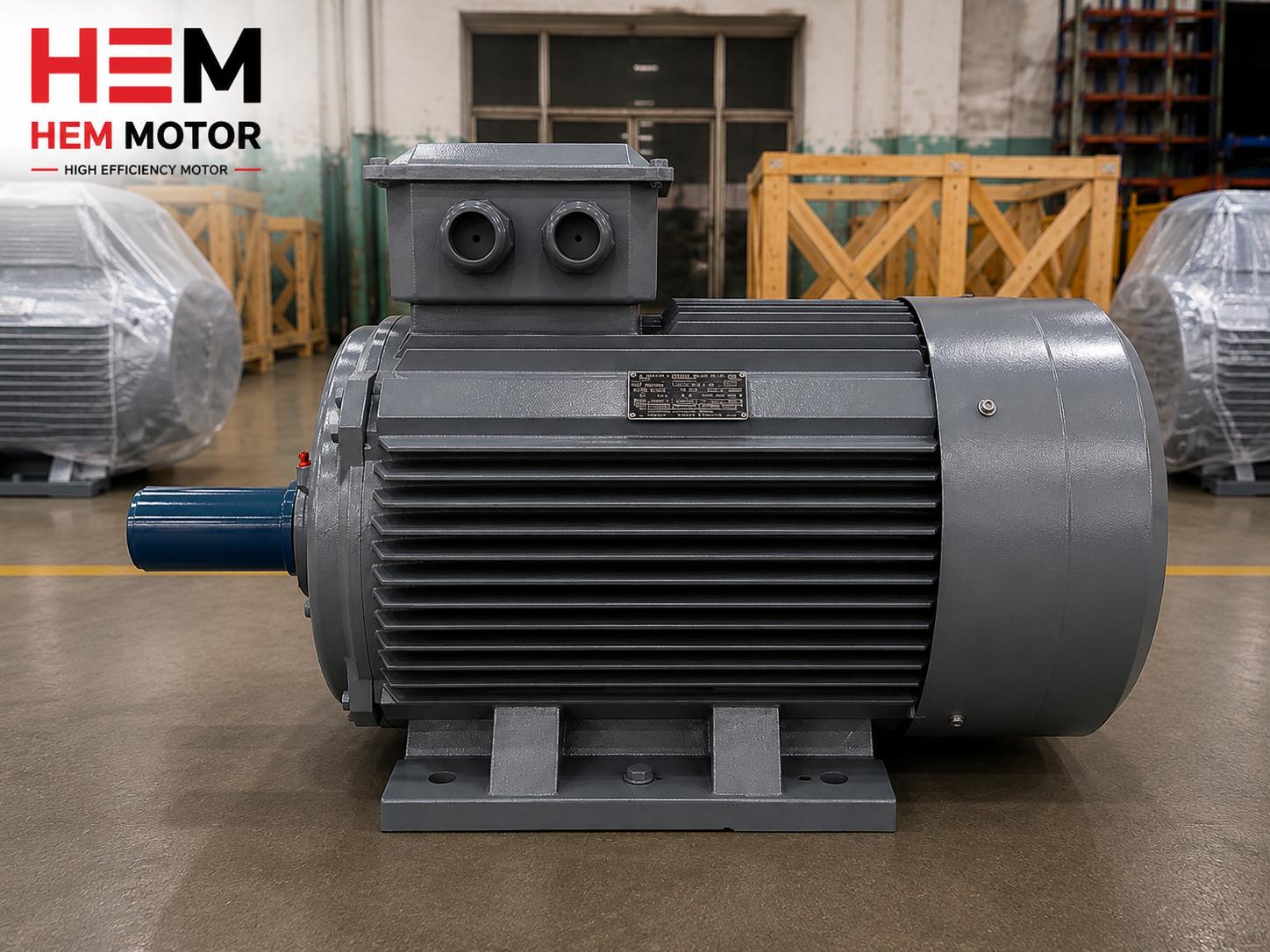
Where Does Vibration Come From in Large Frames?
In a large-frame motor, vibration does not always originate from rotor imbalance. To diagnose correctly, you must distinguish between vibration sources:
Mechanical sources
- Rotor imbalance: The most common source, producing dominant vibration at operating speed (1x). G-grade balancing solves this problem at the root.
- Misalignment: The shafts of the motor and the driven machine not being perfectly aligned. It usually produces vibration at 2x speed and is solved by alignment, not balancing.
- Bearing wear and assembly errors: Incorrect preload, contaminated seats, or wrong bearing selection produce high-frequency vibration.
- Soft foot: The motor not seating fully on its base, stressing the body and amplifying vibration.
Electrical sources
- An uneven stator-rotor air gap, broken bars, or winding imbalances can produce electrical vibration.
- In motors running with a variable frequency drive, switching harmonics can cause additional vibration.
A good cast iron body motor offers the advantage of damping mechanical vibration thanks to its robust structure; however, the real solution is for the motor to leave the factory correctly balanced. Field balancing wastes both time and money. For this reason, the fact that the motors we deliver from stock come with factory dynamic balance values significantly shortens commissioning time.
Vibration Measurement: Acceptance Limits per ISO 10816 / ISO 20816
The standard that determines whether a motor's vibration is acceptable is ISO 20816 (formerly ISO 10816). This standard classifies the machine according to its power and mounting rigidity and requires the vibration velocity (mm/s RMS) to stay below certain limits. In field acceptance, measurements are usually taken on the motor body and bearing seats along three axes (horizontal, vertical, axial). In large-frame motors, keeping the vibration level in the "good" zone is critical for both bearing life and the connected system. Clarifying, before ordering, the vibration class in which the motor will be delivered for critical applications prevents subsequent returns and commissioning delays.
- Vibration measurement should be performed both at factory acceptance and during periodic field maintenance.
- Trend tracking prevents unplanned downtime by catching sudden increases early.
- Vibration can be continuously recorded with IoT-based monitoring systems; for detailed information see condition monitoring approaches for efficient motors.
Large Frame Selection and the Stock Advantage
In the high-power class ranging from frame 132 to 355, selecting the correct frame size and mounting type directly affects vibration performance. B3 foot-mounted, B5 flange-mounted, or B35 combined mounting changes the rigidity of the system; rigid mounting reduces vibration. At high powers (315 kW and 355 kW, 1500 rpm), the 355 frame and large shaft diameter are common in the Turkish market. Since the lead time of these motors can be longer than for small frames, keeping the right power ready in stock is a major advantage for critical production lines. Delivery from stock with manufacturer assurance minimizes production loss in the event of an unplanned motor failure.
- The correct frame size matters for both mechanical strength and cooling; power forced into a small frame produces heat and vibration.
- The cast iron body provides the ideal mechanical foundation for heavy-duty and continuous (S1) operation.
- Spare motor planning for high-power motors is critical for production continuity.
To determine the power, speed, and frame combination suitable for your needs and to get information about current electric motor prices, you can contact us directly and request the G2.5 balance grade for your critical applications.
How Is Dynamic Balance Preserved in the Field?
For a motor that leaves the factory correctly balanced to keep that property in the field, assembly and maintenance discipline are required. Even the best-balanced rotor can begin to produce vibration with faulty assembly. Therefore, the commissioning process determines vibration performance as much as the purchasing decision does. The following points ensure that a large-frame motor runs with low vibration throughout its life:
- Correct alignment: The motor shaft and the shaft of the driven machine should be aligned with a laser alignment device, keeping parallel and angular offset within standards. Misalignment causes vibration and bearing wear even in the best-balanced rotor.
- Balanced drive element: The pulley, coupling, or sheave fitted to the shaft must also be balanced. An unbalanced pulley nullifies the motor's balance.
- Solid foundation and rigid mounting: The motor should be seated on a base rigid enough to damp vibration, leaving no soft foot. Anti-vibration mounts may be used where necessary.
- Periodic vibration measurement: On critical motors, vibration should be measured at intervals and trends tracked; sudden increases may indicate a bearing or alignment problem.
All these steps turn the motor's technical capacity into reality in the field. Our responsibility is to deliver the motor in the correct balance grade and with a robust cast iron body; field assembly discipline then completes the system life. To evaluate the correct body and mounting type together, it is helpful to review B5 flange-mounted electric motors options.
Quality Marks and Manufacturer Assurance When Purchasing
A high-power motor is a serious investment for a facility, and the cost of unplanned downtime can far exceed the price of the motor itself. Therefore, the purchasing decision should consider not only power and efficiency class but also quality marks. A correctly balanced motor with quality bearings and a robust body lowers the total cost of ownership, even if it requires slightly more careful selection in the initial investment.
- Request a balance certificate: Delivery of the G2.5 balance grade with documentation in critical applications.
- Quality bearings: Heavy-duty bearings and correct preload are a prerequisite for low vibration.
- 100% copper winding and class F insulation: Provides heat control and long life in continuous operation.
- Stock assurance: Delivery from stock in the most sought-after powers and speeds prevents production loss in an emergency.
- Supply continuity: Working with manufacturer assurance makes it easier to find an equivalent of the same motor later.
As a manufacturer and supplier, our task is to make these quality marks standard and to deliver the right motor to the field quickly. To determine your power, speed, and balance grade combination together and get a clear quotation, you can contact us.
Frequently Asked Questions
Why does the difference between the G2.5 and G6.3 balance grades matter when buying?
G2.5 provides a balance tolerance roughly two and a half times tighter than G6.3; that is, it produces lower vibration at the same speed. G2.5 should be requested for vibration-sensitive machines, high-speed applications, and comfort-priority systems. Since standard production is mostly G6.3, the tighter grade must be clearly specified at the ordering stage if it is required.
Was my motor balanced with the half-key method, and how can I tell?
The vast majority of electric motors compliant with today's IEC standard are balanced with the half-key method, and this is usually indicated in the motor documents or on the shaft end. In retrofits requiring compatibility with an old machine, confirming the balancing method prevents unexpected vibration after assembly. If you are not sure, request this information when ordering.
If there is vibration in a large-frame motor, is the problem always in the rotor?
No. Vibration can also come from misalignment, soft foot, bearing assembly errors, or electrical sources. Dominant vibration at operating speed (1x) usually indicates rotor imbalance, but the vibration spectrum must be measured for a correct diagnosis. A correctly factory-balanced motor also makes it easier to isolate field-related problems.